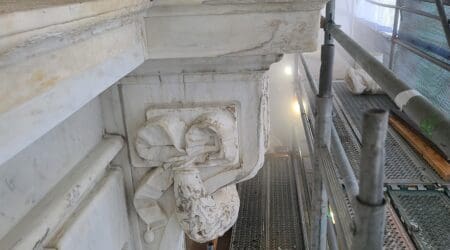
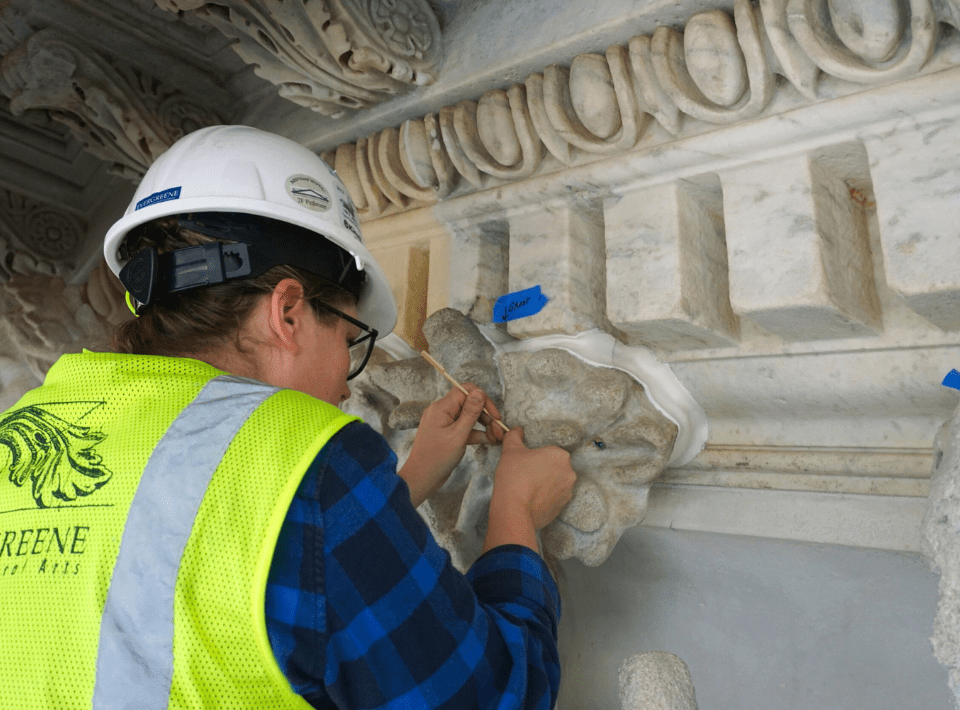
When historic stone begins to deteriorate, traditional restoration methods often fall short of providing lasting solutions. Chemical consolidation—a sophisticated conservation technique that strengthens weakened stone at the molecular level—represents the cutting edge of preservation science. At EverGreene, we’ve pioneered the large-scale application of these advanced treatments on some of America’s most treasured architectural landmarks.
Understanding Chemical Consolidation
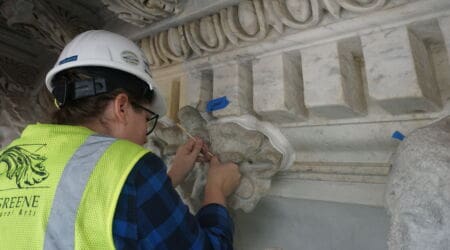
Chemical consolidation is a conservation process that introduces binding agents deep into deteriorated stone to restore its structural integrity. Unlike surface treatments that merely protect the exterior, consolidation works from within, creating new chemical bonds that strengthen the stone matrix. This technique is particularly crucial for carved marble and other historic masonry that has suffered from weathering, pollution, or natural aging. The process typically involves applying specialized chemical solutions—such as ethyl silicate consolidants following hydroxylating conversion treatments—that penetrate the stone’s porous structure. Once applied, these chemicals undergo controlled reactions that create new binding compounds, effectively rebuilding the stone’s strength while maintaining its historic character and appearance.
EverGreene’s Unparalleled Expertise
EverGreene has developed extraordinary know-how in large-scale chemical consolidation through landmark projects, including:
- Russell Senate Office Building, Washington, DC – Consolidation of white carved marble facades
- Carnegie Library, Washington, DC – Vermont marble restoration using advanced chemical treatments
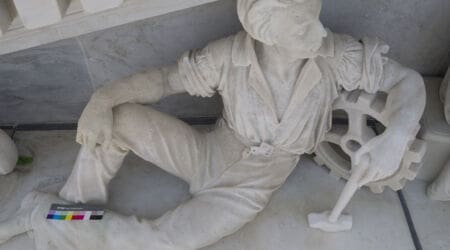
- U.S. Capitol North & South Extensions, Washington, DC – Consolidation of Lee, Cockeysville, Georgia, and Vermont marbles
These high-profile projects have positioned EverGreene as the leading authority on implementing chemical consolidation at an architectural scale. Our conservation team regularly presents findings at international symposiums, including the prestigious Consolidation conferences, sharing breakthrough methodologies with the global conservation community.
Overcoming Logistical Challenges
Translating consolidation techniques to building-scale applications requires mastery of four critical areas where EverGreene has developed industry-leading expertise:
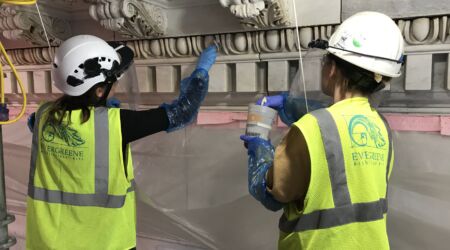
Site Protection and Safety: Chemical consolidation involves hazardous materials that require sophisticated containment systems. EverGreene has refined comprehensive protocols for chemical storage, runoff collection, and protection of surrounding materials and the public. Our site protection systems have evolved through multiple major projects to become the industry standard.
Specialized Training: Achieving laboratory-quality results in field conditions requires crews who understand not just application techniques, but the scientific principles behind the treatments. EverGreene’s training programs ensure technicians comprehend critical factors like timing, temperature restrictions, and environmental controls that determine treatment success.
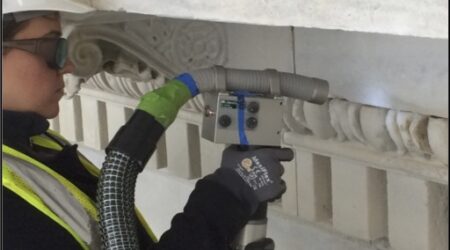
Precise Application: Chemical consolidation demands adherence to exact specifications developed under controlled laboratory conditions. Our teams have mastered the complex coordination required across multi-level scaffolding systems, developing communication techniques including specialized signals and environmental monitoring protocols.
Environmental Control: Maintaining optimal temperature and humidity conditions during treatment application presents unique challenges on occupied historic buildings. EverGreene has pioneered year-round consolidation techniques that maintain treatment efficacy regardless of seasonal conditions.
EverGreene’s track record on the nation’s most significant government buildings demonstrates our unique capability to implement these advanced treatments while maintaining the highest standards of safety, quality, and historical authenticity. For historic buildings facing stone deterioration challenges, EverGreene’s chemical consolidation expertise offers scientifically-proven solutions implemented at a scale and quality level unmatched in the conservation field.