Planting Fields Estate
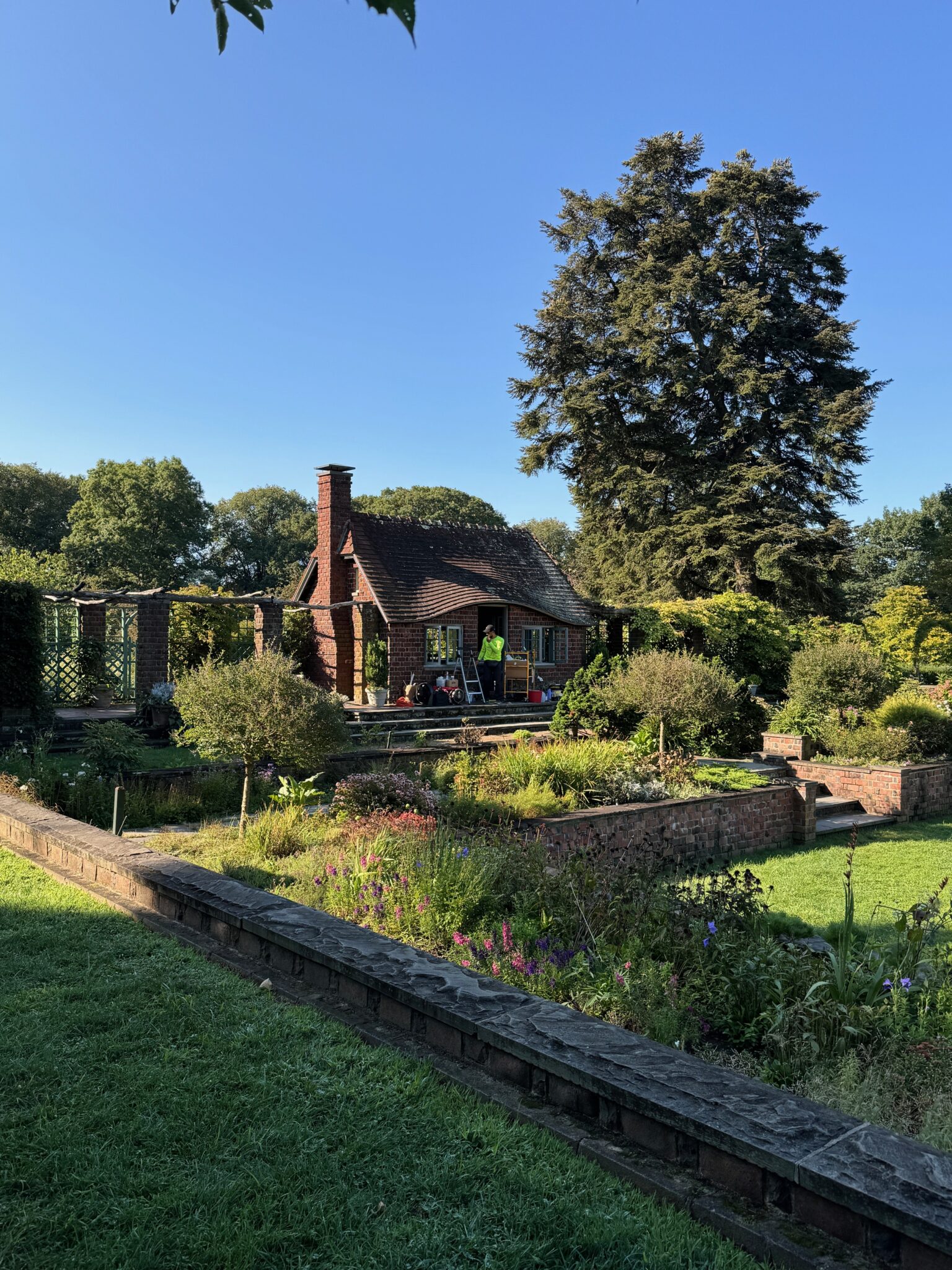
At the close of the Gilded Age, Planting Fields became the residence of William Robertson Coe and his wife Mary “Mai” Huttleston Rogers Coe, daughter of Standard Oil principal Henry H. Rogers. The estate encompasses the 67-room Coe Hall, extensive gardens, greenhouses, woodland paths, and exceptional plant collections, with landscapes designed by Guy Lowell, A. R. Sargent, and the Olmsted Brothers. It also houses an herbarium with more than 10,000 pressed specimens. Today, Planting Fields Foundation works in partnership with New York State Office of Parks, Recreation, and Historic Preservation to steward the Planting Fields Estate.
EverGreene restored two significant historic features at Planting Fields, each representing a distinct era of artistry and craftsmanship:
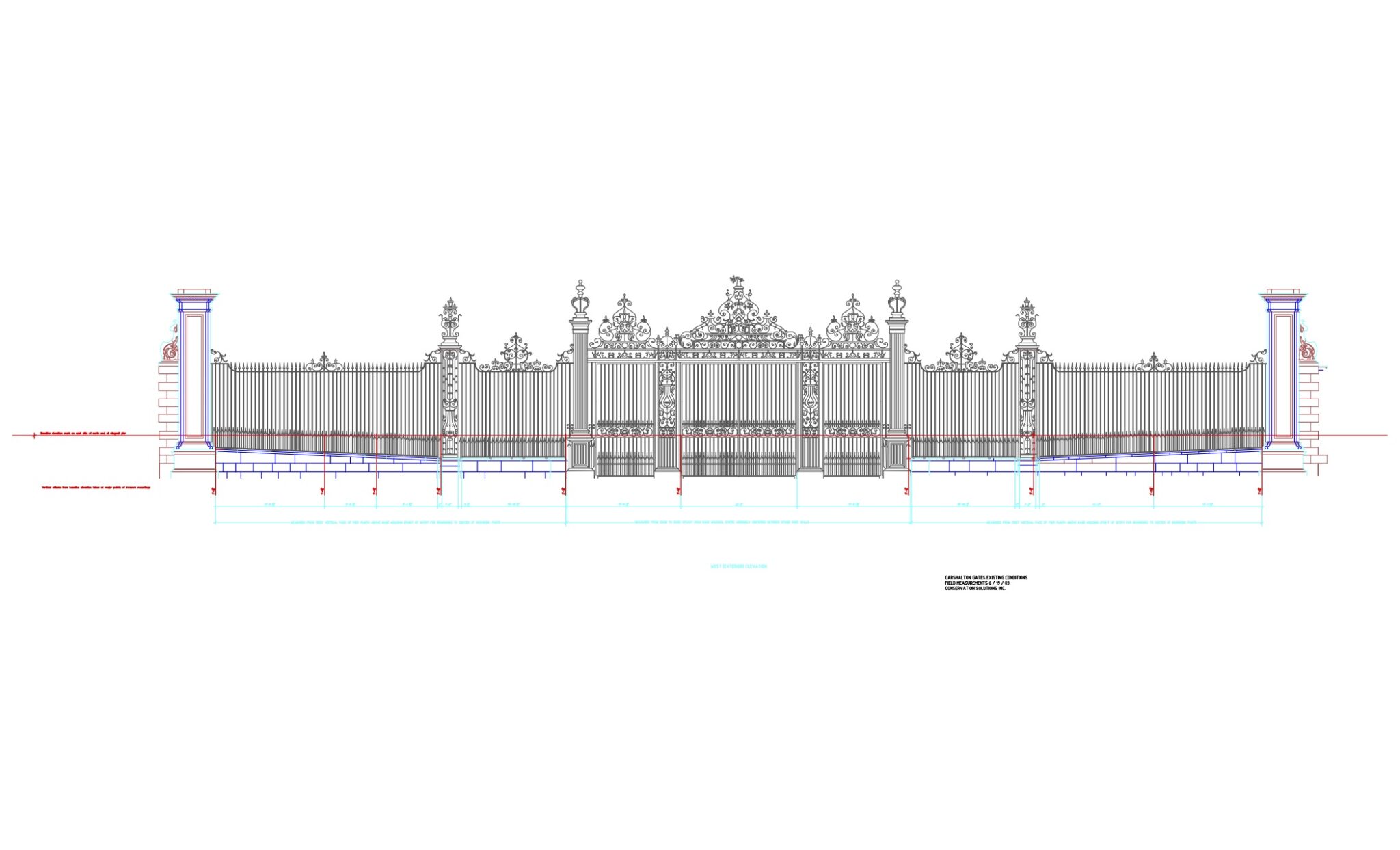
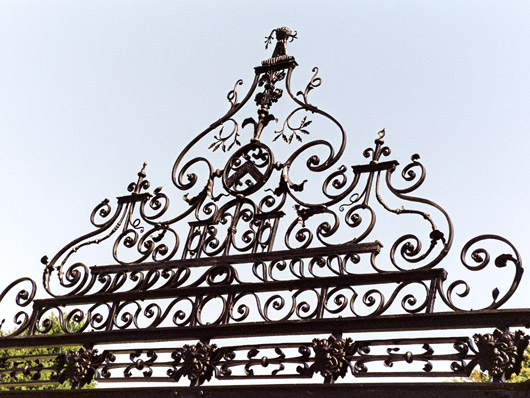
The Carshalton Gates—magnificent examples of early 18th-century English wrought ironwork—were originally crafted in 1711 and later installed on the estate in 1926. EverGreene conservators documented the gates in detail, conducted paint analysis to identify remnants of the original finish, and assessed every element for corrosion and structural loss. Skilled artisans carried out in-kind repairs, unit replacements, and synthetic fills, carefully preserving the gates’ traditional hot-forged construction and mortise-and-tenon assembly. After restoration, the gates were cleaned, metallized, coated with a high-performance paint system, and reinstalled atop their newly restored stone base.
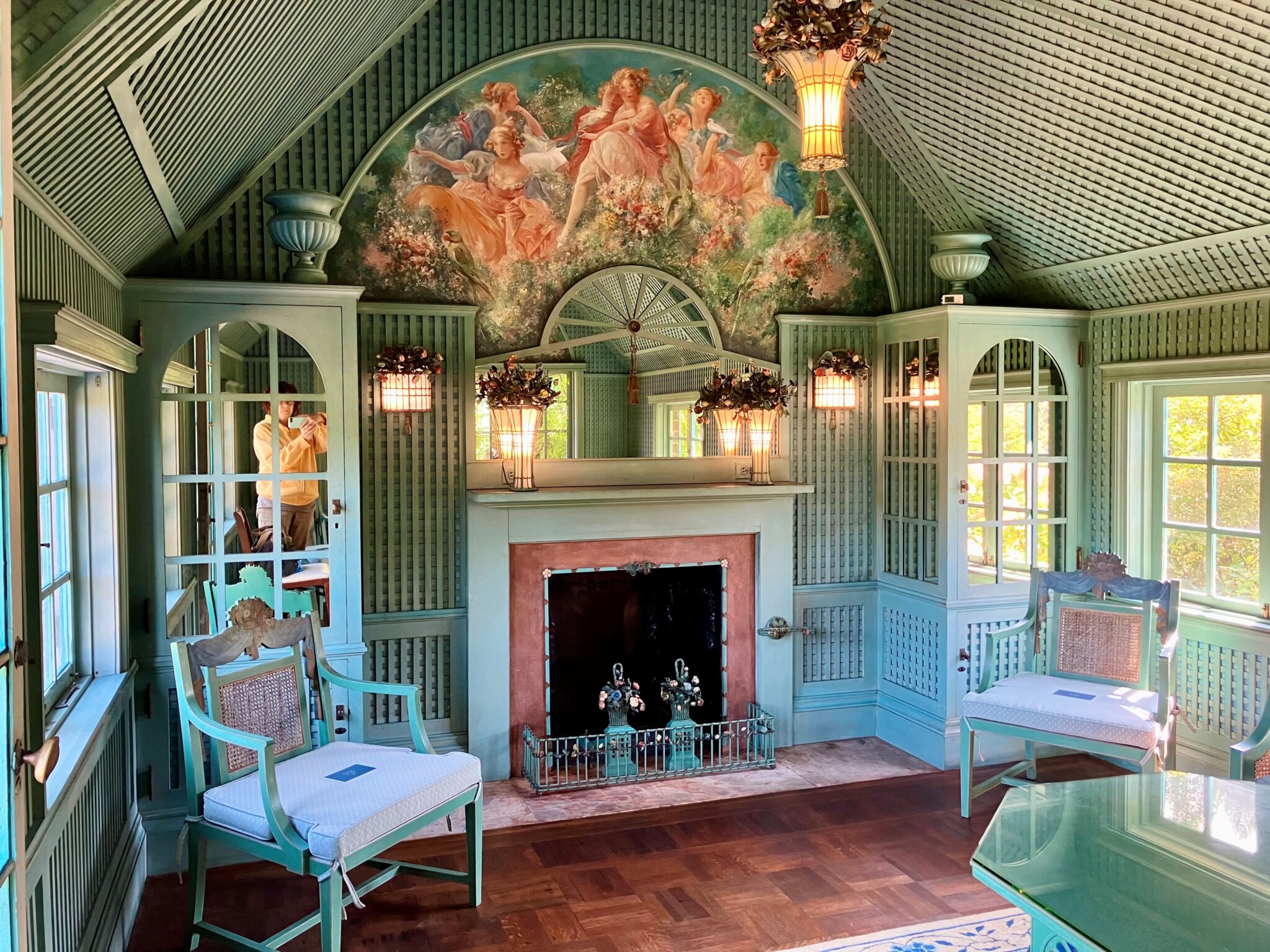
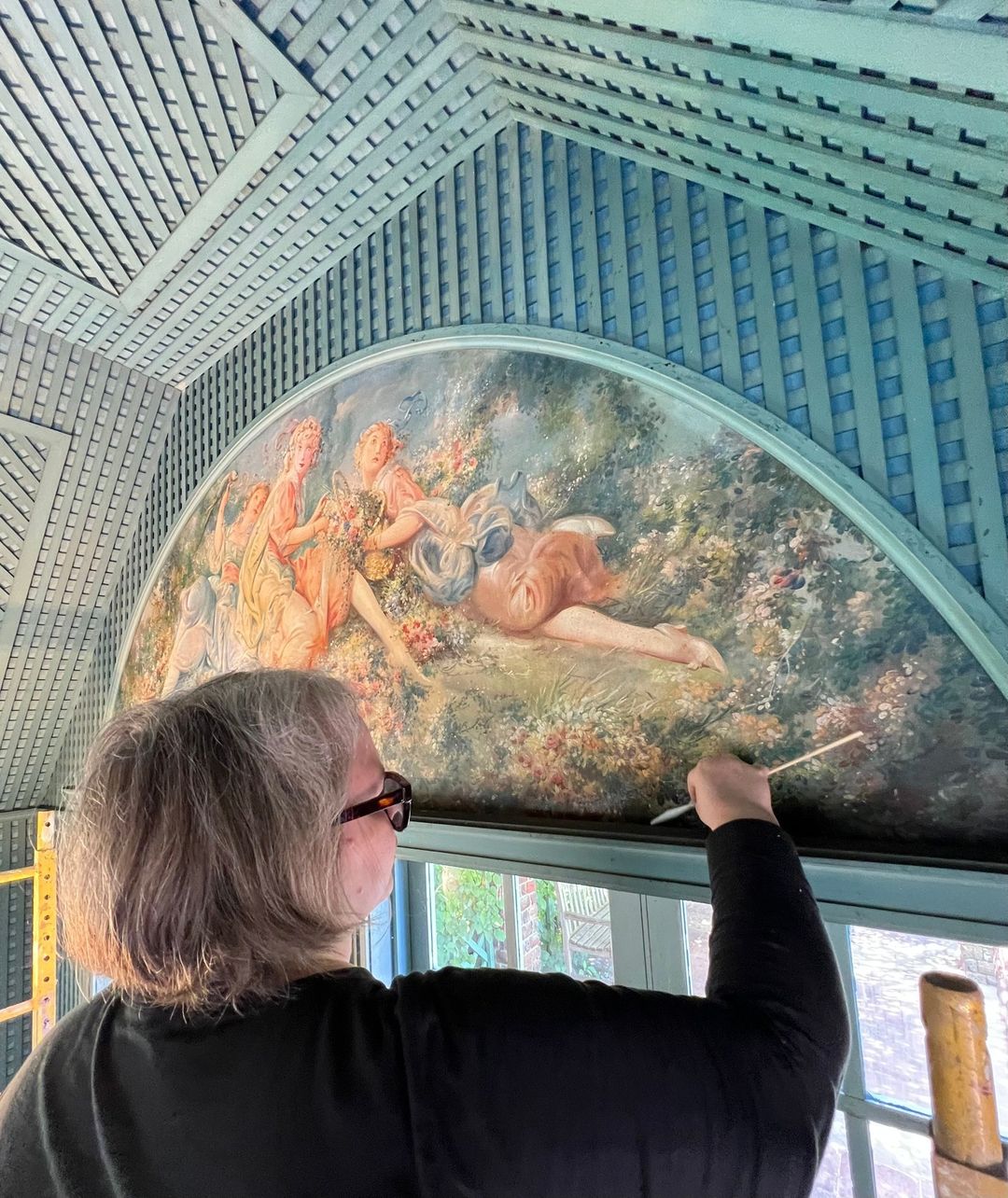
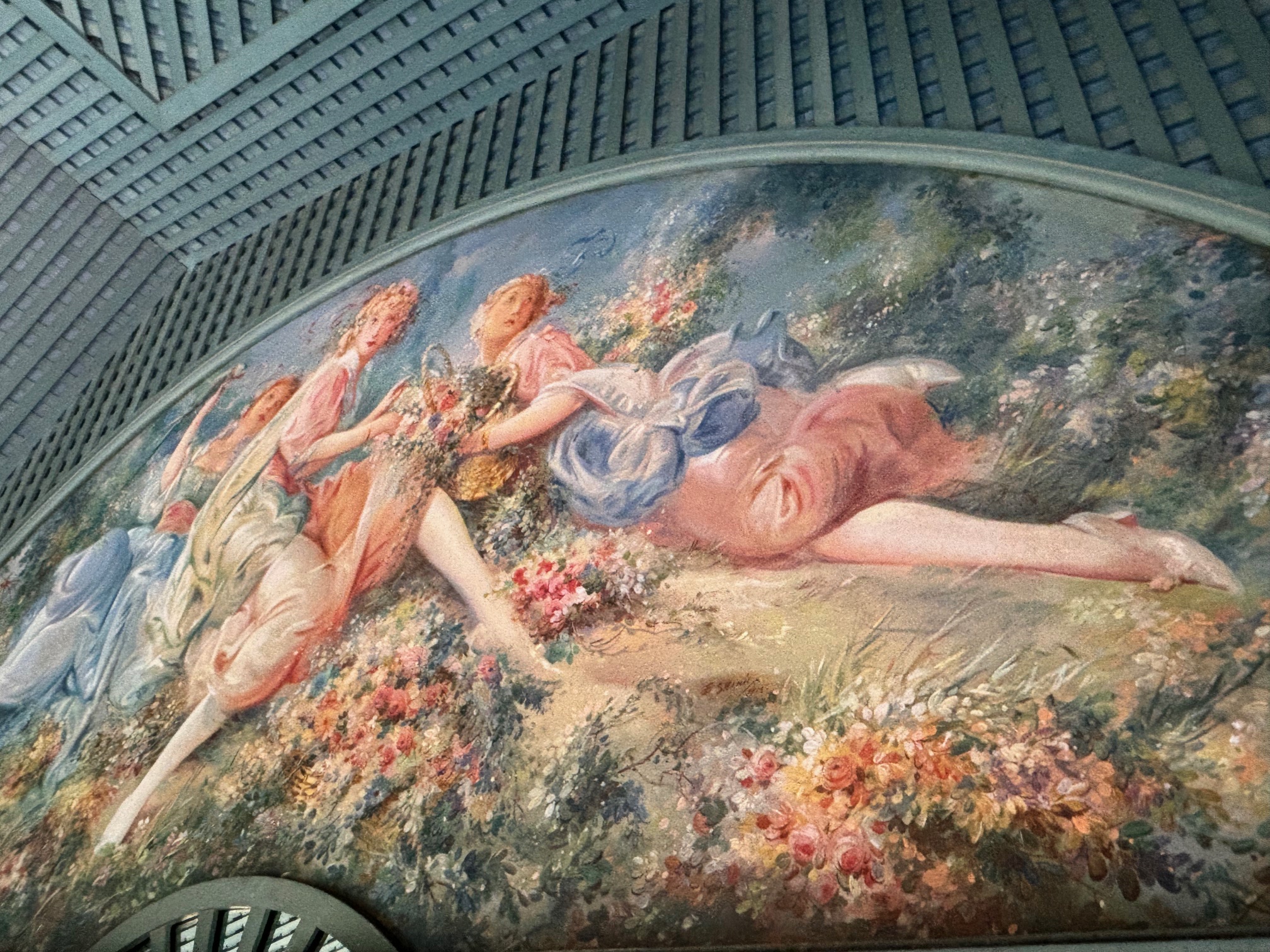
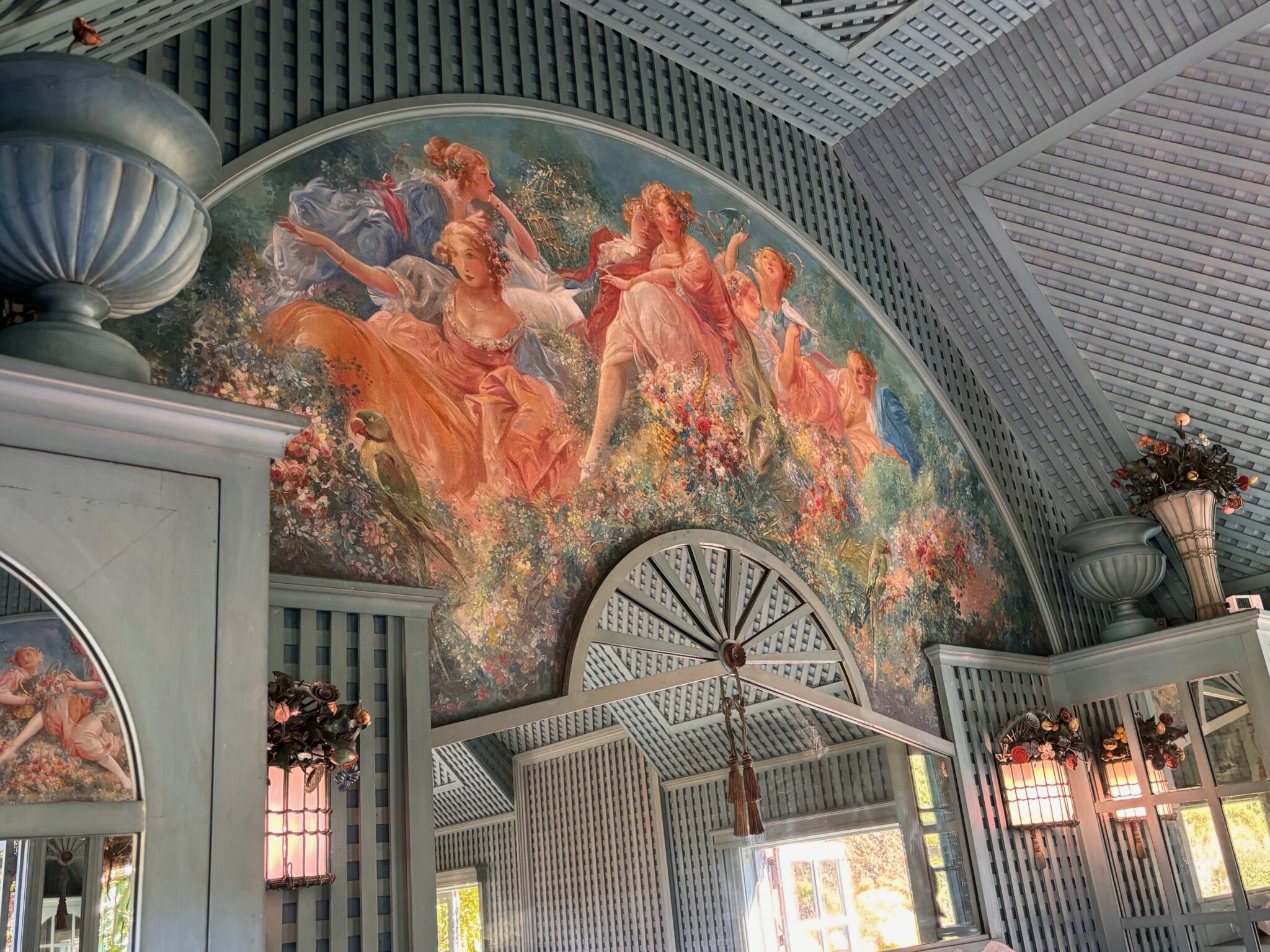
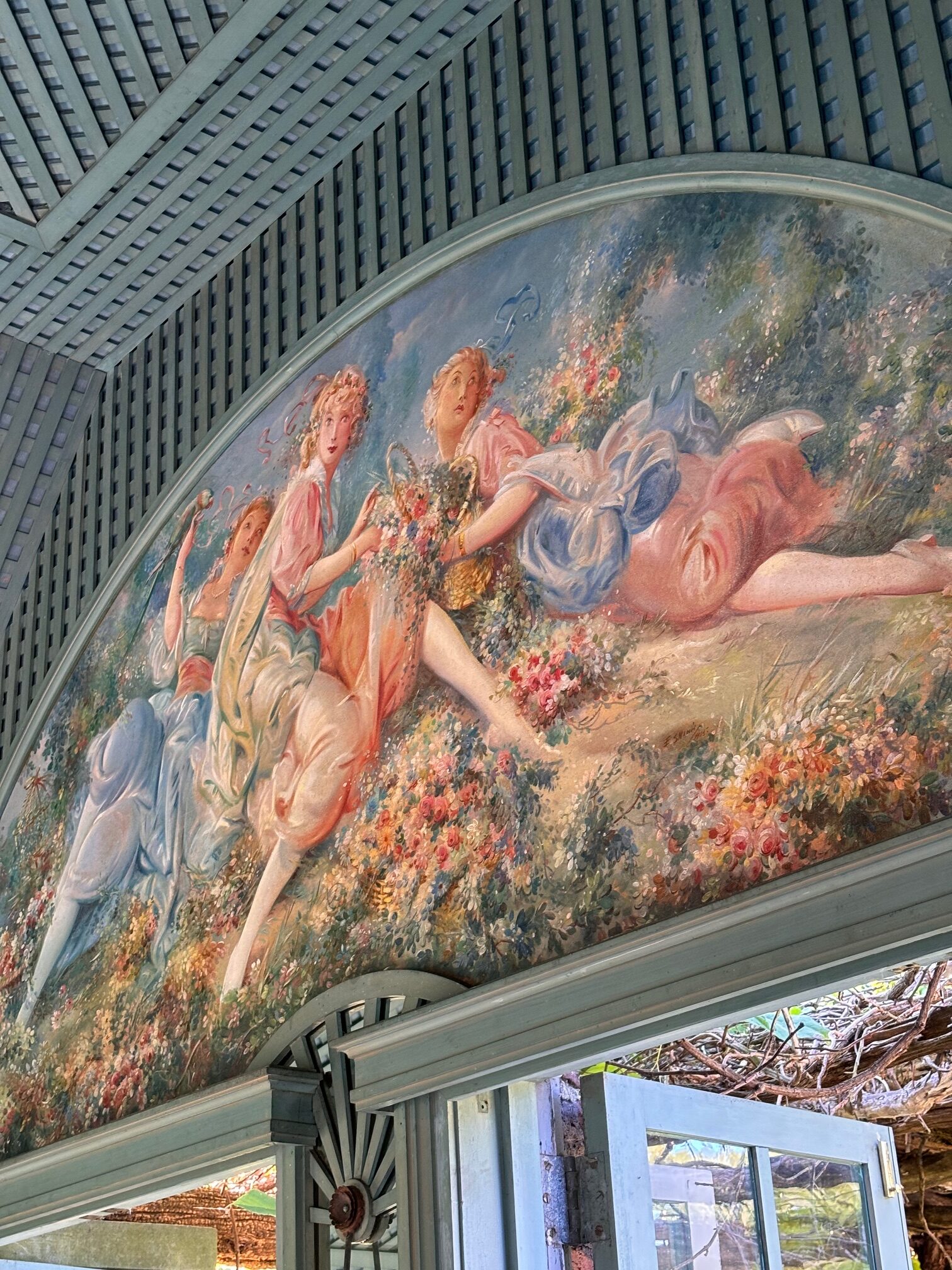
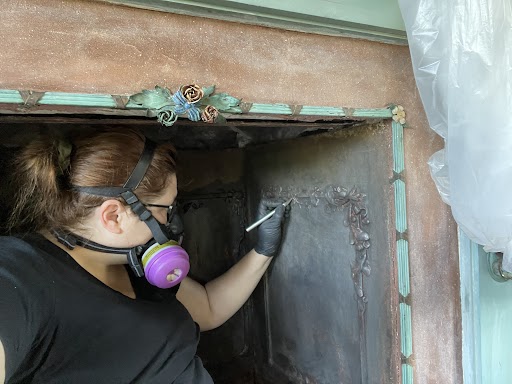
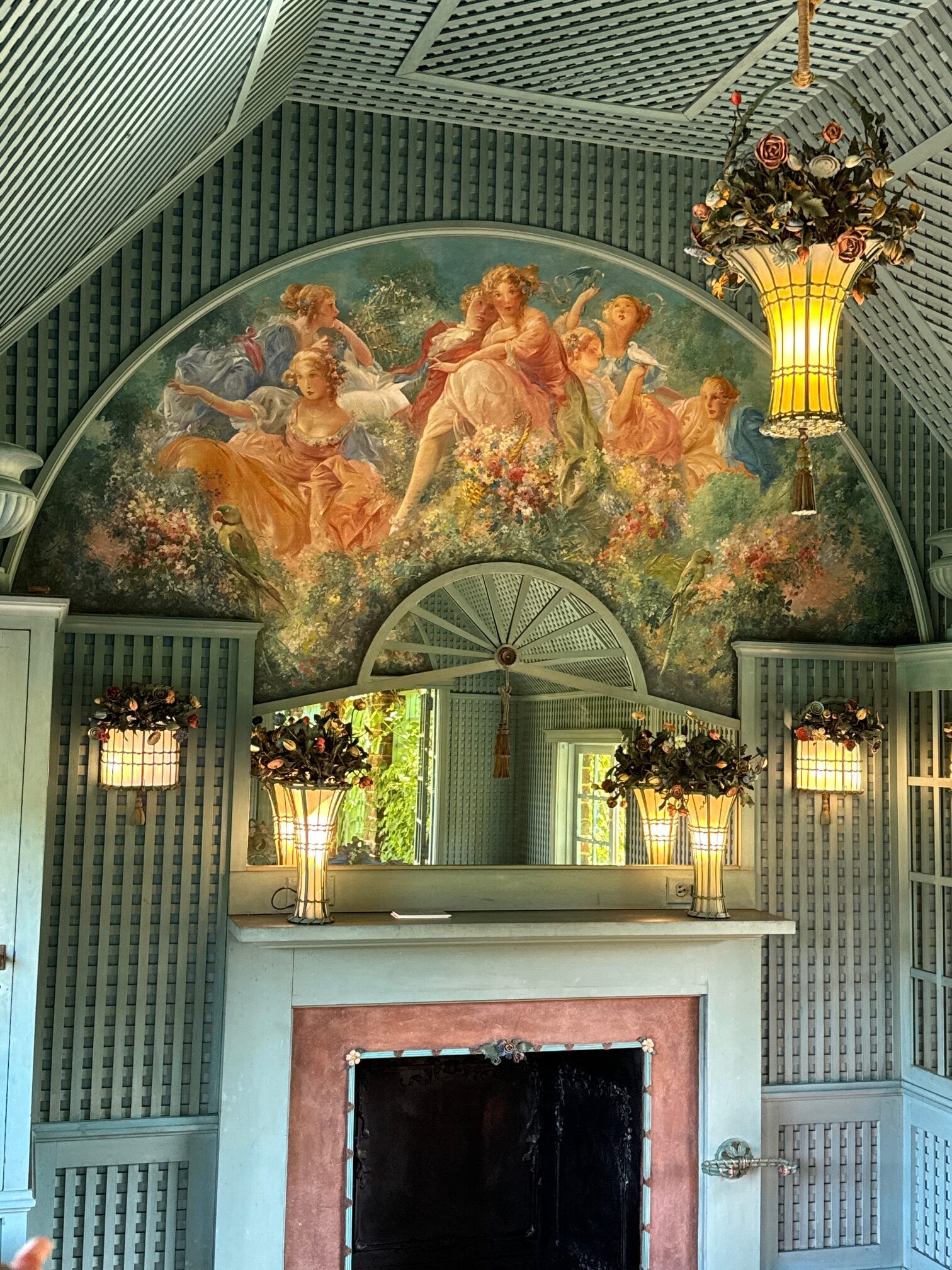
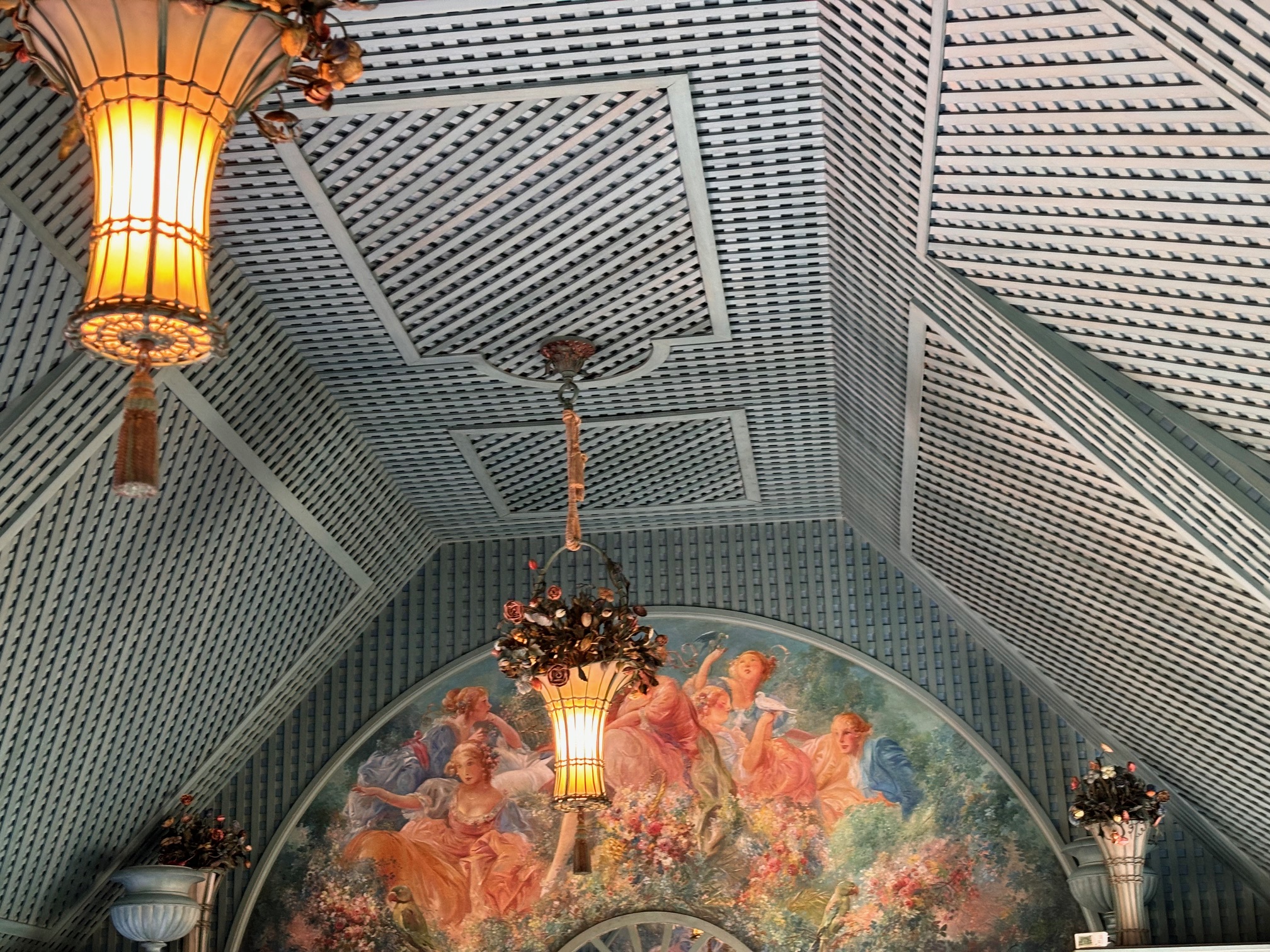
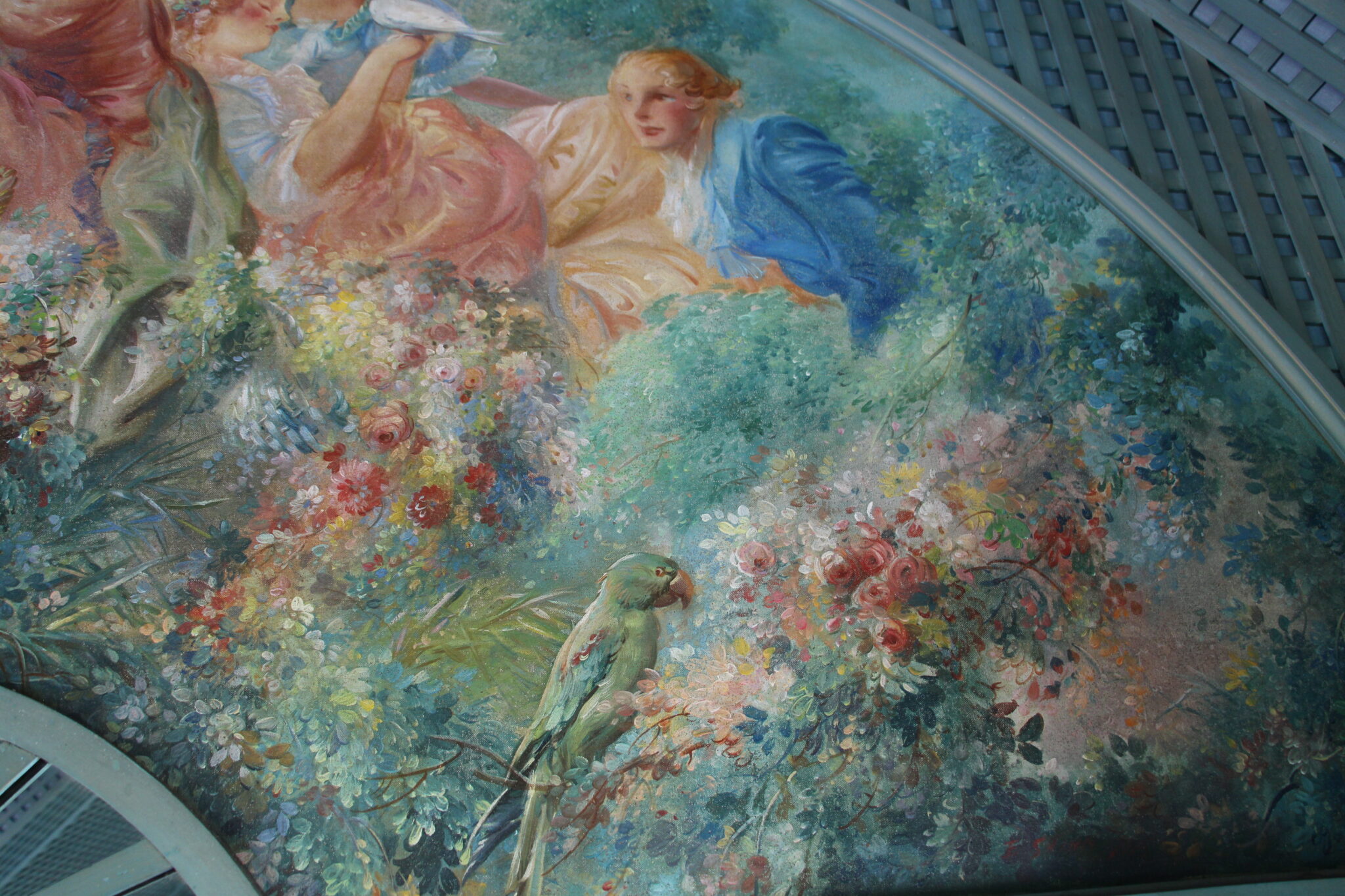
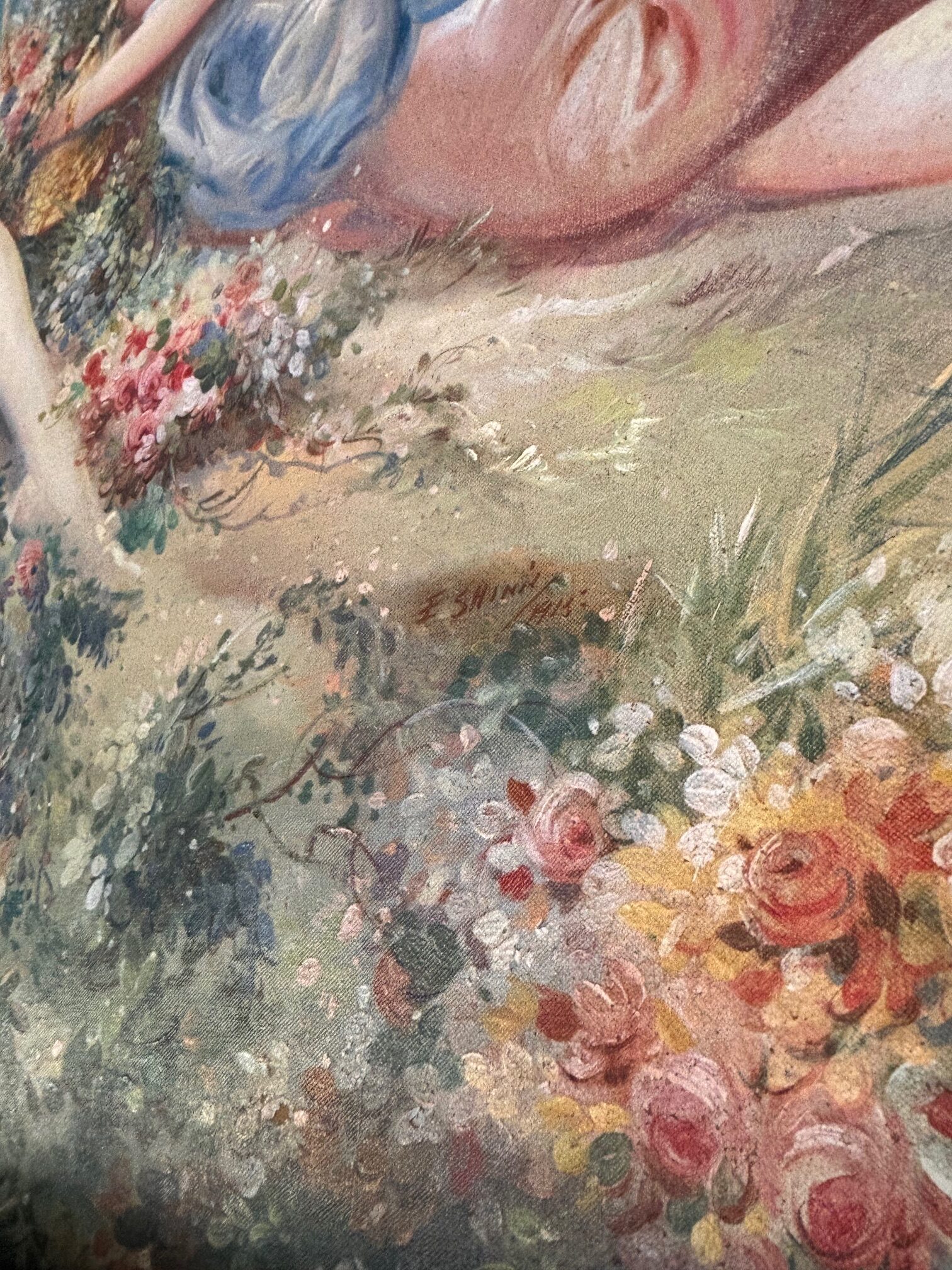
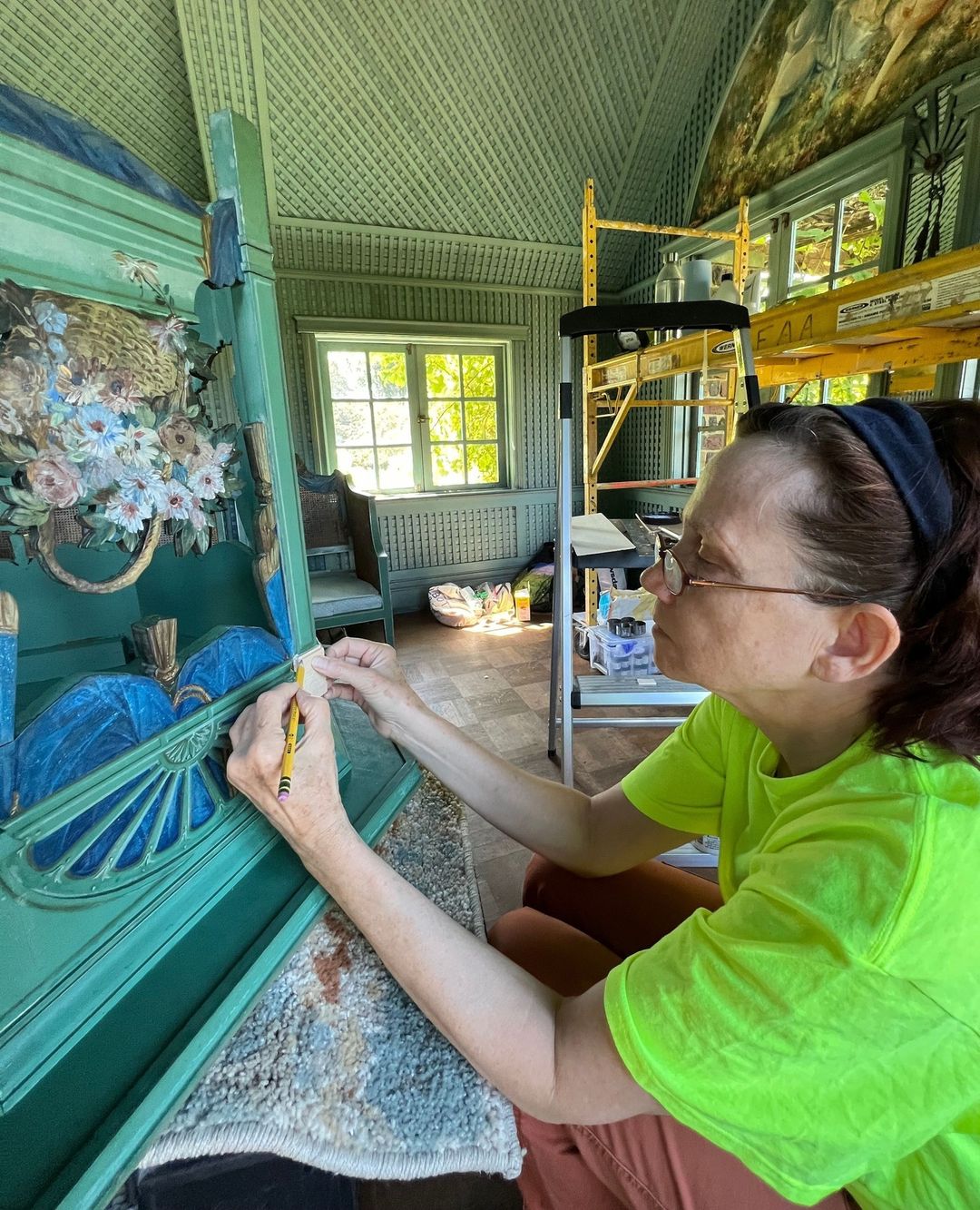
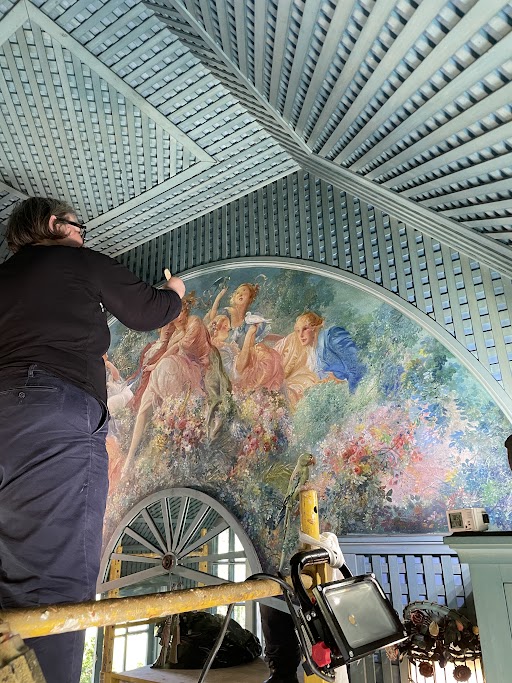
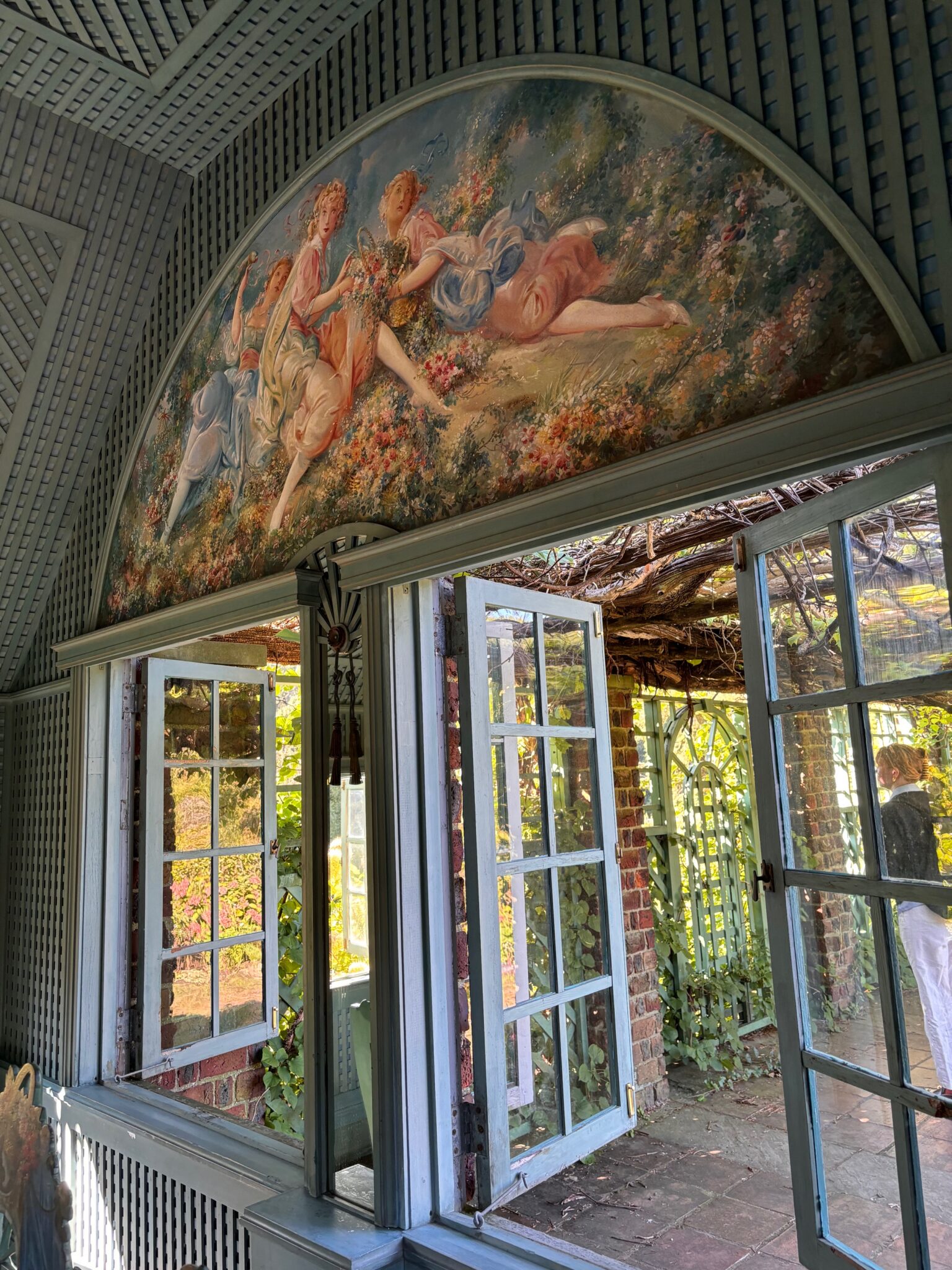
The Tea House, originally designed and decorated by American artist Everett Shinn in 1915 the Tea House is inspired by the pioneering interior designer Elsie de Wolfe. It is rich in handcrafted details—latticework, custom lighting, painted metalwork, and a suite of whimsical hand-painted furniture—all created to complement Shinn’s pastoral lunette murals. EverGreene carefully cleaned and conserved these murals, restored the furniture and decorative finishes, and refreshed the lighting, metalwork, flooring, latticework, fireplace, and stone hearth. The result is a revived interior that honors the playfulness, craftsmanship, and early 20th-century design vision that make the Tea House a signature feature of Planting Fields.