Swiss Embassy Sculptures
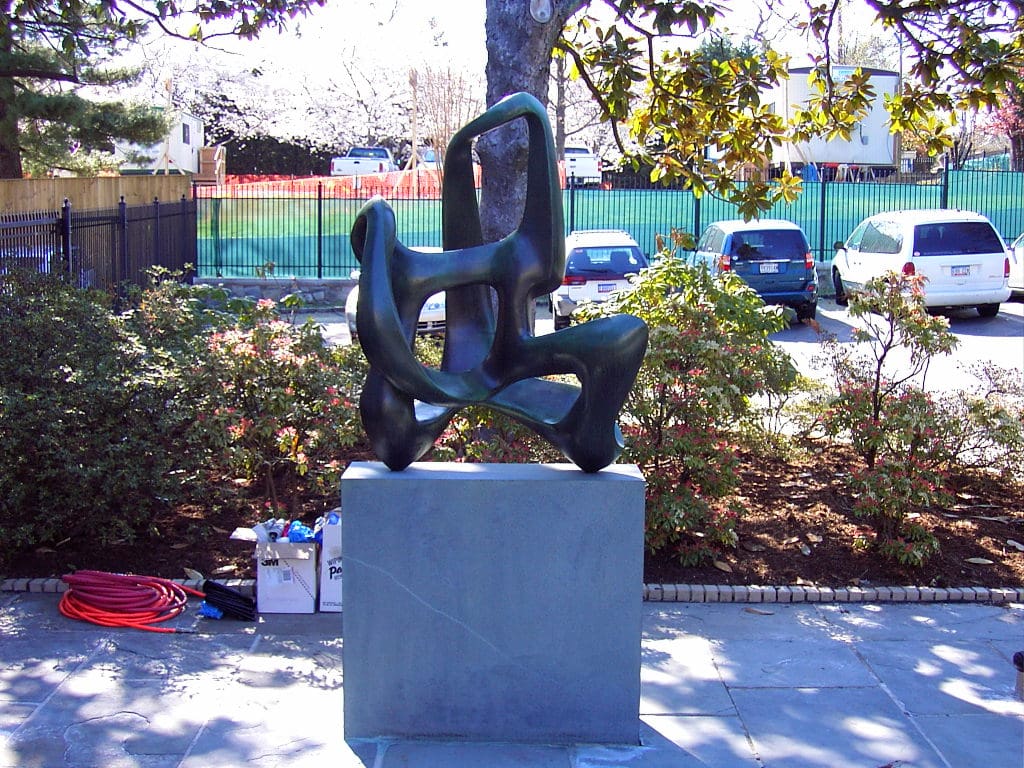
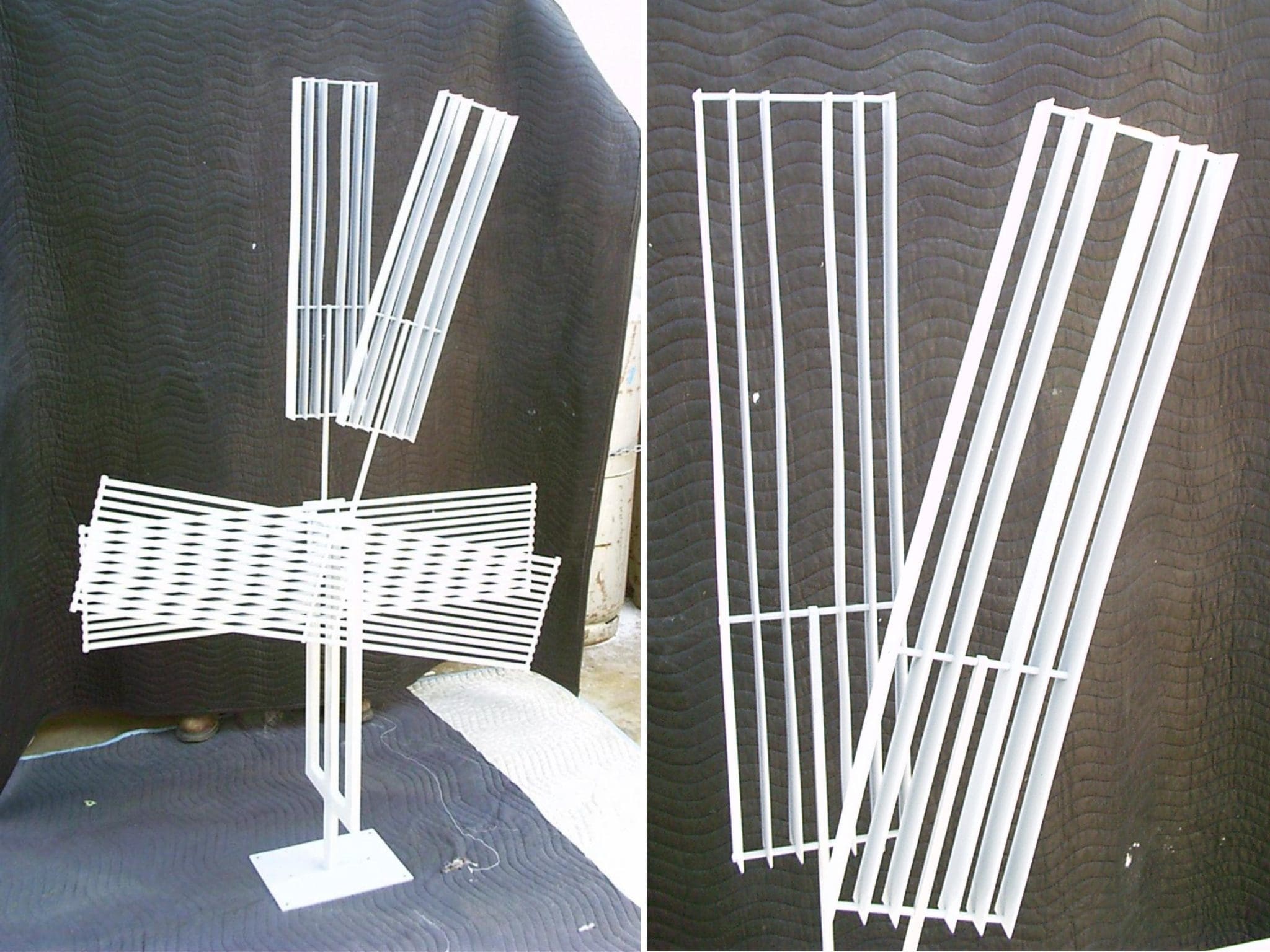
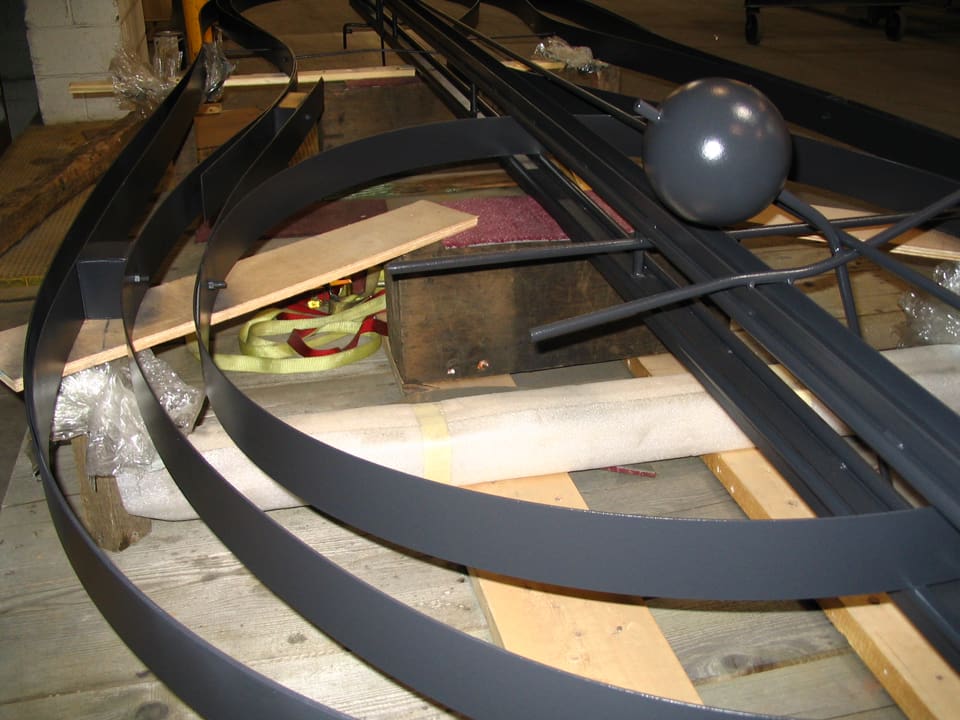
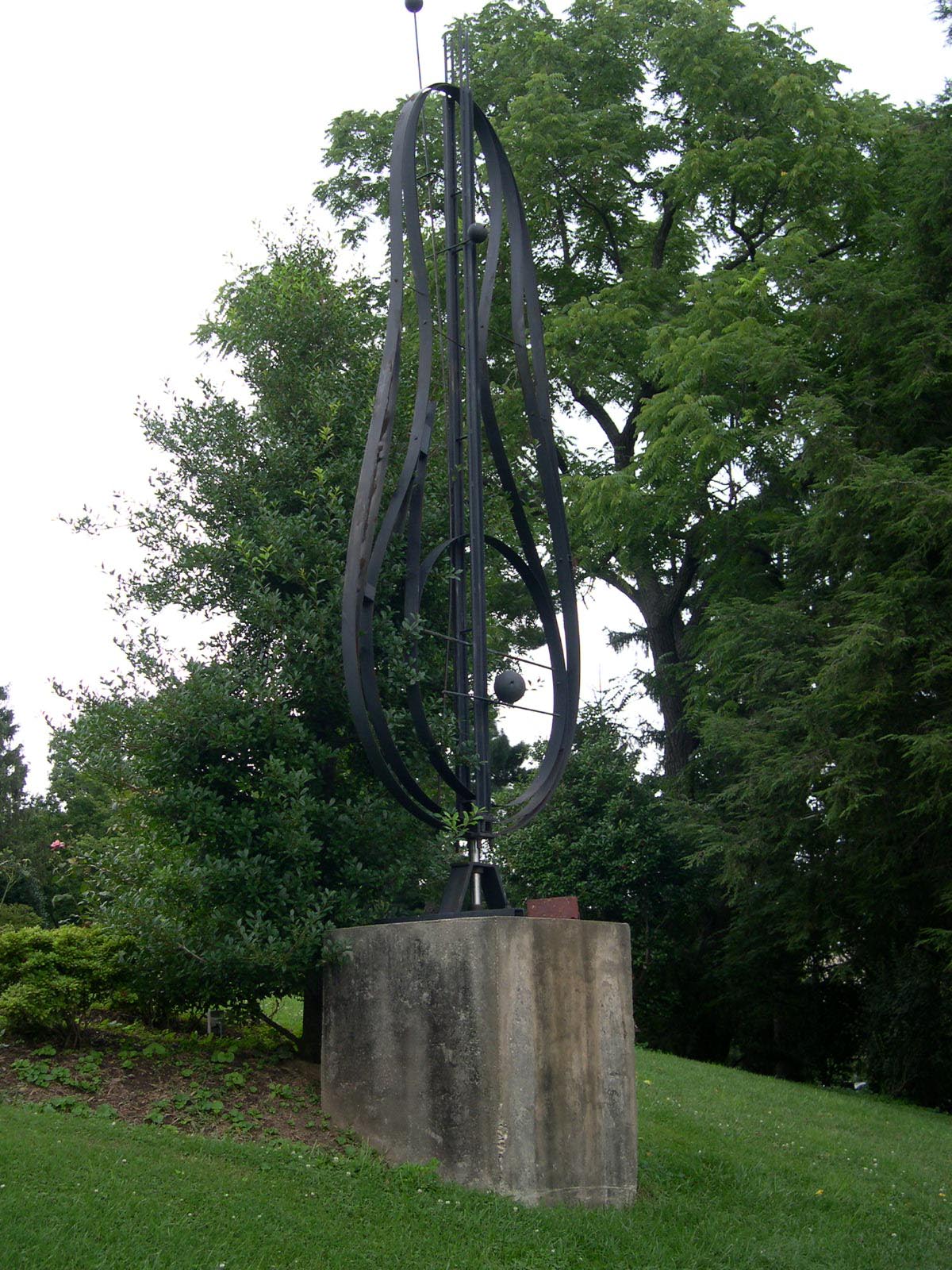
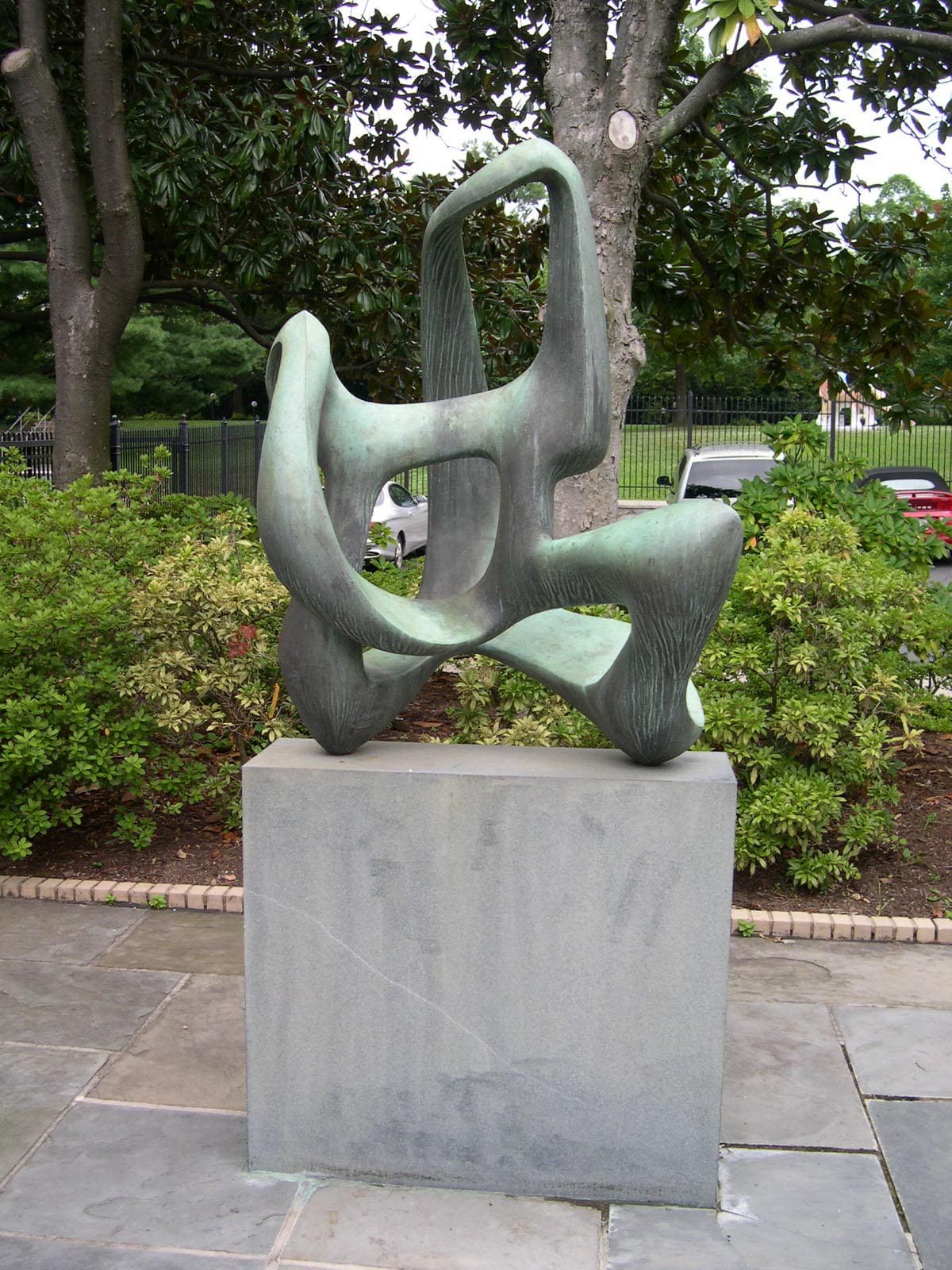
The Swiss Embassy complex was established in the 1940s in the Woodley Park neighborhood of Washington, D.C., as the operational hub for the Swiss legation. In the 1950s, the property was elevated to embassy status, at which time a new chancery was constructed and the original 1940s building was converted into the ambassador’s residence. Over the succeeding decades numerous modern sculptures by Swiss artists were installed both within the buildings and throughout the grounds. The modern designs reflect 20th century abstract ideas by Swiss sculptors. These include biomorphic forms in Eurythmie by André Ramseyer (1955, bronze with stone base), kinetic art in Windpendel by Werner Witschi (steel), and mechanical and Surrealist references in Orbit by Walter Linck (1972, steel).
In the early 2000s plans were made to demolish and replace the 1940s residence, as well as perform major reconstruction of the grounds. As a part of that work, EverGreene was contracted to remove the sculptures where necessary, perform conservation treatments on all three works, and store the deinstalled works in preparation for their transport back to Switzerland.
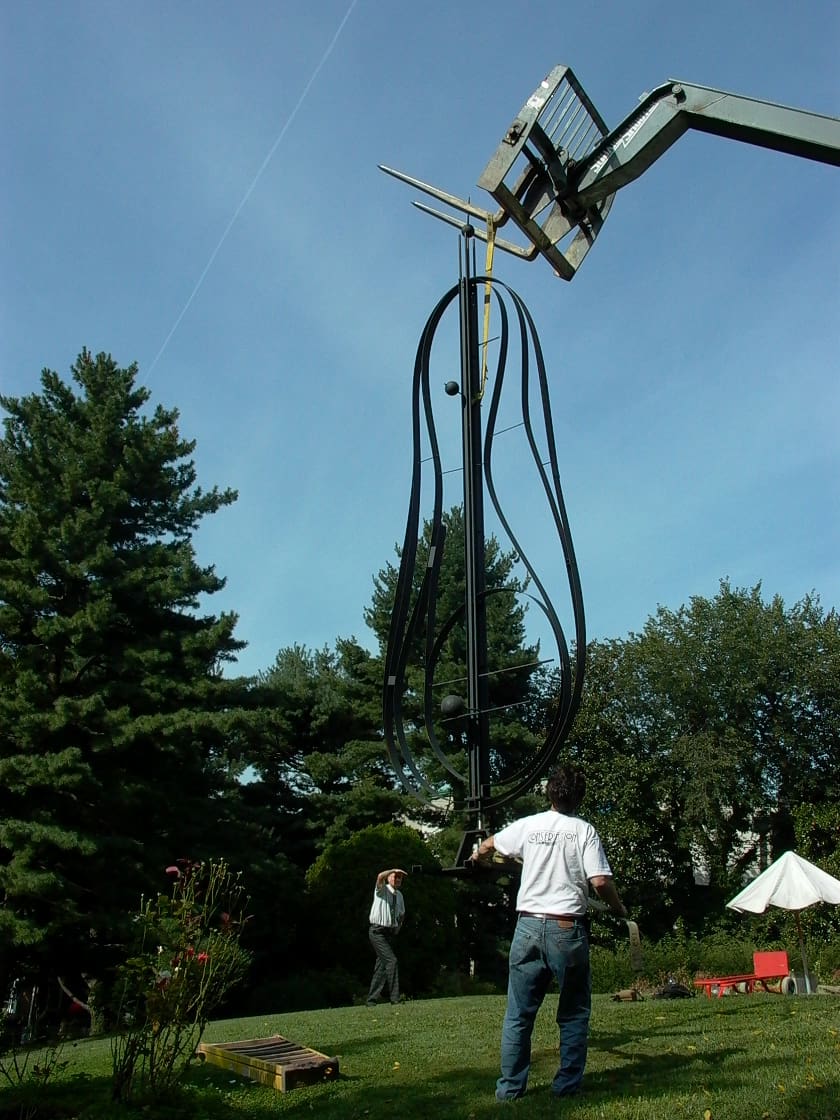
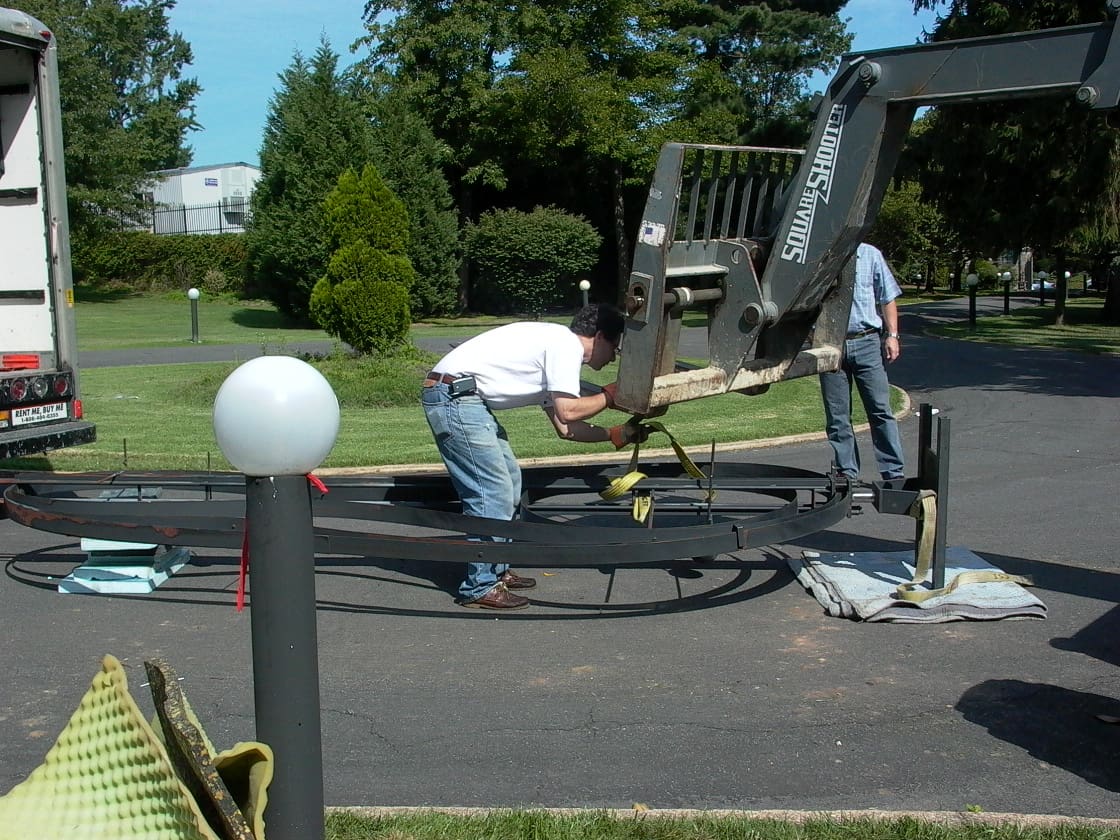
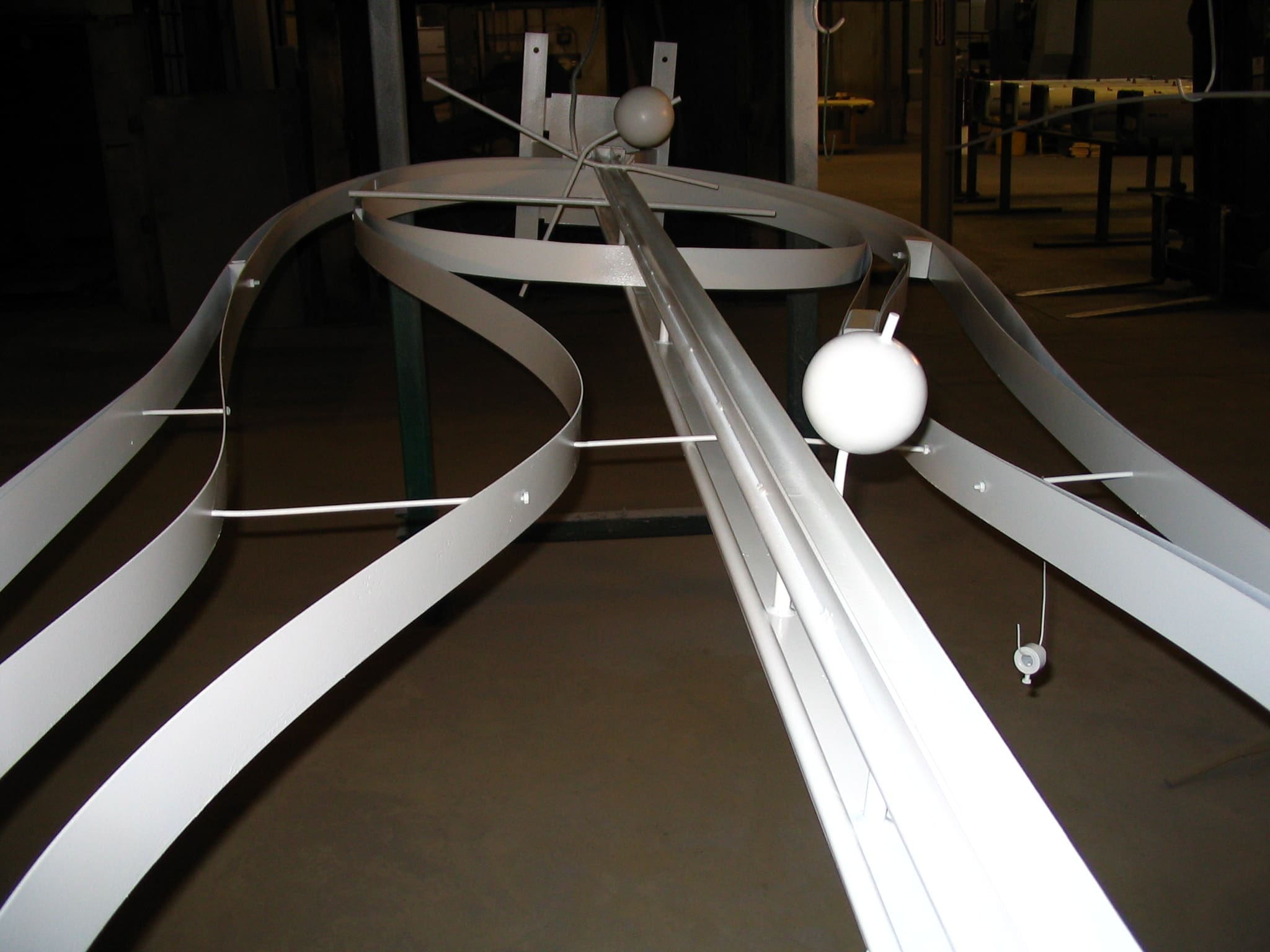
EverGreene began with the creation of removal plans for Orbit and Windpendel, which were transported to EverGreene’s studio for treatment. Both artworks were carefully rigged, elements disassembled and cataloged as necessary, and installed in an enclosed box truck. Each sculpture was stabilized with high-density foam padding and secured with ratchet straps for transport. Treatments included:
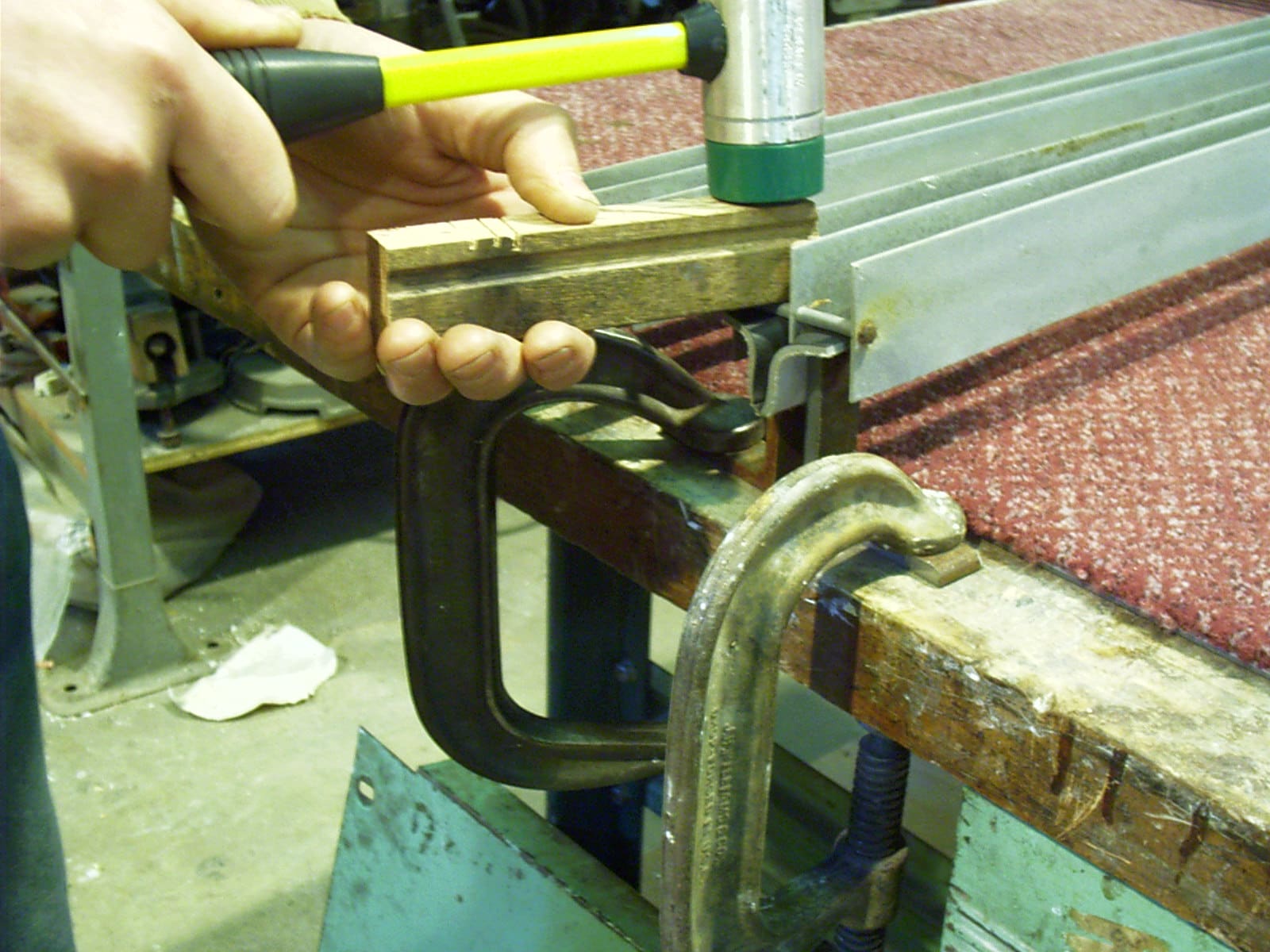
- Repair of deformities and detached elements where applicable
- Cleaning of surface soiling
- Removal of failed coatings
- Treatment of corrosion
- Application of a high-performance color, matching the original appearance
- Re-crating of the objects in advance of transport to Switzerland
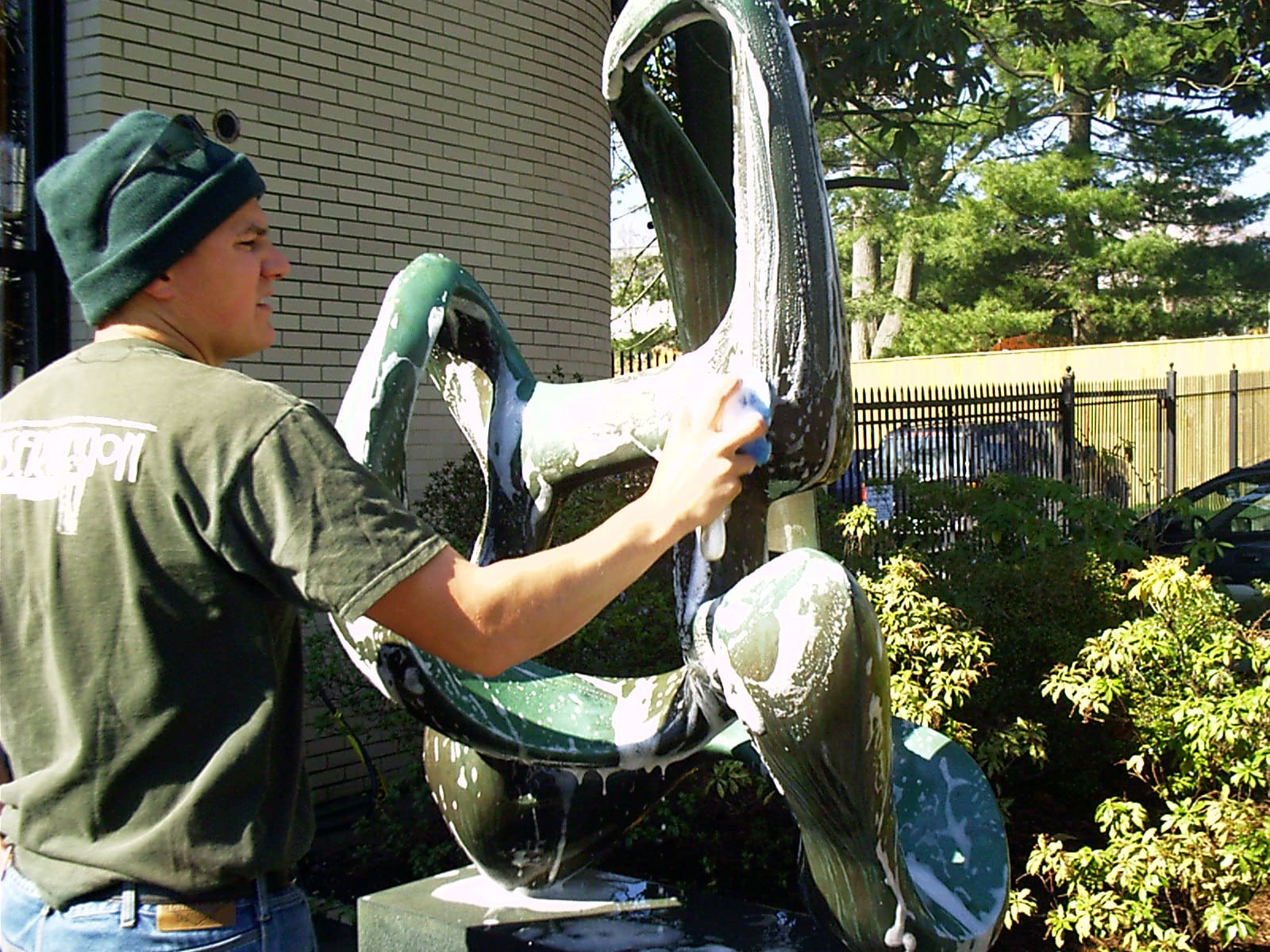
Eurythmie was left on-site for treatment, as it did not interfere with construction plans. Treatments included:
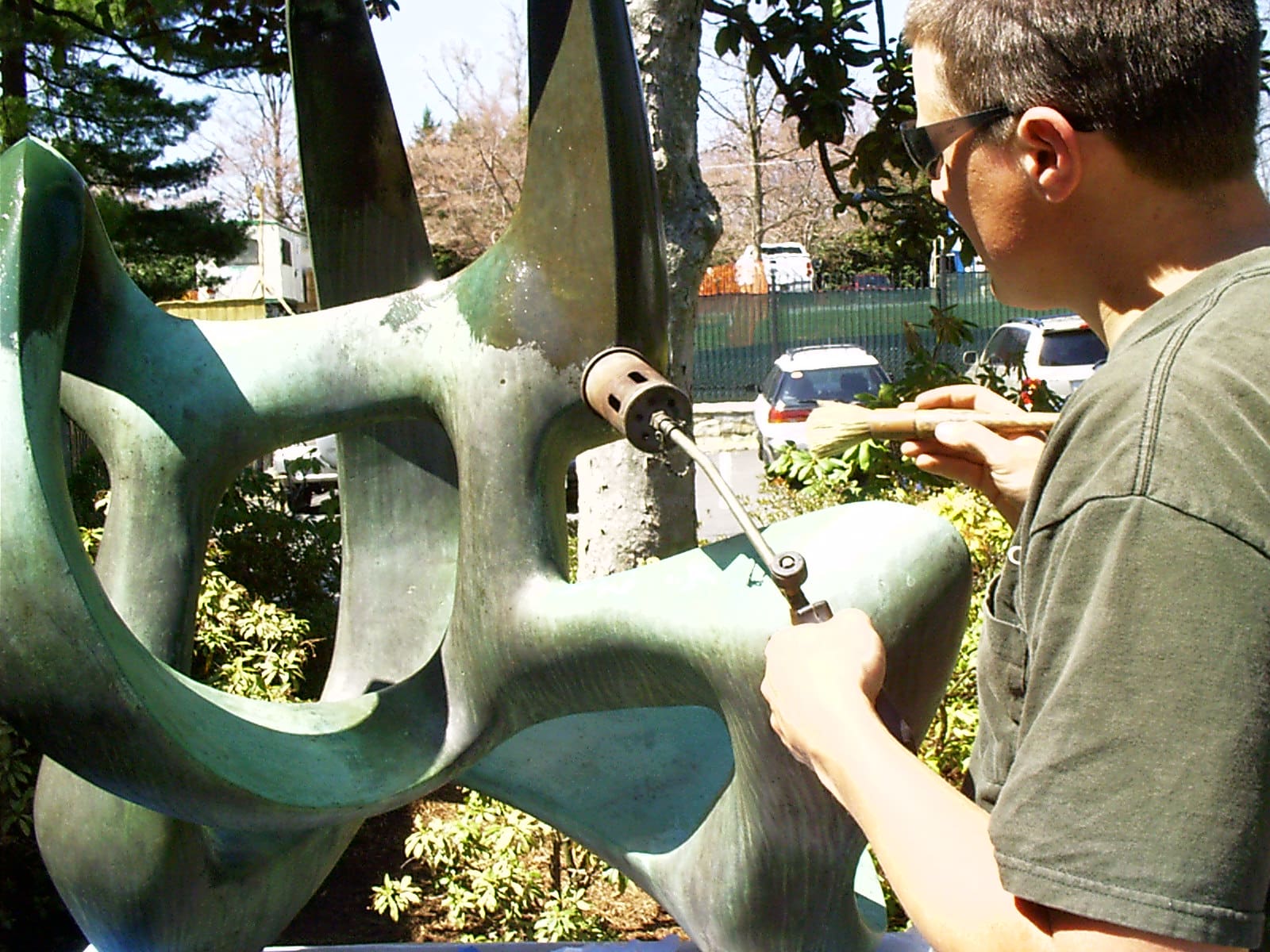
- Cleaning of bronze surface soiling and loose corrosion product
- Patination of the surface which retained the existing patina while minimizing effects of staining and streaking
- Application of a protective barrier coating, including corrosion inhibitors and UV protection
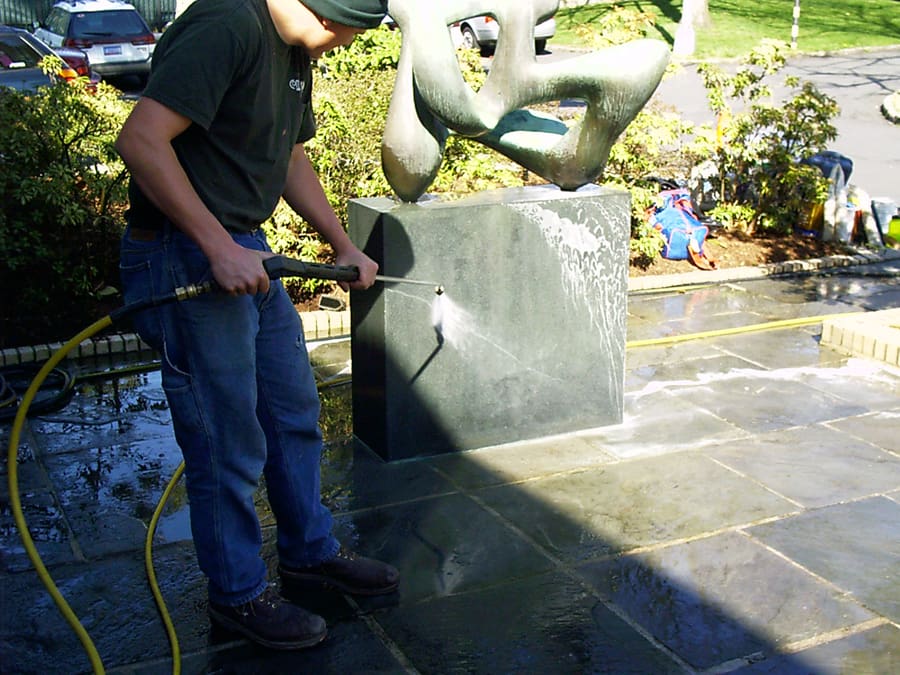
- Cleaning of stone surface soiling, using detergents, high pressure water, and isolated low micro-air abrasion
- Re-crating of the objects in advance of transport to Switzerland