


On November 15, 1976, the Chicago Cultural Center was designated a Chicago Landmark, recognizing the architectural and artistic significance of one of the city’s most extraordinary public buildings. Fifty years later, it remains a testament to the craftsmanship, creativity, and civic ambition that shaped Chicago at the turn of the 20th century.
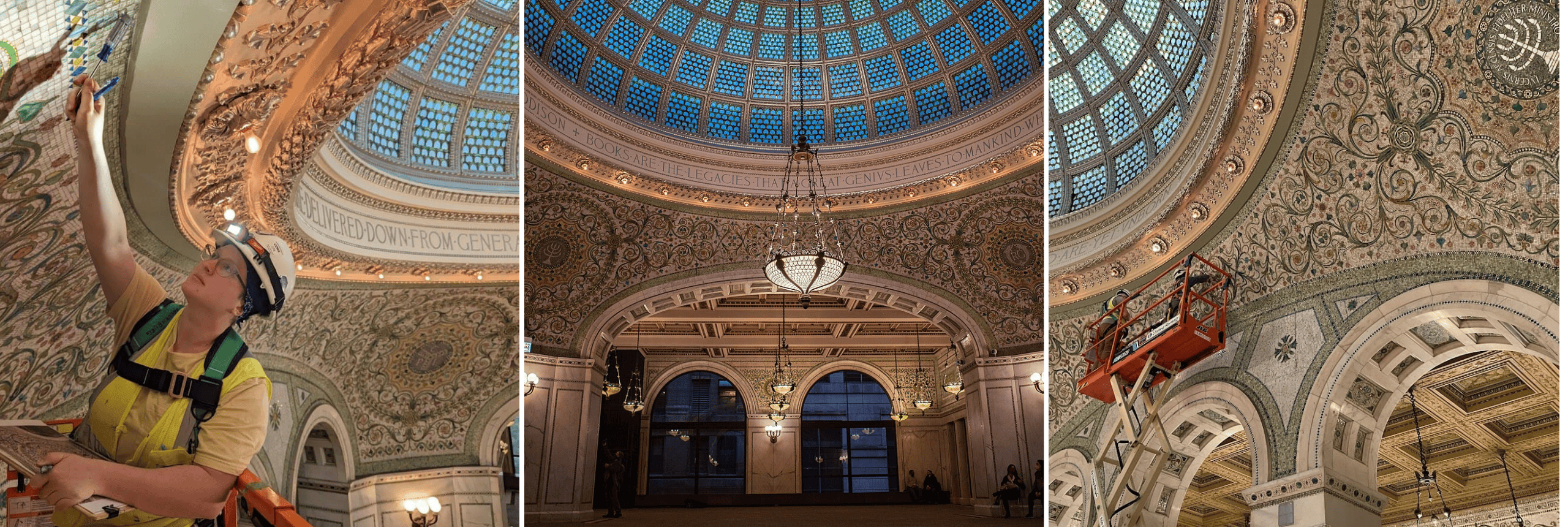
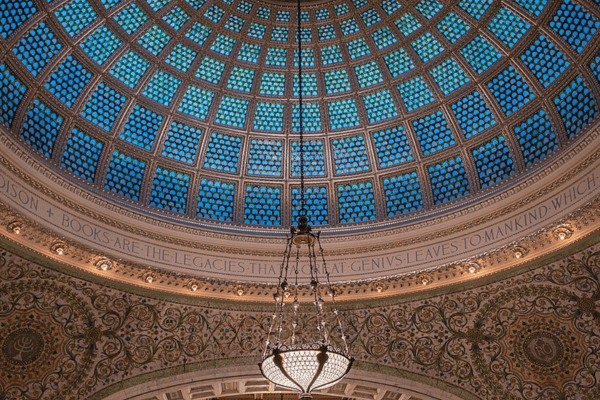
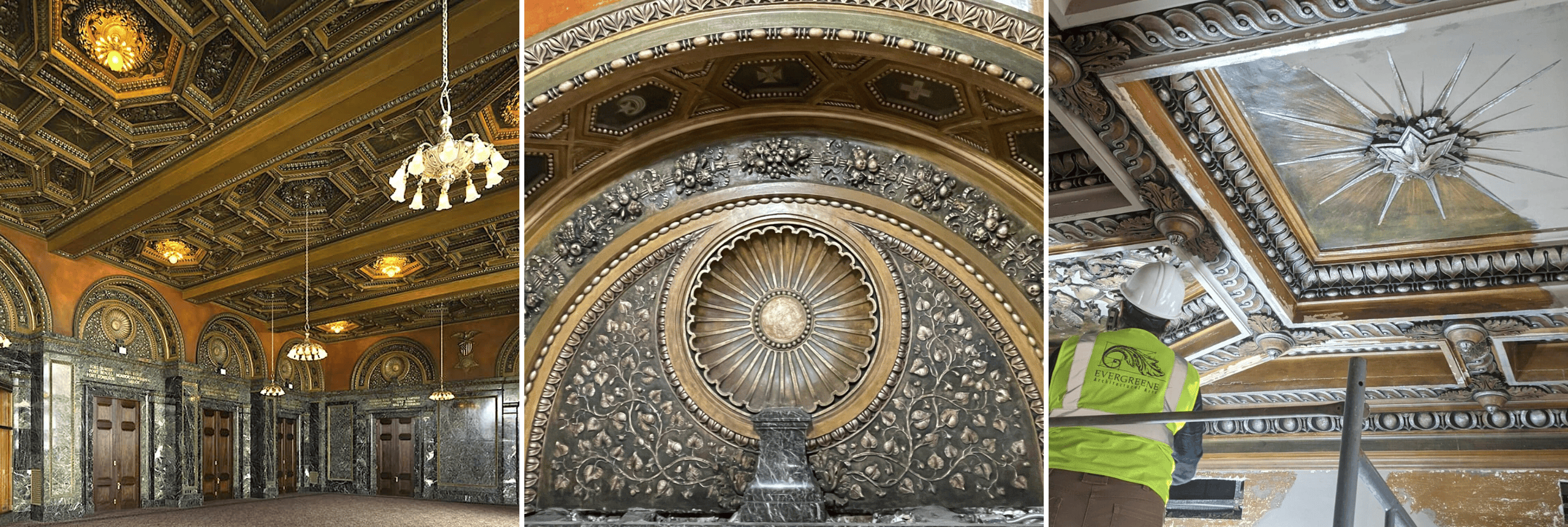
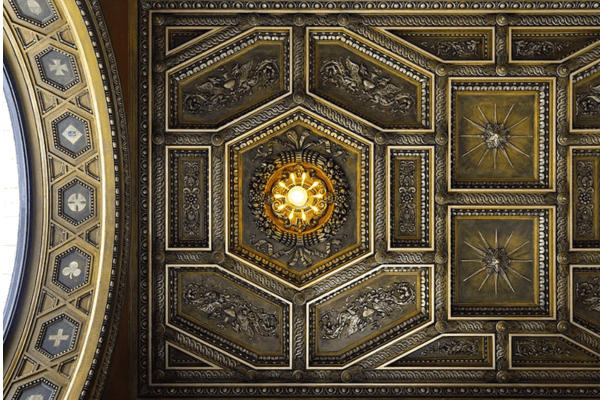
Step inside the Chicago Cultural Center which opened in 1897 as Chicago’s first central public library and memorial hall for Civil War veterans. Elaborate glass mosaics, ornamental plasterwork, gilded finishes, richly colored marble, and magnificent stained-glass domes transform its interiors into a showcase of artistry. Among its most celebrated spaces are the Grand Army of the Republic Rooms and Preston Bradley Hall, home to one of the world’s largest Tiffany stained-glass domes.
More than a century later, preserving these artworks and historic materials requires an equally specialized combination of historical research, conservation science, and traditional craftsmanship. EverGreene has contributed to multiple preservation initiatives at the Chicago Cultural Center, from uncovering original decorative finishes to investigating and conserving intricate glass mosaics.
Grand Army of the Republic Rooms
EverGreene’s restoration of the Grand Army of the Republic Rooms included historic finishes investigations, the removal of overpaint, and the conservation and recreation of original decorative schemes. The work restored aluminum leaf gilded ornament and historic plaster finishes, helping reveal the richness of these remarkable interiors.
Preston Bradley Hall & Tiffany Mosaics
More recently, EverGreene investigated and conserved the Cultural Center’s historic glass mosaics, including those in Preston Bradley Hall. Through condition assessments, material investigations, and specialized treatment testing, conservators have developed methods to stabilize deteriorating mosaic panels and guide future conservation.
The Chicago Cultural Center’s designation as a Chicago Landmark 50 years ago recognized the building’s enduring importance as a place of public gathering, cultural expression, and artistic achievement. Its continued preservation is a reminder that historic landmarks require ongoing care, specialized expertise, and a commitment to the craftsmanship that brought them into being.