Ariel Rios Federal Building
The Ariel Rios Federal North and South Buildings are located in the historic Federal Triangle area of downtown Washington D.C. They were designed by Delano & Aldrich, a New York architecture firm who designed Willard Straight Hall at Cornell University, the Ferry Building on Ellis Island, and the iconic Rockefeller estate Kykuit.
The buildings are comprised of two separate structures connected by a cross-over passage on the fourth floor. The principal public spaces of the building are four identical lobbies, one on the first floor and one on the third floor in each building. The double-height spaces are entirely clad in cream Mankato Kasota dolomitic limestone, offset by a dark Vermont Verde Antique marble baseboard.
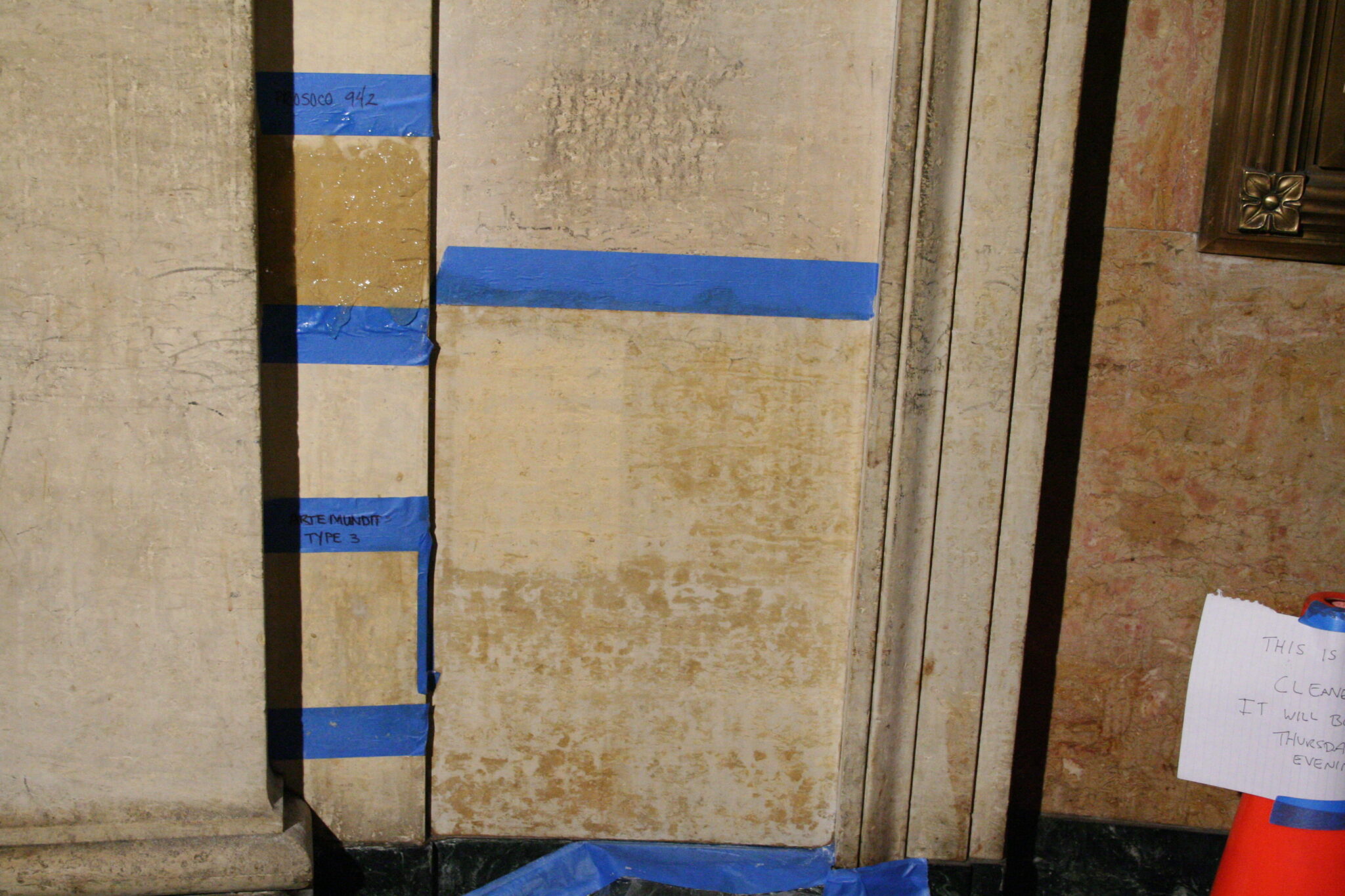
EverGreene was contracted in 2009 by the General Services Administration (GSA) to perform detailed assessments of the Mankato stone walls in all four lobbies. The goal of the work was to identify existing conditions, test cleaning methods, and to provide recommendations for treatment while preserving the historic fabric and addressing the continuing use of these spaces.
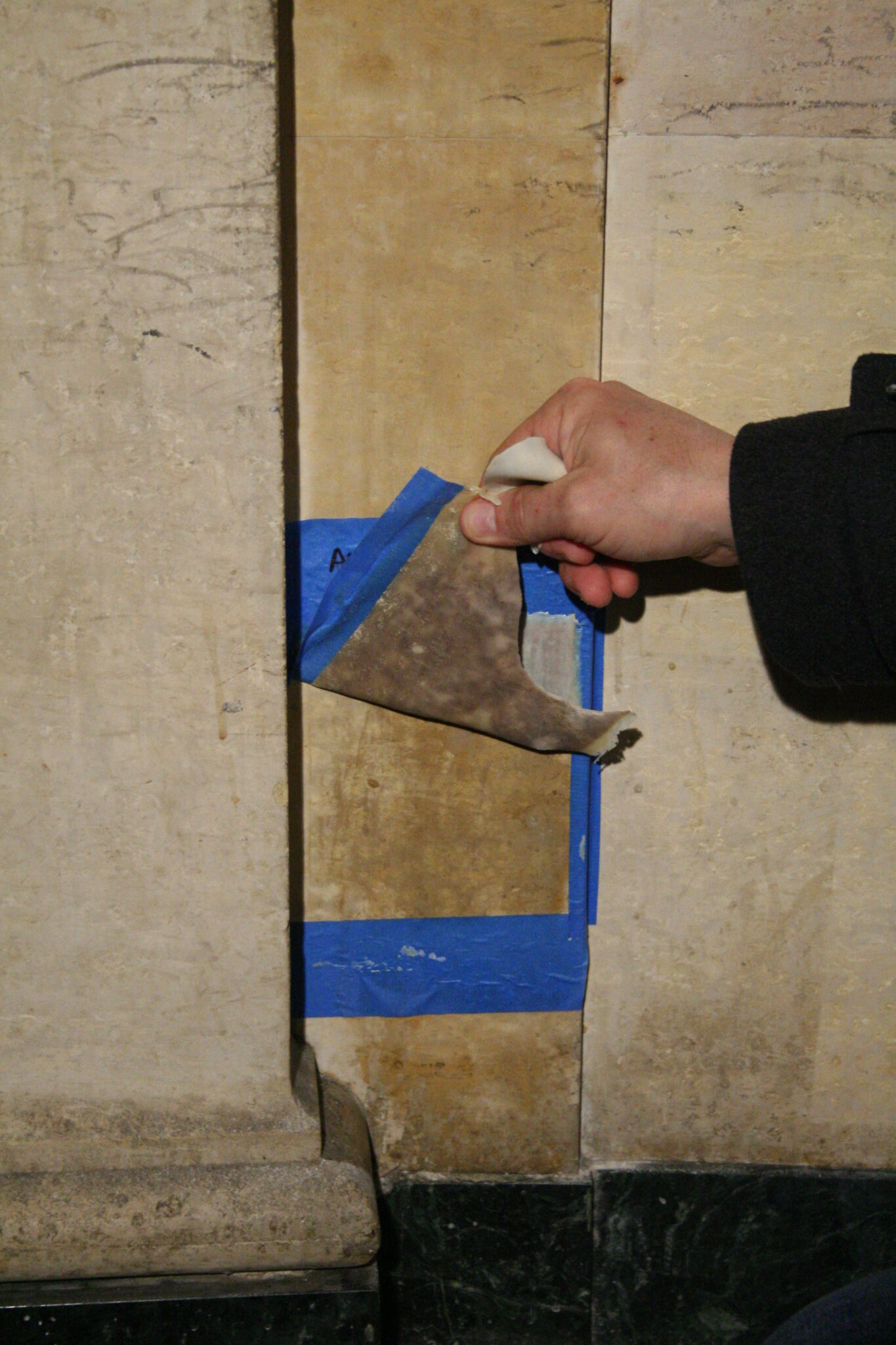
The conditions assessment included a review of historic documentation and an analysis of GSA cleaning procedures in conjunction with on-site evaluation. Due to greater use, the first floor lobbies showed significantly more deterioration than those of the third floor. Some of the mechanisms of deterioration include: evidence of aggressive cleaning campaigns, which resulted in a cloudy film and prominent, distinct streaks and etching of the stone; visible wear, damage, and losses; open joints; grease and oil staining, as well as soiling from repeated contact; floor wax splashed onto the wall, trapping dark soiling, and tenacious residue and staining from variety of adhesives used to hang temporary signage.
EverGreene conducted a series of cleaning tests to address the various mechanisms of deterioration. Cleaning tests included strategic application of appropriate cleaners, poultices, gels, and strippers. Methods and results were thoroughly documented photographically and on spreadsheets. The findings informed the development of an overall treatment plan that prioritized using the fewest products and techniques necessary to effectively address the widest range of conditions.