City of Asheville Public Art Conservation
A traditional center for the arts and crafts movement in western North Carolina, the City of Asheville has made a concerted effort to enrich its public spaces with commissioned works of art. These works aim to tell of the city’s history and culture, and includes several traditional monuments to military and political leaders, as well as a plethora of more modern works. The works have been arranged along what is known as the Urban Trail, which winds through downtown with markers illustrating many aspects unique to the city. Works in the collection range in size, material, and fabrication date; the earliest artwork dates to over a hundred years old while some artworks are less than a decade, though most have been installed after the creation of the Urban Trail in 1989.
Condition Assessment
EverGreene was contracted to perform detailed conditions assessments on the entire collection, artworks along the Urban Trail as a part of the City Parks and Recreation Department’s maintenance program. The goal of the assessments was to evaluate each objects’ condition and components, as well as establish treatment recommendations which support conservation of the outdoor objects. Each object was thoroughly inspected, and the conditions were photographed and documented in written reports. The mountings and sites were studied and recommendations were made for improvements to reduce the potential for theft or further vandalism. The severity of conditions was ranked and prioritized. The most common conditions observed overall included:
- Stone: General and biological soiling, staining, cracking, inappropriate previous repairs, acts of vandalism including both damage and loss to select elements, localized spalling, scratches, and abrasions.
- Metals: General and biological soiling, staining, coating deterioration and/or loss, localized corrosion, failed previous repairs, acts of vandalism including both damage and loss to select elements, scratches, and abrasions.
- Concrete: General and biological soiling, loss of material, cracking, spalls, exposure of the internal stainless steel reinforcements.
- Ceramic: General and biological soiling, staining, cracking, mortar loss, glaze failure, inappropriate previous repairs, scratches, and abrasions.
- Murals: General soiling, darkening of the varnish, craquelure of the paint layers, cleavage of the paint layers, and localized flaking.
Conservation Treatment
Following the conditions assessments EverGreene was retained to perform conservation treatments on two works in the collection: the Martin Luther King Jr. Memorial and the Urban Trail Monument.
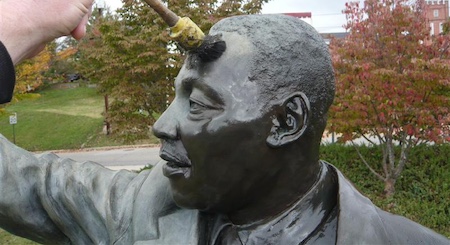
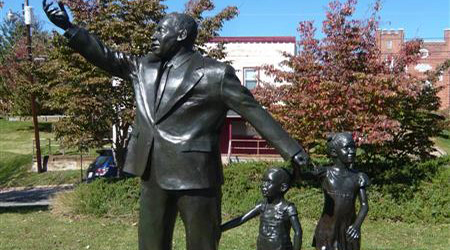
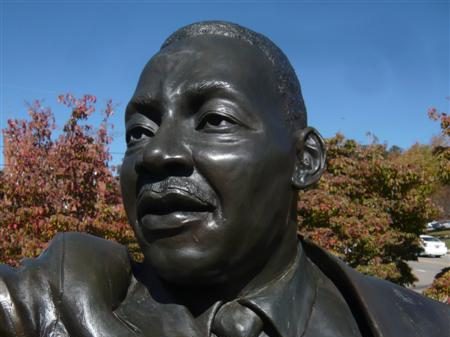
The Martin Luther King Jr. Memorial, located in Martin Luther King Park, is a life-sized representation of King, who is holding the hand of a small girl, while a small boy holds his pant leg. King’s right arm is outstretched in a welcoming gesture to come together. The figures are raised above the ground surface on a cast concrete base. The statue, composed of bronze on a concrete base, had numerous signs of deterioration, including general soiling, localized areas of corrosion, and deterioration/failure of wax coatings. Procedures for treatment were as follows:
- Removal of wax coatings using steam and solvent cleaning
- Cleaning of soiling using a gentle detergent rinsed with water
- Application of a corrosion inhibitor was applied
- Removal of corrosion using hand tools
- Application of a new wax coating, including a layer of proprietary hot wax which includes corrosion inhibitors, followed by a layer of cold wax and thorough buffing.
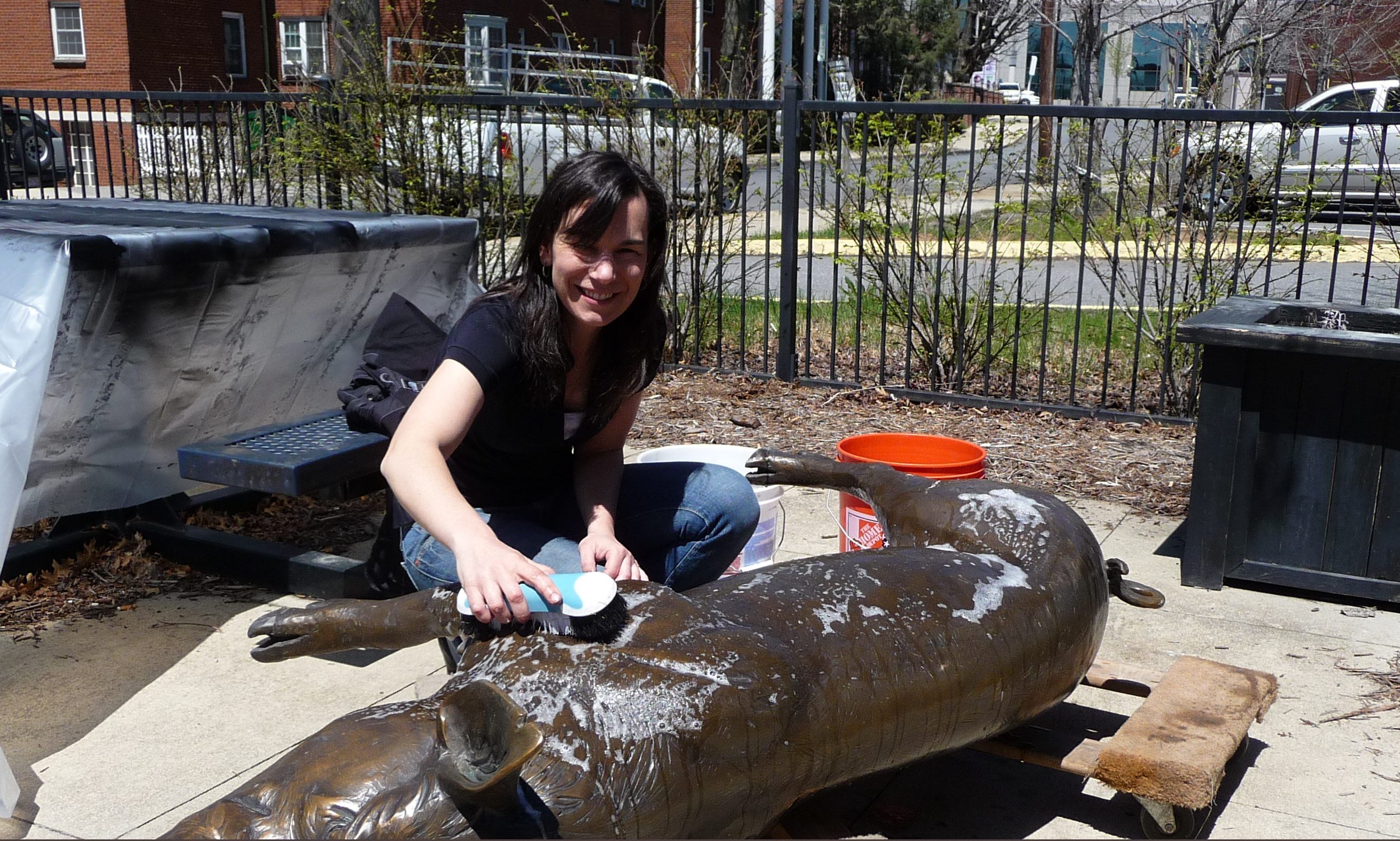
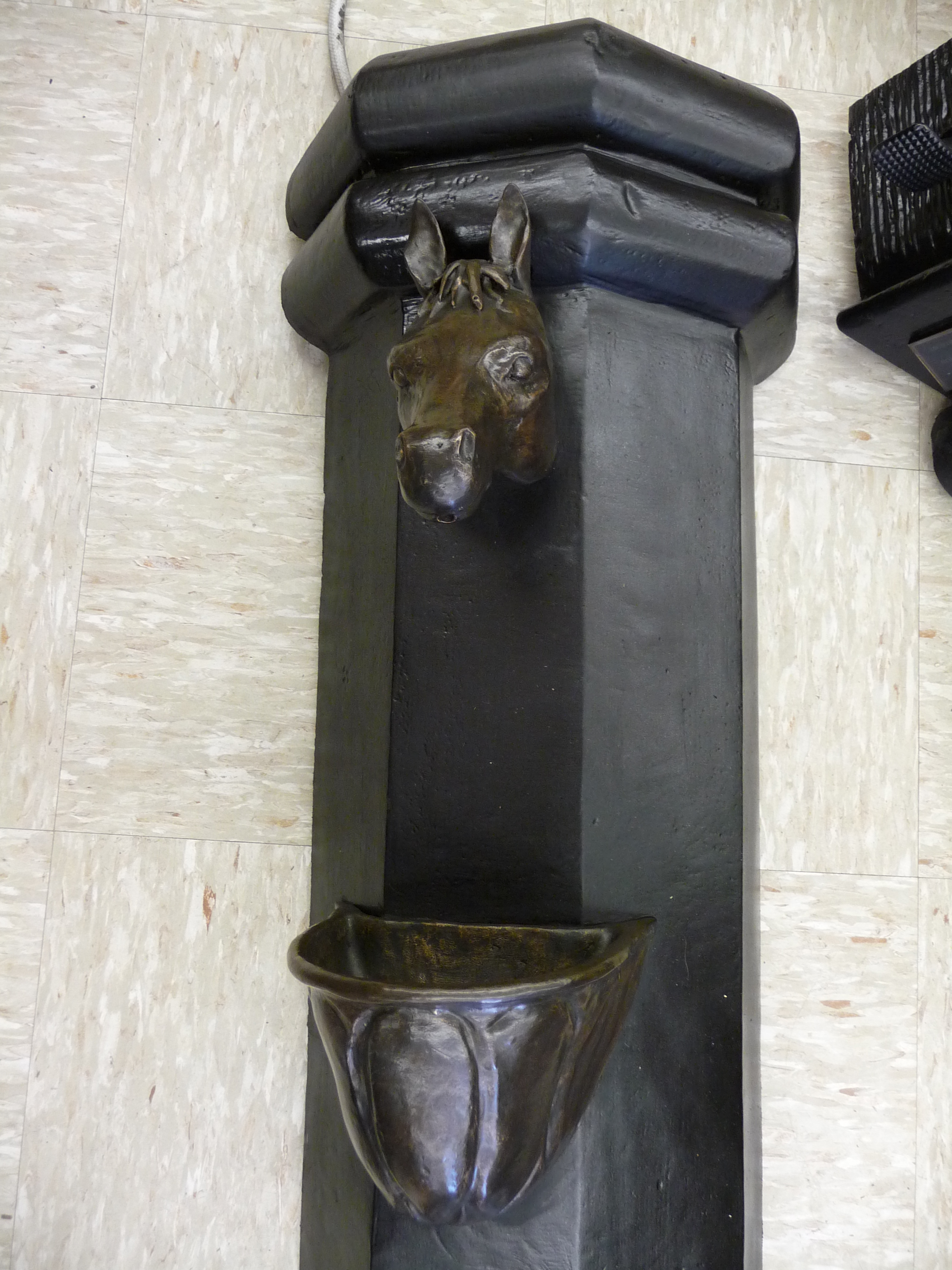
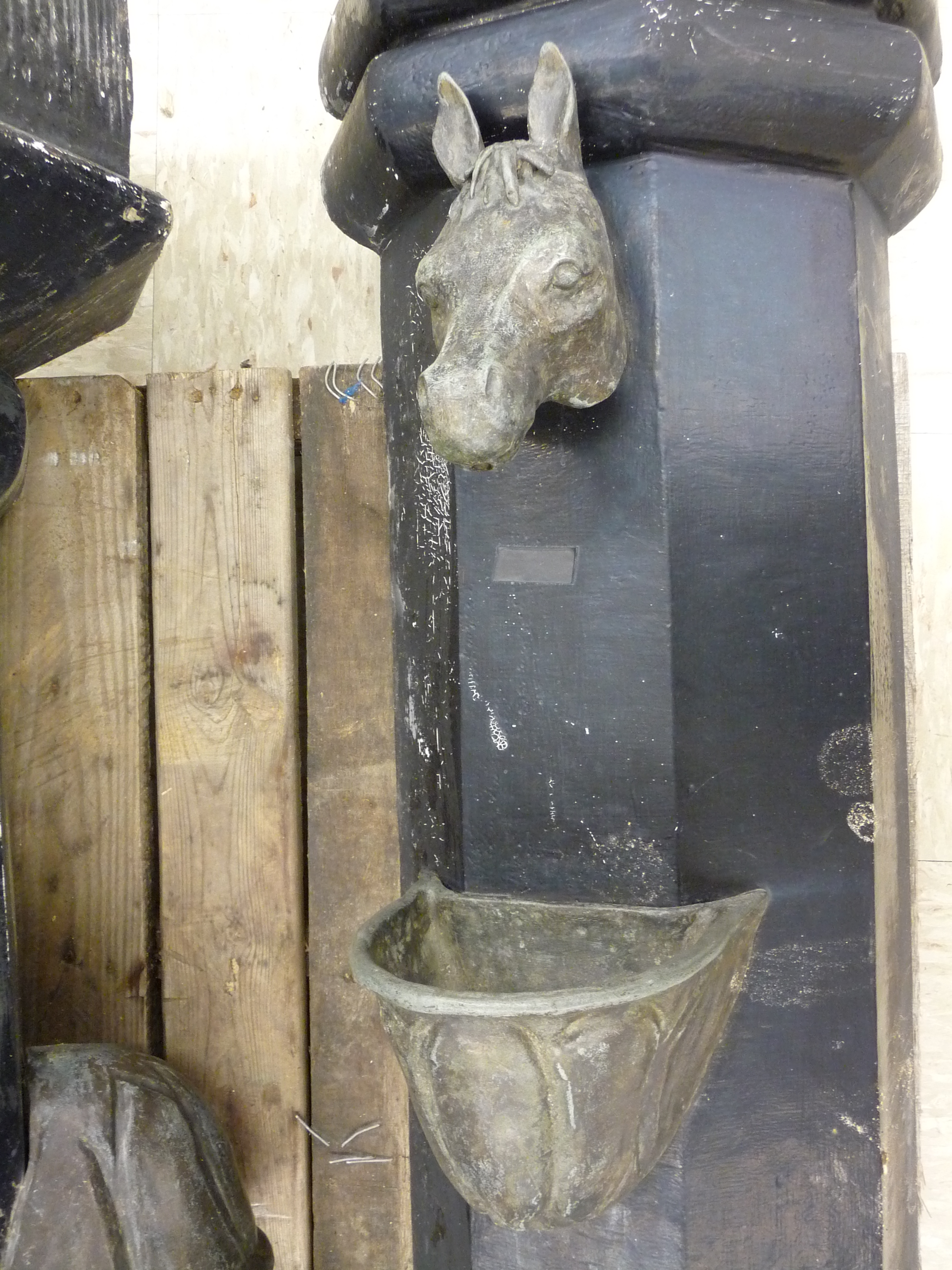
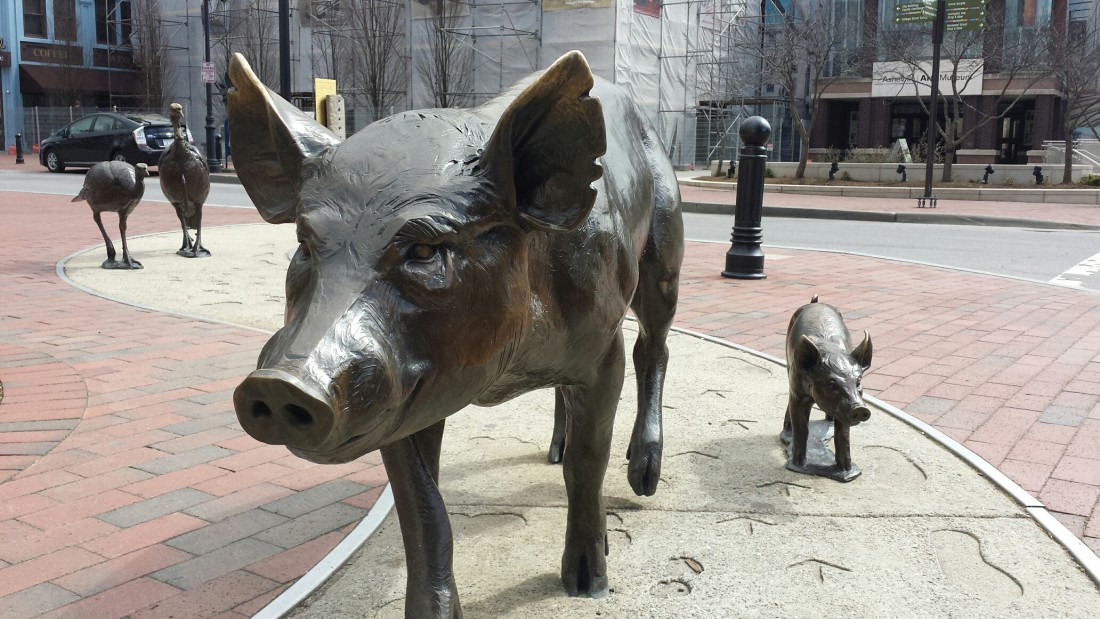
The Urban Trail Monument includes four sets of statues and their associated plaques: “Crossroads,” bronze sculptures of a sow and piglet, turkey, hen and poultry; “Past & Promise,” an old style gas lamp base with bronze horse head fountains and bowls, and a bronze figure of a young girl drinking from the fountain; “Ellington’s Dream,” depicting Ellington’s sketch for the Art Deco Asheville City Hall and the unrealized County Court House building on a silhouette block of granite; and “Monument Center,” a block of granite with bronze mason’s tools affixed to the stone marking the site of W.O. Wolfe’s monument shop.
- Removal of existing coatings
- Cleaning of soiling using a gentle detergent rinsed with water
- Removal of corrosion using solvents and medium pressure water, where applicable
- Scratches were gently buffed and patinated to match the original
the surrounding dark brown of the metal - Application of a new protective coatings, which either included a layer of proprietary hot wax which includes corrosion inhibitors, followed by a layer of cold wax and thorough buffing, or included renewal of painted coatings.