Kansas State Capitol
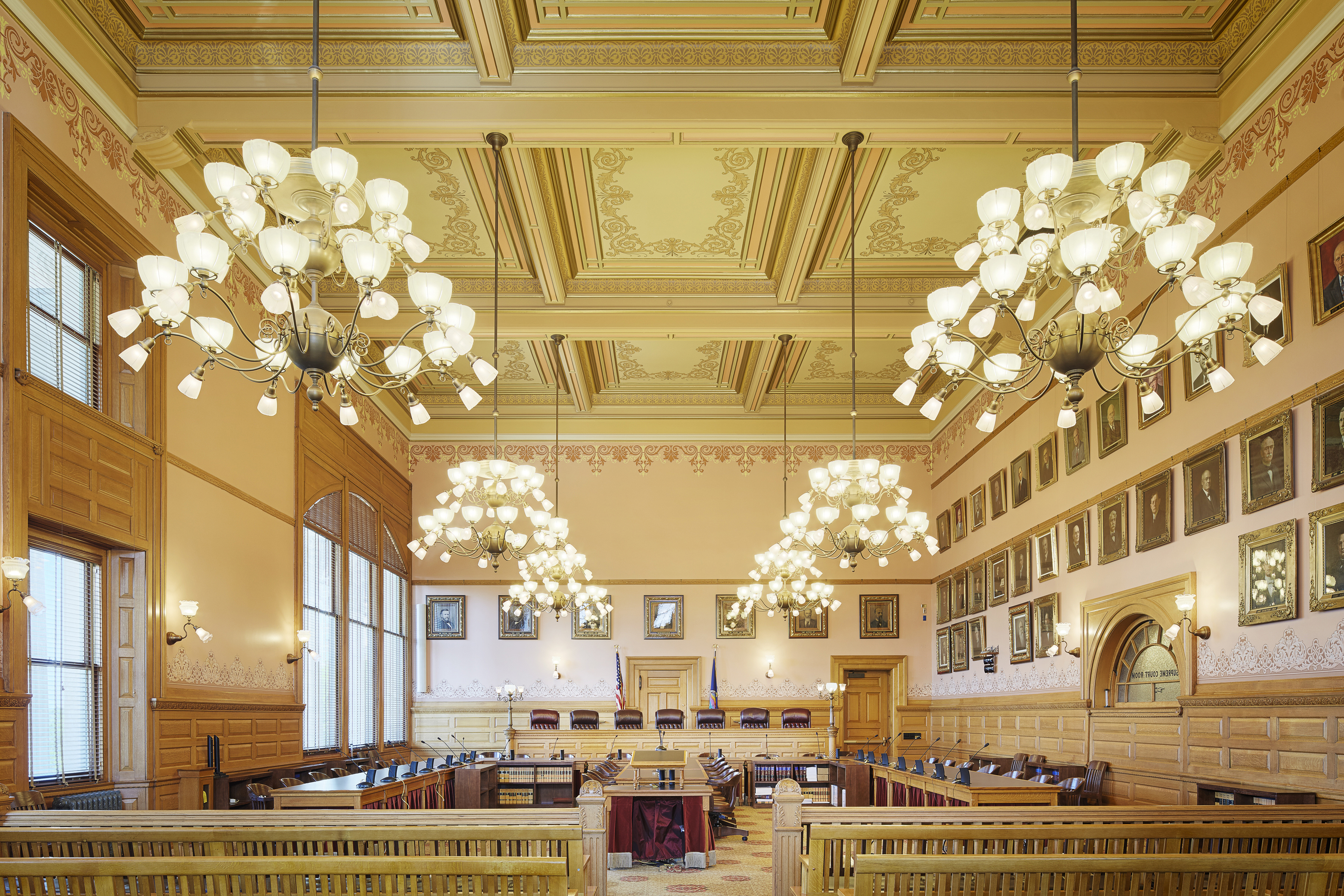
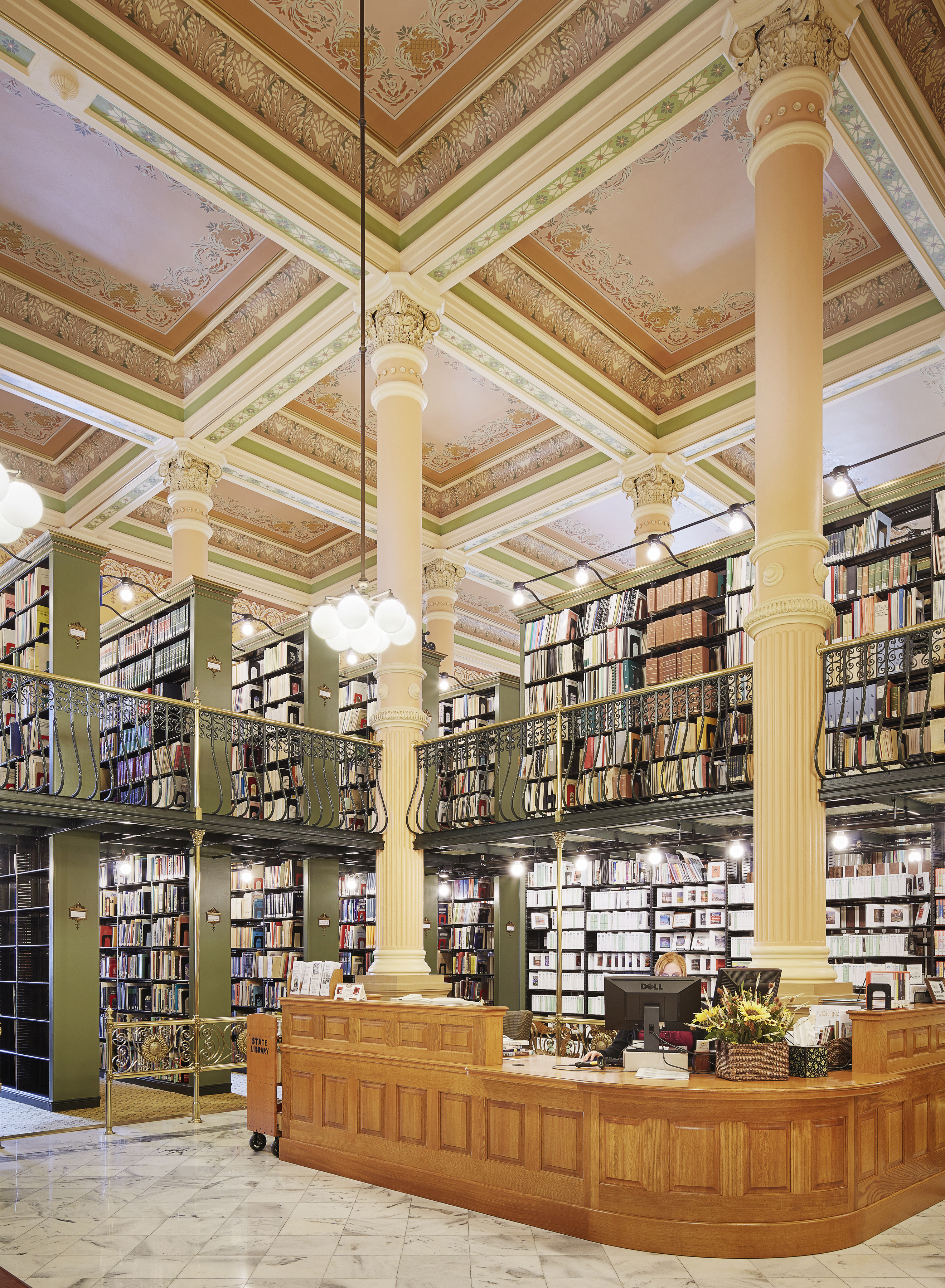
The Kansas State Capitol building, located in Topeka, Kansas, took 37 years to be built. Originally designed by Edward Townsend Mix and revised by John G. Haskell, construction began in 1866 and was not completed until 1903. It is an elegant statehouse combining Renaissance and Classical revival elements. Over the following one hundred years the building’s historical and architectural integrity was threatened by practical considerations, such as the need for more office space, modernizations in lighting and climate control. As a result, much of the building’s decorative wood, metal and stonework had been modified or overpainted. EverGreene was a part of a multi-year $322M restoration of the entire building between 2000-2013.
Metalwork
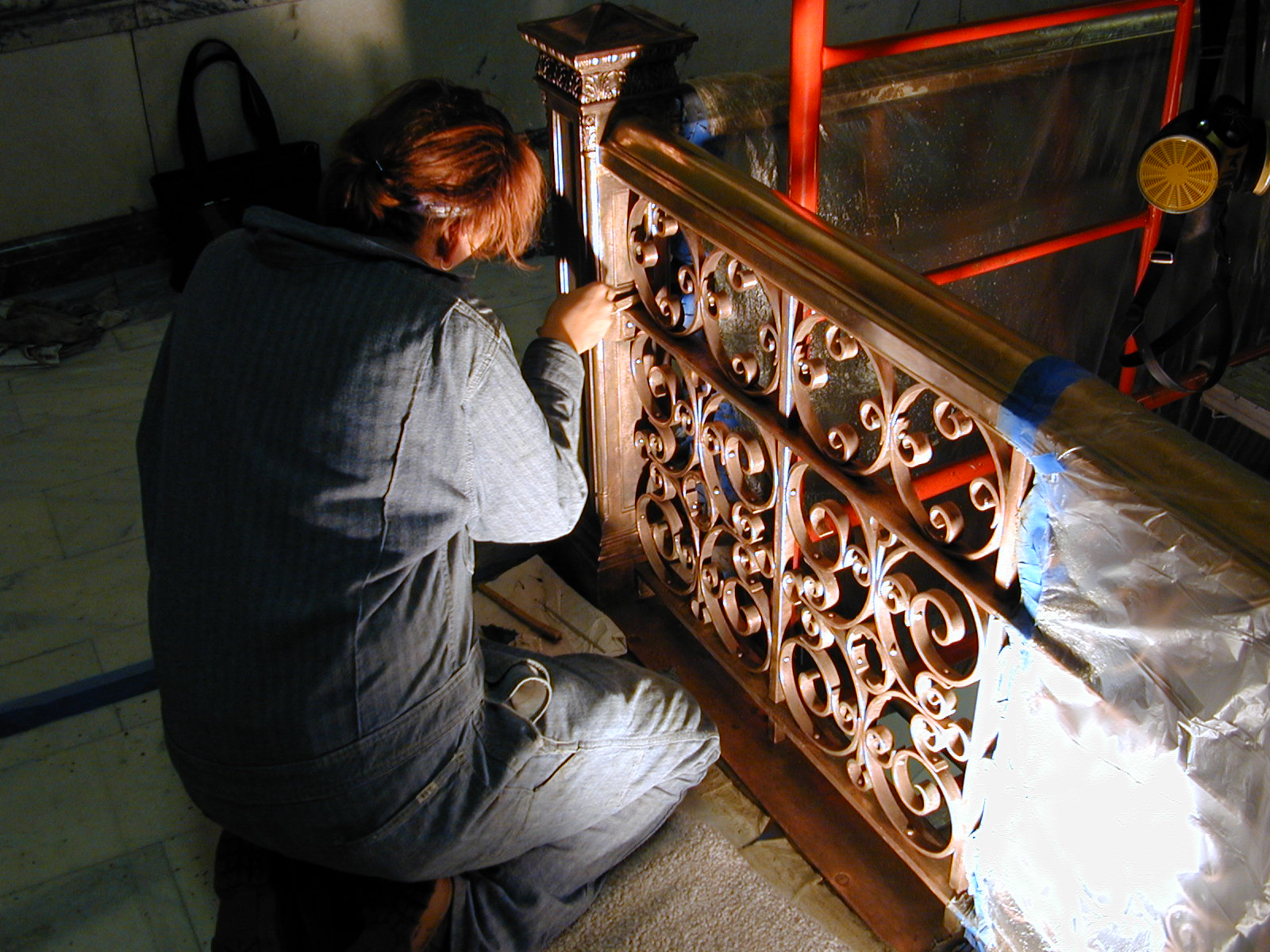
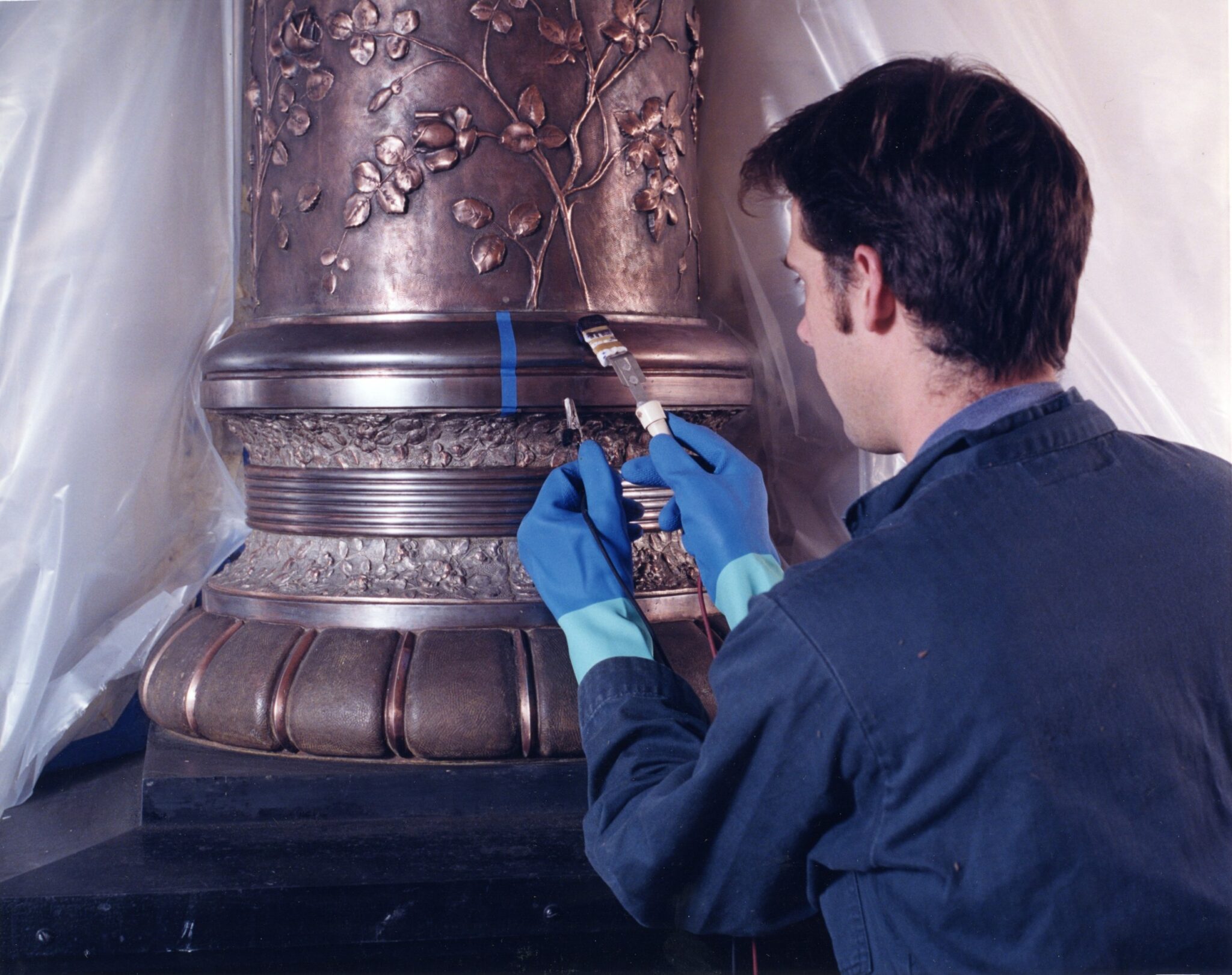
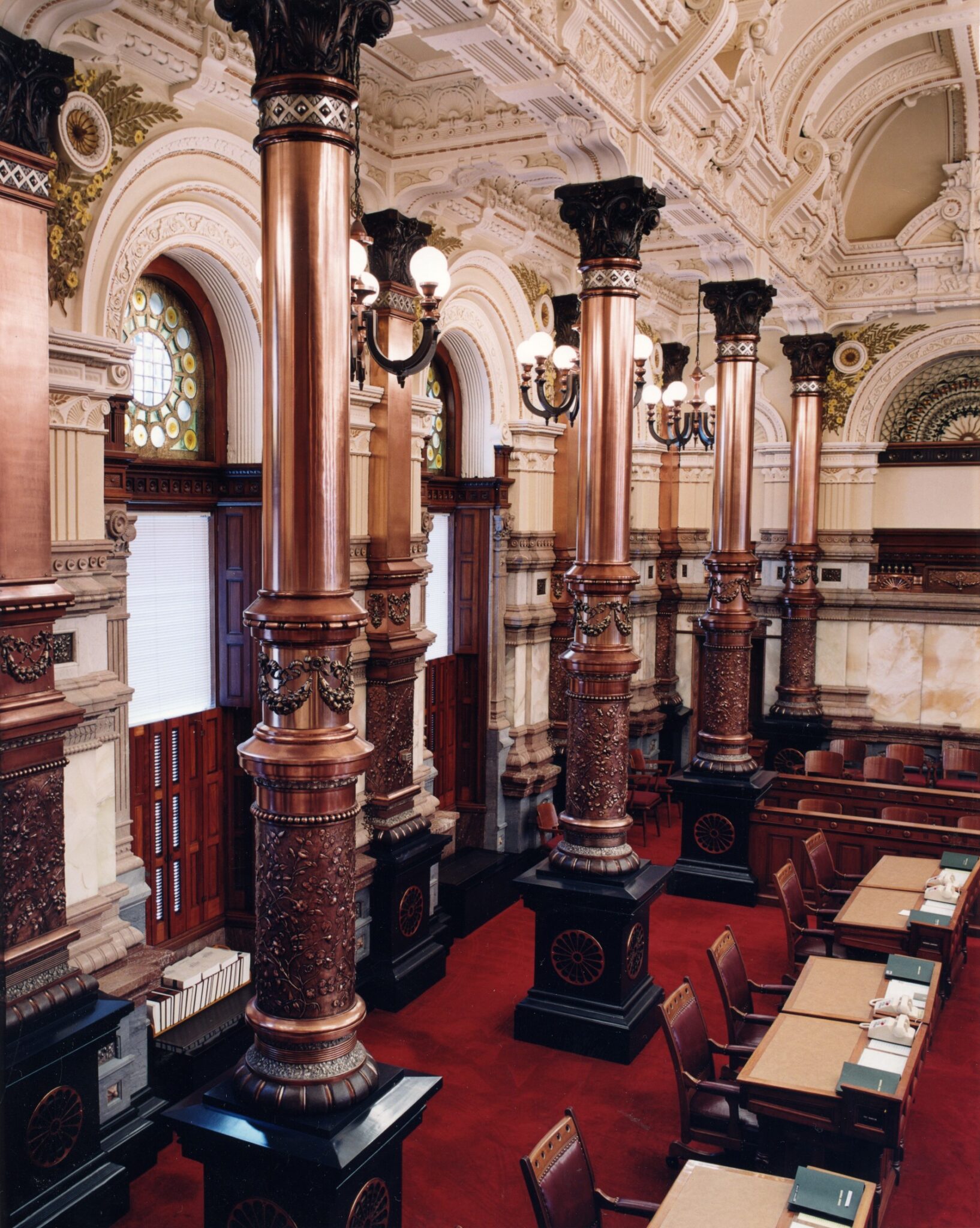
EverGreene was contracted to determine the appearance of select areas of decorative metalwork throughout the building, including in the Senate Chamber, which has twenty-eight bronze and copper-plated cast iron columns that each measured almost twenty-five feet tall, approximately one hundred silver-plated copper repousse inlaid plaques, and numerous balustrade and wall grills, all of which consisted of a mixture of copper alloys and copper-plated base metals. On-site investigations coupled with historic documentation revealed three potential treatments of the metals: (1) coated with a either wax coating, probably used as a protective barrier, which had darkened over time, obscuring the metalwork, (2) post-historically overpainted, or (3) had previously lost their coatings from excessive handling, years of neglect, and aggressive previous restoration efforts.
EverGreene tested various techniques to safely remove the unwanted corrosion products, sampled a variety of coatings to try and match the original finish, performed selective brush plating tests to repair areas of missing original plating, tested methods of paint removal, determine best methods of repatination, and developed strategies for restoring the polychromatic painted finishes on the cast iron columns and pilasters in the Senate chamber. Treatments methodologies were determined and implemented based off of treatment testing. Conservation reports and maintenance plans were provided after completion of treatment.
Plasterwork & Decorative Painting
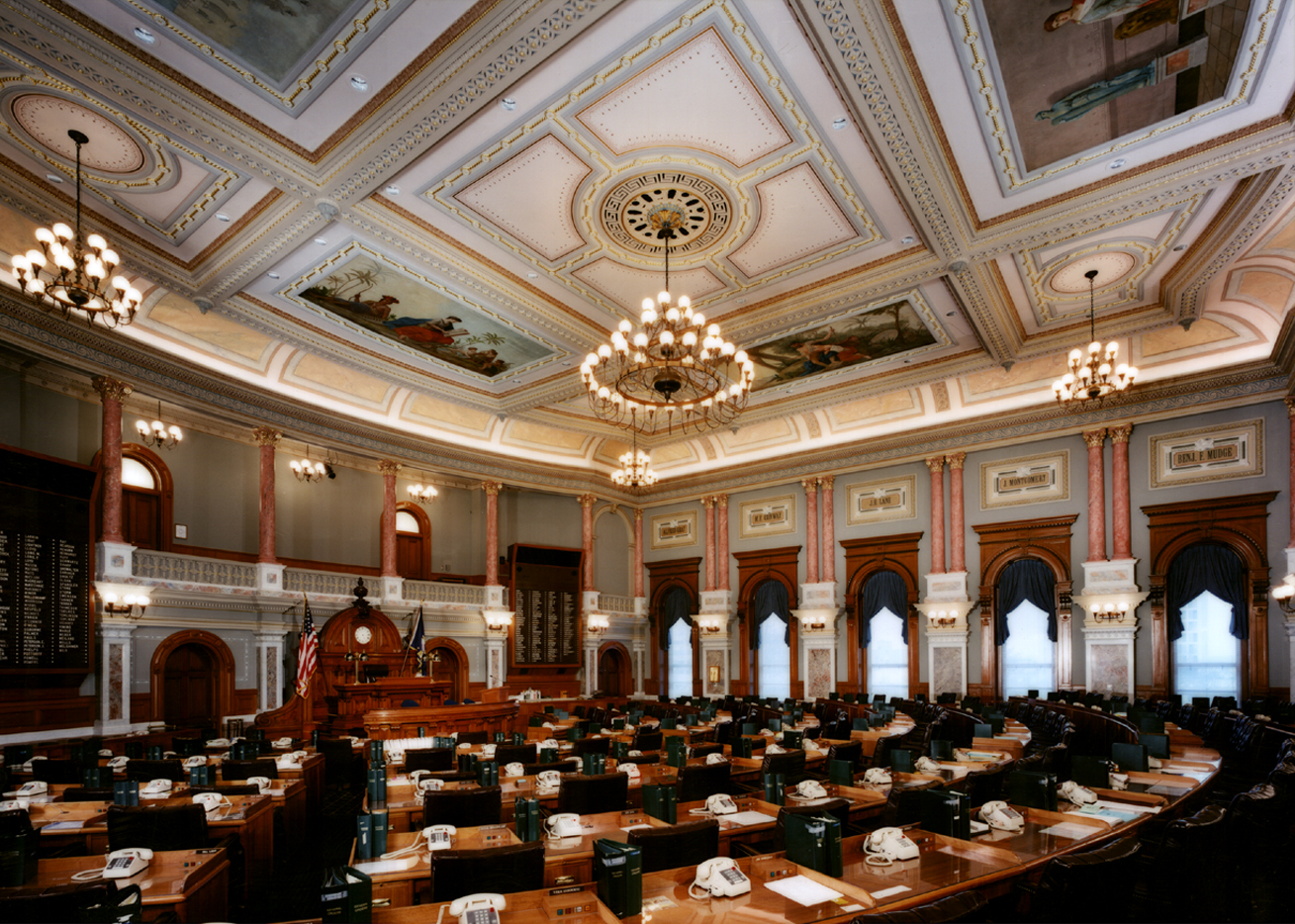
EverGreene was part of the design team, investigating plaster and decorative finishes in virtually in every space of the House and Senate Chambers. Treatments were based upon findings from each investigation and included:
- Implementation of oil on plaster decorative painting schemes
- Restoration of traditional gypsum 3-coat and ornamental plaster in flat and sanded finishes
- Addition of new ornament to look like historic plaster
- Restoration of the scagliola
Mural Conservation
The historic murals in the House Chamber ceiling mural had been overpainted. As a part of the paint study, partially uncovered and developed a treatment plan for the restoration of the murals and original finishes. EverGreene fully exposed and conserved the four ceiling murals.
Dome Restoration
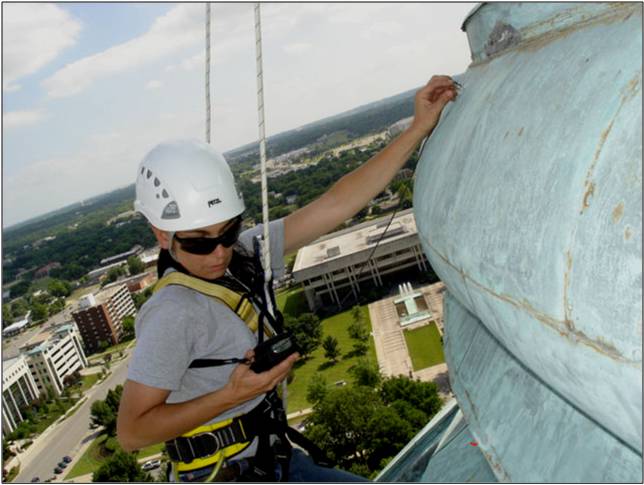
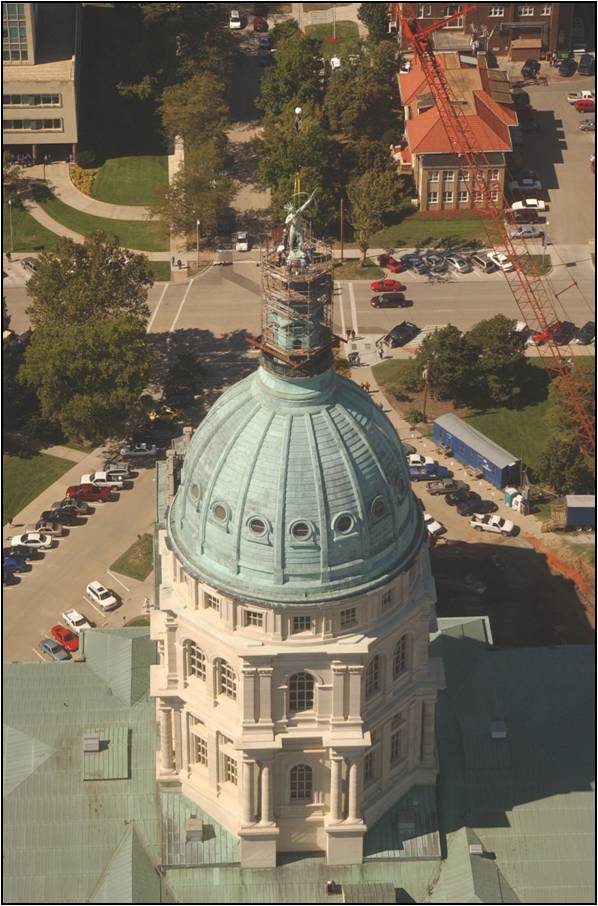
EverGreene was contracted to assess the condition of the copper sheet roof dome and estimate its anticipated life-span, including both historic elements, as well as the means and methods used in a restoration performed in 2000. Most of the original construction was found to be sound, but some improper detailing had led to recurring failures. Exposure-related damage was noted, including metal that had been affected by wind hail. The copper thickness was evaluated in-situ with an ultrasonic thickness gauge to direct repairs towards areas of weak, thin metal. Additional samples were sent to a testing lab to examine the nature of the cracks and tears observed. Recommendations were generated for minimal, targeted repairs to greatly extend the practical life of the roof.