Mizner Fountain
The Mizner Memorial Fountain is a historic fountain at the heart of Town Hall Square, which sits adjacent to the historic Town Hall in Palm Beach, Florida. It was created by the Memorial Fountain Commission following the construction of the Town Hall in 1925. The plaza opened to the public in 1929, featuring a central reflecting pool lined by walkways and curated landscaping, as well as the Memorial Fountain, which sat atop an upper adjacent terrace. The fountain was designed in the Beaux Arts style by Addison Mizner and was inspired by the Fountain of the Sea Horses or Fontana dei Cavalli Marini, an 18th century work by Christopher Unterberger at the Villa Borghese in Rome. iI represents the last commissioned work by the architect for the city of Palm Beach.
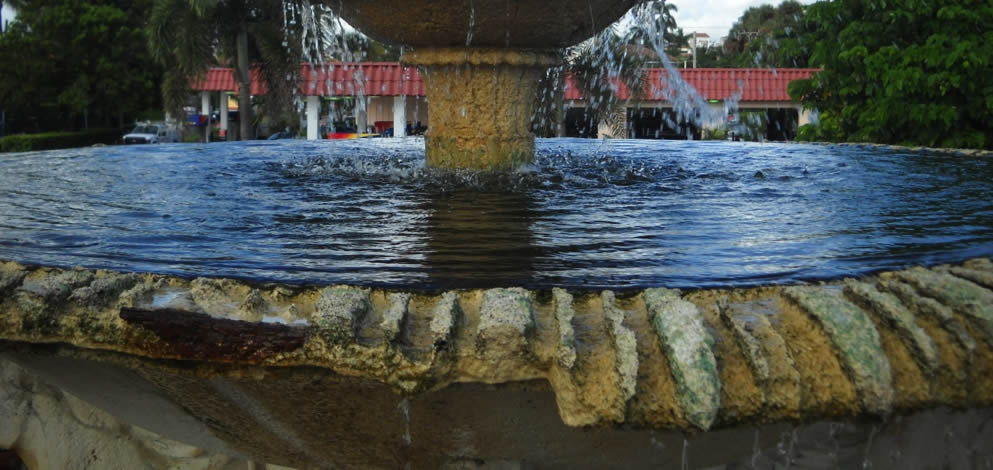
The fountain consisted of a main circular basin approximately sixteen-feet in diameter, which contained a set of multi-tiered bowls and stems of diminishing size. The large lower bowl was supported by a thick central stem and four hippocamps, or mythological sea-horses. It was constructed of cast stone and reinforced with steel, and was designed to imitate the color and texture of the local coral limestone.
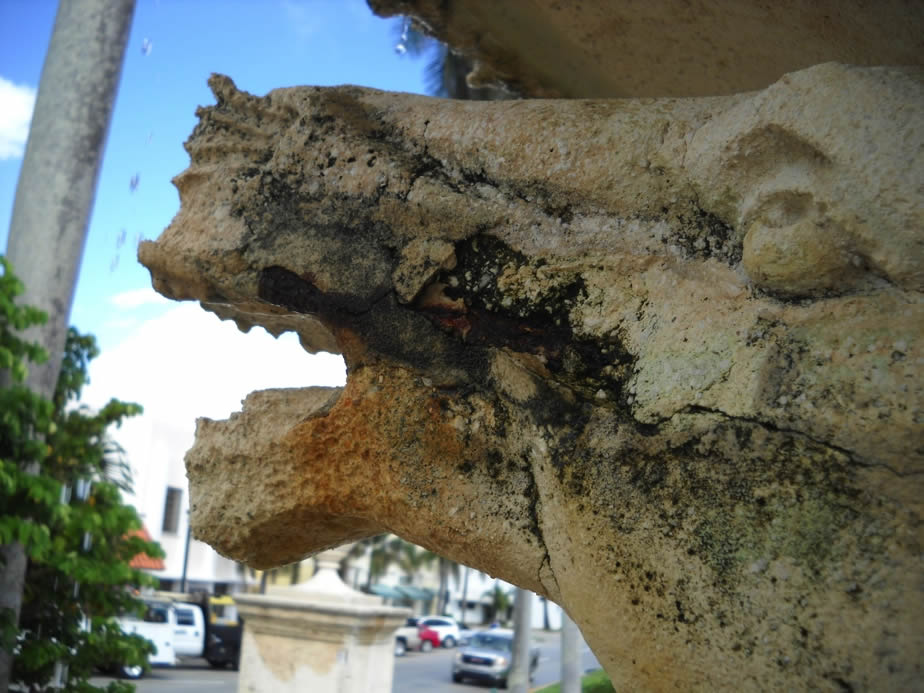
EverGreene conservators completed a conditions assessment and prepared specifications for conservation treatments. Work was performed as part of a larger restoration project being executed at the site. Constant exposure to the salt air and moisture infiltration caused significant deterioration resulting in loss, cracking, and erosion of details. EverGreene performed petrographic and chemical analyses on cast stone samples to determine the composition and carbonation levels in preparation for treatment. Analysis determined that the natural carbonation of the cement paste over time caused a loss of alkalinity which normally protects the embedded rebar from corrosion, resulting in the described deterioration.
EverGreene used the results of the assessments to develop and implement a treatment plan. The fountain was completely disassembled and removed to an off-site location for treatment. Large losses and areas of severe deterioration, including the forelegs of all hippocamps and the bowls and upper stems, were re-sculpted and re-created in new cast units. Small areas of loss were patched in-situ and sculpted to match adjacent materials. Cast stone elements not being re-created, including the four hippocamps torsos, were treated to ensure long-term preservation; including treating the inner rebar with corrosion inhibitors, re-alkalizing the cast stone to reverse the carbonization and reduce future corrosion, and apply protective coatings. The basin was also stripped of waterproofing membranes and re-waterproofed.