Mosaic at Texas State Technical College
Texas State Technical College (TSTC) Waco is located on the property that was once home to the James Connally Air Force Base in Waco, Texas. Although now an academic building, an original mosaic in the former Officer’s Club survived. The mosaic integrates images of flight and space exploration with a shield and Air Force wings in a stylized ‘space age’ aesthetic popular in the 1960s. The design is composed of irregularly shaped glass tesserae in vibrant hues of white, black, blues, yellow, red, and gold leaf.
EverGreene was contracted in 2011 by TSTC Waco to perform an assessments of the mosaic. The goal of the work was to ascertain original installation mechanisms, identify existing conditions, determine means and methods for removing and salvaging the mosaic for re-location to a new building, and provide recommendations for conservation treatments.
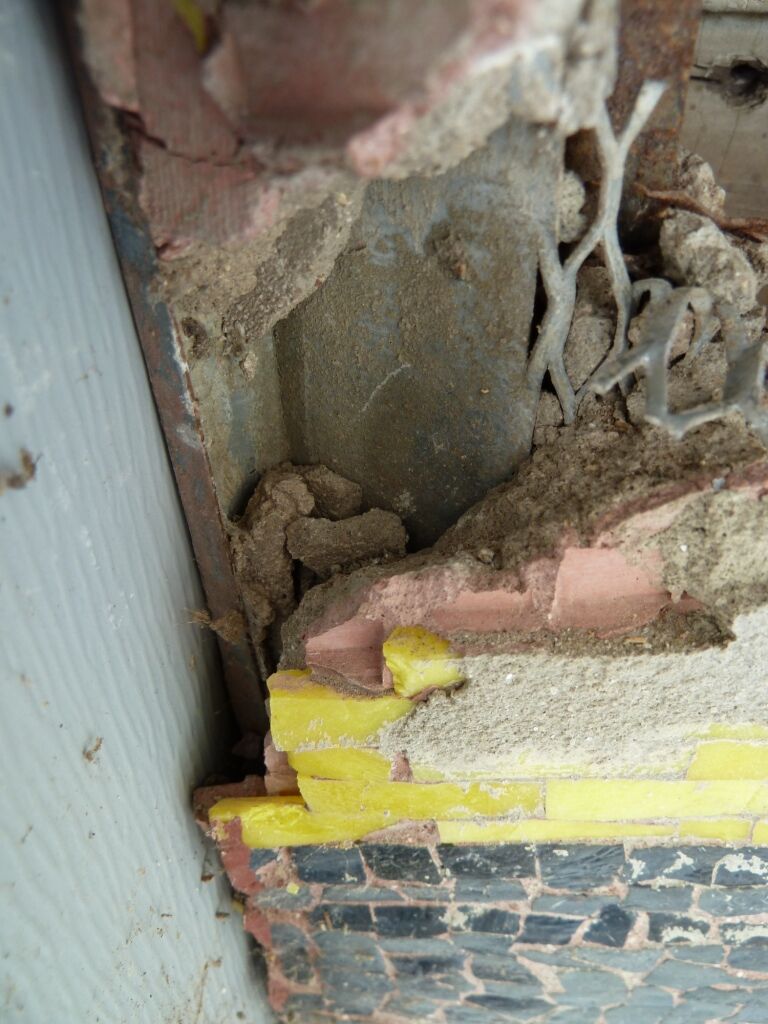
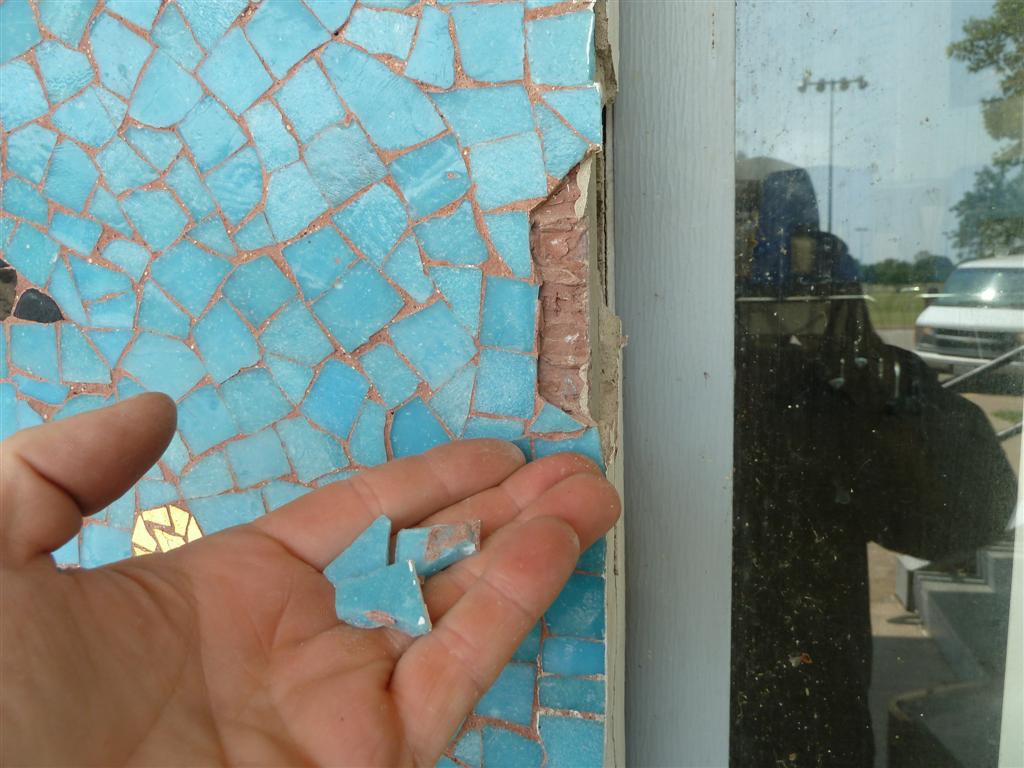
EverGreene conservators performed an in depth investigation of the mosaic, its backing, and the overall site conditions. The mosaic was found to be in very good condition, with some areas of tesserae loss, post-historic cement repairs, and soiling being the main issues. The rear of the mosaic was examined, and it was confirmed that it had been built as a self-contained element independent from the building structure and could thus be removed without damaging surrounding elements.
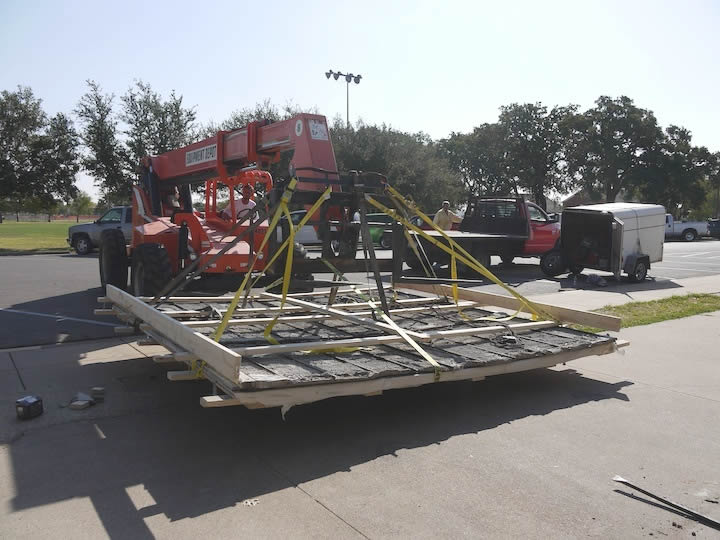
Following the investigation EverGreene was contracted with the removal, reinstallation, and treatment of the mosaic. The removal began by facing the mosaic with muslin to protect the tesserae and hold any that loosened during the work. EverGreene custom designed and fabricated a support frame that was built on site and secured to the mosaic. The assembly was then carefully freed, lowered, and transported to its new home. Additional supports were added to the rear of the mosaic to provide extra structural reinforcement. The mosaic was hoisted into place and braces were added to the rear for extra support.
Conservation treatments were then implemented. The protective layer of muslin ware carefully removed and the surface was cleaned with a mild acidic solution to ensure any additional residue from the facing, as well as any remaining surface soiling, were removed. Post-historic Portland cement patches were mechanically removed. The resulting voids were infilled using wire mesh and a compatible cementitious patching compound. Pre-existing losses were repaired using salvaged tesserae or new glass specially sourced to match the existing. Glass was custom cut to size and set in a bed of color-matched mortar.