Illinois State Capitol—North Wing Mural
General Grant Taking Command at Cairo in 1861 is one of the large historical mural panels decorating the Illinois State Capitol in Springfield, located in the North Wing on the first floor. It was painted by William L. Clouse and dedicated in 1903. The painting commemorates Ulysses S. Grant’s assumption of command at the state’s most strategically important Civil War outpost, setting in motion the campaigns that would help secure Union victory.
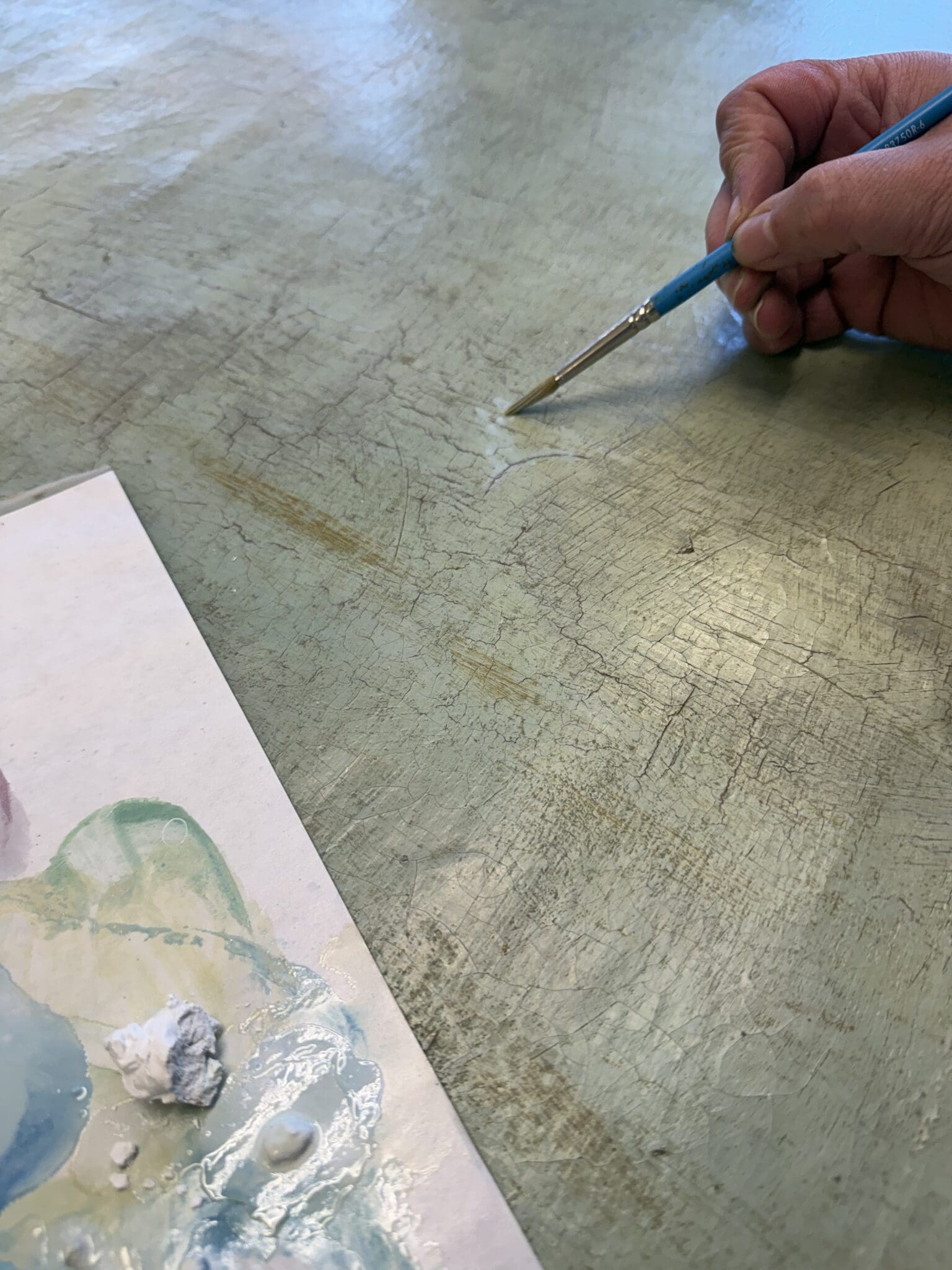
An evaluation by EverGreene in April 2025 identified significant conservation concerns, including pronounced cupping and planar distortion of the paint and ground layers resulting from moisture-induced shrinkage of the canvas support. Differential movement between the canvas substrate and the brittle paint layers had created widespread lifting, tenting, and cleavage, placing the mural at risk of continued paint loss and structural instability.
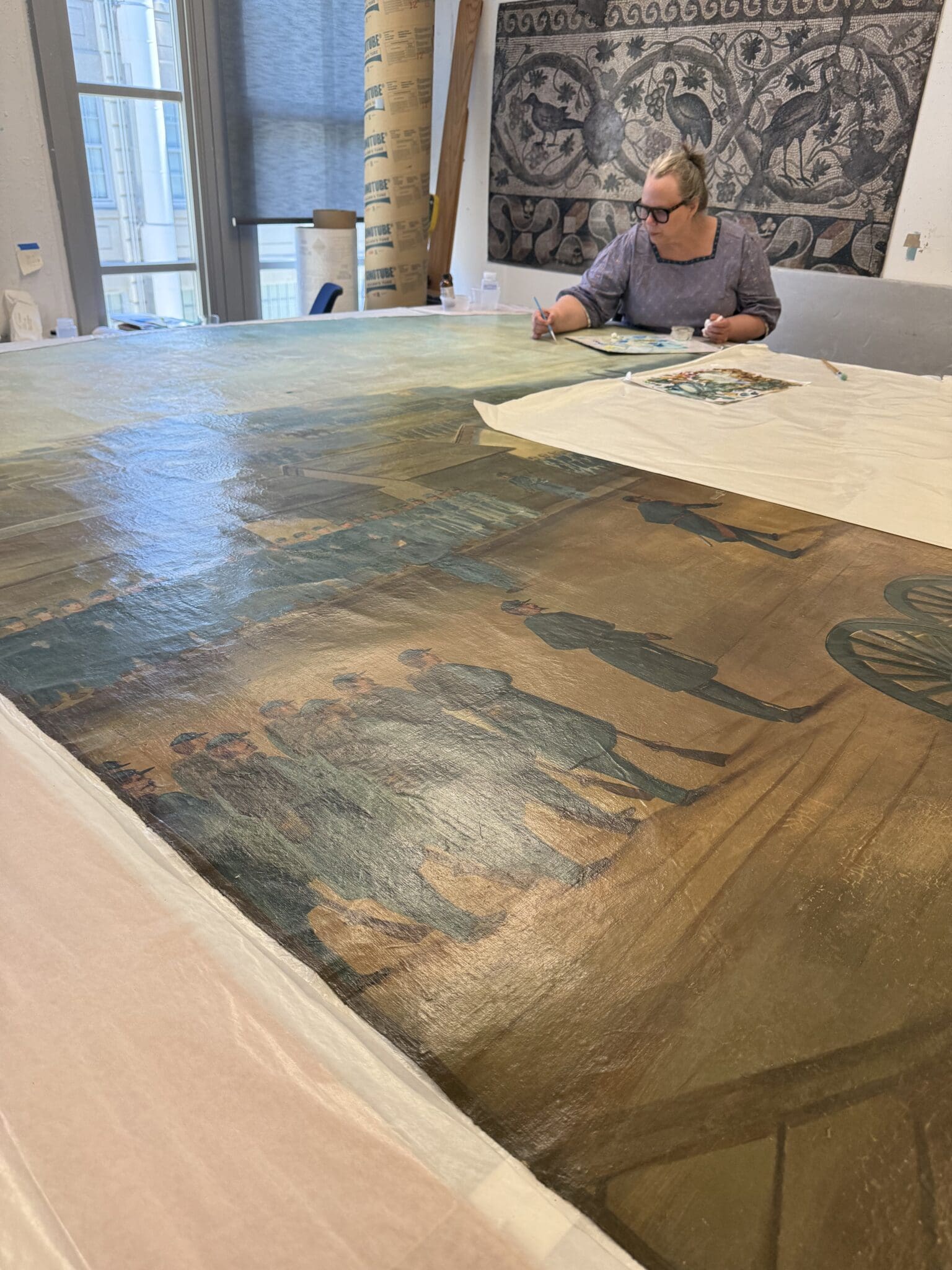
EverGreene’s conservators determined that removing the mural for off-site treatment was the most effective long-term solution compared to in situ stabilization. Removal allows conservators to treat both sides of the canvas, relax and flatten the paint, and reline it onto a stable, non-hygroscopic support to prevent future shrinkage.
The project follows the standards of the American Institute for the Conservation of Historic and Artistic Works (AIC) and is divided into three main phases:
1. Mural Removal (On-Site)
Thorough written and photographic documentation was completed before testing was undertaken to determine the most appropriate paint removal method. To safely manage lead-containing materials generated during the work, a negative-air containment zone was established. The painted surface was then protected with a facing of Japanese tissue, allowing the canvas to be carefully detached in a single section and rolled onto a large-diameter tube for safe transport.
2. Conservation Treatments (Off-Site)
Mural conservation treatments included aqueous cleaning to remove surface soiling and the removal of post-historic repairs and discolored, uneven varnish layers. The mural was then relined on a vacuum table, where controlled heat was used to relax severe cupping and distortion within the paint layers. Following stabilization, an isolation barrier layer will be applied to protect the historic finishes and provide a reversible foundation for subsequent aesthetic reintegration and repairs.
3. Reinstallation
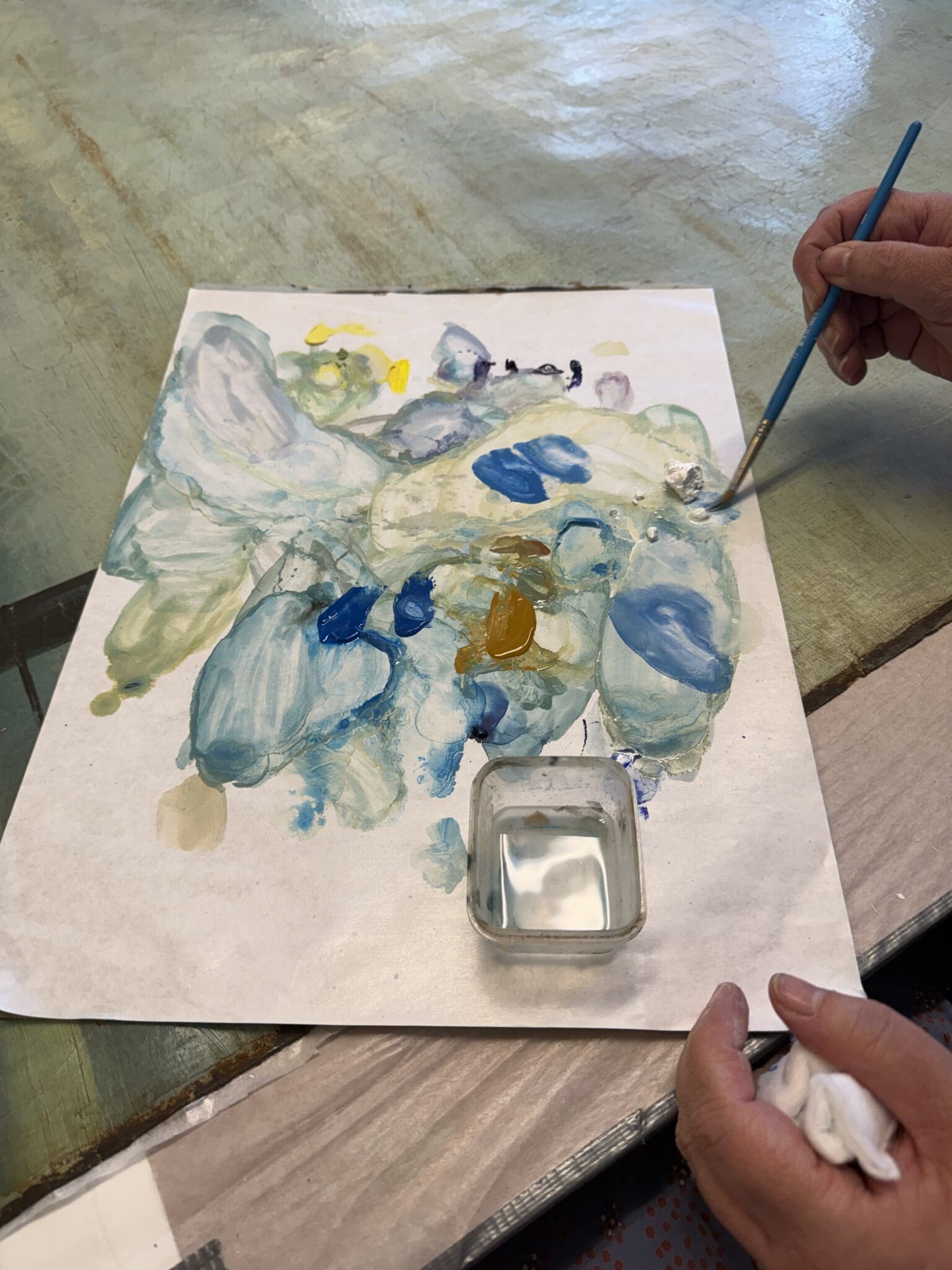
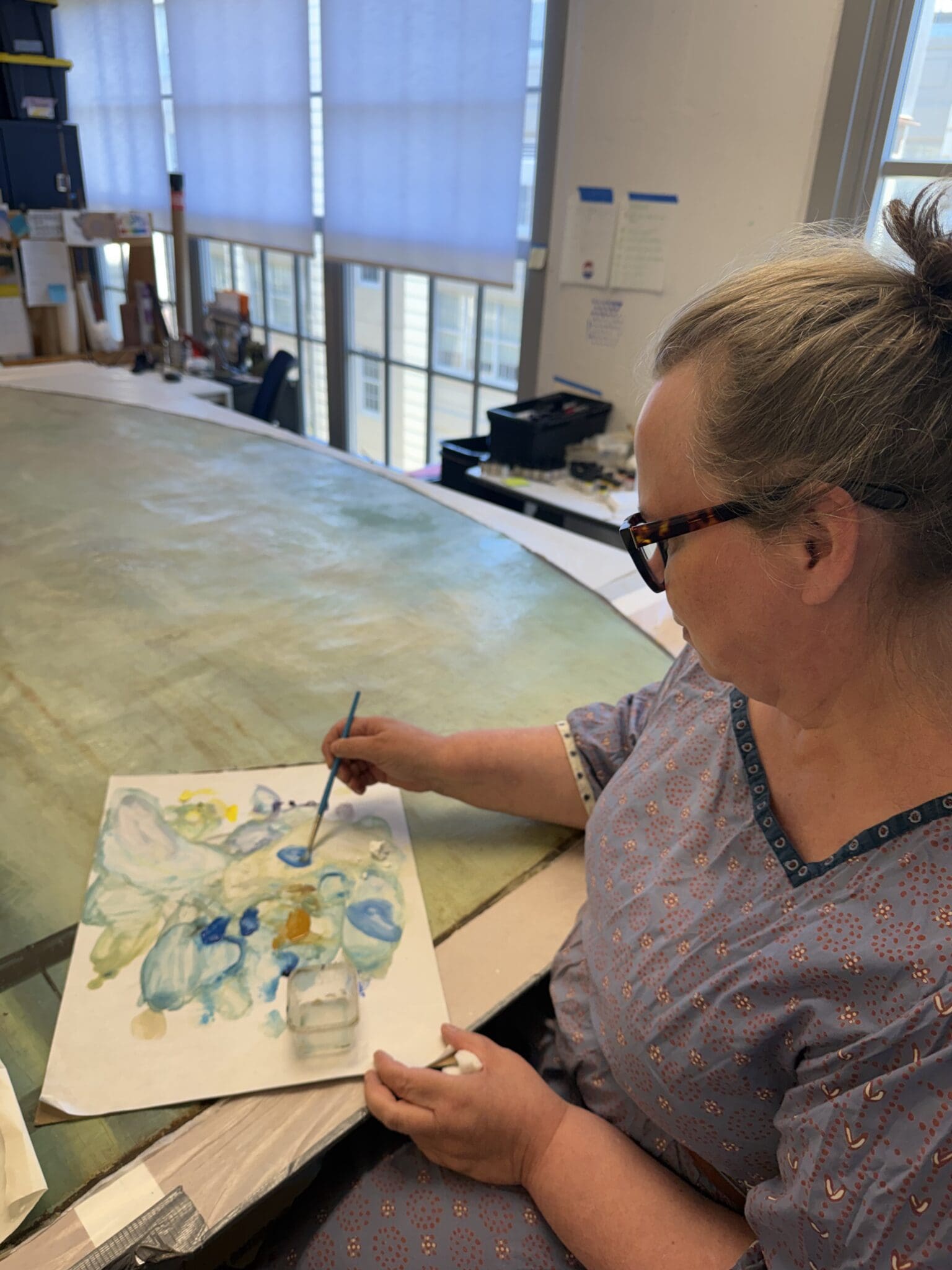
After preparing the wall, the conserved mural will be carefully unrolled and adhered to the surface using controlled, even pressure. Once installed, conservators will fill and inpaint areas of loss to visually reintegrate the image, followed by the application of a UV-stable final varnish with a sheen matched to the adjacent murals in the corridor. The project concludes with comprehensive photographic and written documentation of the restored mural.