The machine age left a profound mark on architecture and design, most notably in the streamlined aesthetics of Art Deco and Modernist styles. By contrast, the so-called “space age” has often been treated more as a cultural cliché than as a sustained architectural influence. Exceptions exist—such as John Lautner’s Sheets-Goldstein House—but these were anomalies rather than widespread movements. The futuristic Googie style, originating in Southern California in the late 1940s and popular through the 1960s, reflected the optimism of the atomic and space age but proved short-lived. The impulse to build structures resembling rockets or space stations faded after the height of the space race, leaving the vision of space-age living more aspirational than actual.
The more enduring legacy of the space age lies not in visual form, but in materials innovation. NASA and DARPA actively promoted the adaptation of technologies and materials developed for aerospace and defense into commercial applications. Many of these materials—urethane foam, honeycomb panel systems, high-strength aluminum and nickel alloys, beryllium, Mylar™, Tedlar™, RTV silicone, Plexiglas™, and specialized resins—found their way into construction. Though inconsistent in appearance, their impact was profound. The development of titanium for advanced aircraft, such as Kelly Johnson’s A-12 and SR-71 spy planes, provided a direct link to its later architectural use in projects like Frank Gehry’s titanium-clad Guggenheim Bilbao.
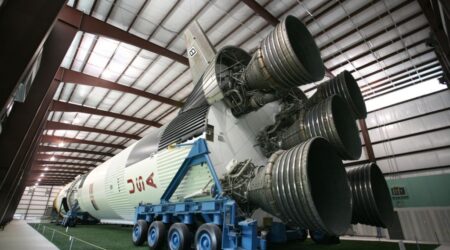
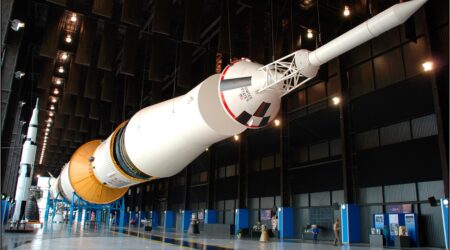
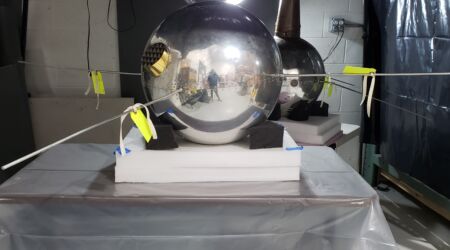
A thorough understanding of these materials is critical, as many present unique challenges: titanium, for example, can shatter if worked with conventional cadmium-plated tools and is vulnerable to chlorinated cleaning agents. Over the past several decades, EverGreene has developed specialized expertise in this field through the conservation of significant aerospace artifacts, including the Space Shuttle Atlantis, Saturn V rockets, Skylab, a titanium A-12 spy plane, and a Corona spy satellite. This body of work has provided unique insights into the performance, vulnerabilities, and preservation requirements of advanced mid-century materials.
Today, EverGreene’s expertise informs the conservation of mid-century modern architecture and building materials, where the legacy of aerospace innovation continues to play a defining role. EverGreene’s work demonstrates how lessons learned from space-age artifact conservation can be applied to architectural preservation, ensuring that both the technological and cultural achievements of the era are safeguarded for the future.