Central Park's Bethesda Terrace Arcade
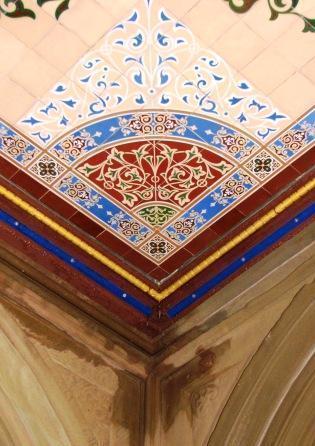
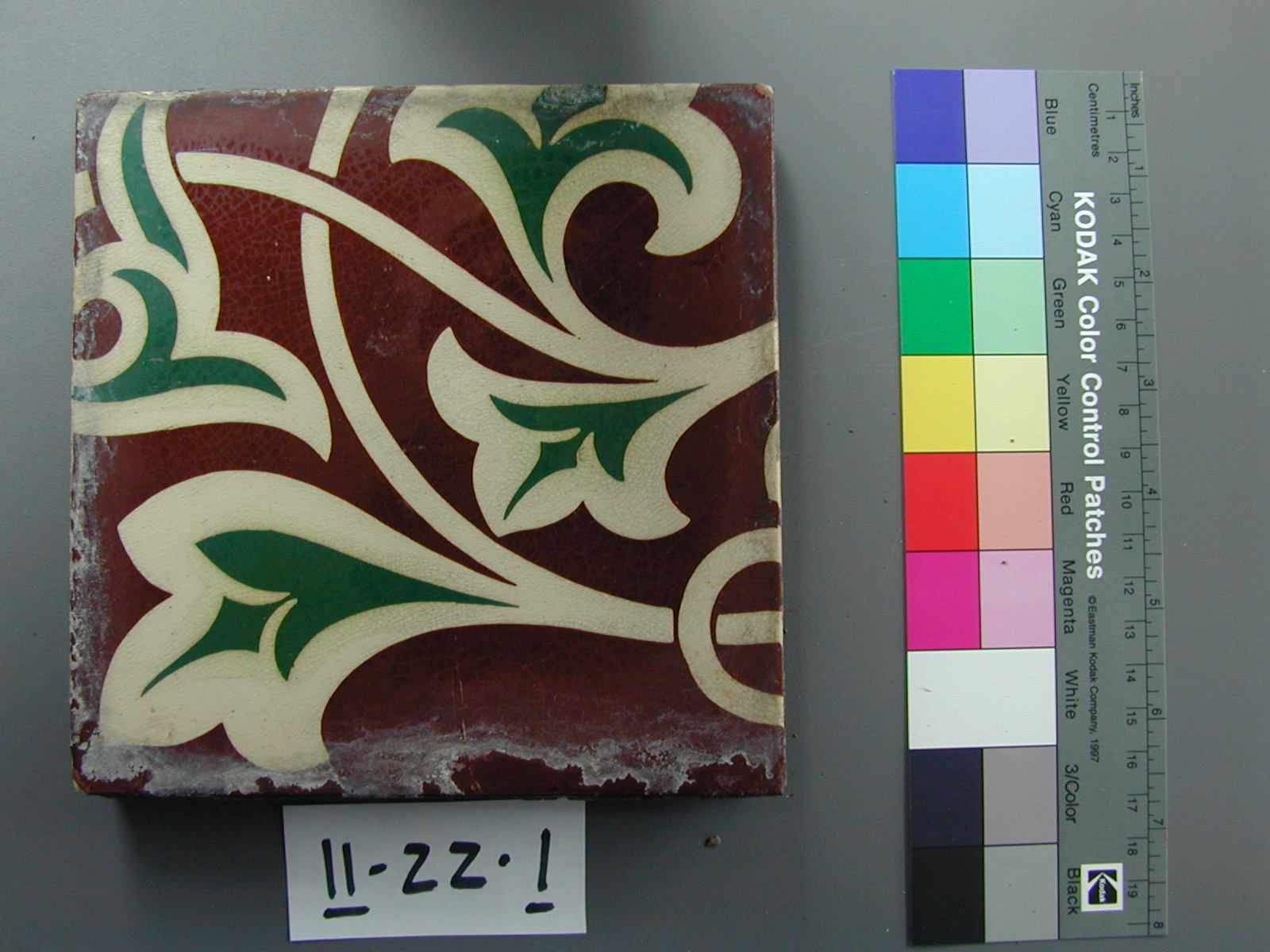
The encaustic tile ceiling within the Bethesda Terrace Arcade in New York’s Central Park dates to the mid-1860s and is the only known example of a Minton tile suspended ceiling. Minton encaustic tiles are created by inlaying colored clays into the body of a tile rather than through the application of glazes. When the Bethesda Terrace was restored in the early 1980s, it was discovered that the iron suspension structure that held the ceiling tiles suffered from severe corrosion due to water and salt infiltration from the roadway above. The ceiling’s forty-nine panels, each comprised of more than 350 Moorish-patterned tiles were removed and put into storage in 1984 while a preservation treatment was researched and funding secured for their restoration.
In 1997 EverGreene worked with The Central Park Conservancy to develop a restoration plan for the tile ceiling. Work included development of restoration procedures, testing of methods to preserve the tiles which had continued to deteriorate during storage, and to restore two panels as prototypes. One of the major goals of the work was to retain as many of the original tiles as possible. A stainless steel backing system was engineered that keyed each tile to the support. A complex method was developed to hold the tiles in their panel forms while the failed backings were stripped off and the new system installed. After the panels were re-backed, the faces were treated. Tiles that were in relatively good condition were washed to remove surface soiling and cleaned of excess mortar, grout, and iron staining. Rather than entirely replace damaged tiles, as previously thought necessary, EverGreene was able to infill losses with Jahn restoration mortar, hand-paint them to restore the original tile design, and seal them with a fixative.
In 2004 EverGreene returned to the Bethesda Arcade to assist with additional restoration efforts. EverGreene was contracted to perform conditions assessments on a variety of elements relating to the arcade, including the stonework, both decorative and structural elements, the brickwork, bronze statuary, and other cast elements, the metalwork of the suspended ceiling, and the encaustic tiles installed in 1997. Work included research into and evaluation of previous restoration efforts to determine their efficacy and identify areas needing repairs. Results of the conditions assessments were used to provide recommendations for the development of master conservation plans for the property. In particular, the work on the encaustic tiles was found to be extremely effective, and more tiles would be able to be salvaged than previously thought. EverGreene created the detailed treatment procedures which would be used for the full restoration effort.