Calder Facade Statues & Mosaic Conservation
Situated in New York City’s infamous Time Square 1552 Broadway is best known for .
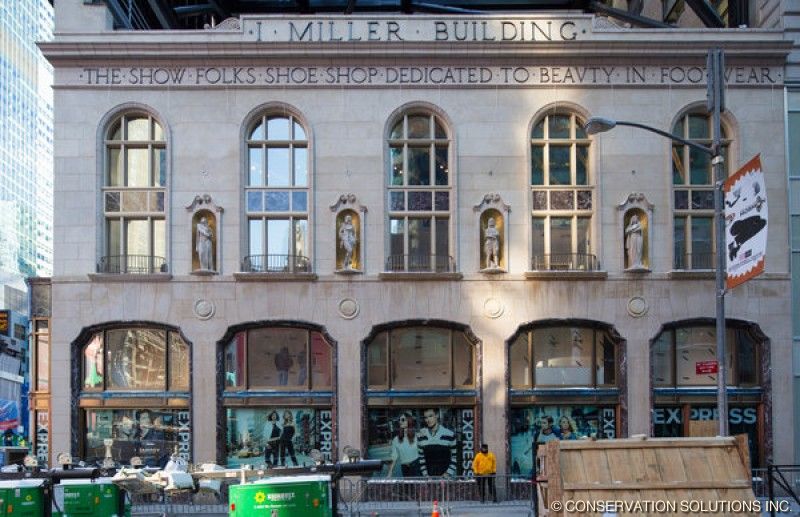
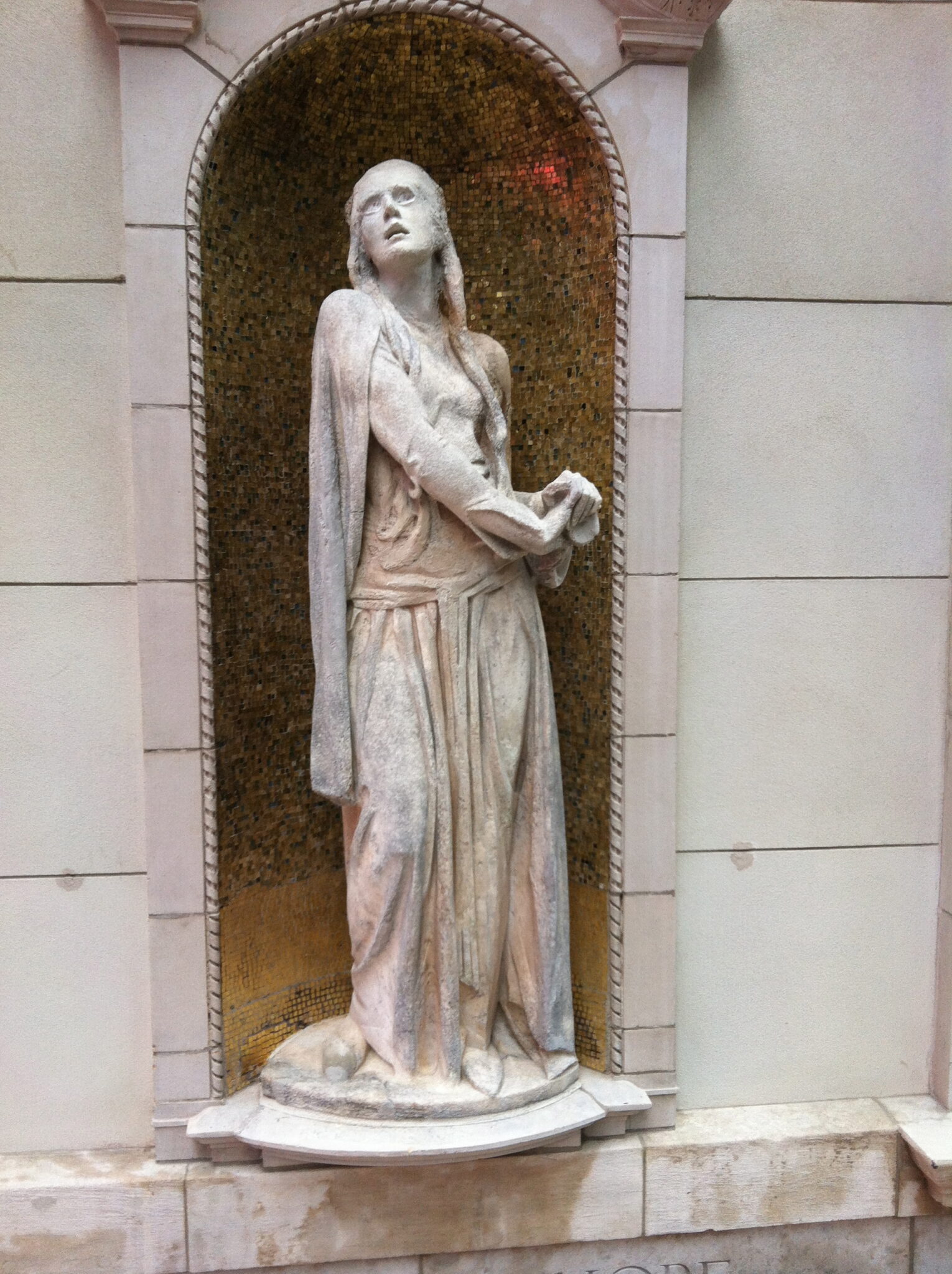
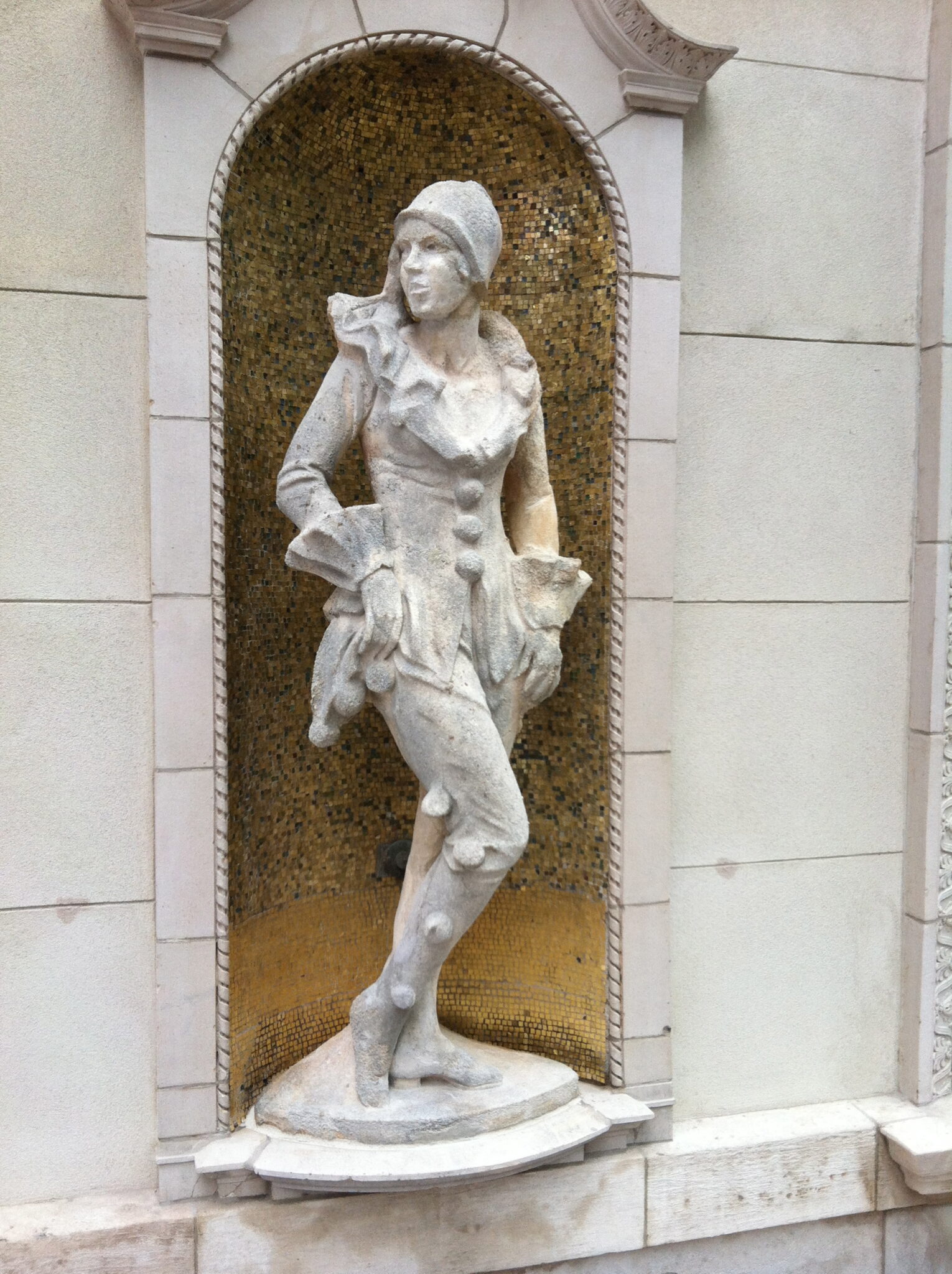
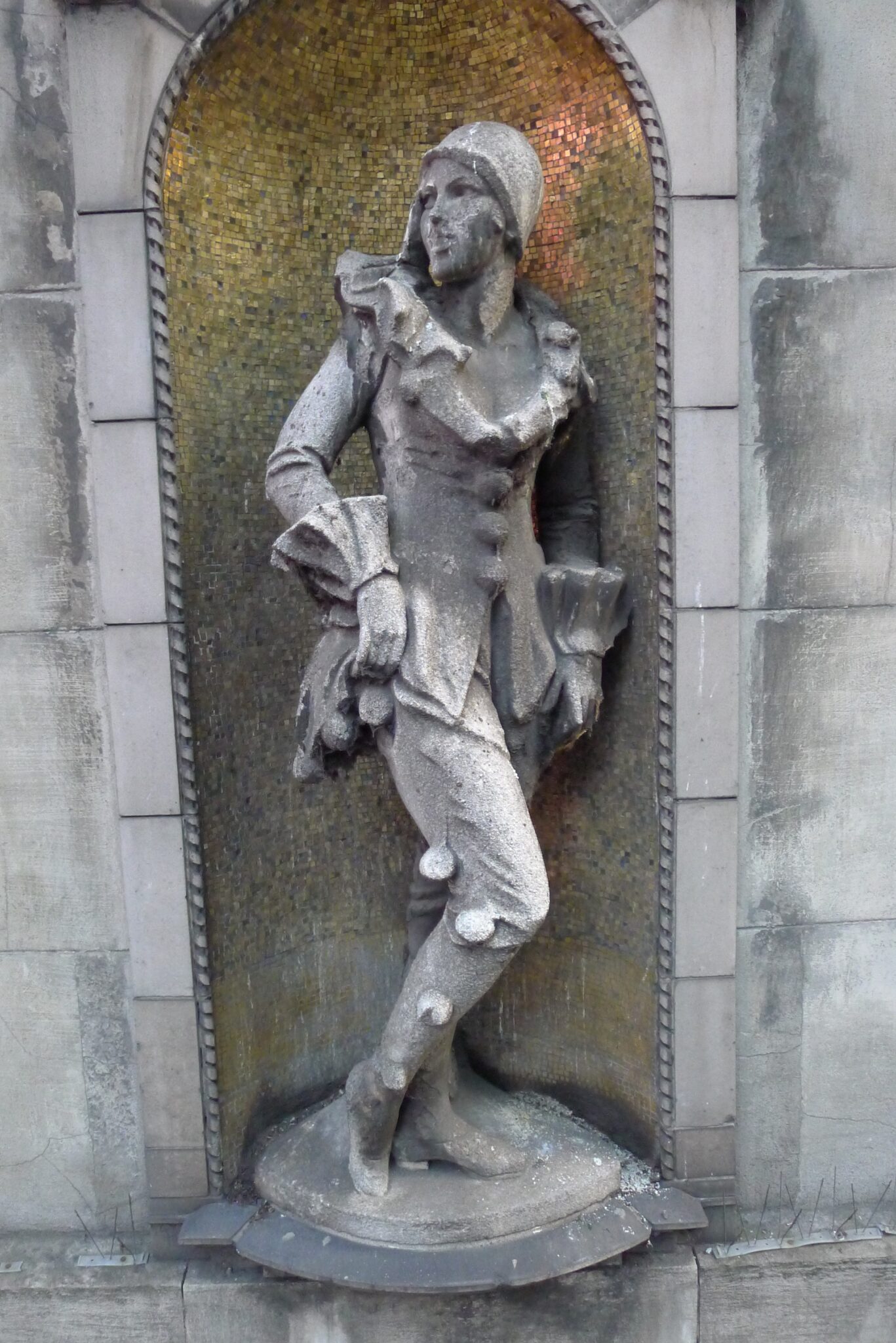
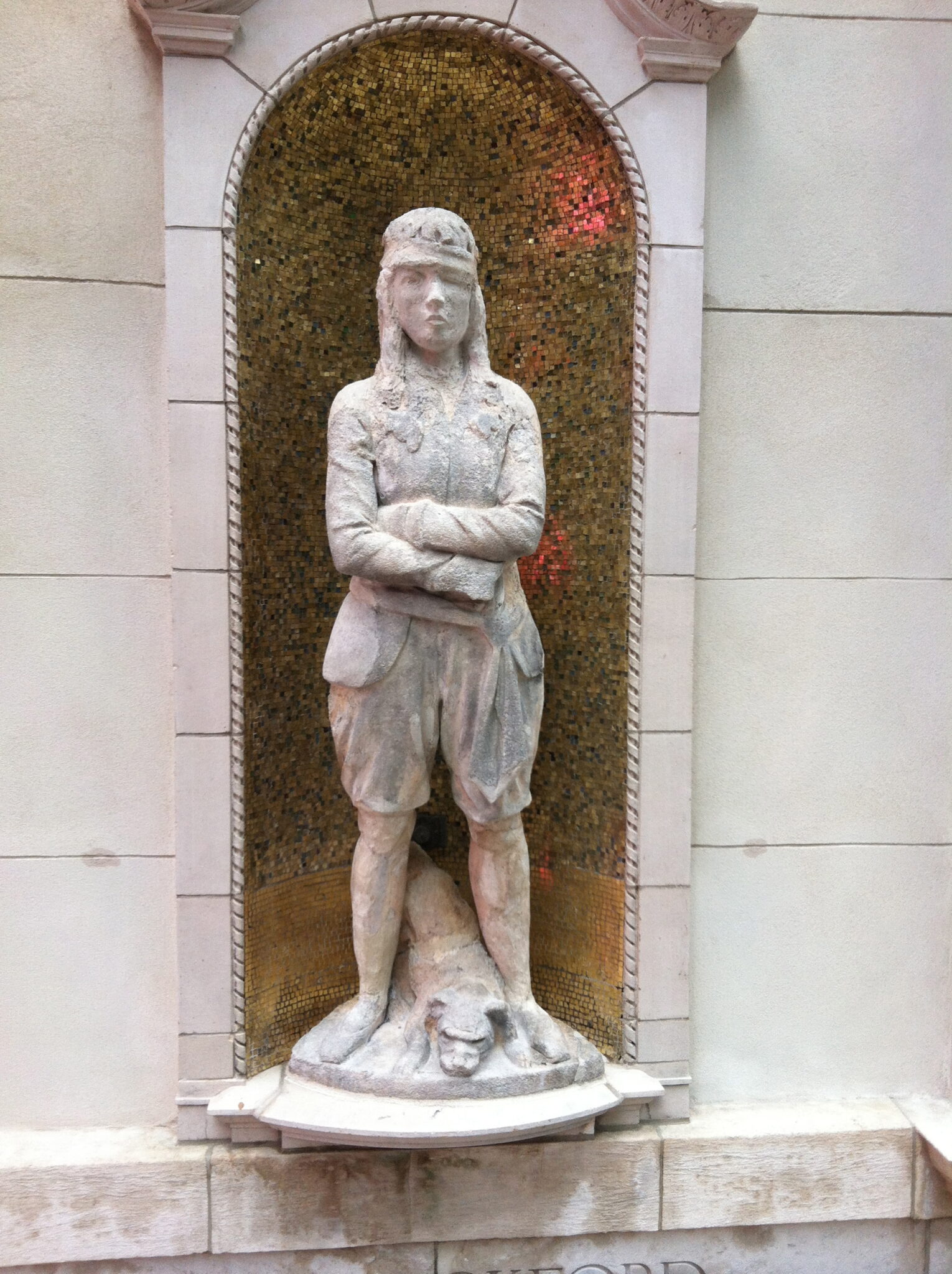
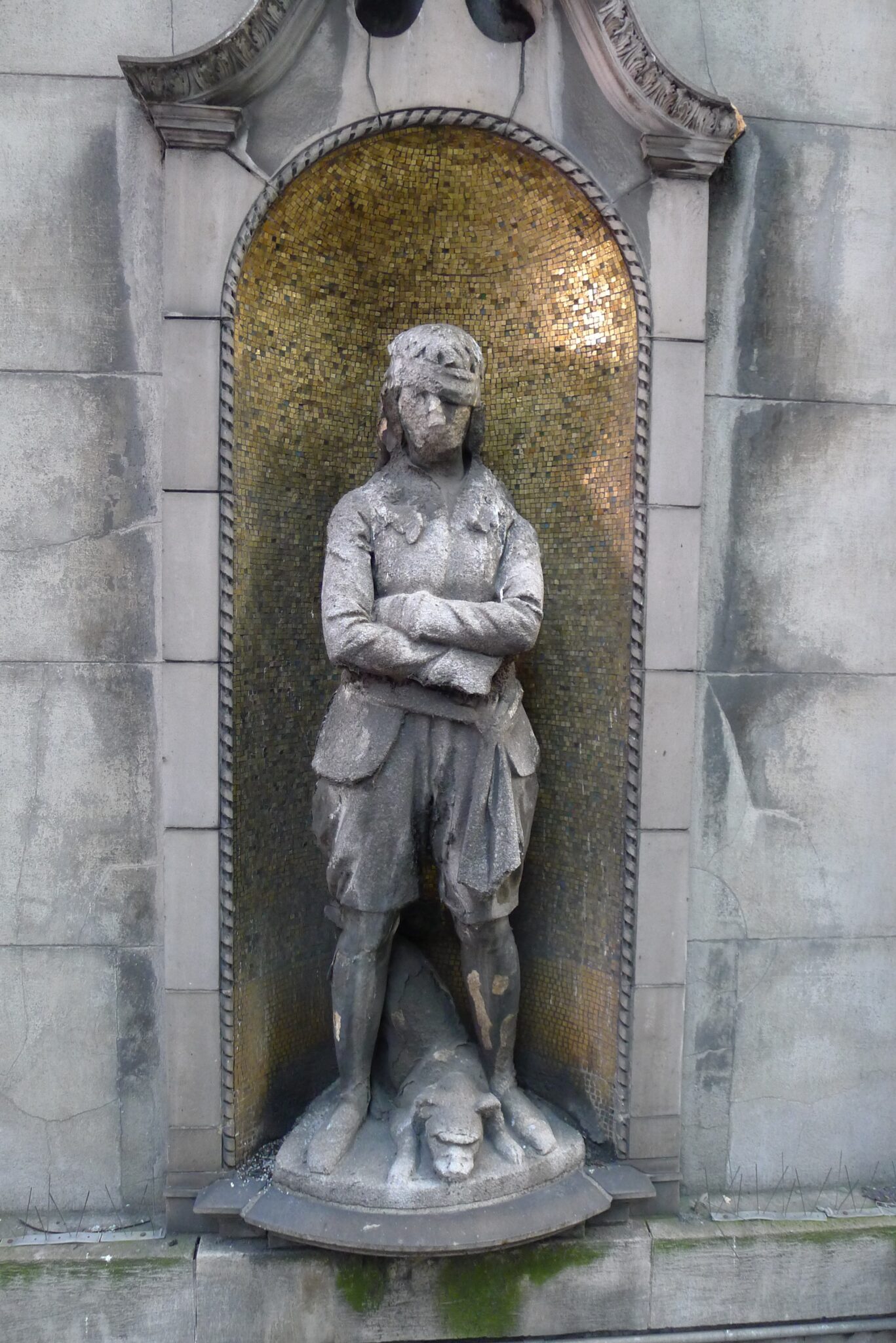
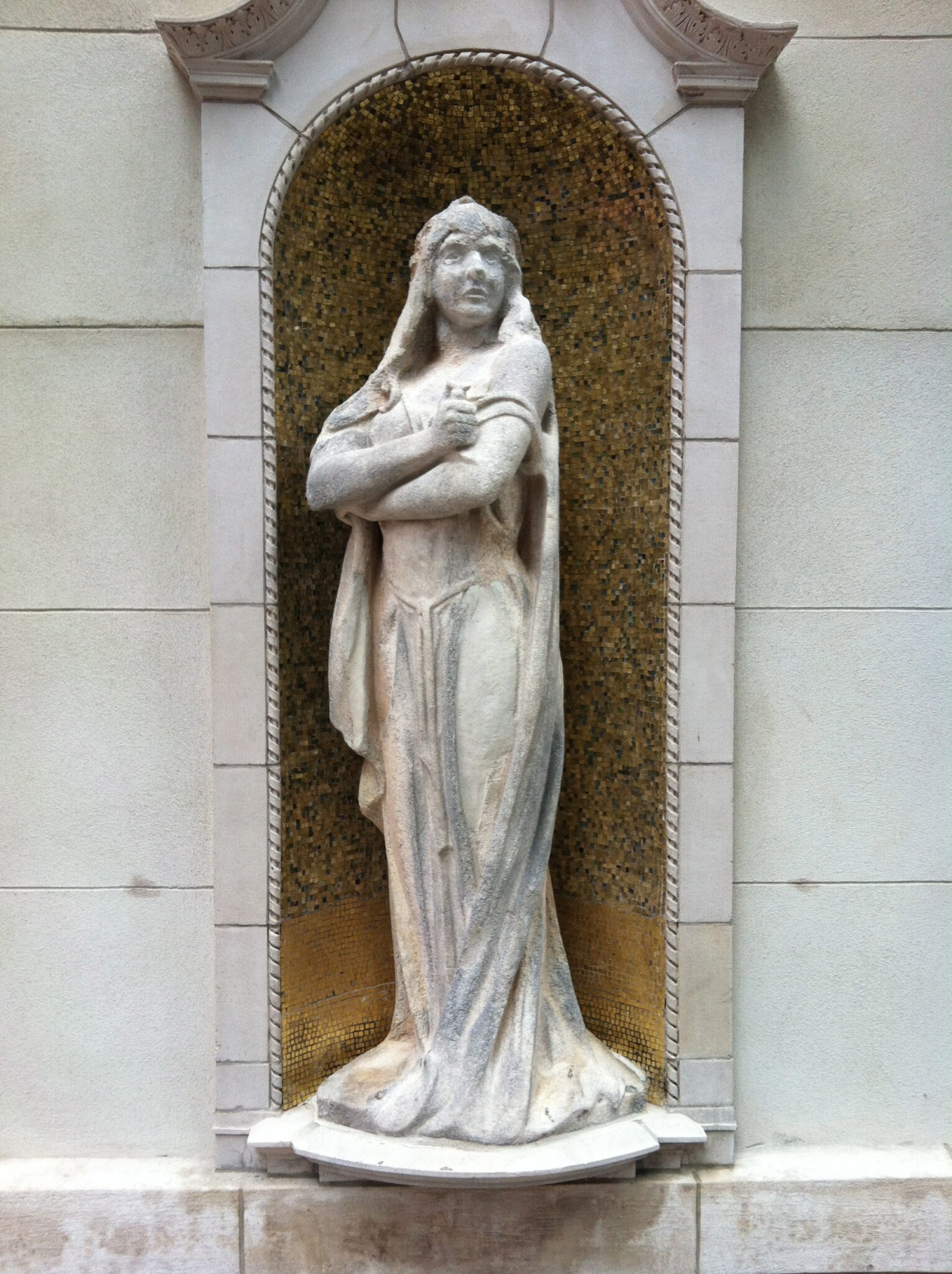
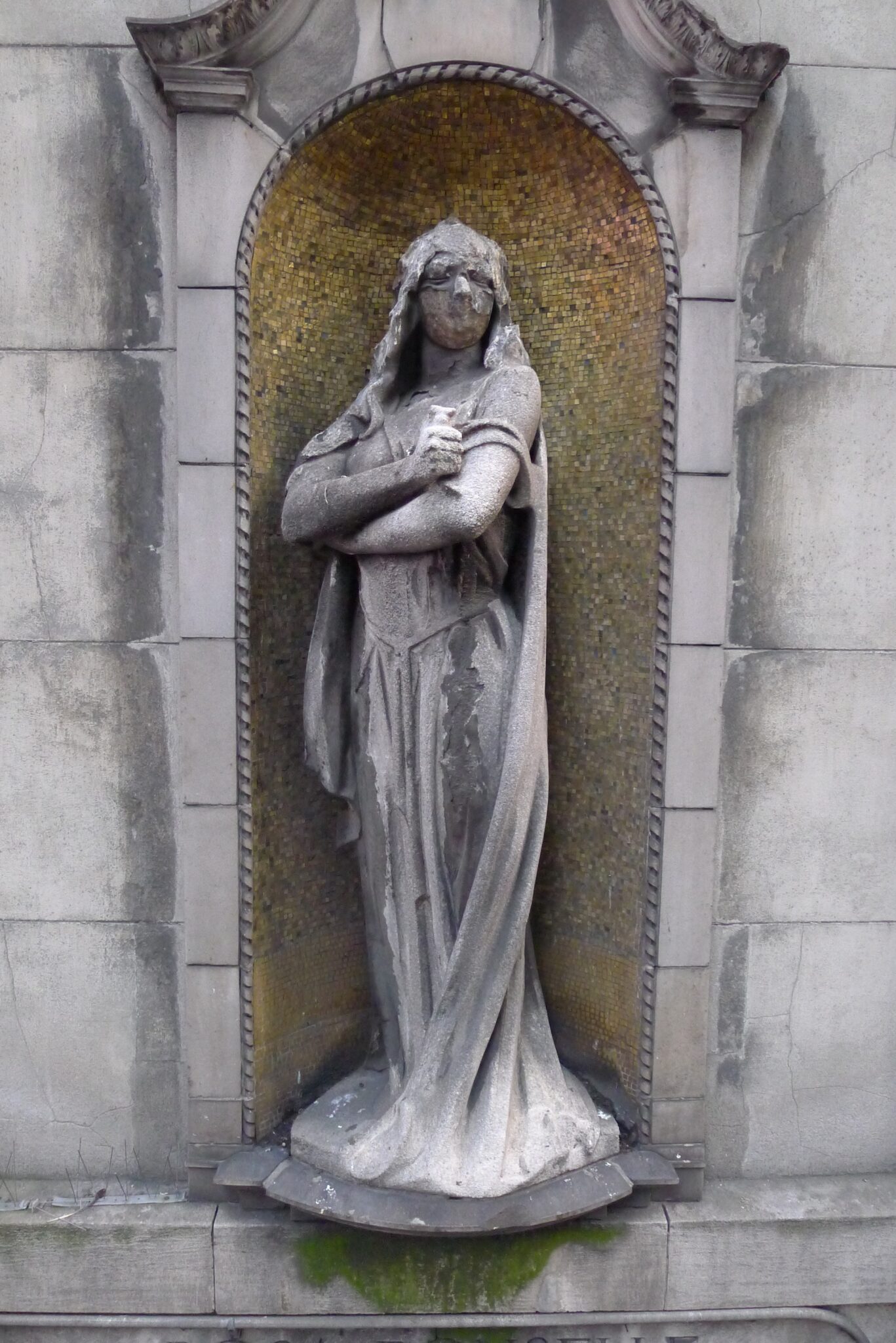
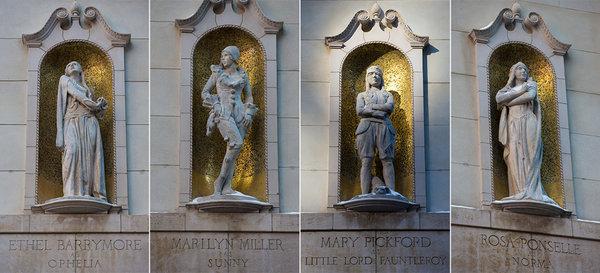
What is known as the I. Miller Building, due to its role as the former home of well-established women’s shoe store chain I. Miller, the structure is comprised of two brownstone four-story tenements. The buildings were remodeled to house the famous store by architect Louis H. Friedland in 1926. Designed as a tribute to Broadway theatre, the building facade prominently features four carved marble figures inset into mosaic adorned niches which emulated four leading actresses of the time: Ethel Barrymore as Ophelia to represent drama, Marilyn Miller as Sunny to represent musical comedy, Mary Pickford as Little Lord Fauntleroy to represent motion pictures, and Rosa Ponselle as Leonora in La Forza del Destino to represent opera. The statues were carved by Alexander Stirling Calder using the Beaux-Arts and Modernist influences he was renowned for, and installed in the building in 1929.
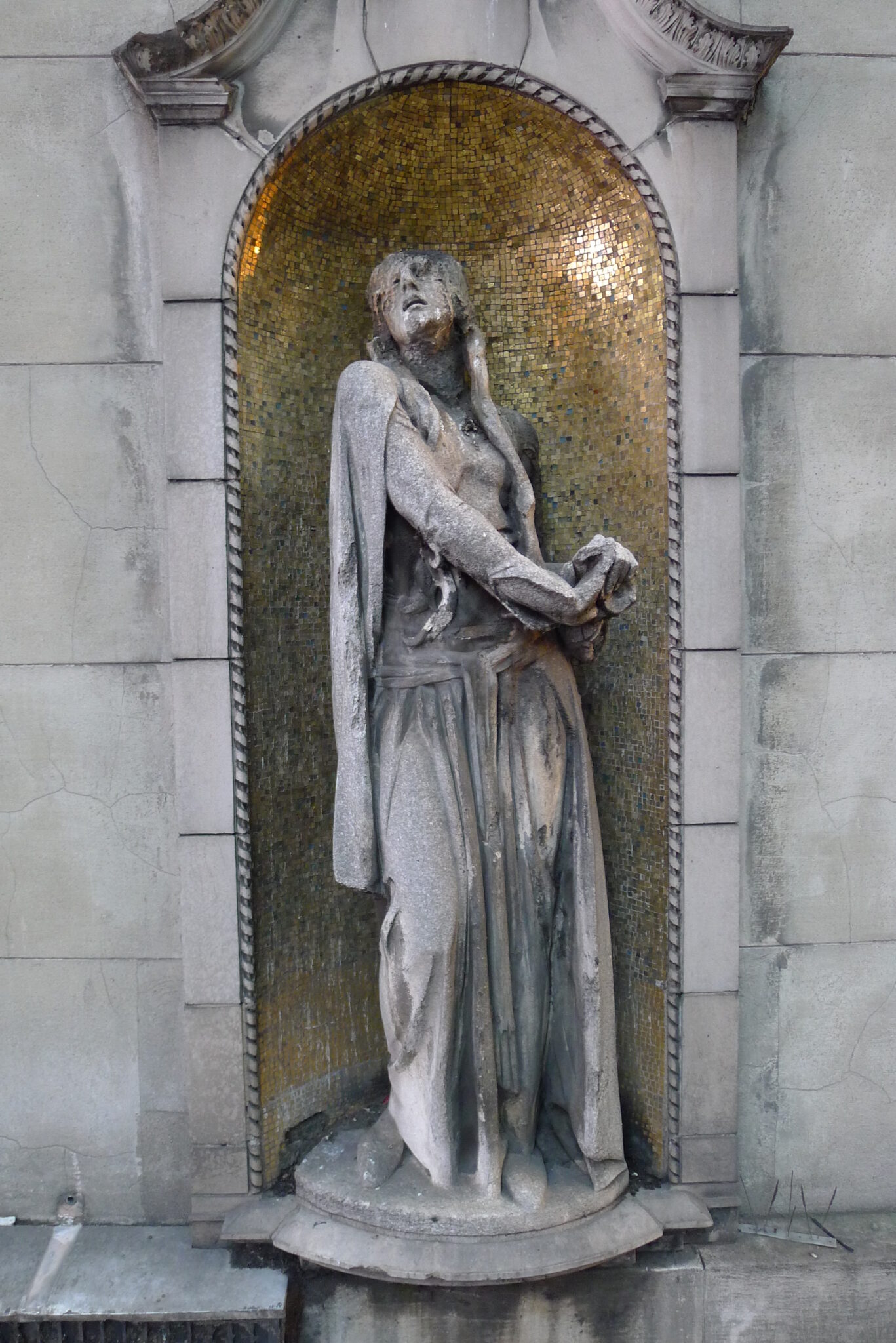
EverGeene was contracted to assess the condition of the sculptures and their mosaic embellished niches. The sculptures and their niches had suffered from deterioration typical of architectural elements in outdoor urban environments. The figures suffered severe erosion, disaggregation, weathering, soiling, and the formation of black gypsum crusts, and two of the four had structurally failed. The mosaics experienced atmospheric soiling, a buildup of gypsum crusts, loss of tesserae, and cracking. As part of a larger restoration of the building, EverGreene developed recommendations and implemented treatments on the statues and their niches.
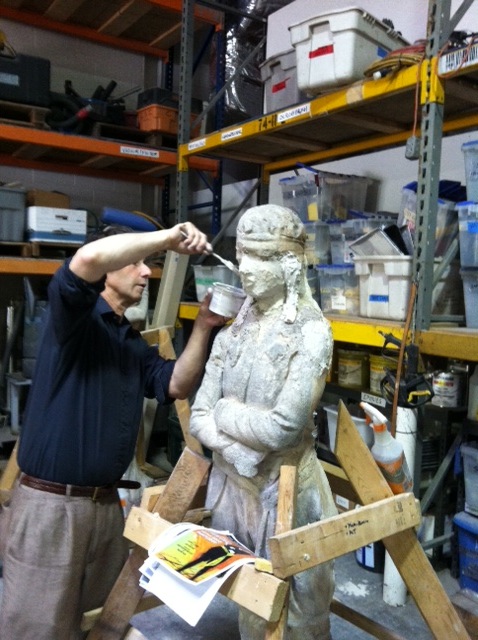
The sculptures were removed from their niches, crated, and brought to our studio. Treatment of the stone included:
- Consolidation to stabilize the extremely friable stone prior to other work.
- Disassembly, reinforcement, and reassembly to take the burden of its weight off the deteriorated stone at the legs.
- Cleaning surfaces to remove atmospheric and biological soiling using a range of techniques
- Removal of surface crusts using microabrasion and hand tools
- Second round of consolidation
- Recreation of sculptural losses
The niches were treated in-situ. Treatment included:
- Cleaning surfaces to remove atmospheric and biological soiling using a range of techniques
- Removal of surface crusts using hand tools
- Replacement of failed and lost tesserae with new custom cut gold foil backed glass
- Injection of cracks with high lime grout
- Replacement of failed or missing grout with new color matched modified grout.
EverGreene reinstalled the sculptures once treatments were complete.