Kennedy Space Center Collections Care
The Kennedy Space Center (KSC) is one of NASA’s ten field centers, which operates as a multi-user spaceport where NASA is able to partner with private aeronautics companies to further space exploration. Established in 1968, the center acts as a main launch site and a hub for research and development facilities, as well as a visitor complex where the space program is publicly accessible. As a part of their vast complex, the Kennedy Space Center is home to numerous artifacts relating to the history of space flight and aeronautics development.
EverGreene has worked with the Kennedy Space Center on several projects, performing conditions assessments, implementing comprehensive treatment plans, and providing maintenance recommendations for various objects within their collection.
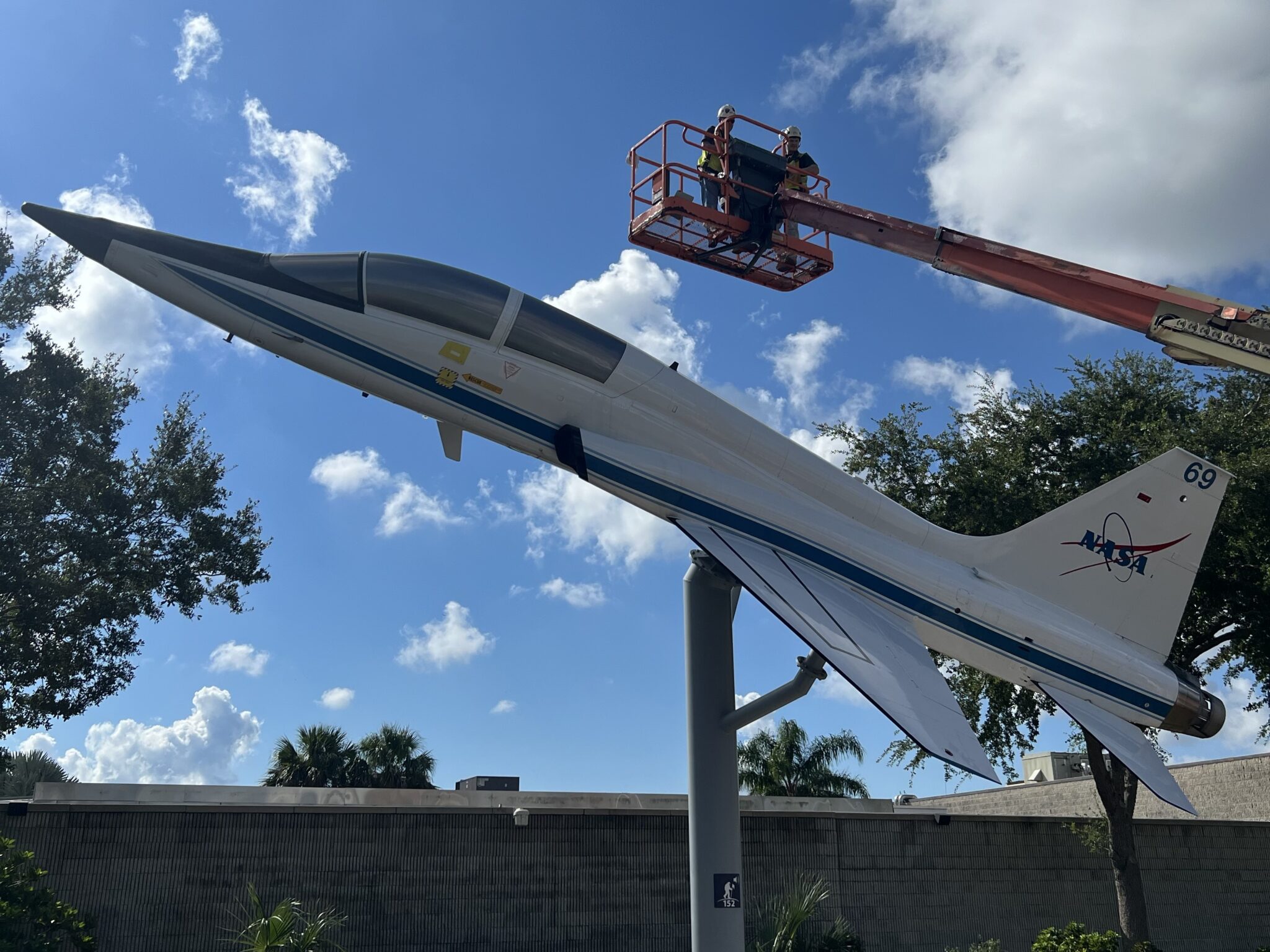
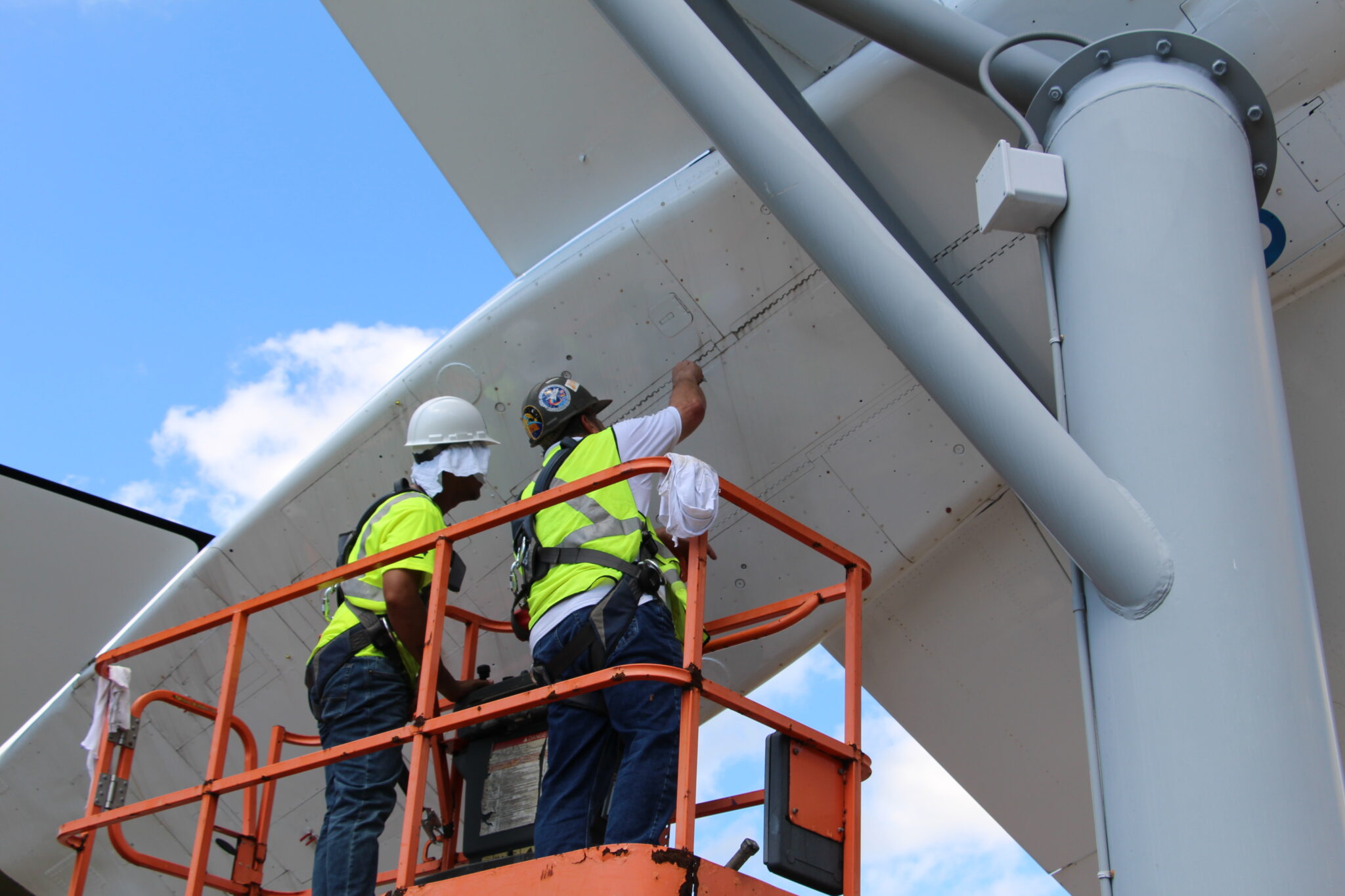
T-38 Talon Aircraft: This high-altitude supersonic jet was first manufactured in the 1950s by the Northrop Corporation’s Aircraft Division. NASA has used the T-38s for a wide variety of purposes. Throughout the Apollo and Space Shuttle era, astronauts frequently used these type of aircrafts between NASA locations in preparation for launches into space. More recently, the aircrafts have been used as test platforms, chase aircrafts, and vehicles to allow NASA pilots to maintain their minimum flight requirements. EverGreene performed an on-site inspection to determine exact construction materials, present conditions, and causes of deterioration and provided recommendations for future preservation treatments.
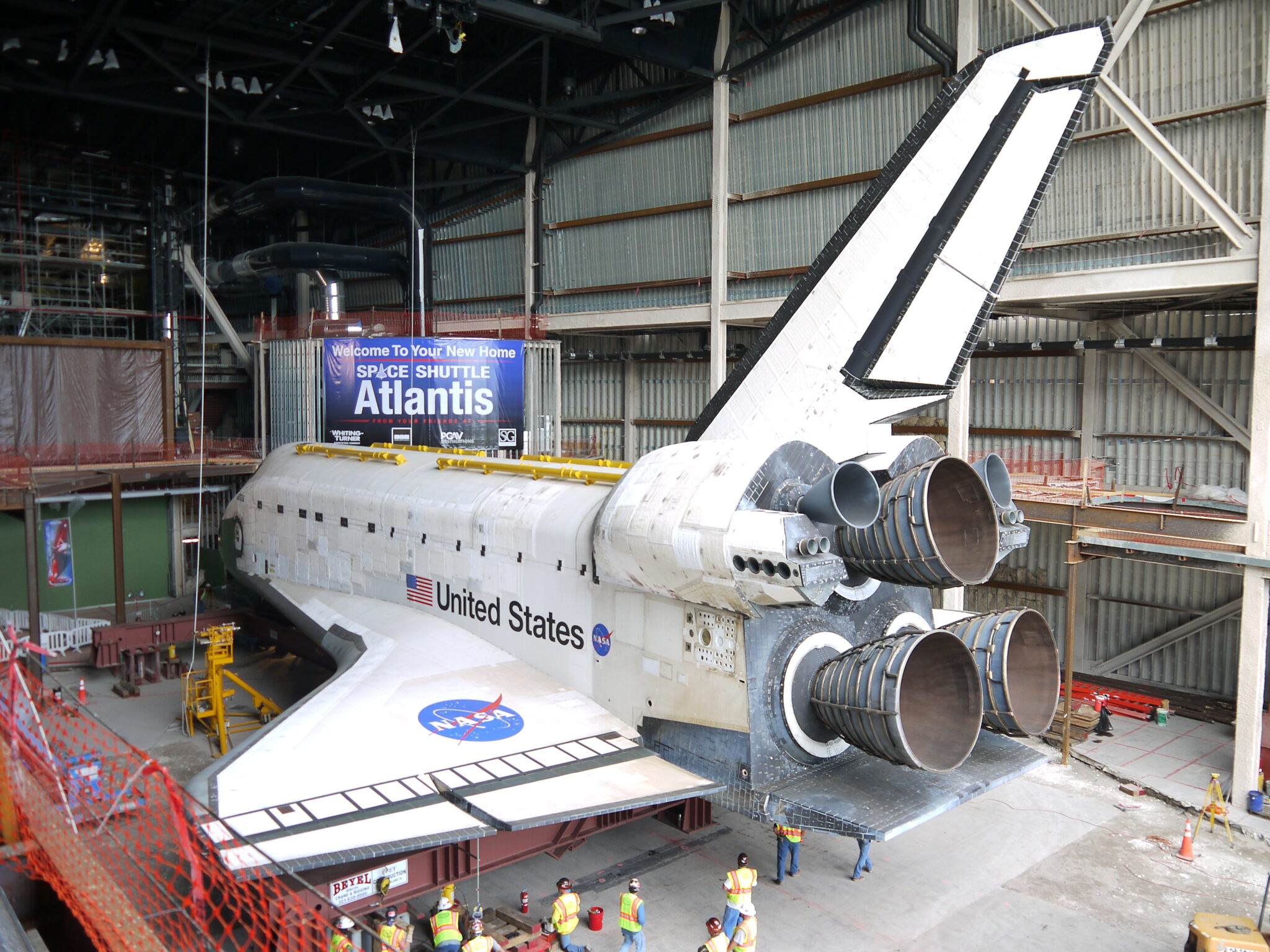
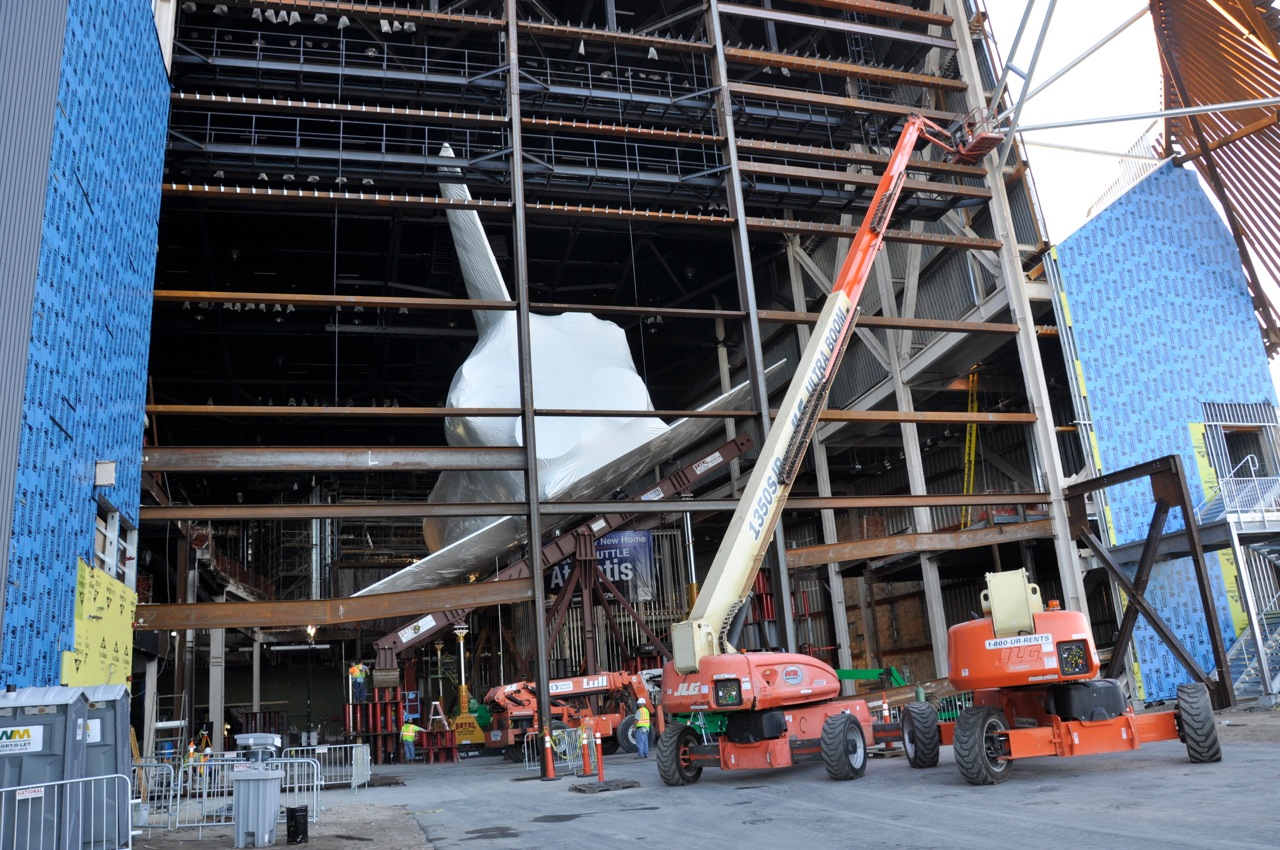
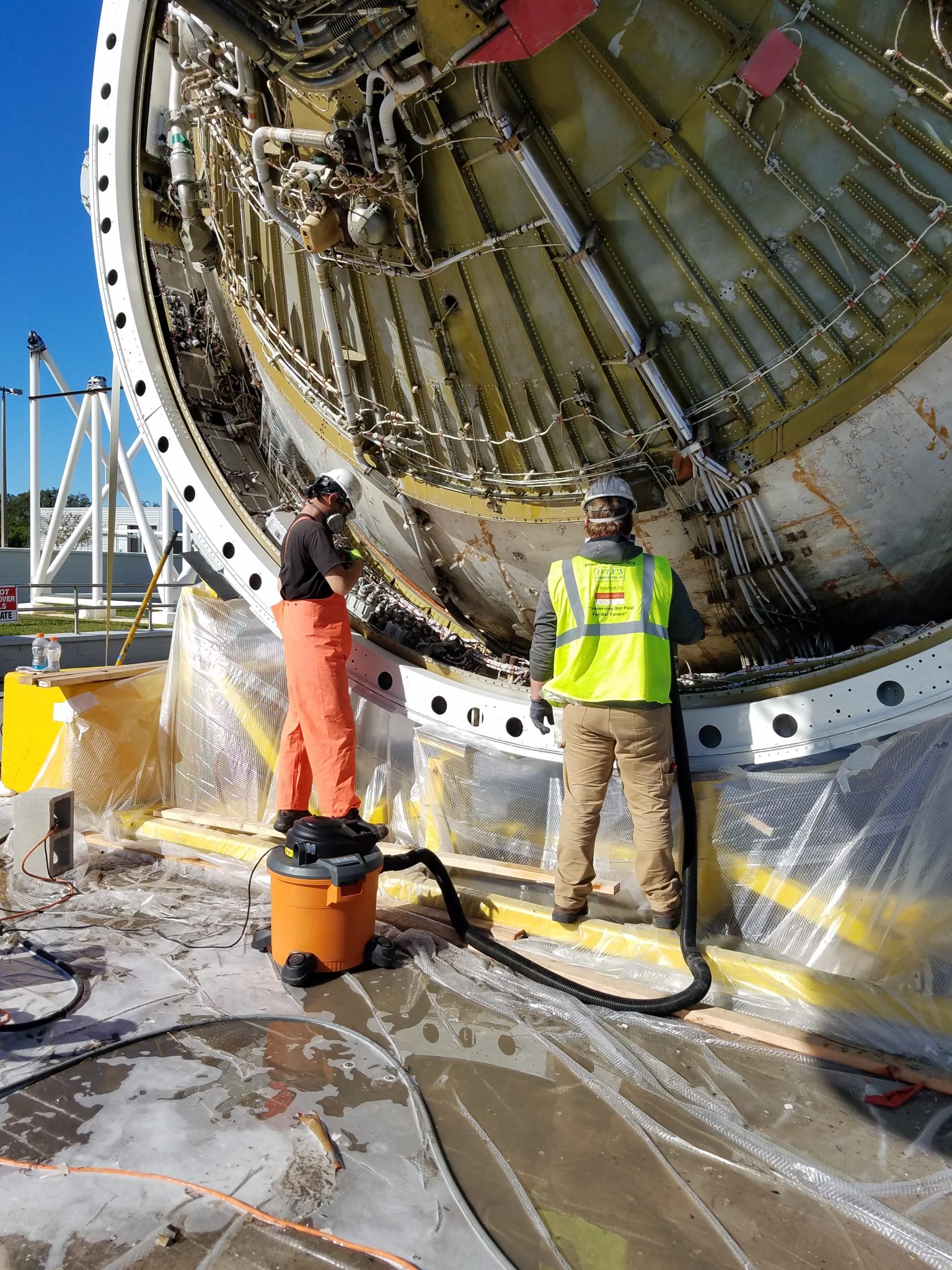
Atlantis Space Shuttle: This example is one of the three remaining orbiters from the NASA Space Shuttle program and the last to fly before the program was retired. The shuttle was moved to KSC in January 2013 to be put on permanent static display in a purpose-built hangar. EverGreene was contracted to assist with the transition of this artifact into exhibition in 2017. During this process, EverGreene controlled and monitored macro and micro-climates inside Atlantis while the hangar was erected around it. EverGreene further assisted with implementing a long term monitoring systems, developed recommendations for repairs, and cyclical cleaning and maintenance plans. In 2025, EverGreene returned to KSC for dry cleaning treatments, removing excess dust and debris from the surface.
Hubble Space Telescope: This telescope launched into low earth orbit in 1990 and continues to remain in operation. KSC Visitor’s Complex contains a full scale replica of the telescope on display. Conservation treatments included dry cleaning to remove excess dust and debris from the surface.
Challenger Midbody Artifact: One of NASA’s first shuttles, the Challenger broke apart in 1986 just 73 seconds into its tenth flight, marking the first fatal accident involving an American spacecraft while in flight. The artifact is part of a memorial in the visitor complex which includes a vast collection of personal items from both the Challenger and Columbia.
Columbia Cockpit Artifact: in 2003 the Columbia disintegrated upon re-entry during its 28th flight, marking the second fatal accident involving American spacecraft while in flight.
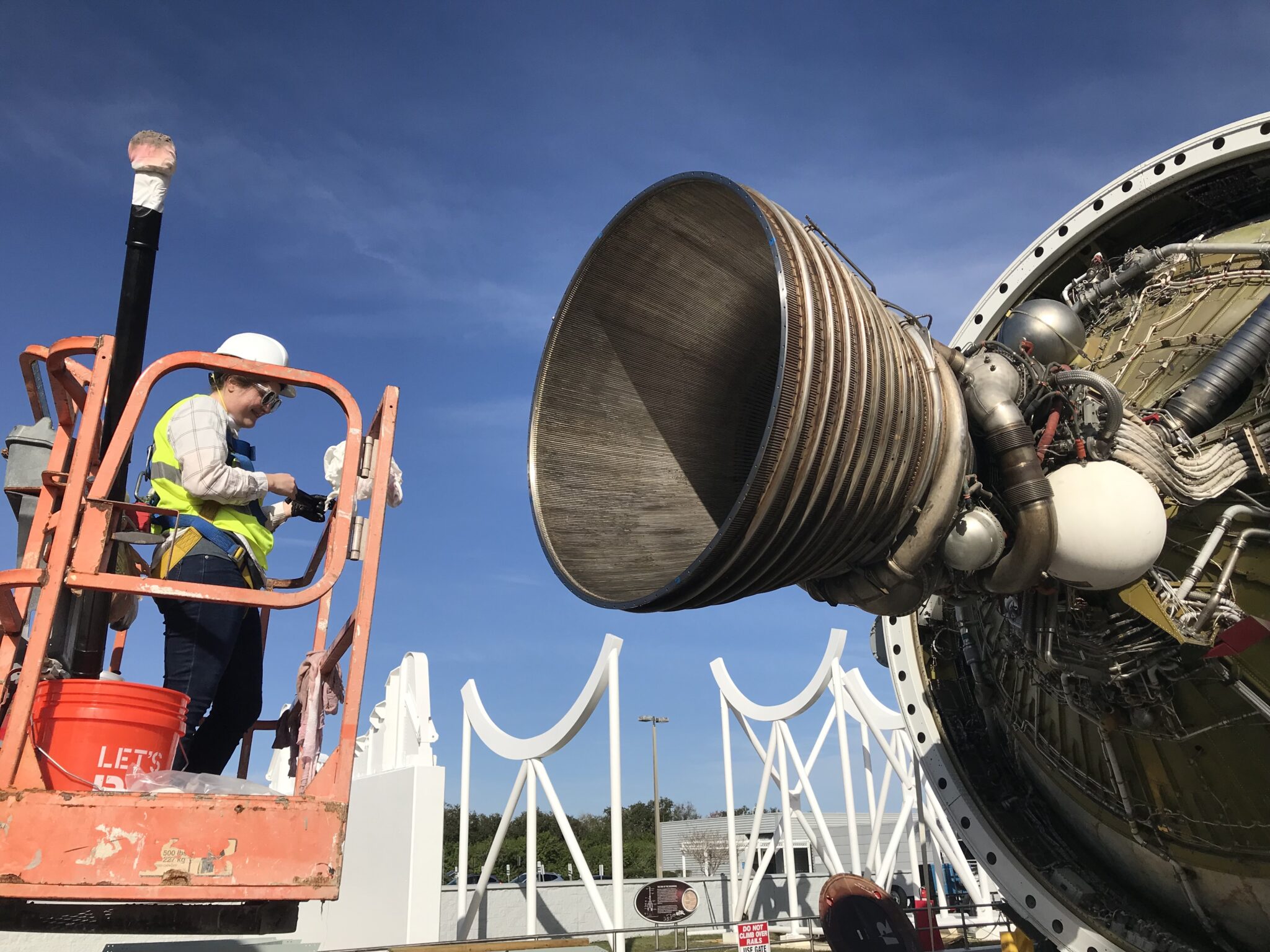
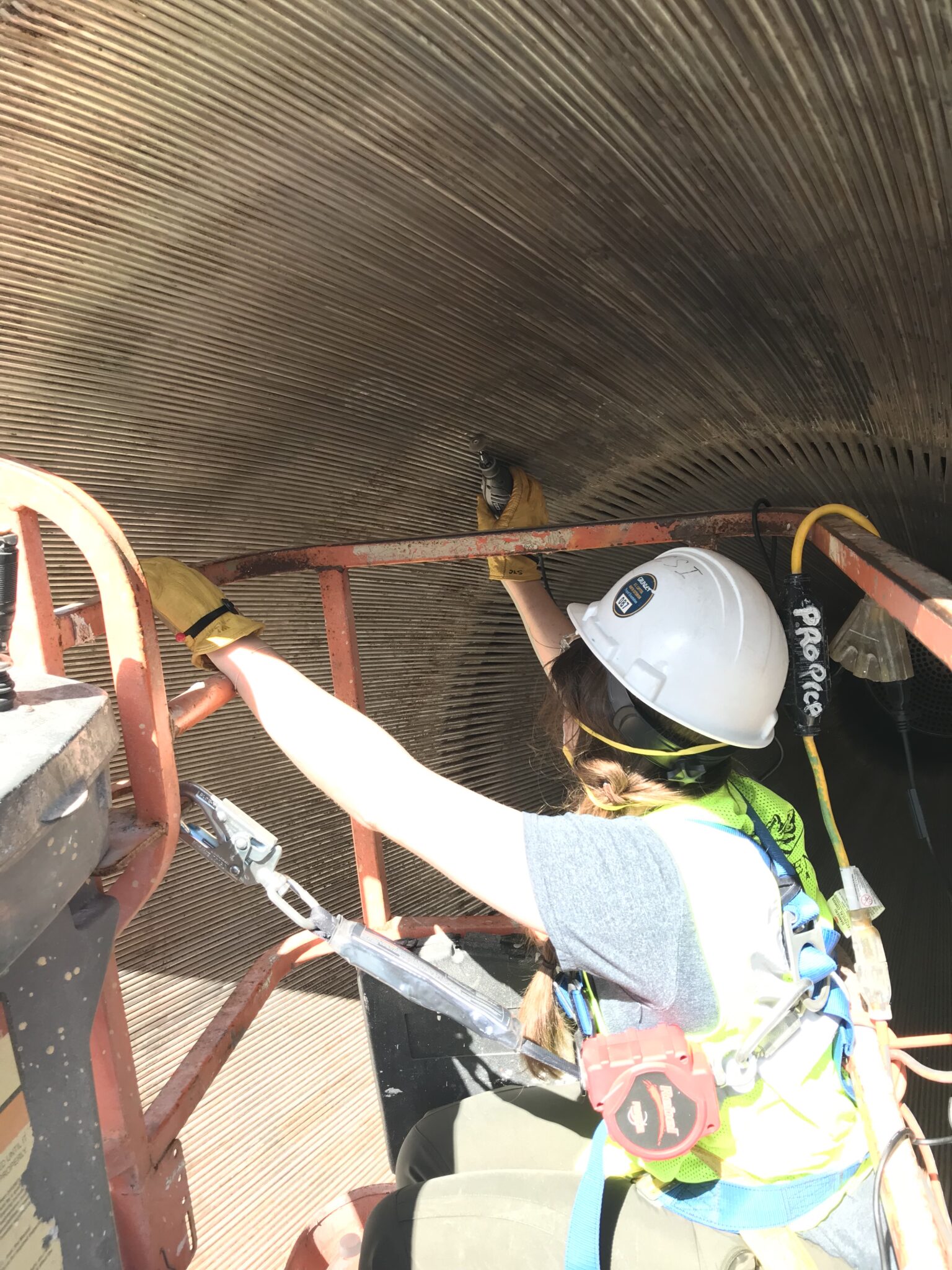
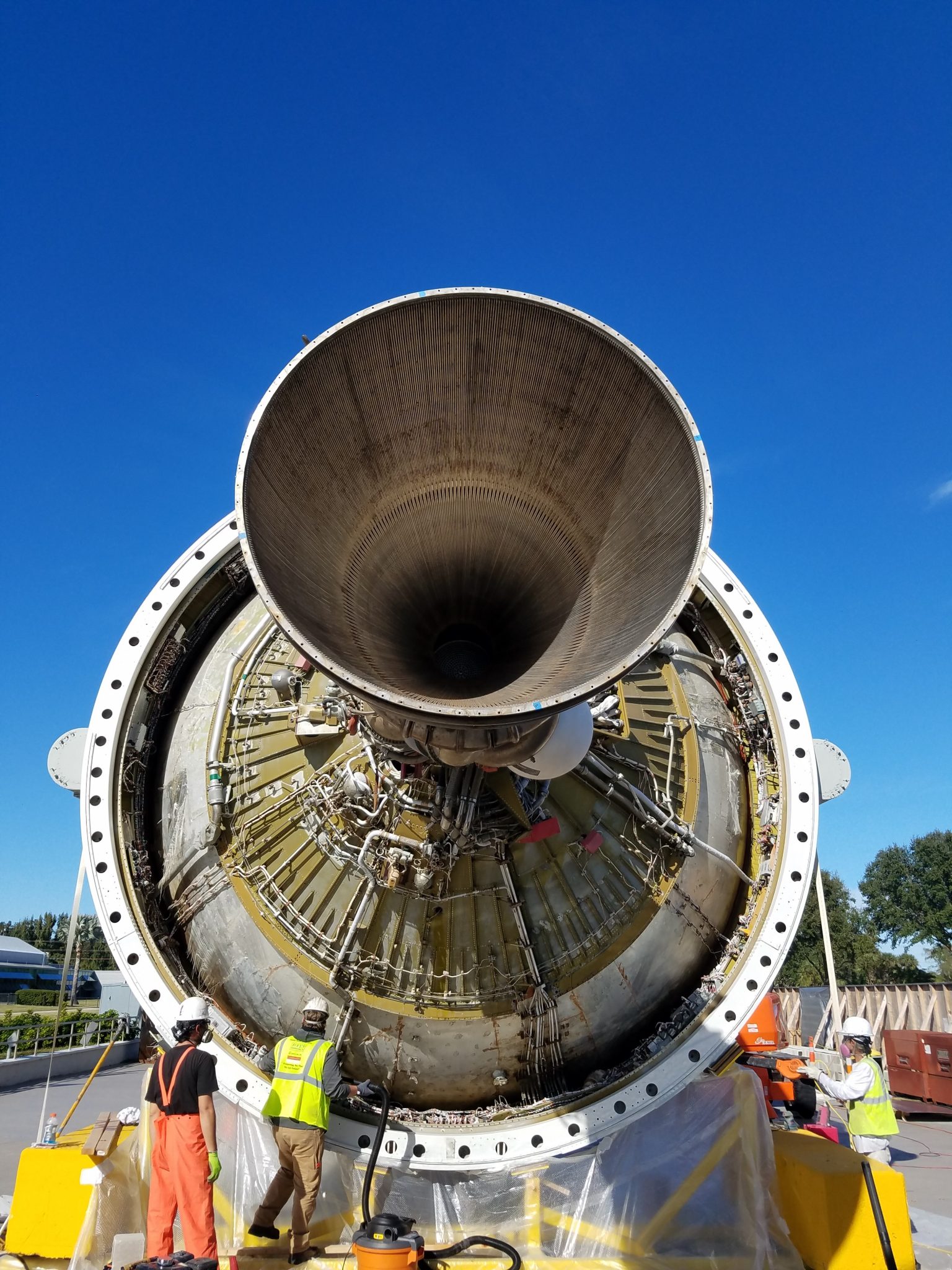
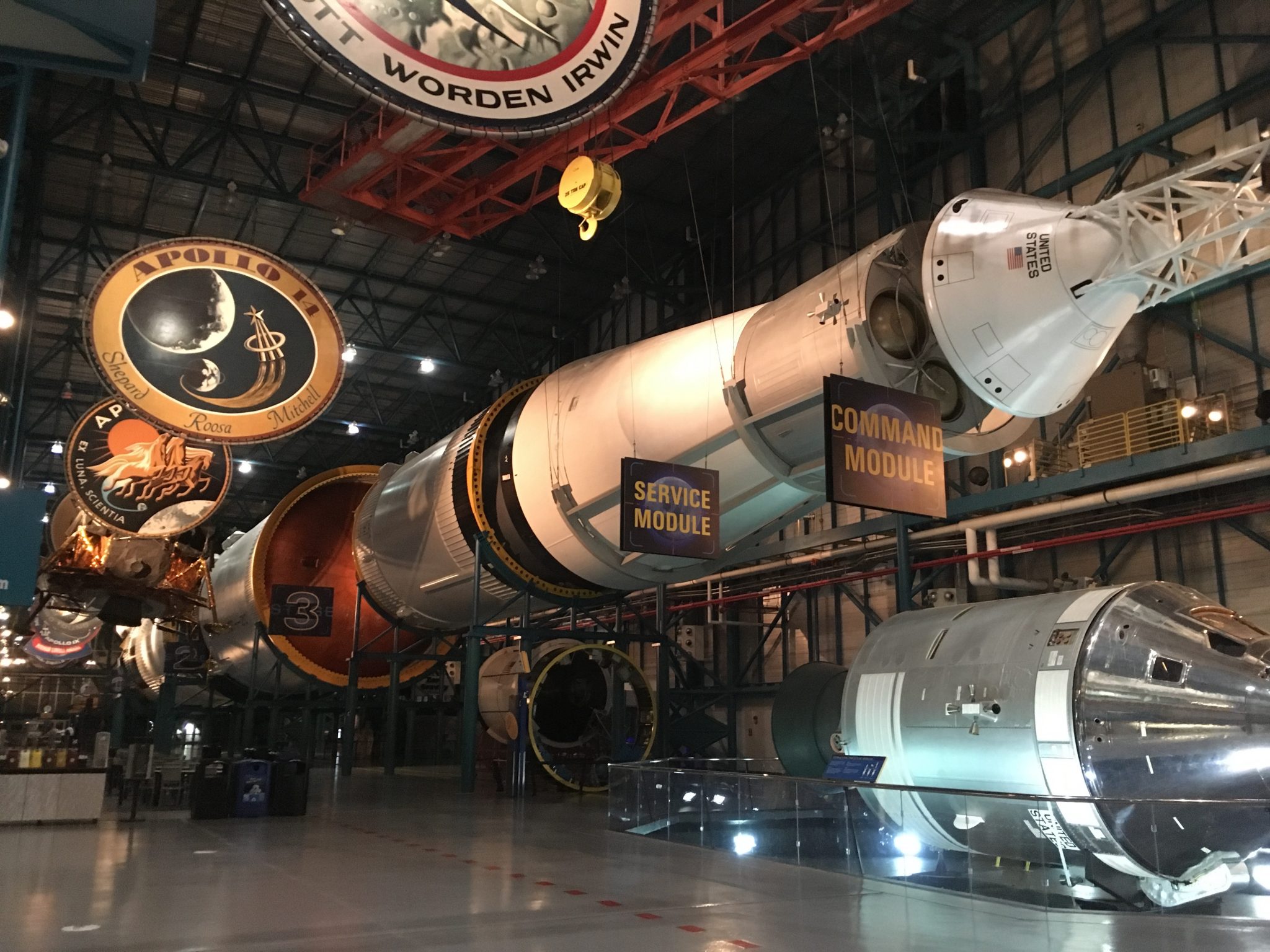
Saturn 1B Rocket: The smaller, less-powerful forerunner to the Saturn V rocket launched Apollo 7, the first successful mission of NASA’s lunar landing program, with the first three-person crew to enter orbit together. This particular rocket was never used. EverGreene assisted with the removal and replacement of the “S.IB Stage Beam” and the steel ring at SM/SLA, removal and disposal of the SPS engine replica, and the removal and stabilization of the J-2 Engine in S-IVB Stage.
Saturn V Rocket: One of only three moon rockets remaining in the US, Saturn V is on display as the centerpiece of the Space Center’s 100,000-square-foot Apollo/Saturn V Center. EverGreene repaired structural fracture at one of the two gimbal strut actuator attachment points (clevis) by adding two steel plates to immobilize it.
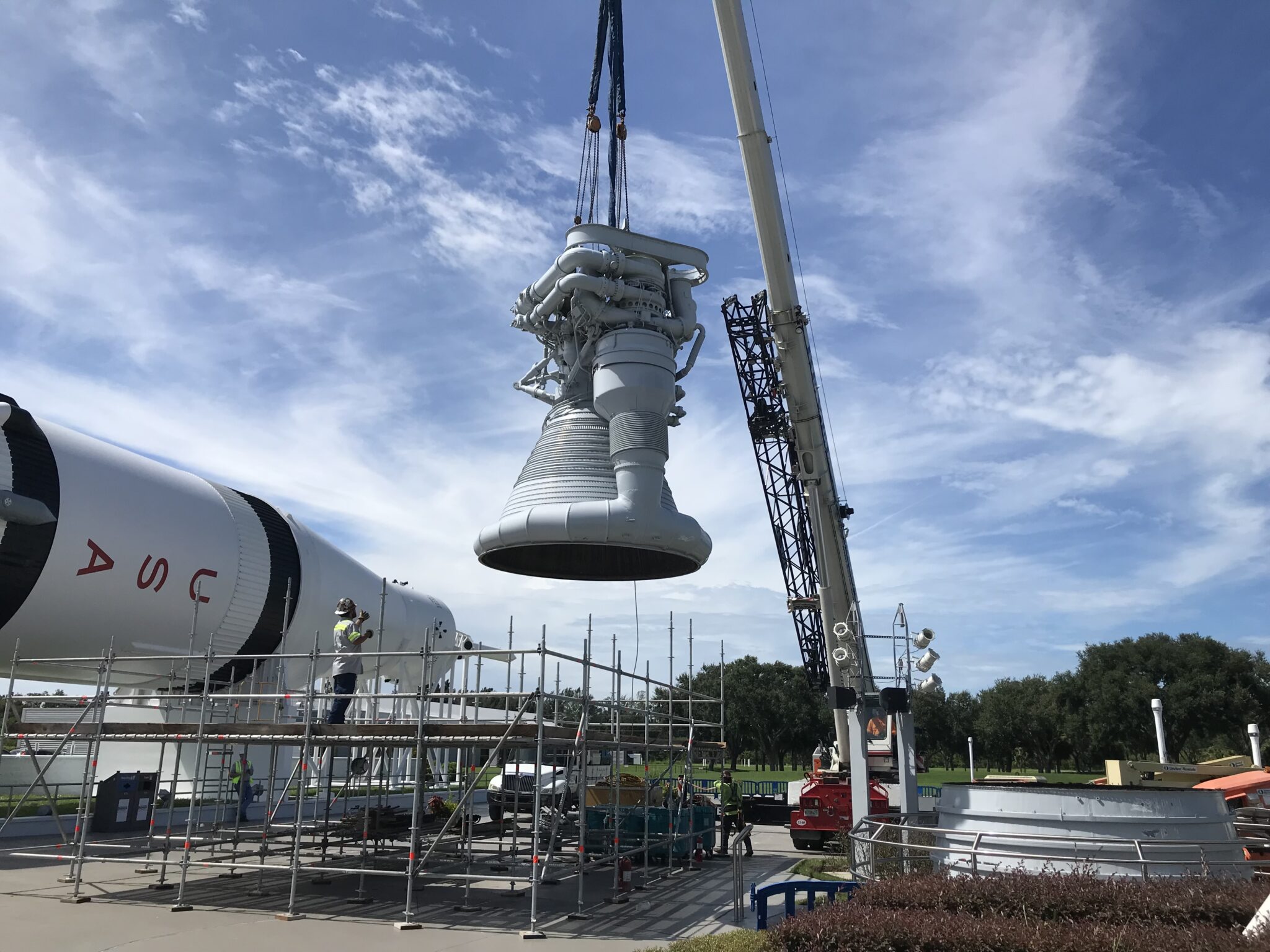
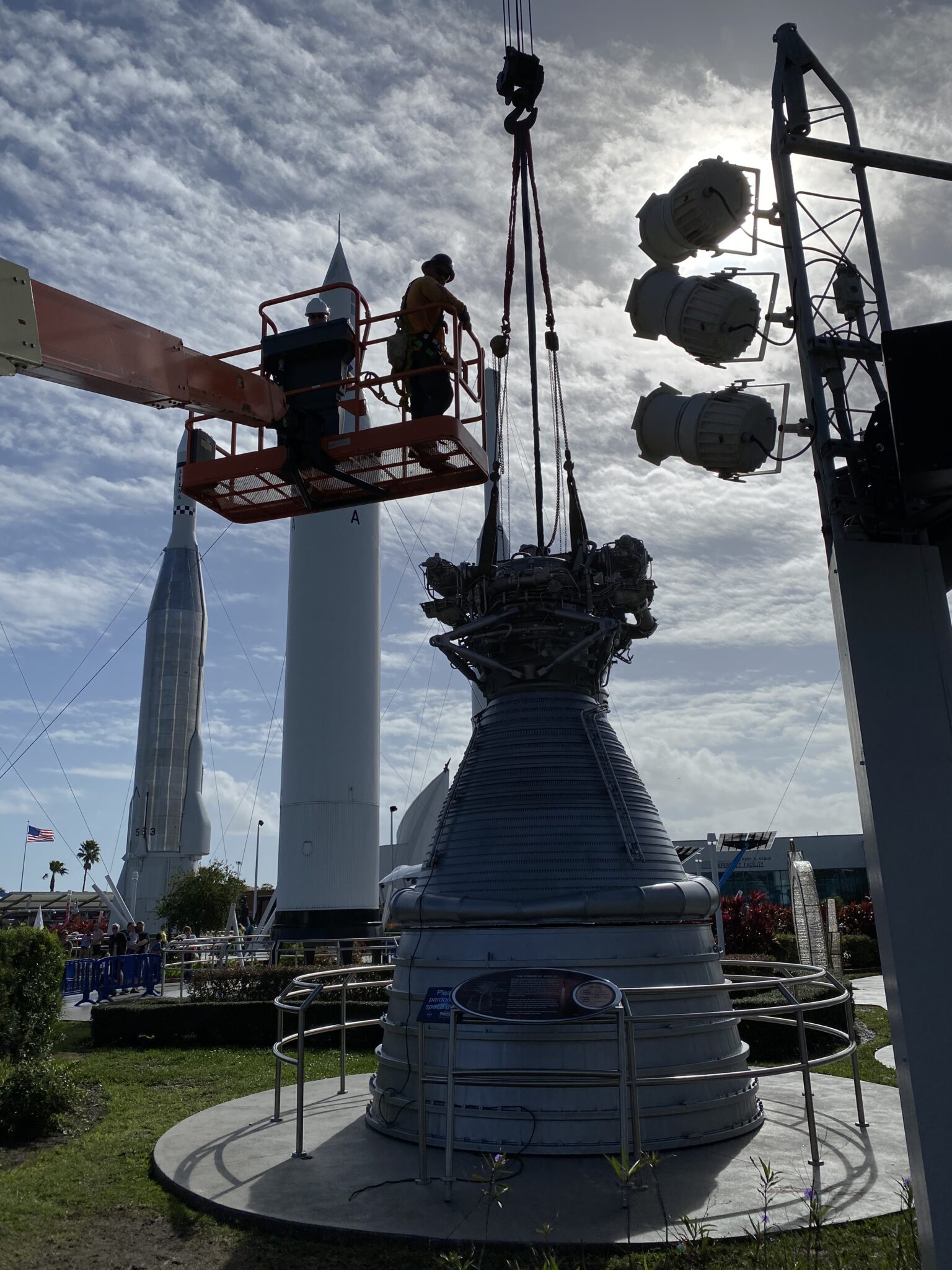
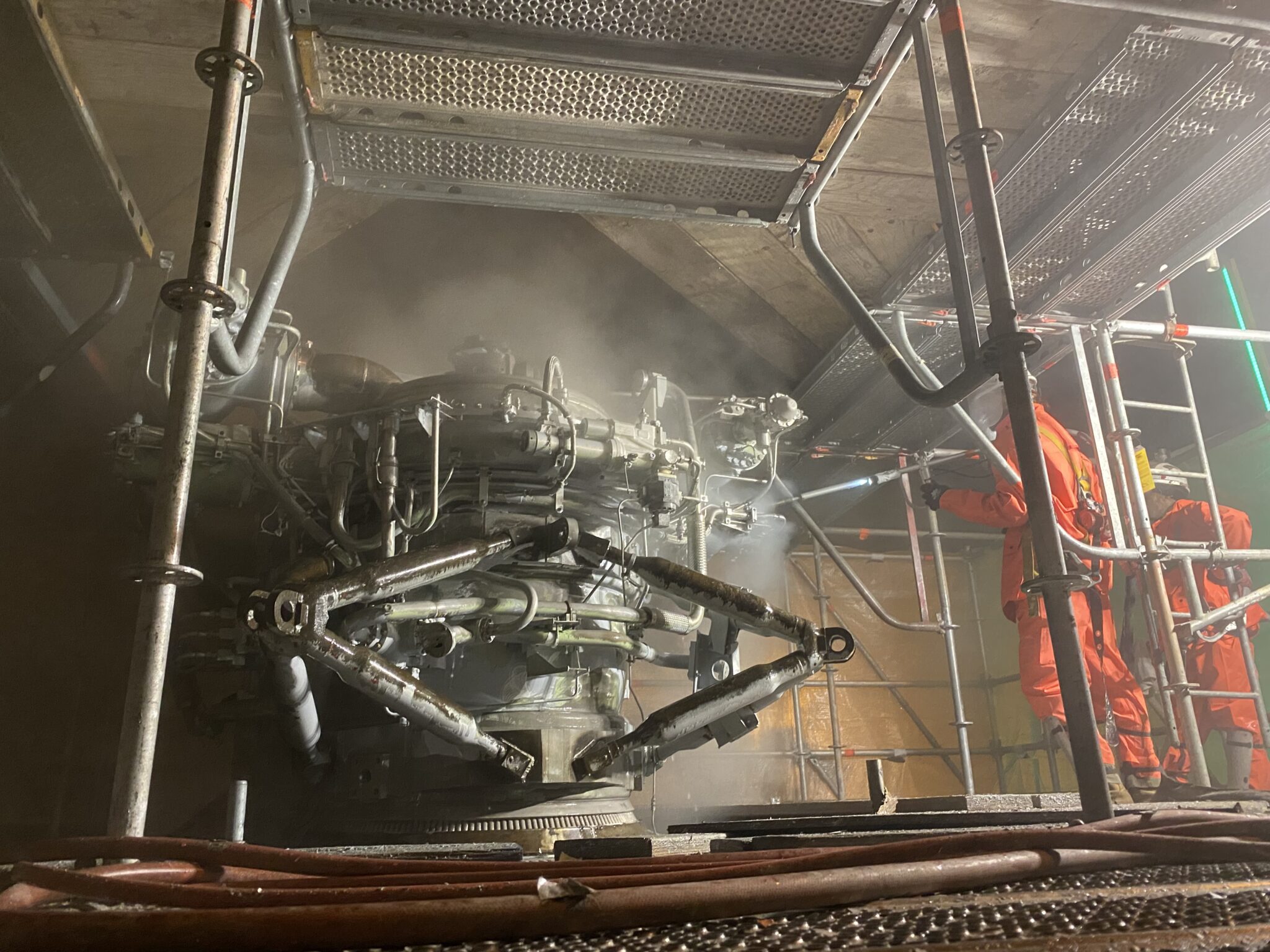
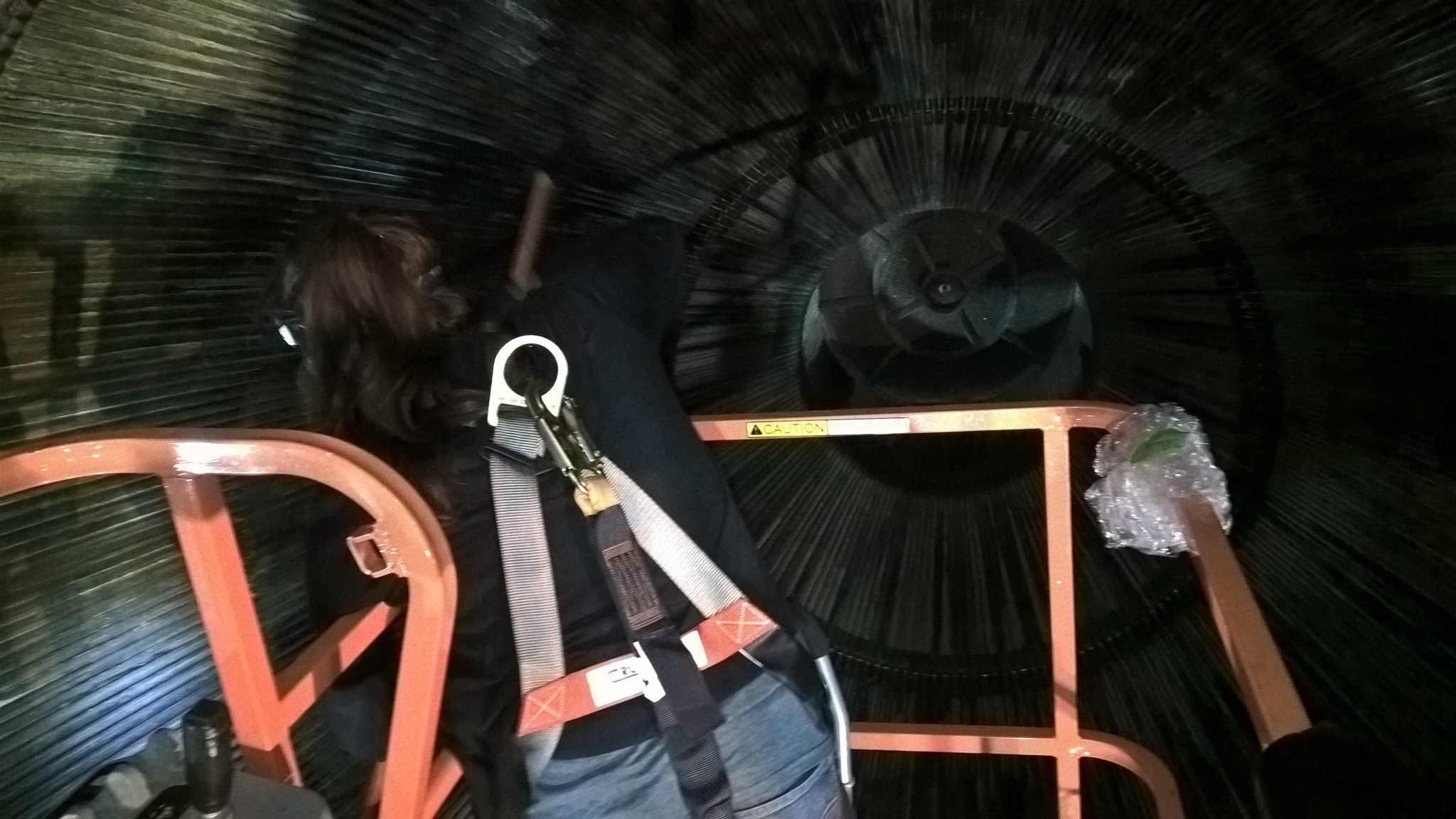
KSC F-1 Engine Prototype: Initially developed by Rocketdyne in the late 1950s for the US Air Force, this engine is one of the only two high-fidelity prototypes in the country. Although the Air Force halted the engine development, NASA recognized its utility and contracted Rocketdyne to complete the F-1, which they did in 1963. It remains the most powerful single-nozzle liquid-fueled rocket engine ever to be used in flight, and it launched 13 Saturn V rockets in space missions for the Apollo Program. EverGreene rigged and moved the F-1 engine from the exhaust extension to a work area for provide access to the interior, using a custom built fortified scaffolding. Failed wire insulations were re-wrapped and a detailed display and maintenance plan developed.
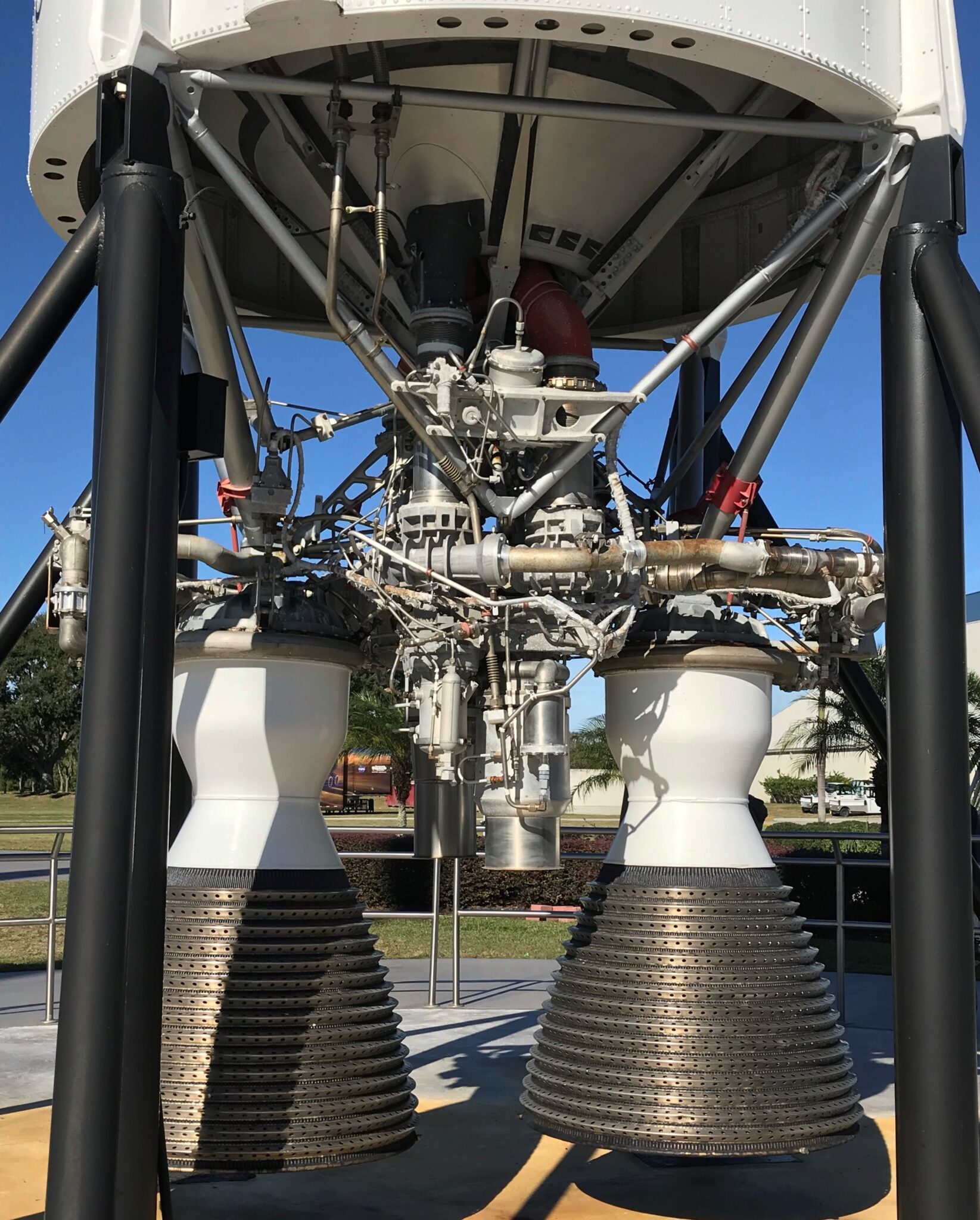
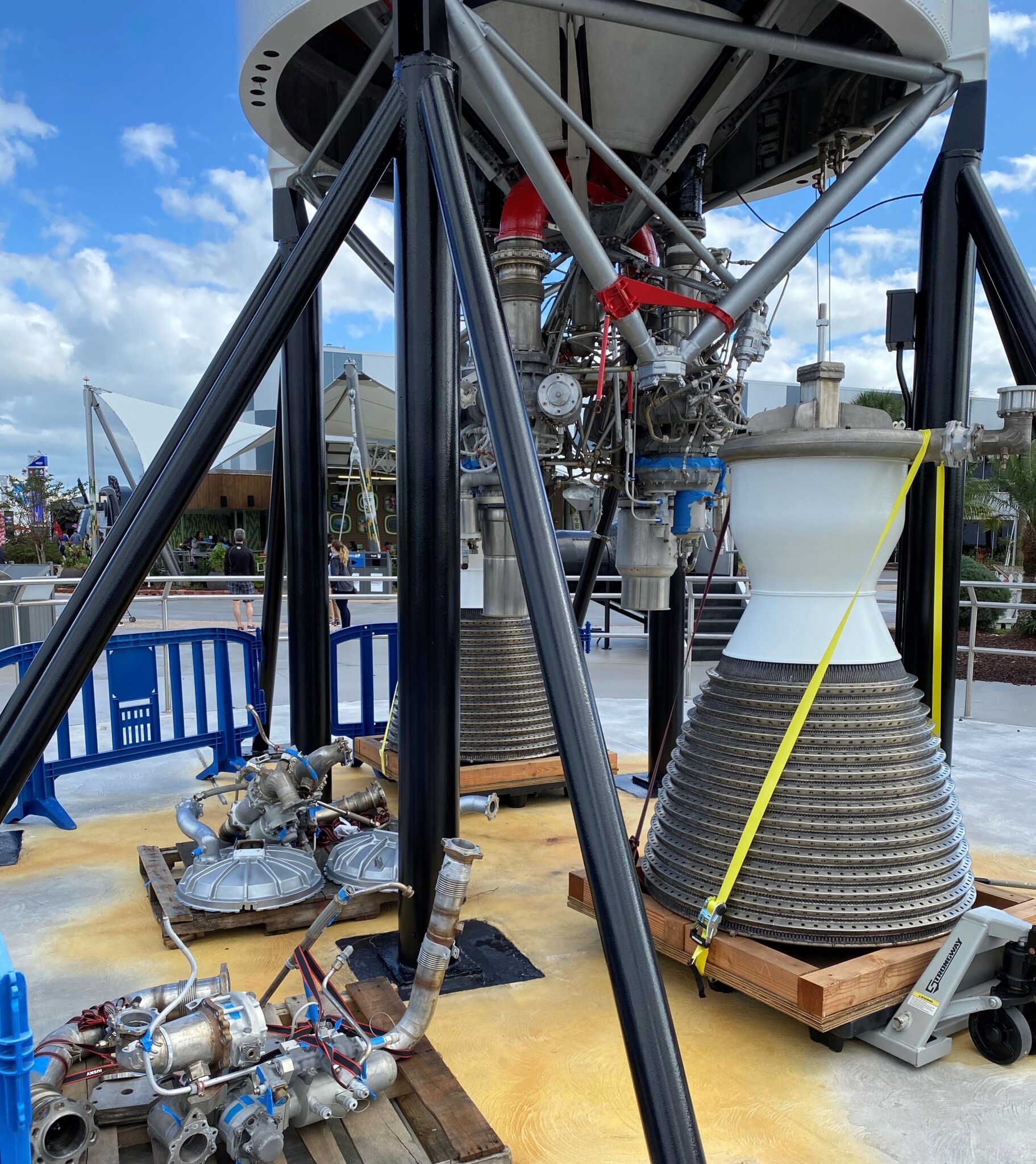
Titan II Rocket Engine: Developed for the US Air Force beginning in 1955 to fulfill the need for an intercontinental ballistic missile (ICBM), Titan rockets were also used as crewed space launch vehicles for the NASA Gemini Program. The Titan II was developed in 1962. The one currently on display is a refurbished ICBM fitted with a replica Gemini space capsule, painted to resemble the Gemini 3 booster. Work specific to this artifact included the disassembly of engine components and display armature, fabrication and installation of new stainless steel support armature, selective repainting, re-wrapping of failed wire insulation, and the development of a maintenance plan with recommendations for display parameters.