Preservation at National Cemeteries
National cemeteries can be found across the United States. They are managed by three different government agencies: the Department of Veterans Affairs (VA) National Cemetery Administration (NCA), the National Park Service (NPS), and the Department of the Army. The NCA was established in 1862 as a place for military burial places and now oversees over 100 cemeteries nationwide. The NPS manages a select few historic cemeteries, which are often associated with national parks. The Army oversees two cemeteries: Arlington National Cemetery and the Soldiers’ and Airmen’s Home National Cemetery.
VA National Cemetery Administration (NCA)
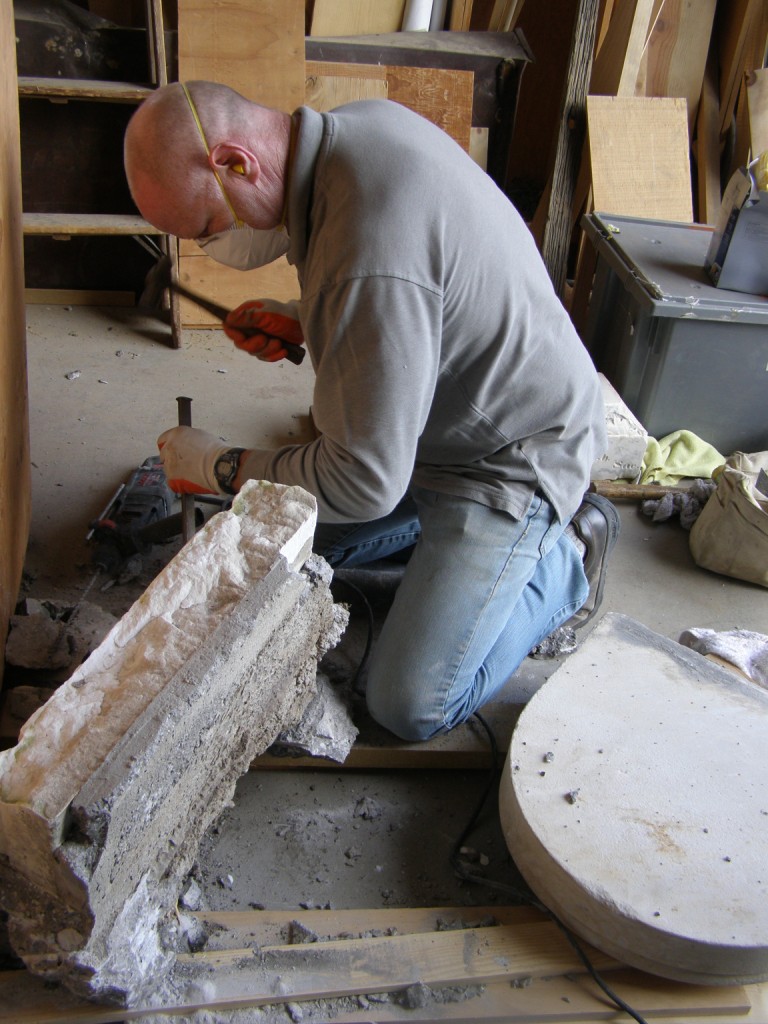
EverGreene has worked with the NCA on numerous occasions, including a comprehensive nationwide survey and assessment and subsequent treatments. The survey involved a variety of monuments, memorials, and historic objects at thirty eight national cemeteries throughout the western US. Consecutive conservation treatments spanned wide range of monument types and materials in 25 National Cemeteries. Treatments included cleaning, repointing, corrosion removal, crack repair, as well as designing and implementing interior structural support systems for bronze and zinc monuments, or resetting and leveling stone monuments. A written plan for the continued maintenance of each monument was provided. The work for NCA included:
76th Illinois Volunteer Infantry Regiment Monument, Mobile National Cemetery: Stone cleaning, removal and replacement of the severely damaged gilded copper eagle sculpture at the top (the eagle was taken into NCA’s permanent collection), gilding of the eagle.
August Bloedner Monument, Cave Hill Cemetery: Relocation and conservation treatments, including cleaning, repairing spalled surfaces, removal of failed patches, and new patch repairs.
Union Monument, Bath National Cemetery: Cleaning of stone and bronze, removal of surface crusts, repointing of stone, removal of inappropriate surface coatings on bronze, re-patination and recoating of bronze.
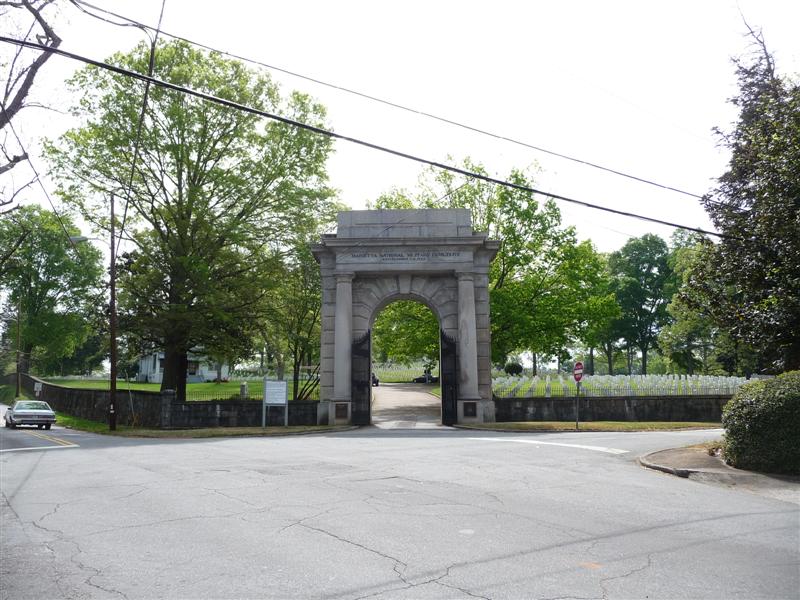
Bear River Monument, Fort Douglas Post Cemetery: Part of a larger project to treat and repair seven headstones, three monuments, and the original cemetery gate. Monument found to be in poor condition and in danger of collapsing. The work was documented, disassembled, crated, and transported to a storage facility to await treatment.
Box Tombs, Fort Crawford Cemetery: Treated six of the eight box tombs, which included cleaning, patching, repointing, and fills and/or dutchman repairs, as well as resetting four of the six tombs. These four were hoisted, the foundations removed and rebuilt, and securely pinned back together.
Major General Sterling Price Monument, Springfield National Cemetery: Bronze repair, including removal of core material, replacement of corroded iron armature, closing of cracks/open seams, and repair of failed/inappropriate previous repairs. Repatination and coating of the statue with a protective lacquer. Removal of atmospheric and general soiling on granite plinth, removal of iron stains from the bronze, and stone repointing.
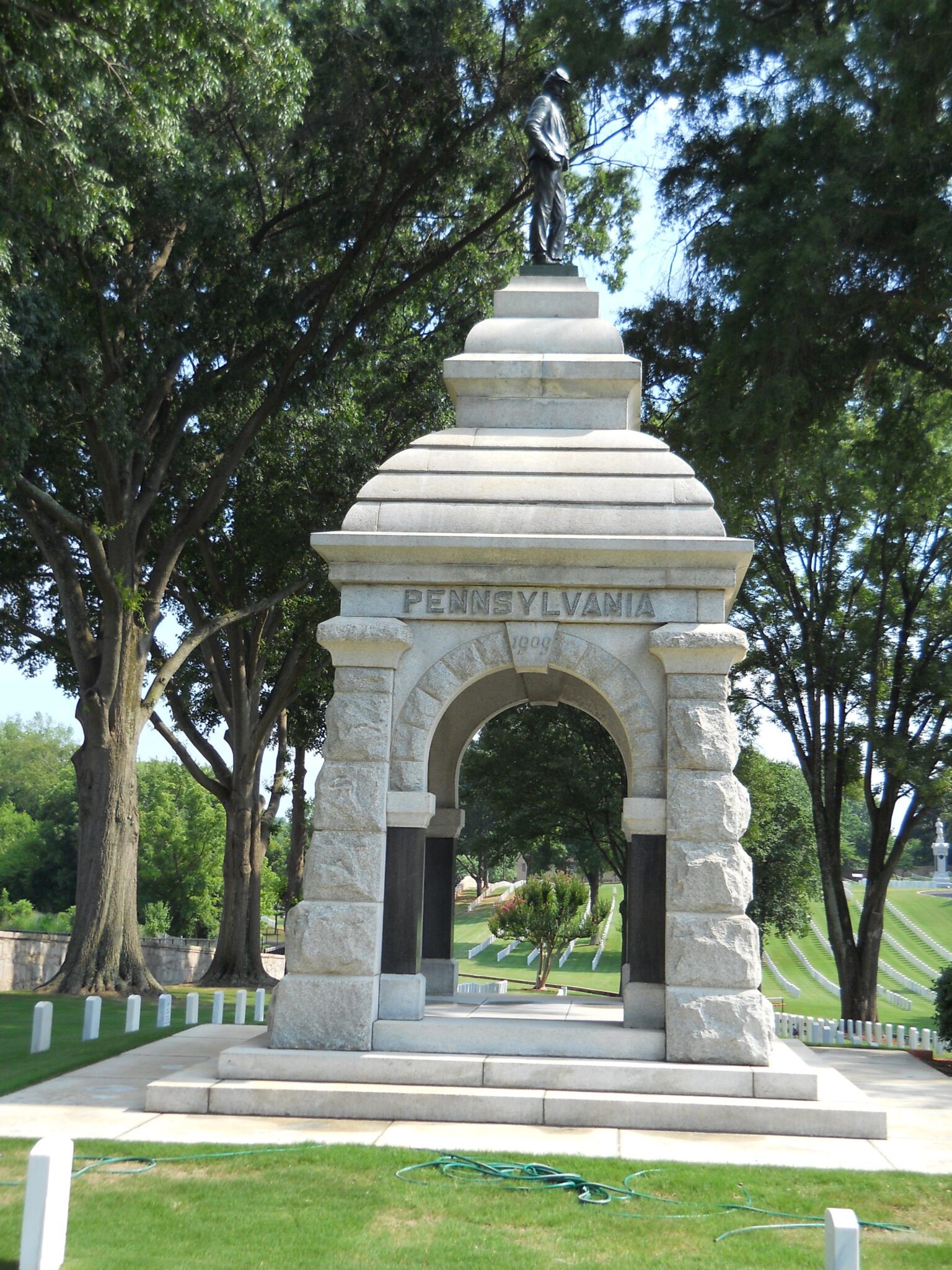
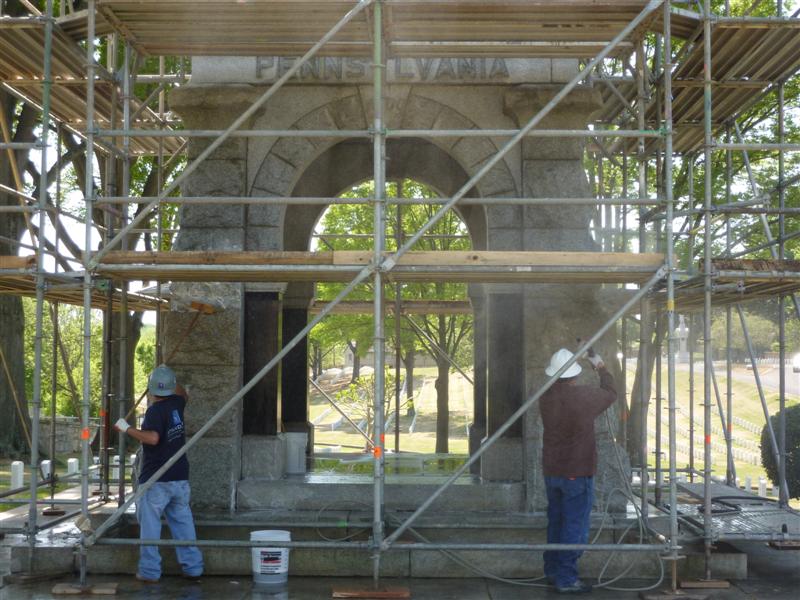
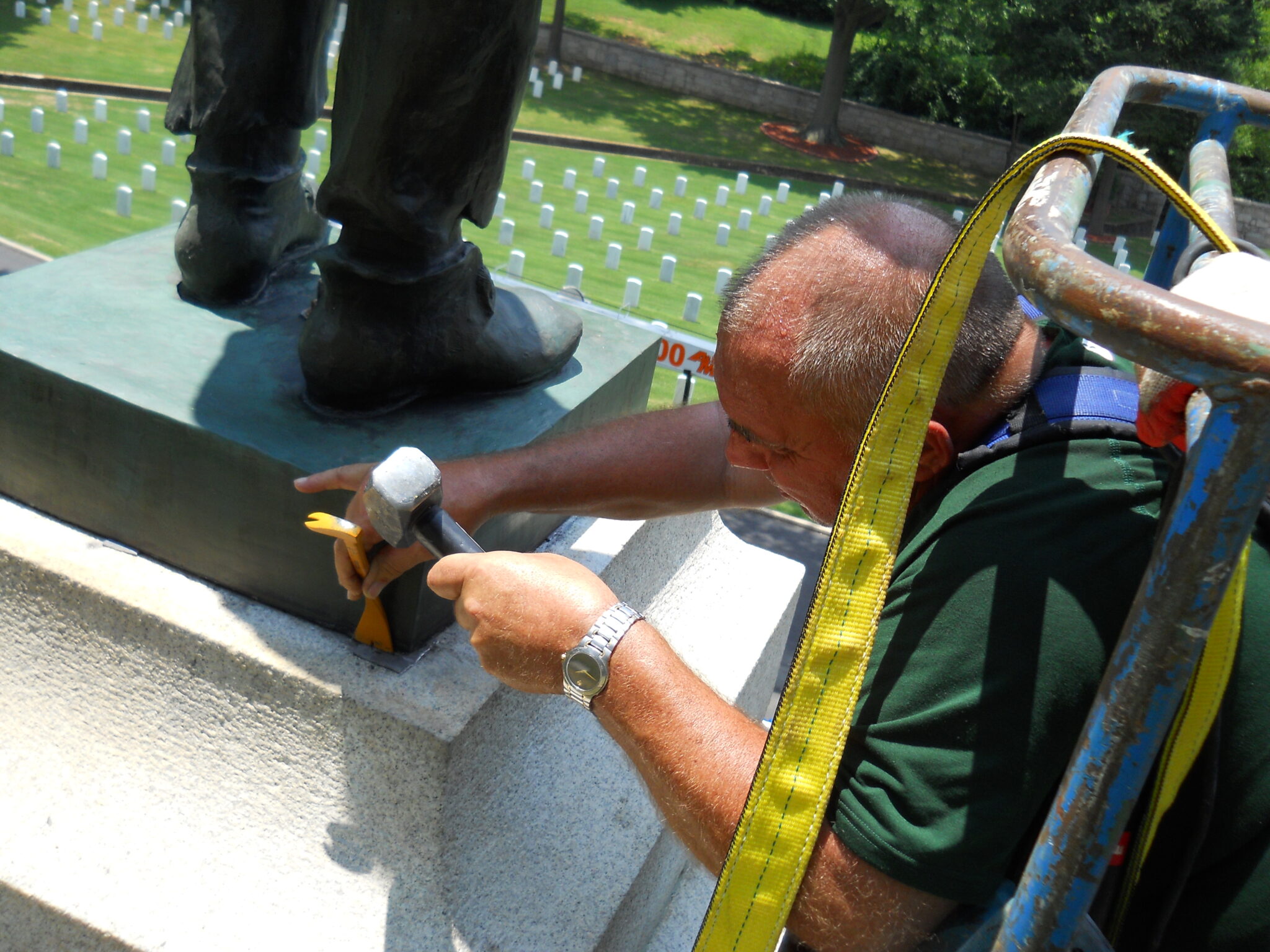
Pennsylvania Monument, Salisbury National Cemetery: Cleaning of general and atmospheric soiling and copper staining, repair of mortar joints, removal of concrete fill from the base, application of corrosion inhibitor from bronze, renewal of protective coatings on bronze.
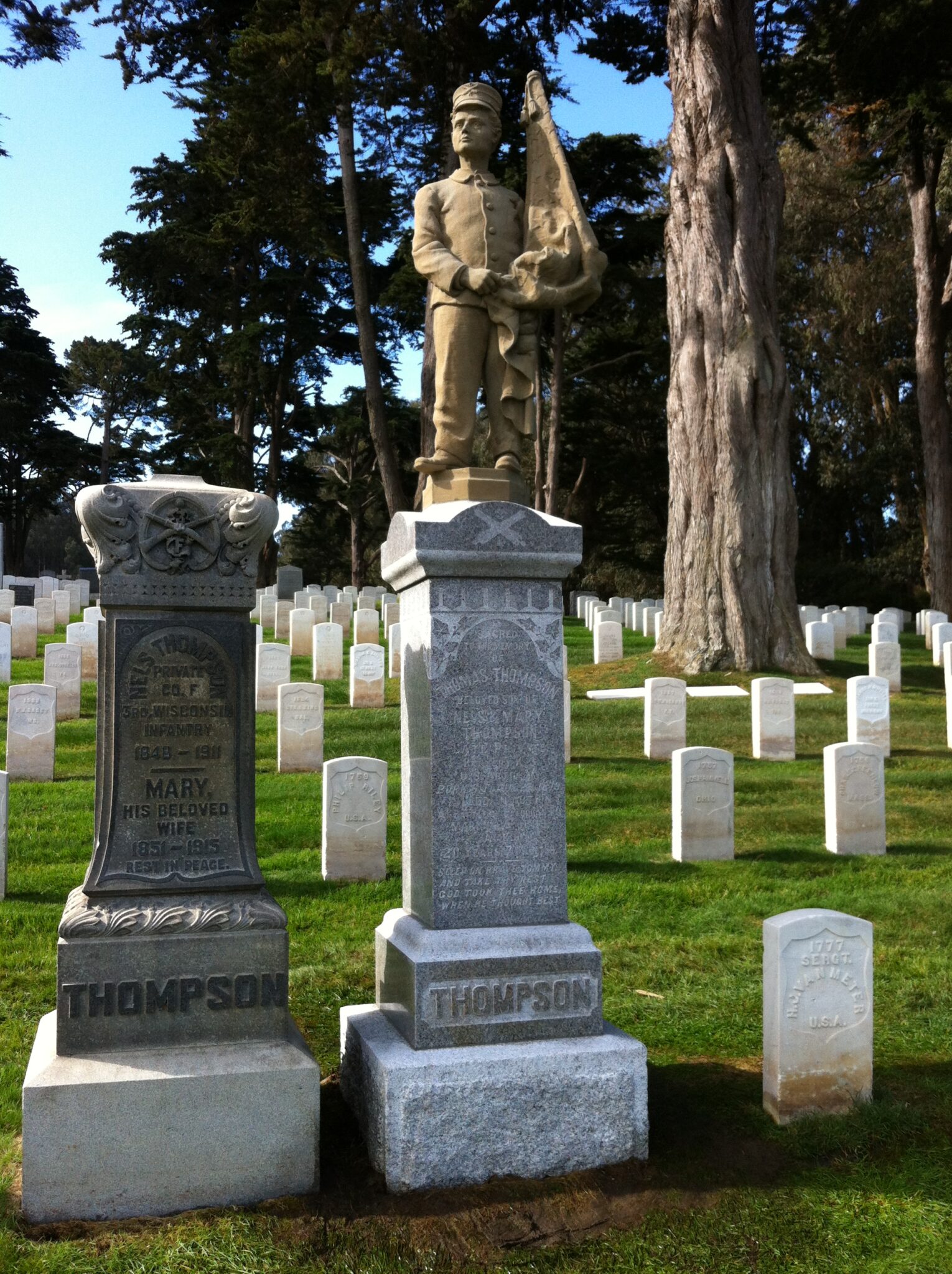
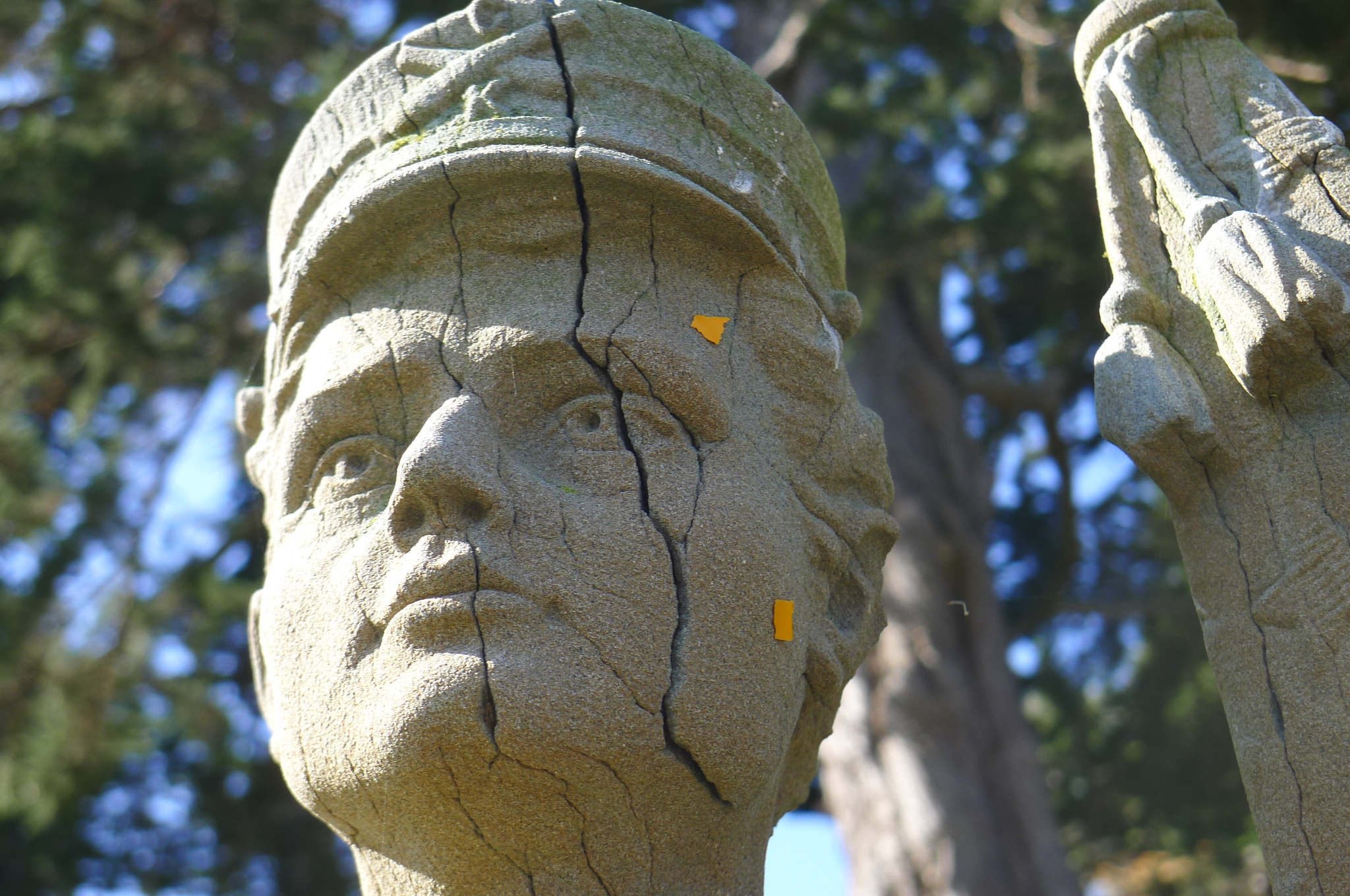
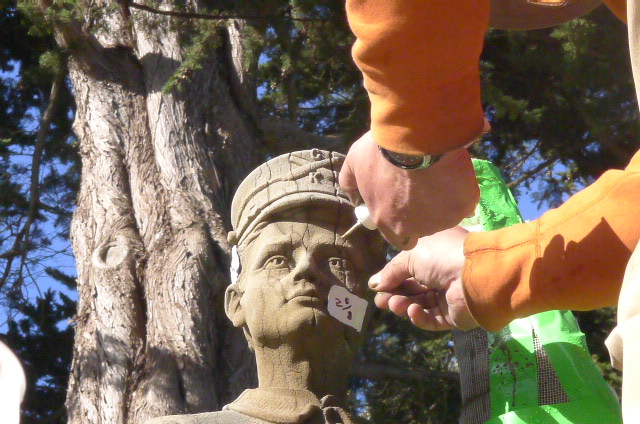
Thompson Headstone, San Francisco National Cemetery: Cleaning atmospheric and general soiling, repointing, repair of severe structural cracking and delamination of the bedding layers of the figure via inserting new stainless steel pins, rack repair with color matched grout, losses rebuilt and re-sculpted.
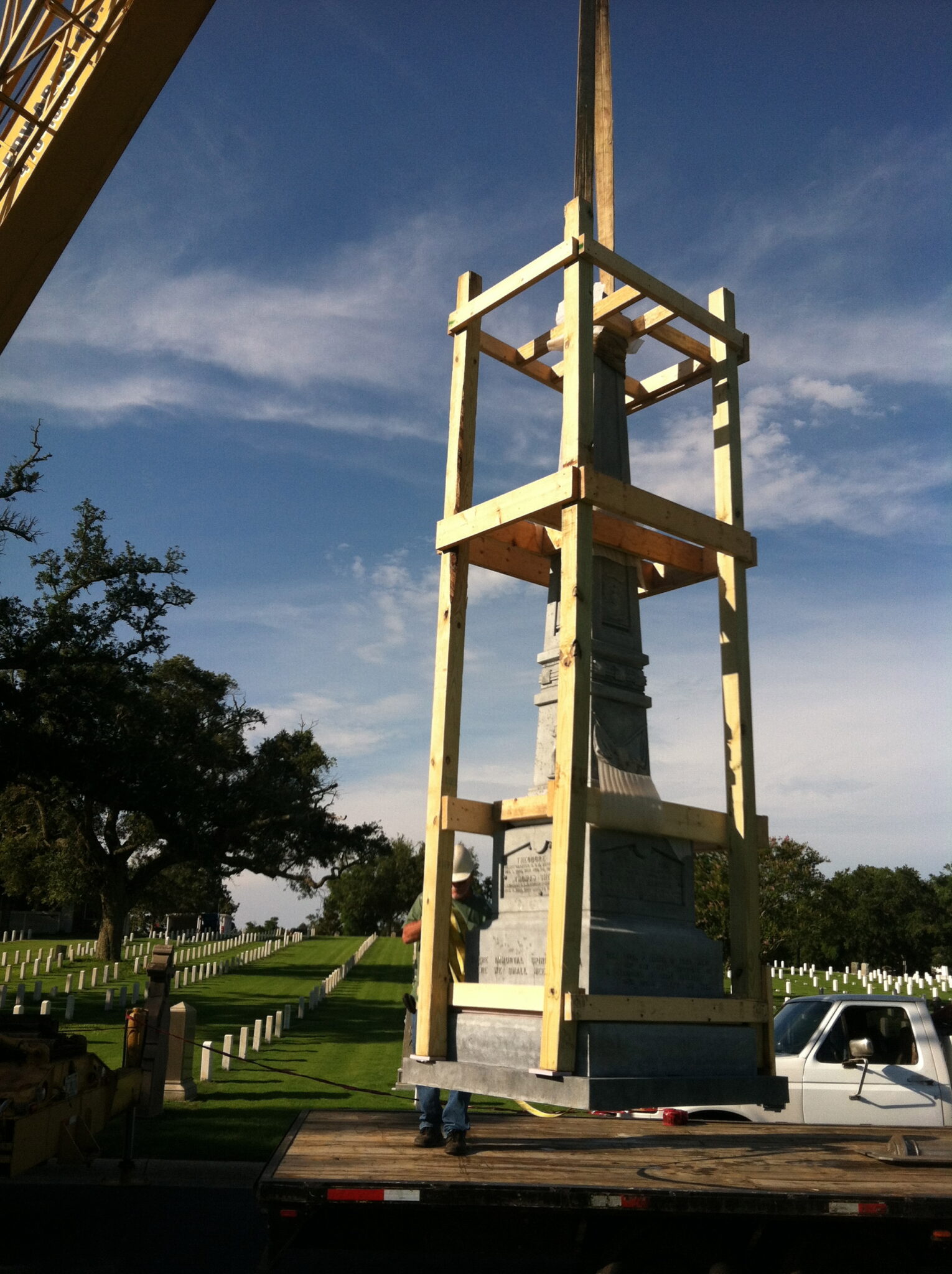
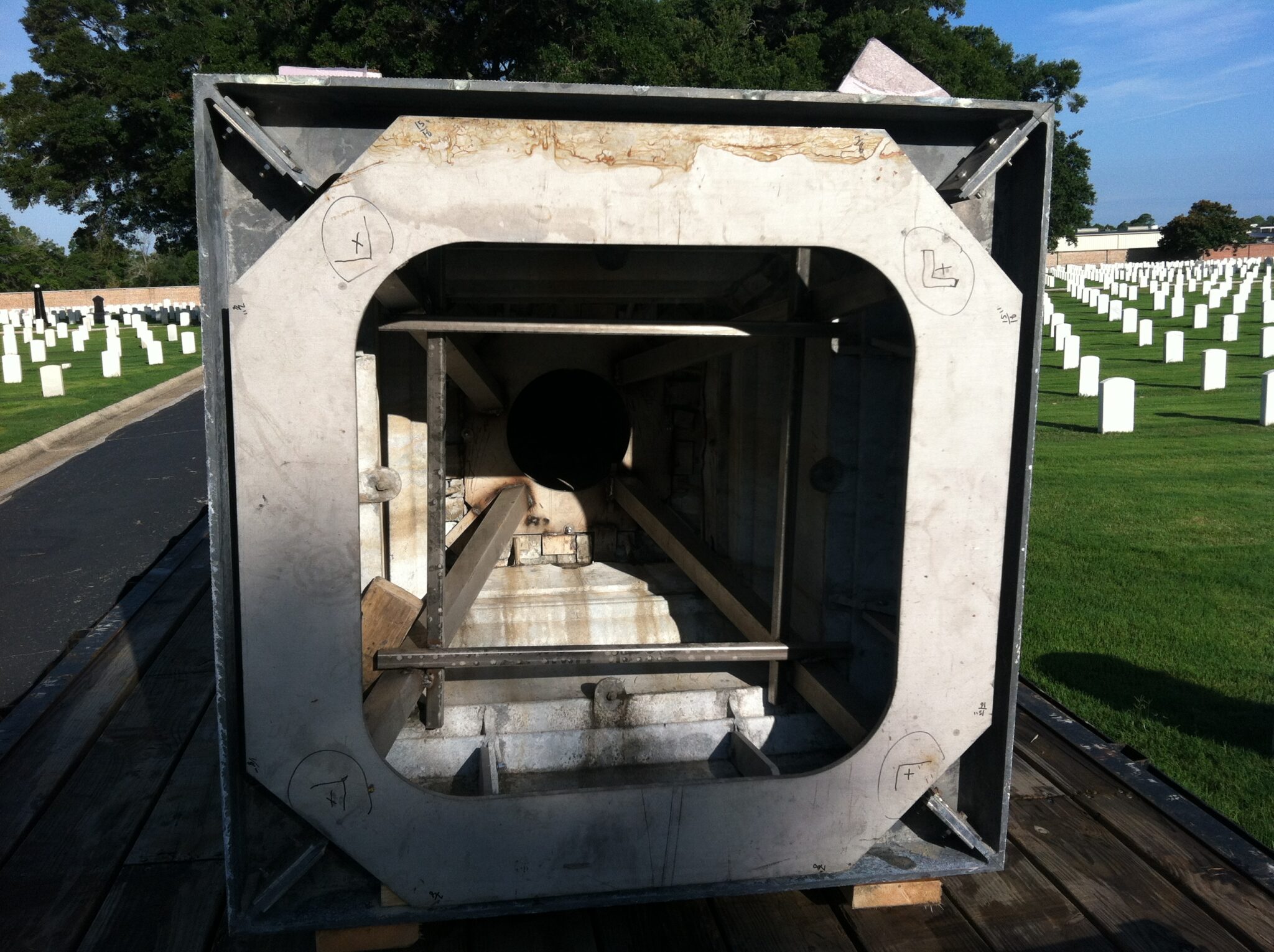
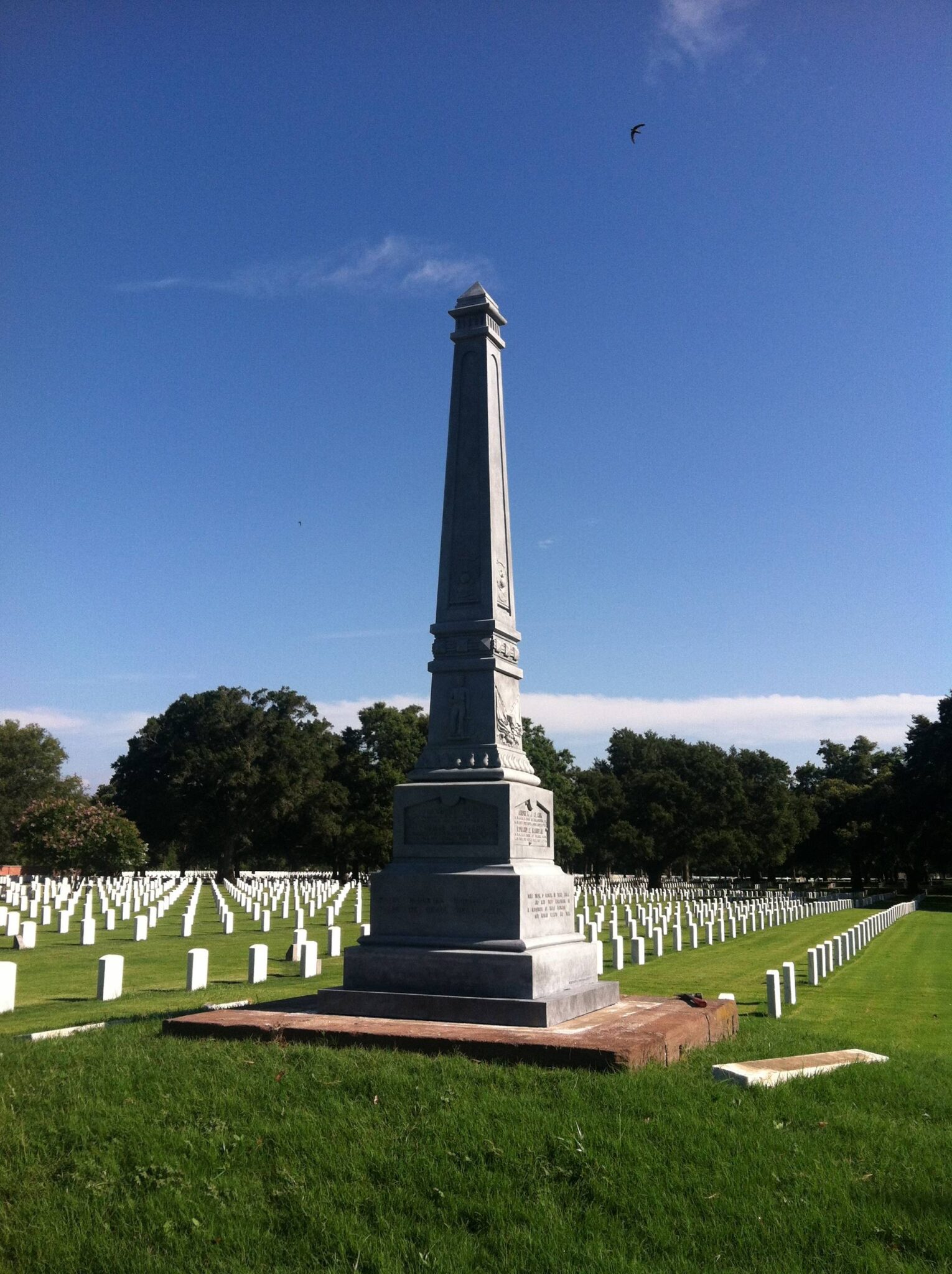
US Marine Guard Monument, Barrancas National Cemetery: Structural treatments included removal of the marble blocks covering the original base of the zinc monument, removal of the monument to a workshop for repair, fabrication and installation of an interior support armature, and replication of the original zinc monument base. Surface treatments included removal of corrosion, filling of losses in the zinc, and re-patination.
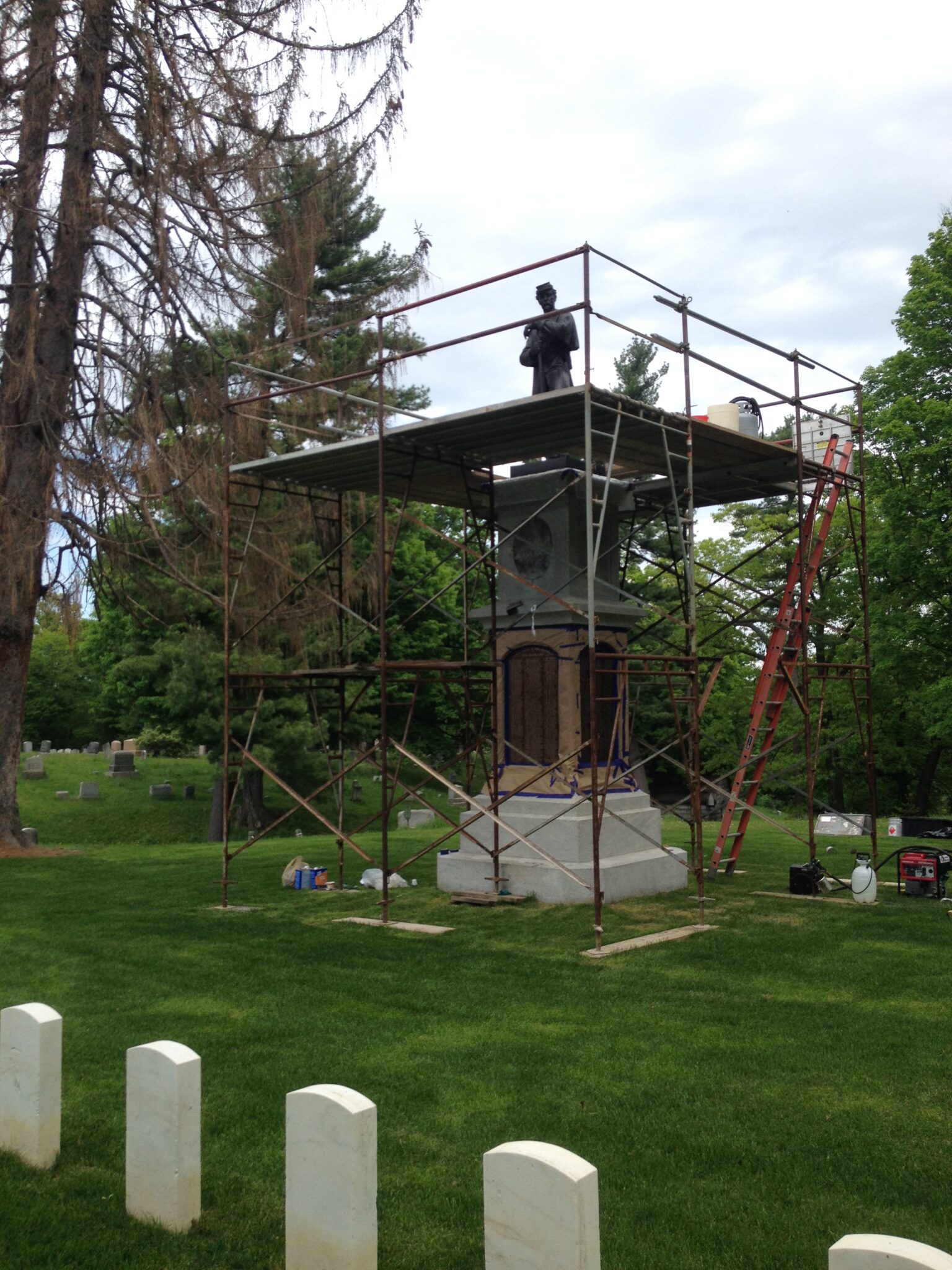
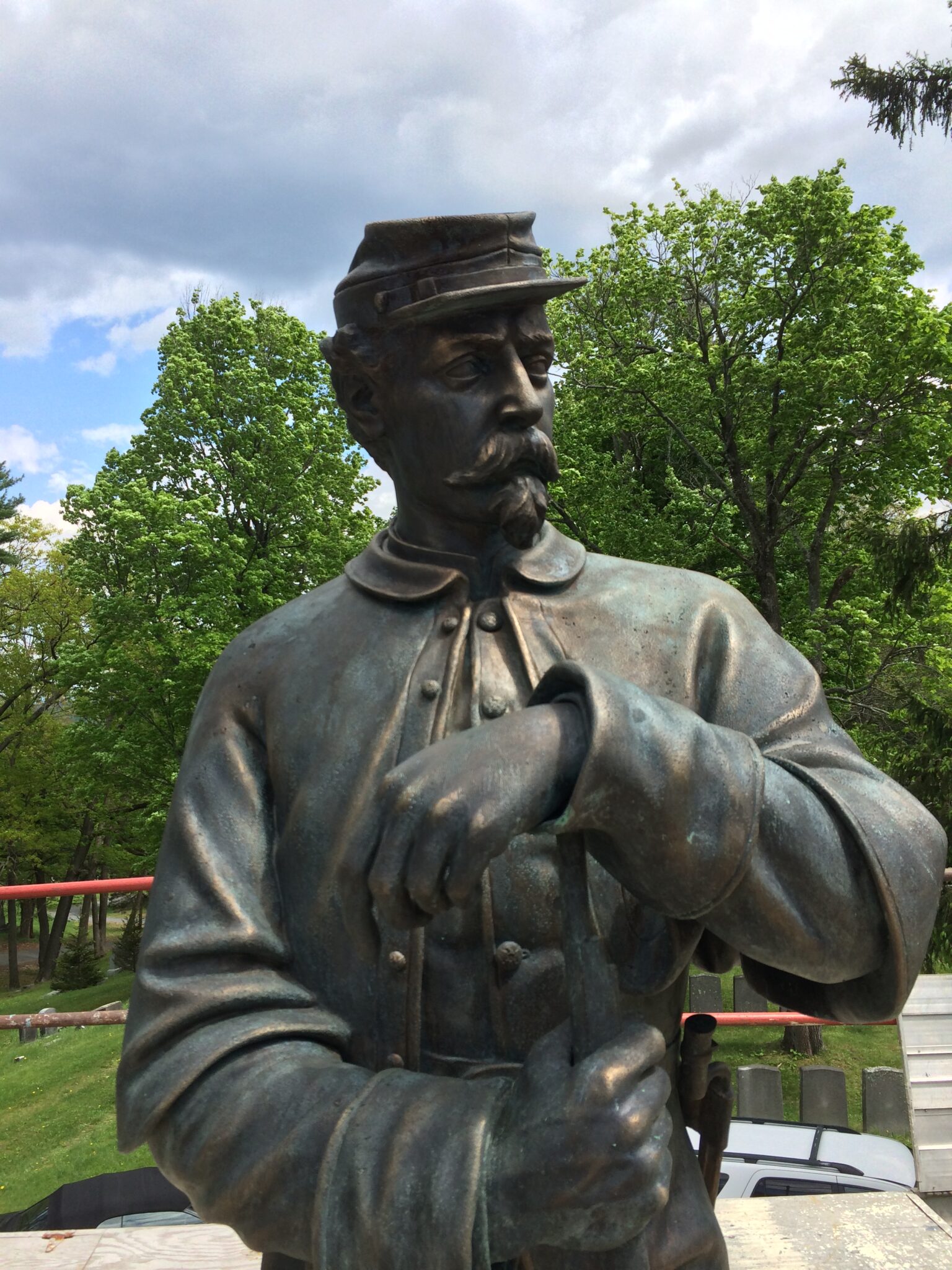
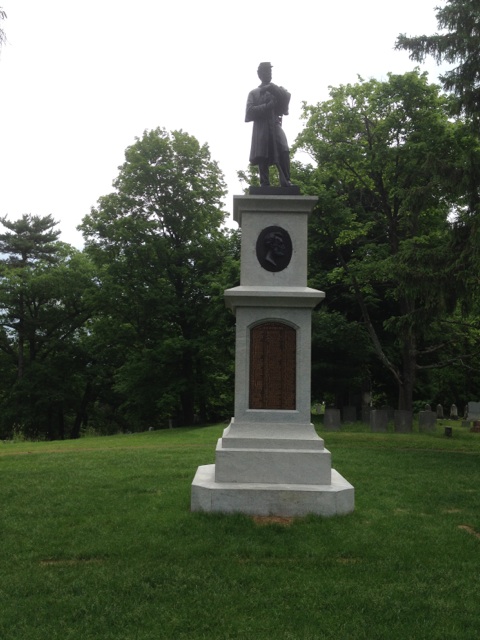
GAR Monument, Rural Cemetery, Albany, NY: Treatments included the removal of all inappropriate previous coatings using solvent based strippers and the removal of light soiling and bio-growth using appropriate methods for the material with detergents, biocides, pressurized heated water, and brushes. The bronze elements were repatinated to even out the coloration and homogenize the appearance. Failing joints between the monument sections and around the plaques were repointed or recaulked as necessary. Holes in the granite base were patched as necessary to create a more unified appearance and prevent the damage from worsening. The inappropriate mounts on the Lincoln medallions were removed and replaced with specially fabricated hardware.
Department of the Army, Arlington National Cemetery
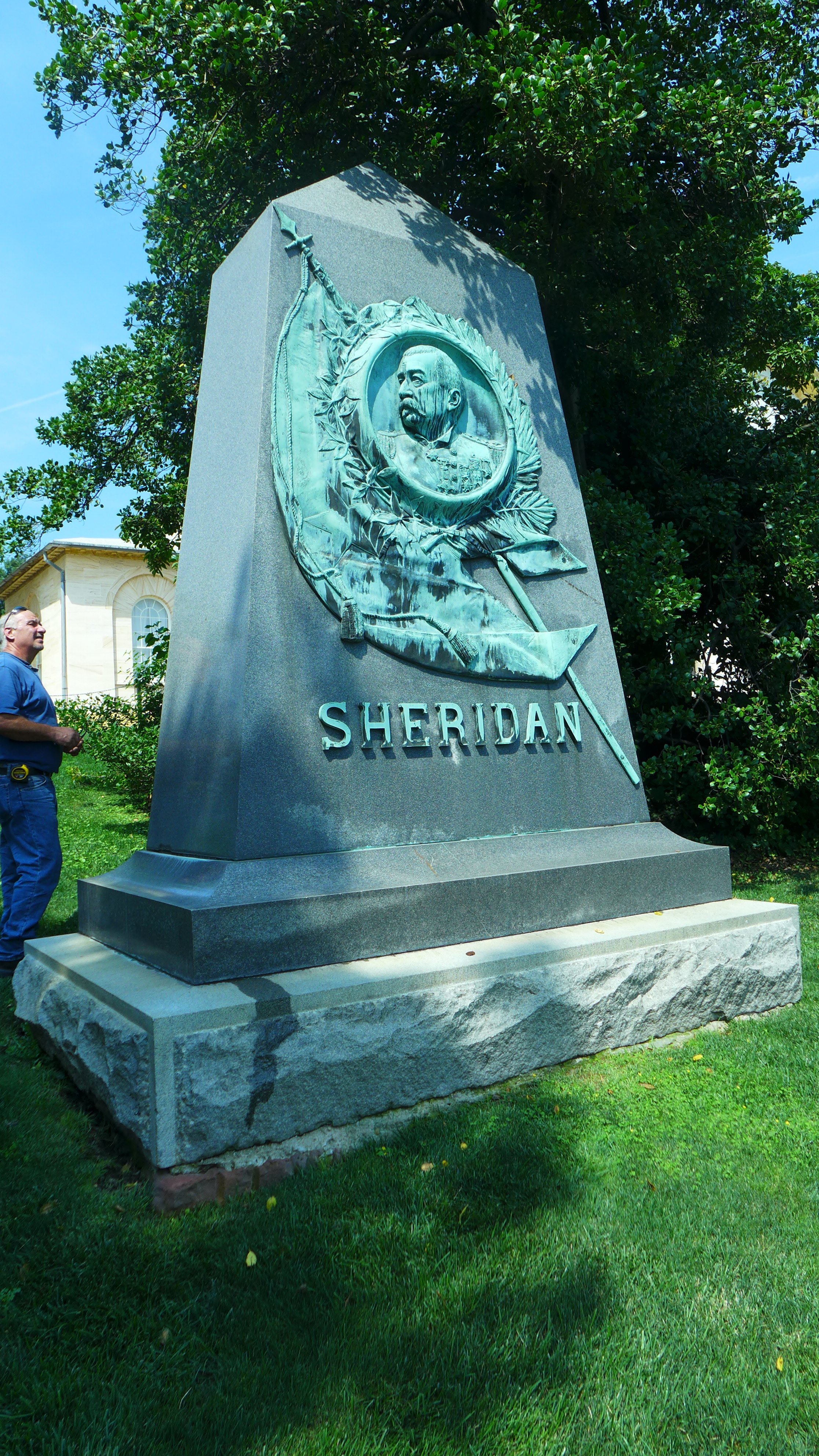
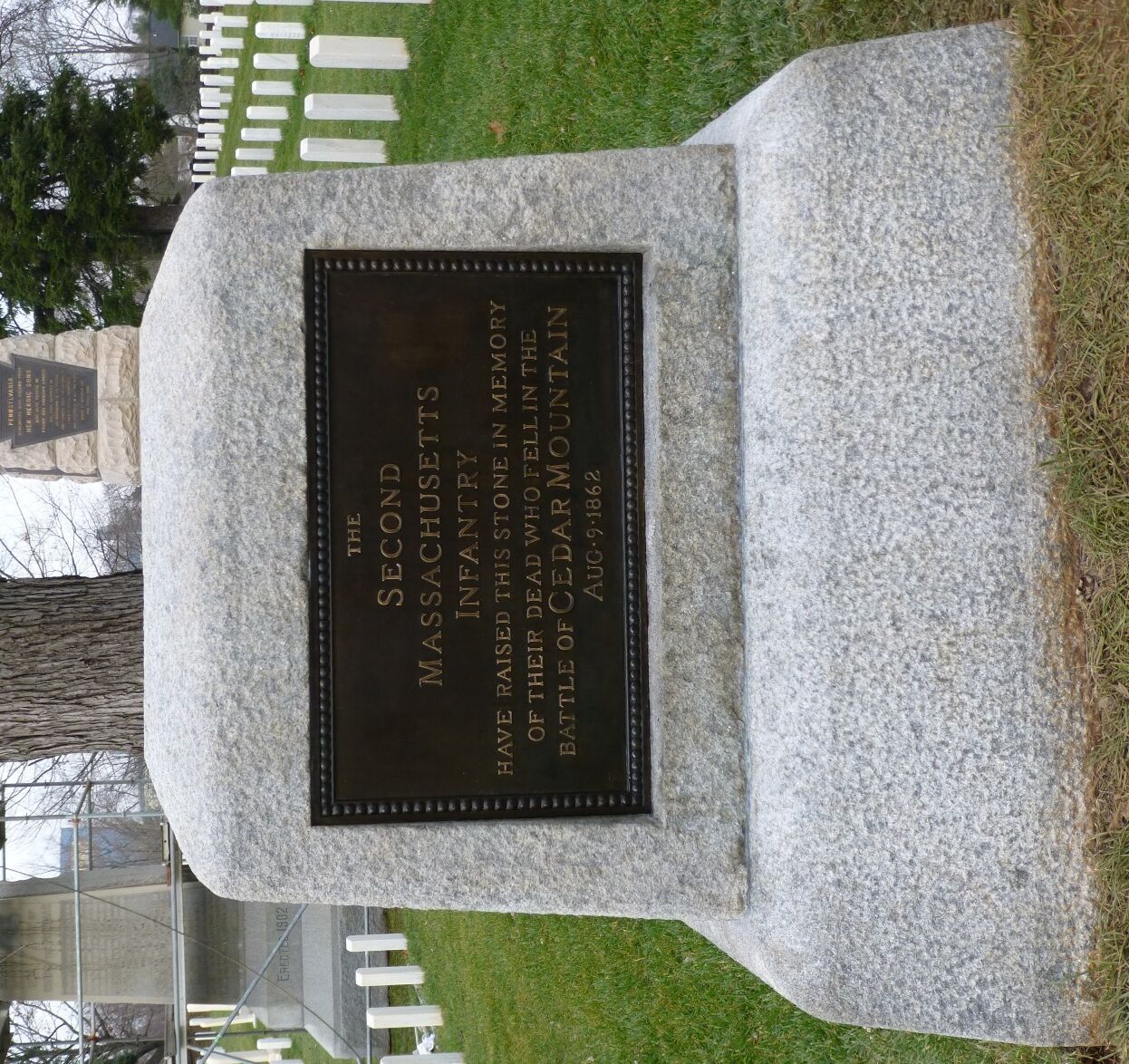
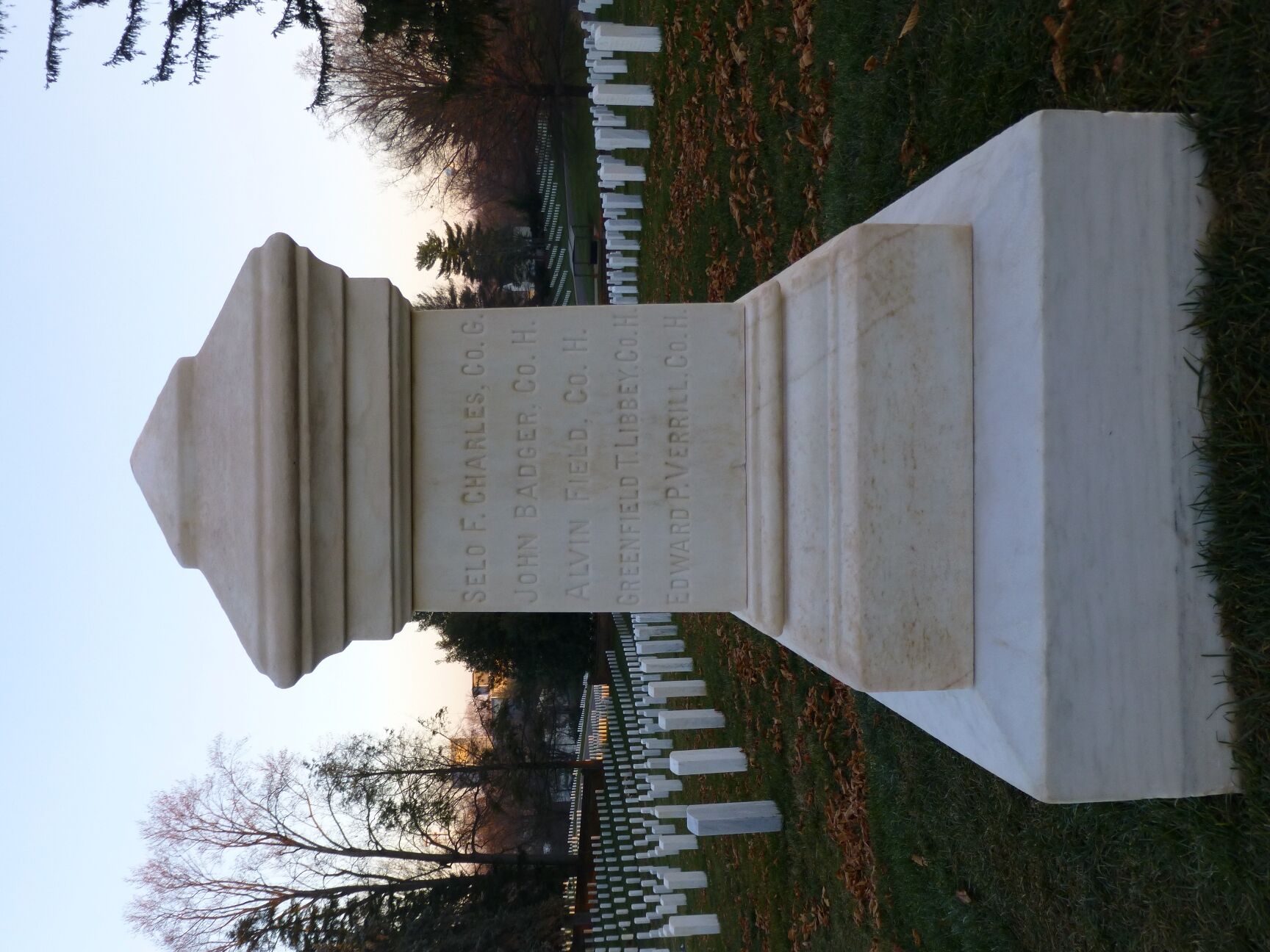
Monuments: EverGreene has worked with the Army on several occasions, including a comprehensive assessment and treatment of numerous monuments at the Arlington National Cemetery, including the Minnesota Monument. A written plan for the continued maintenance of each monument was provided. Treatments included cleaning, removal of residual protective coatings and loose corrosion, patination, and the application of hot and cold waxes to the bronze elements. Stone, brick, and mortar components were cleaned to remove cupric staining, soiling, and biological growth. Mortar joints were raked and repointed with a compatible, color-matched mortar developed from mortar analysis, and stone elements received repointing and crack injection as needed.
Flagpoles: Two of the flagpoles in the project scope are at Arlington National Cemetery with the third flagpole is located at the United States Soldiers’ and Airmen’s Home National Cemetery. EverGreene oversaw paint removal and re-painting of cast iron, steel, and copper alloy surfaces, and applied gold leaf to the finials of two of the flagpoles.
National Park Service
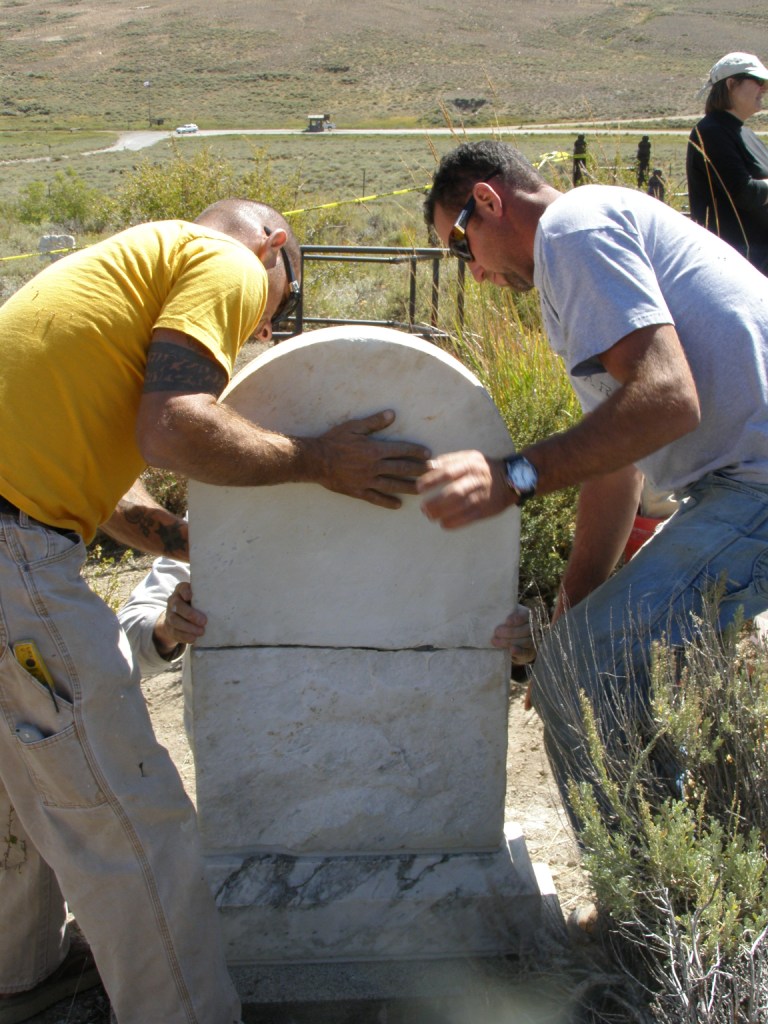
Bodie State Historic Park Cemetery: EverGreene has worked with the NPS on a number of occasions, a few of which included cemeteries. The stone markers and monuments at Bodie State Historic Park, were damaged, suffering from vandalism, weathering, erosion and deterioration. The California Department of Parks and Recreation contracted EverGreene to assess the conditions, make treatment recommendations, and implement treatment for 22 stone grave markers. Those included realigning stones, replacement of failed footings with new ones, stabilization of stone bases where required, repinning broken stone markers with stainless steel rods, removal of post-historic concrete, repointing, and infilling of small chips, spalls, and cracks.