Kykuit Rockefeller Estate Collections Care
The Kykuit Estate was home to four generations of the Rockefeller family in Tarrytown, New York. The 40-room historic home was completed in 1913 for John D. Rockefeller, founder of the Standard Oil Company. Elaborately decorated grounds were mainly designed by noted architect William Welles Bosworth. They feature formal gardens in a variety of styles, which have been meticulously maintained over the last 100 years. The gardens include pavilions like the Japanese Tea House and Temple of Aphrodite, fountains, and Nelson Rockefeller’s collection of large-scale sculptures, including works by Louise Nevelson, David Smith, Pablo Picasso, and Henry Moore. The home is a National Historic Landmark and is owned by the National Trust for Historic Preservation.
EverGreene was contracted by the Estate on several occasions to conduct conditions assessments and implement conservation treatments for the estate’s outdoor art collection. EverGreene worked closely with the curators and staff to realize their goals of preserving all treated works, including:
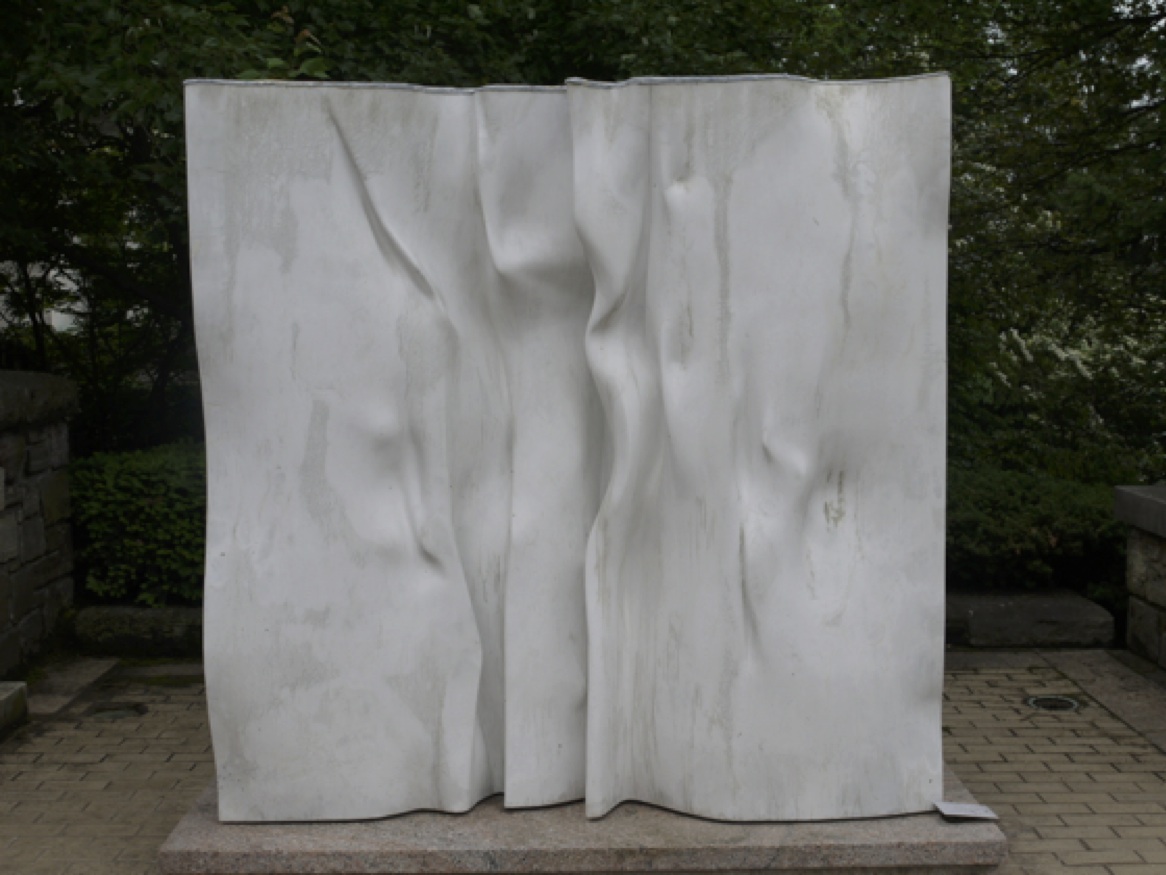
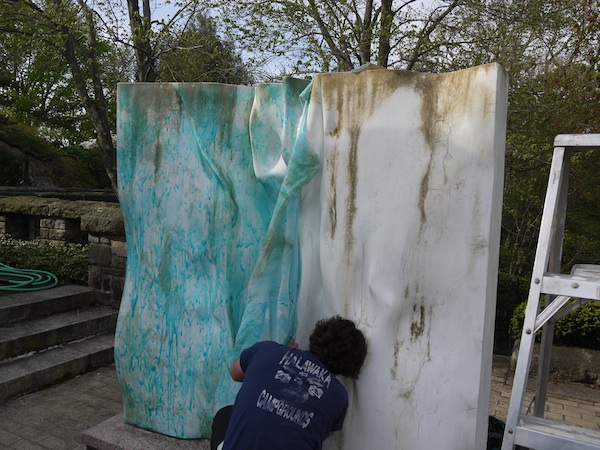
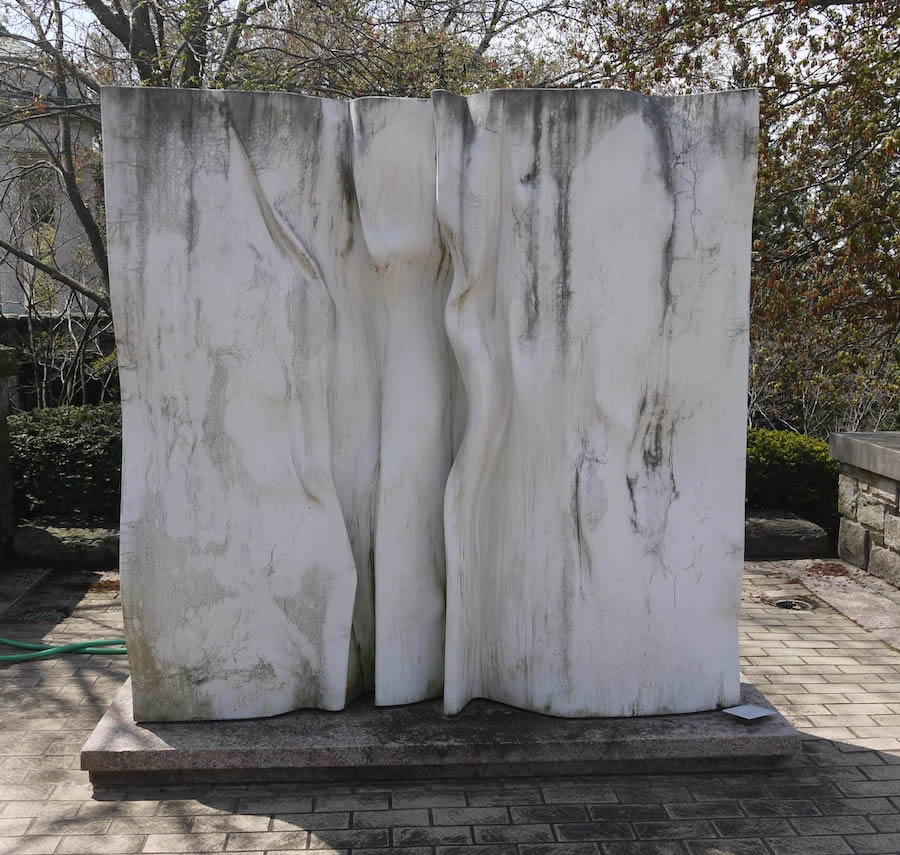
- Gio Pomodoro Sculpture Grand Ghibellina (Marble)
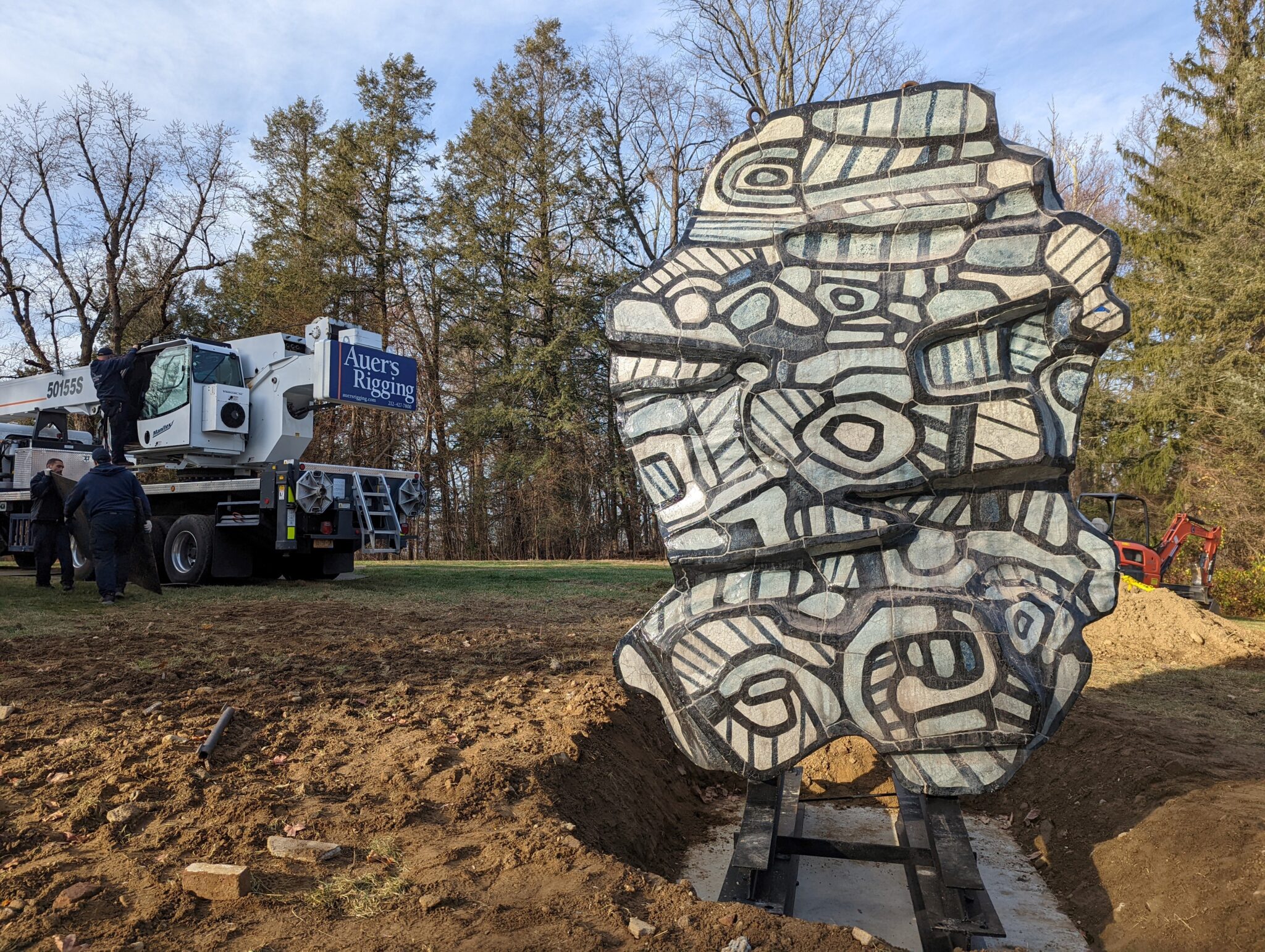
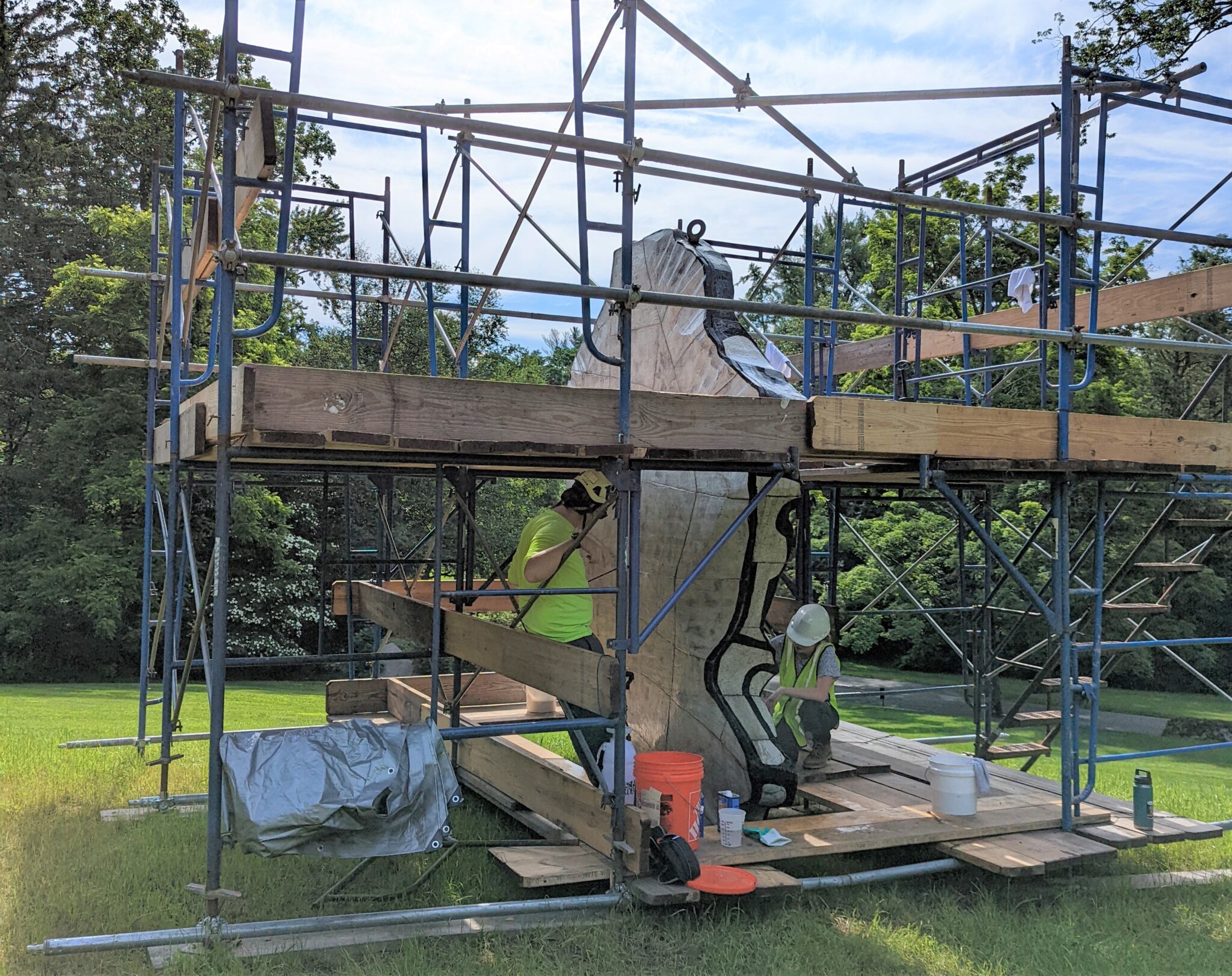
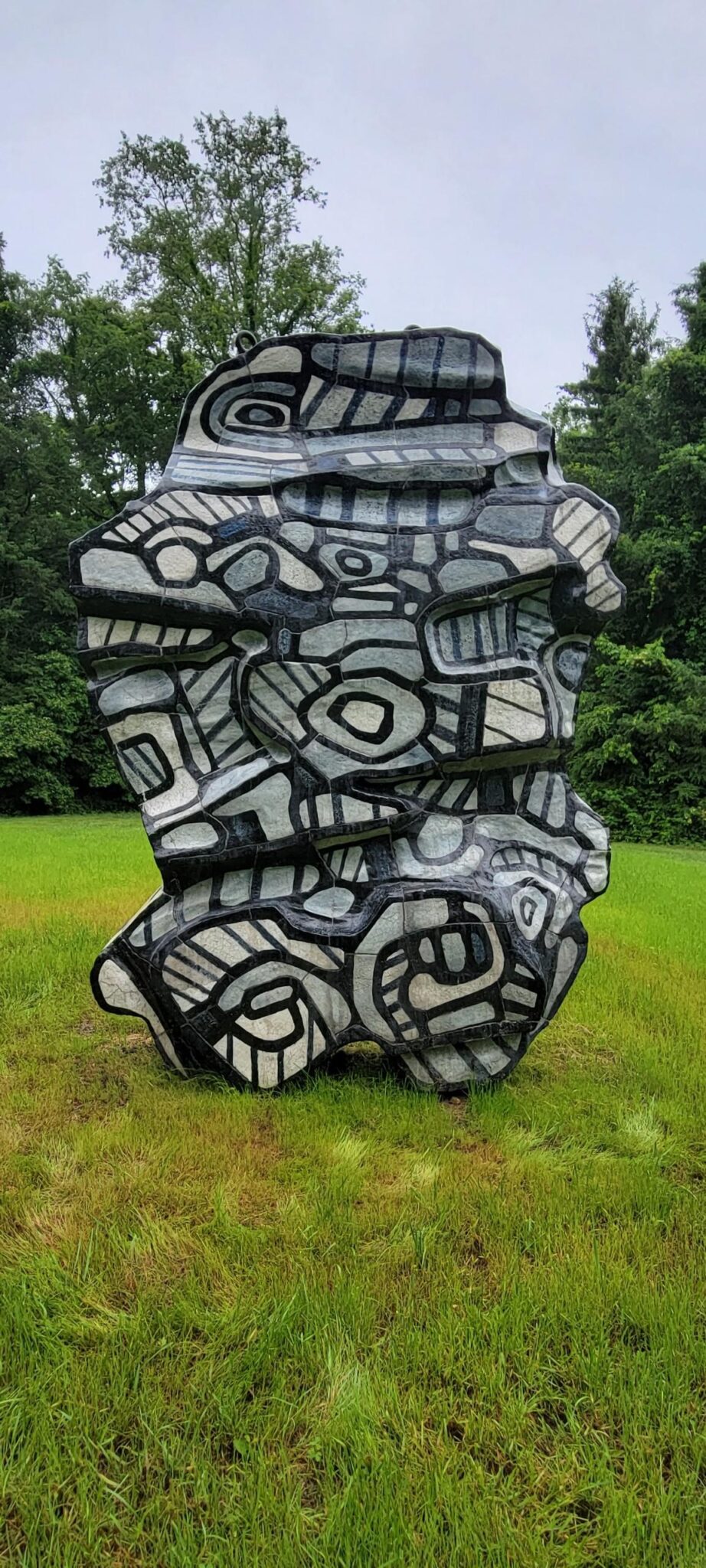
- Jean Dubuffet sculpture “L’Érection Logologique Bleue” (Terra Cotta & Steel)
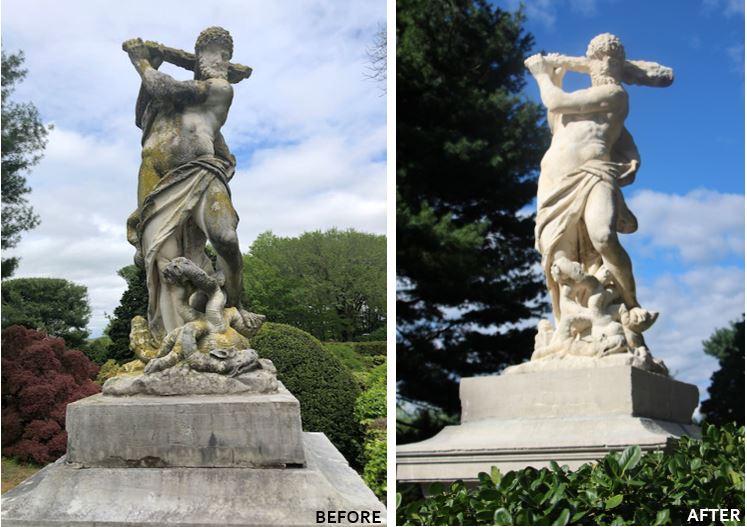
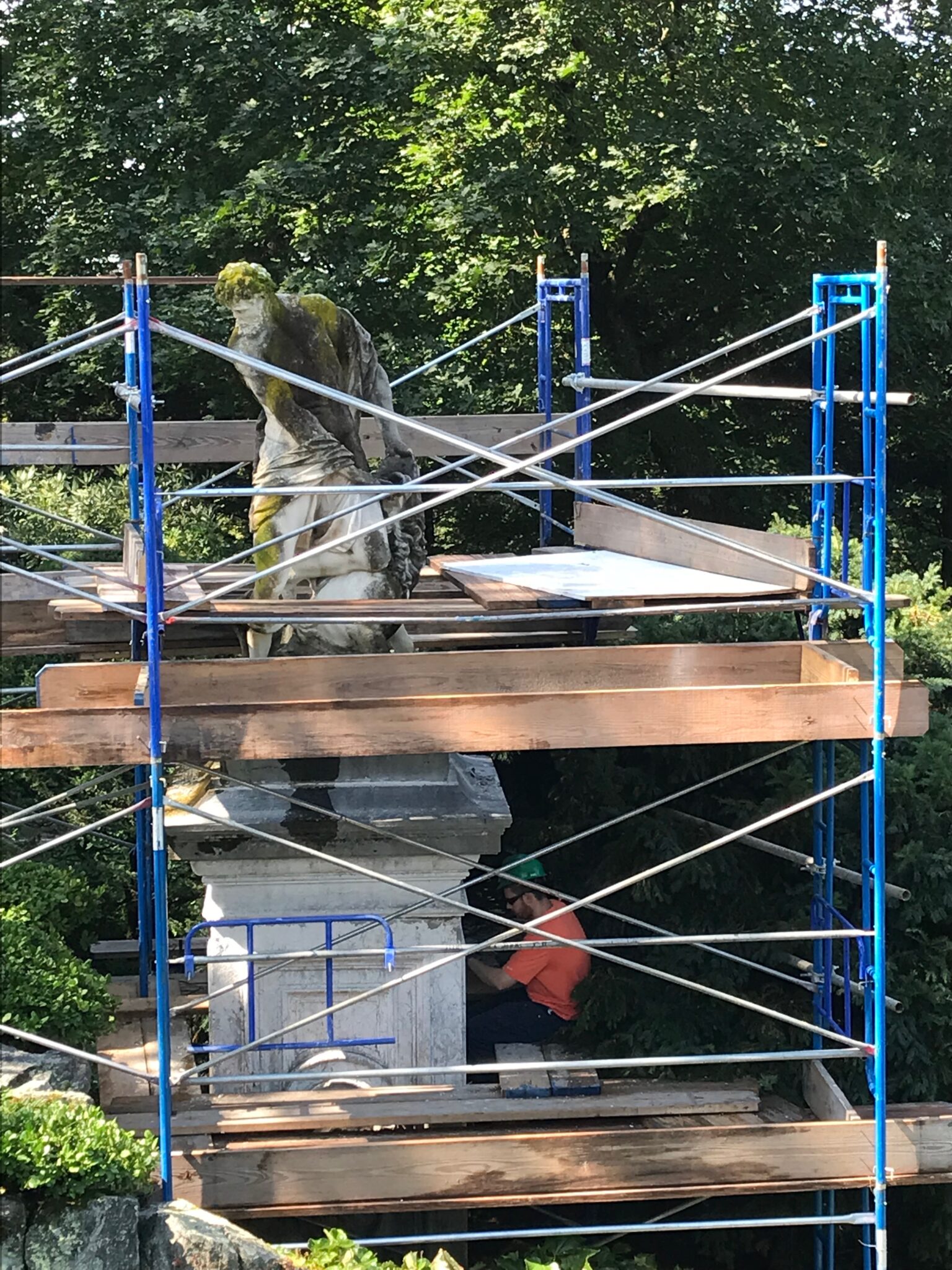
- Orizio Marinali Hercules Sculptures (Vicenza Limestone with Marble Pedestal)
- Tony Smith’s Cigarette Sculpture (Painted Steel)
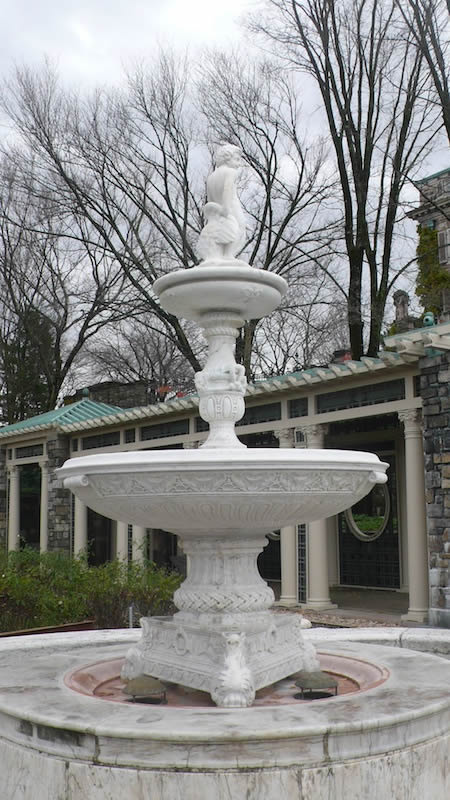
- Rose Garden Fountain (Marble)
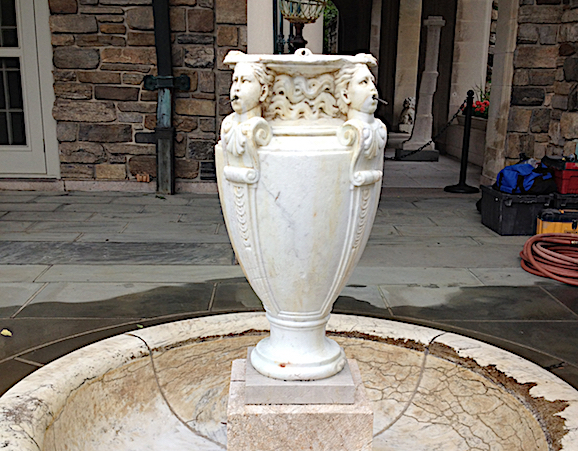
- Urn Fountain (Originally from Boboli Gardens) (Marble)
- Canal Fountain (Marble)
- Oceanus Fountain (Marble)
- Tea House (Limestone)
Stone Conservation
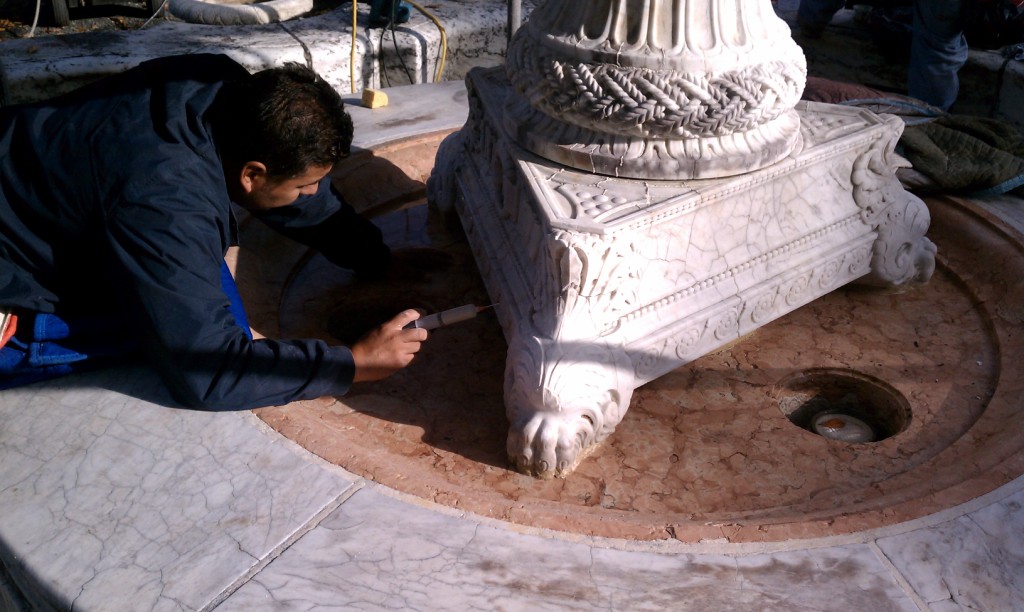
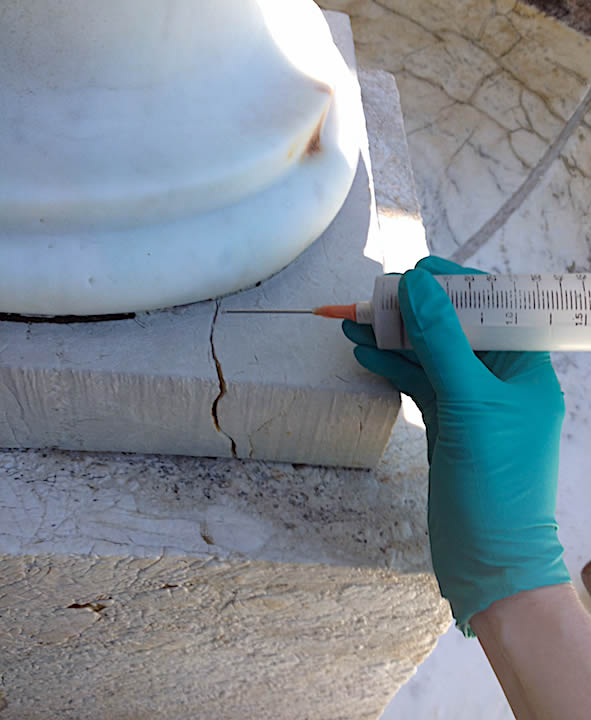
The applied stone conservation treatments included cleaning surfaces to remove atmospheric and biological soiling using a range of techniques including biocides, poultices, detergents, low pressure water, nebulizing mists, and steam; removal of surface crusts and tenacious surface staining; injection grouting to fill cracks; removal and replacement of deteriorated mortar joints, shims, and backer rods; removal and replacement of old repairs; disassembly, reinforcement, and reassembly of structurally weak elements; reattachment of detached fragments; application of wax coatings to prevent staining; consolidation of stone; installation of lead caps to prevent water infiltration.
Sculpture Conservation
Treatments on the various sculptures included cleaning surfaces to remove atmospheric and biological soiling using a range of techniques including detergents and low pressure water; removal of surface crusts/mineral deposits; removal and replacement of deteriorated mortar joints; crack repairs; infilling areas of loss; painting of repaired areas to match adjacent materials; installation of lead cap to prevent water infiltration.
Metal Conservation
The applied metal conservation treatments included abrasive cleaning of the steel to remove previous coatings and corrosion; recoating with a zinc-enriched primer followed by a two-part epoxy paint appropriate for buried steel. In addition to these general treatment protocols, EverGreene replaced one of the copper waterspouts on the Urn Fountain. The sprayer walls on the Canal Fountain were lined with a modified cementitious pool facing material to address the issue of the fountain no longer being water-tight with minimal impact on the aged appearance, which the curators requested be retained.
Art Deinstallation, Transport & Reinstallation
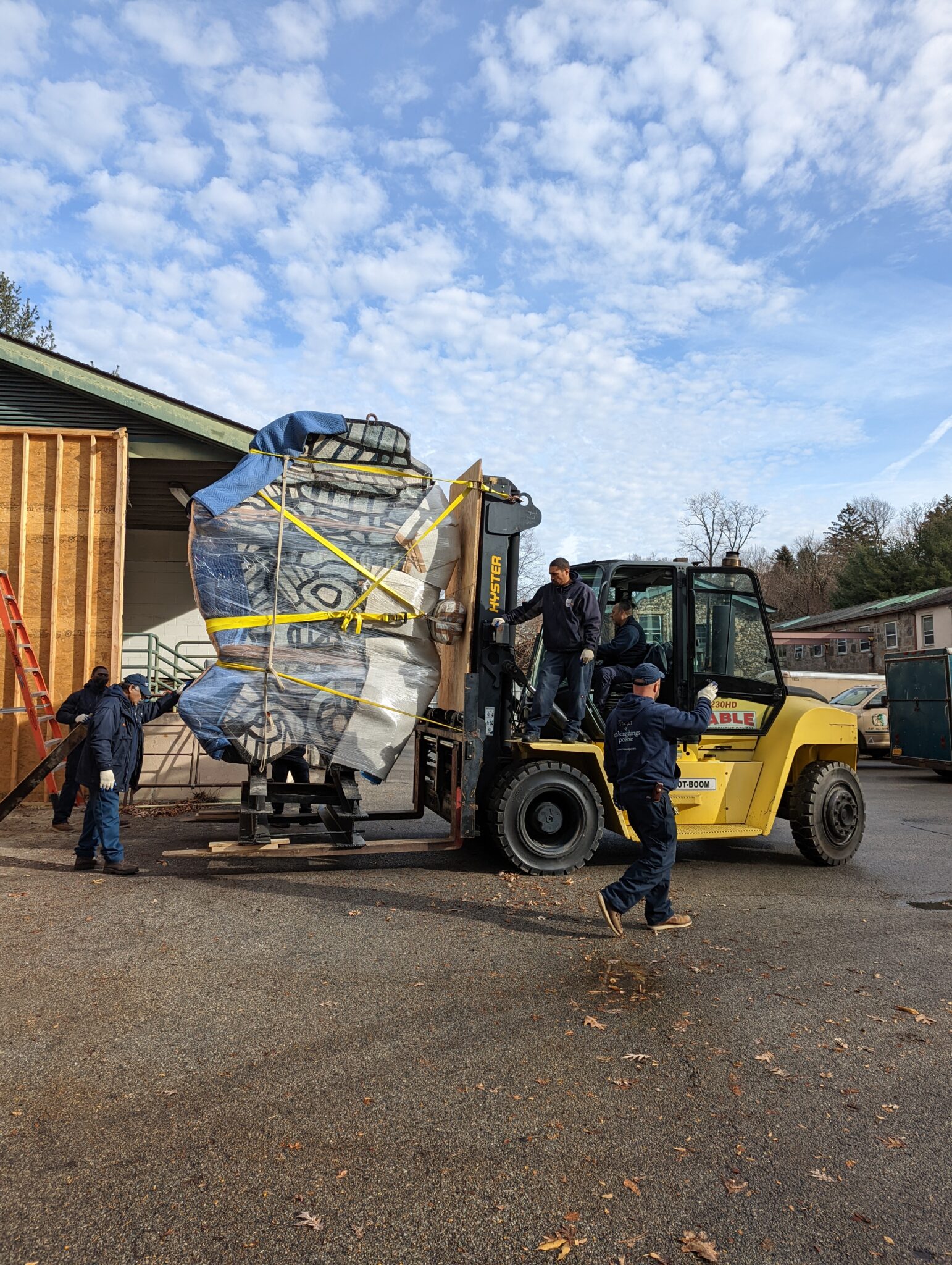
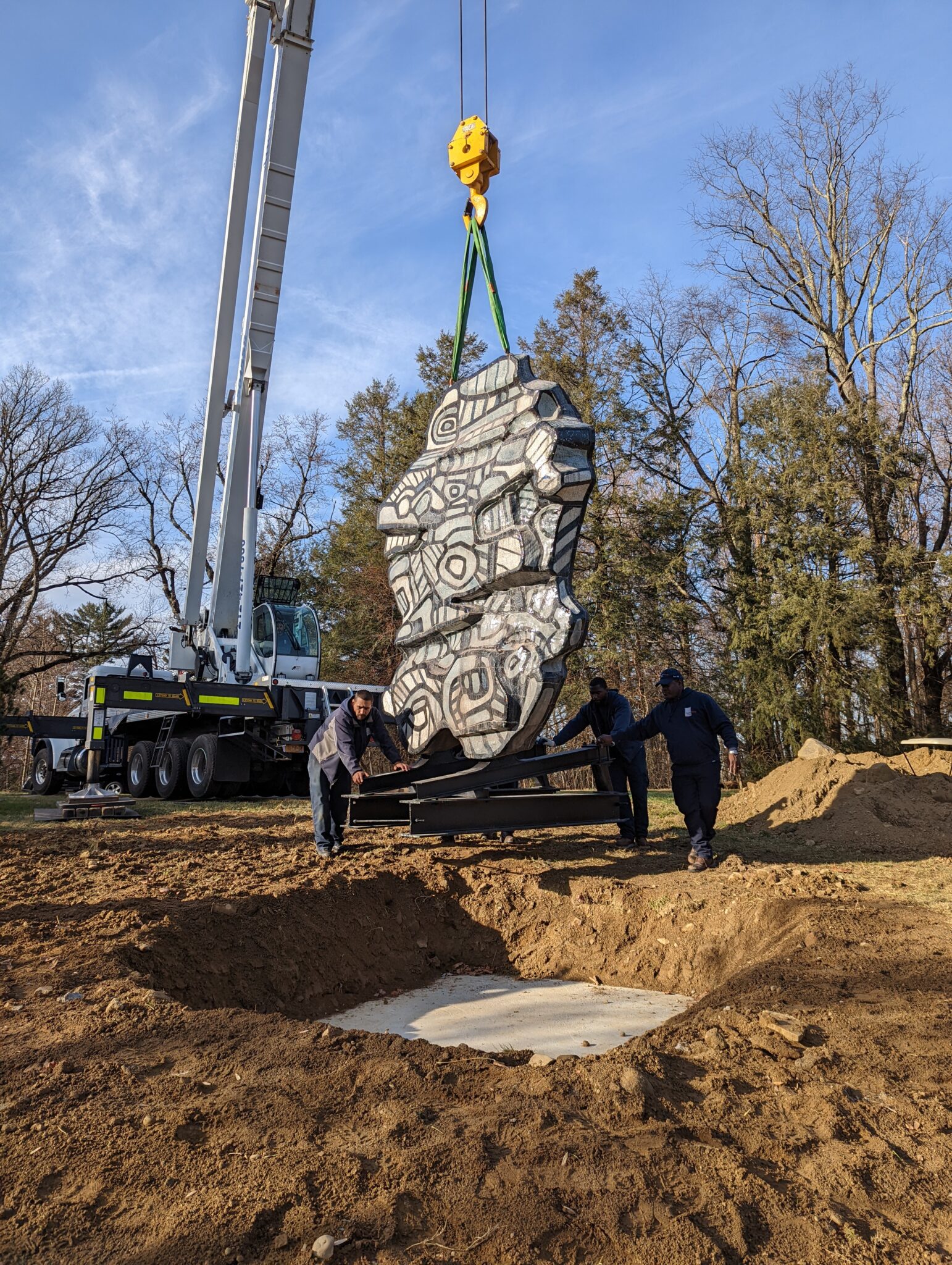
EverGreene also oversaw and assisted in relocating two sculptures on the property: the Jean Dubuffet sculpture “L’Érection Logologique Bleue ” and the Augustin Pajou Sculpture “Venus Presenting Cupid an Apple.” Curatorial staff wished to relocate the Dubuffet sculpture from the Orangerie into temporary storage and later to its final installation space on the top of the hill near the Lake road entrance. For both moves, EverGreene worked closely with a rigging contractor, using a forklift to suspended the sculpture from the existing steel I-beams and secured with nylon ratchet straps padded with non-abrasive blankets to prevent damage. Prior to the second move to its permanent home, the steel I-beams were treated. The sculpture was driven to its installation site and lifted into place using a crane attached to existing eye-bolts. The sculpture was then placed on a previously poured concrete pad. Curatorial staff also wished to move the Pajou sculpture from its exterior location to an interior one to better protect it from the elements and to place it closer to its original site at the Tea House. The work was crated in place, and a team of riggers carefully transported into the house. The work was accomplished with a combination of modern machinery and ancient levers and pulleys, and required two days with a team of skilled riggers.