Meet the women bringing New York’s historic landmarks back to life.
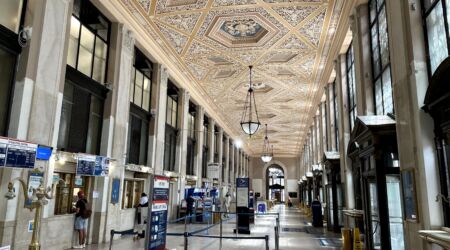
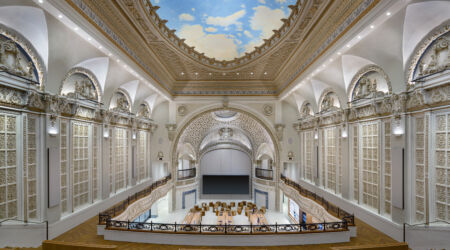
One of the joys of living in New York is the diverse tapestry of historical architecture that enriches its streets, from Dutch Colonial to Beaux-Arts to Gothic and much more in between. Monuments such as the Guggenheim Museum New York, the Palace Theatre on Broadway, the Park Avenue Armory and New York Public Library’s flagship Steven Schwarzman Building have recently required substantial restoration with hefty price tags, and the greatest expertise is sought to oversee such delicate projects. [ ]

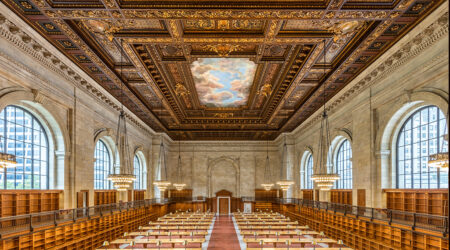
Kim Lovejoy, Senior Business Development Executive at EverGreene Architectural Arts in Brooklyn, is a New York-based expert at complex projects in historic and contemporary buildings. EverGreene, where she has worked for 27 years, focuses primarily on architectural ornament and artwork. Recent projects she spearheaded include the Rose Reading Room, the adjacent Catalog Room and three decorated stair halls at the New York Public Library’s flagship Steven Schwarzman Building on Fifth Avenue at 42nd Street. “It’s one of the most popular visited spaces in New York and, of course, the exhibitions at the library are of great interest.” The Reading Room project was spurred when a 60-pound plaster ceiling rosette fell to the floor at night. “People call and ask how can we do this project, and what are the things to think about? We’re very involved forensically, understanding the historic materials conditions and identifying treatment options that will be durable. Often, when clients have an architectural team, we are consultants on materials conservation and design,” says Lovejoy.
“We are grateful to visionary donors who support initiatives that preserve and revitalize historic buildings and artwork. My most meaningful projects at EverGreene were made possible by generous individuals and business leaders who believe in inspirational public spaces and cultural and educational institutions that enrich our civic life.”
Kim Lovejoy
EverGreene also designs for houses of worship, with its Sacred Spaces Studio. “There’s often a combination of conserving existing features and designing new elements. A lot of churches want to update figures and decorative elements in response to the cultural diversity of the congregations and changing liturgical practices and usage of the building,” she adds.
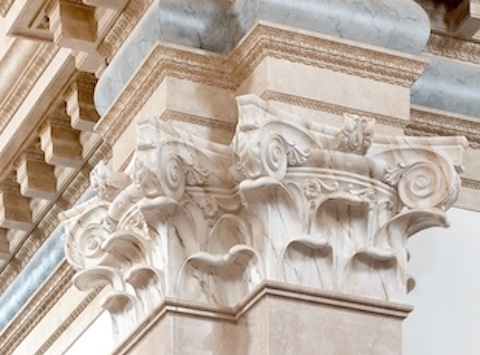
On a church with a budget, for example, EverGreene can produce repetitive ceiling and wall covering patterns on printed canvas or paper, as well as hand-painted murals. “Our craftsmen on site will restore the plasterwork, perform decorative painting on three-dimensional ornament, while conservators are cleaning and conserving murals and historic decorative elements on site, and we can install newly made artwork to replicate what is missing or as a new feature.”< Ensuring that modern materials do not compromise a historical integrity of a building is key. Lovejoy says: “We are aware of how lime plasters and gypsum plasters, and historic lead-based paints, oil-based paints and varnishes, how they age over time, and then what is available with current materials now. We must carefully choose materials for chemical compatibility and durability, and pay attention to regulations, which can limit the types of materials used in buildings, and with other safety issues.”
She adds: “The most challenging situation is handling murals with lead paste adhesive, historically when we’re having to remove and reinstall all or part of a mural; that requires the highest level of safety and protection. Asbestos can be found in some historic plaster, and often in painted fire curtains in theaters. We plan carefully for safety in our procedures.”sustainability in development should factor in more preservation. “My most important mission now at EverGreene is to teach and inspire its leaders to carry on responsible stewardship of our architectural heritage.”
Article & photo by Lisa Young. Published in Billionaire Magazine on September, 29 2025.