Paluxy River Dinosaur Tracks
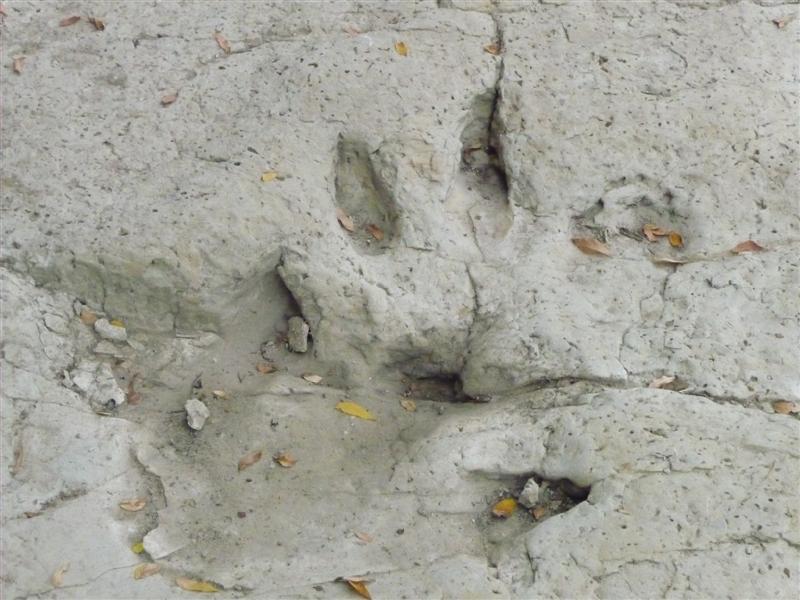
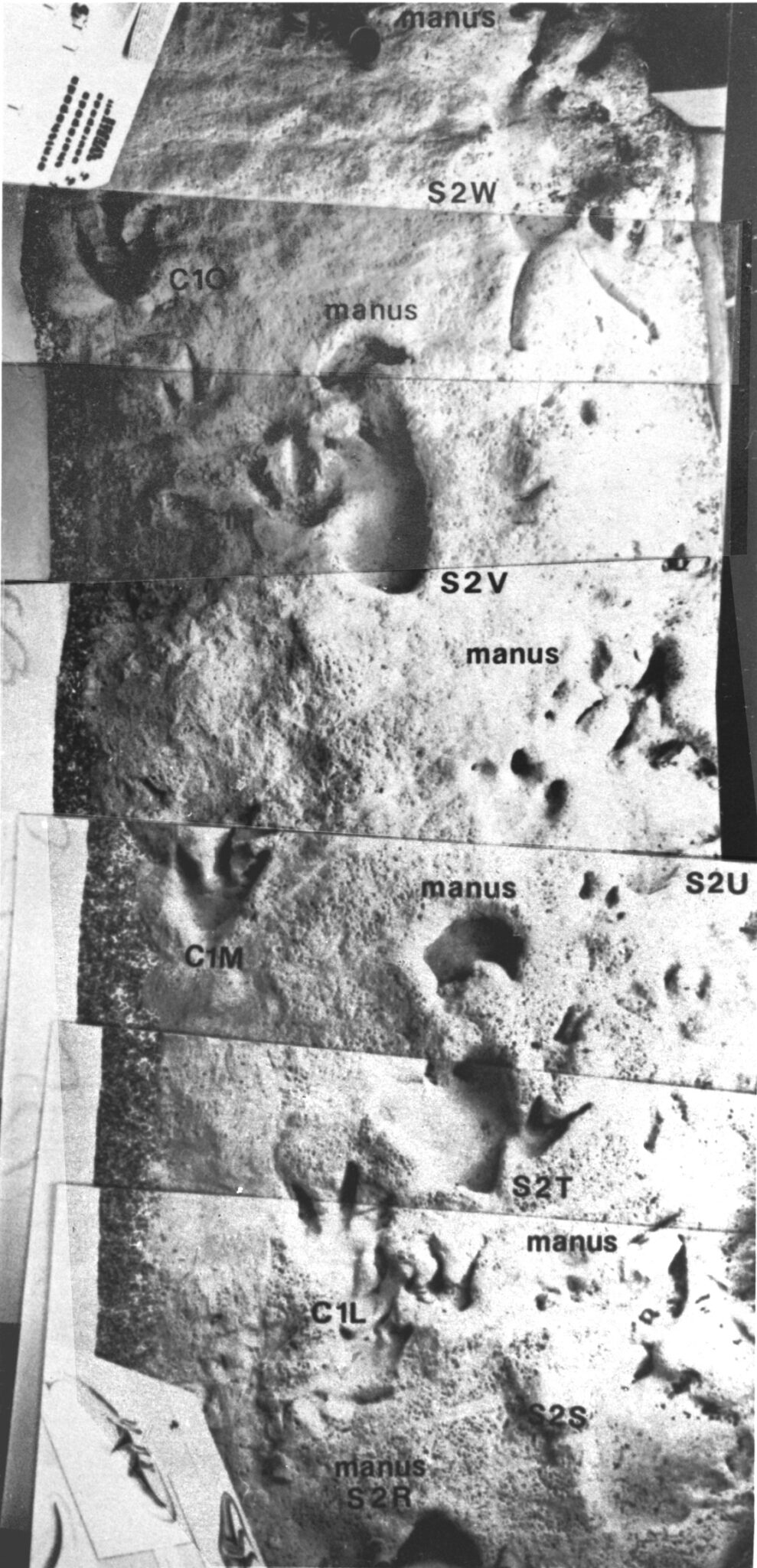
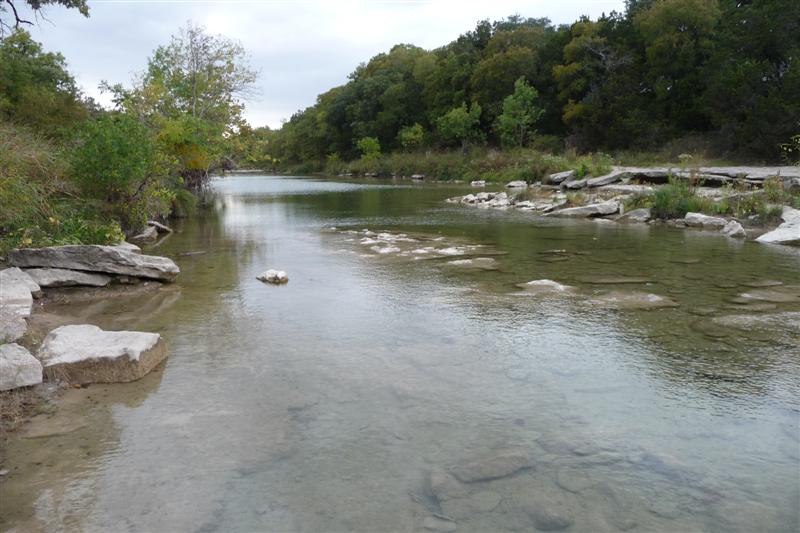
The Paluxy River dinosaur trackways are among the most important paleontological artifacts in the collection of the Texas Memorial Museum at The University of Texas at Austin. Originally excavated from the Paluxy River near Glen Rose, Texas, by paleontologist Roland T. Bird, the fossilized trackways have been on display at UT Austin since 1940.
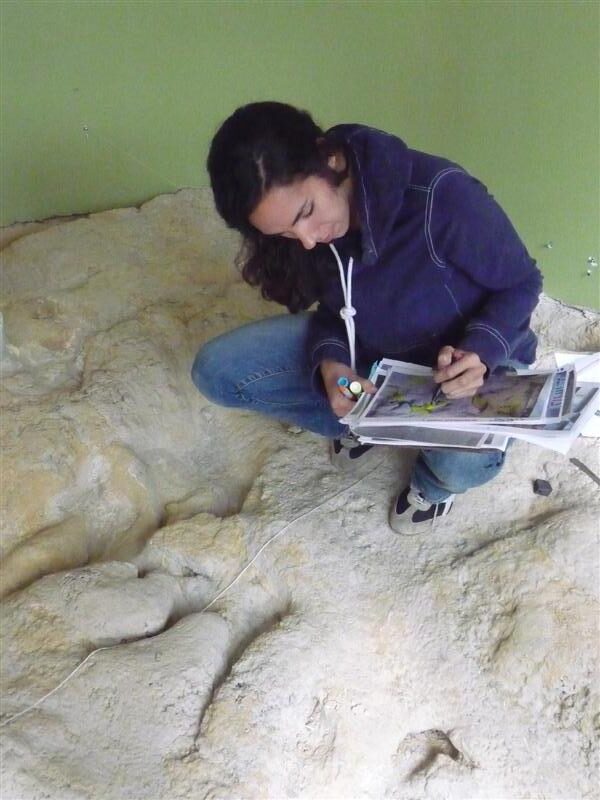
EverGreene was initially engaged by the University in 2008 to assess the condition of the trackways and develop a comprehensive conservation and relocation strategy in anticipation of their transfer to a new museum facility designed specifically to house and interpret the fossil collection. The project began with an extensive condition assessment, materials testing program, and engineering study to evaluate both the existing installation and the structural requirements of the proposed exhibit space. EverGreene conservators and engineers developed a detailed treatment and relocation plan, including methods for safely disassembling the trackway into its individual puzzle-like stone sections and mounting them onto a modular support system suitable for transportation, reassembly, and long-term display. Materials testing, mock-ups, and engineering analyses informed the final recommendations for conservation treatment, structural support, and exhibit design.
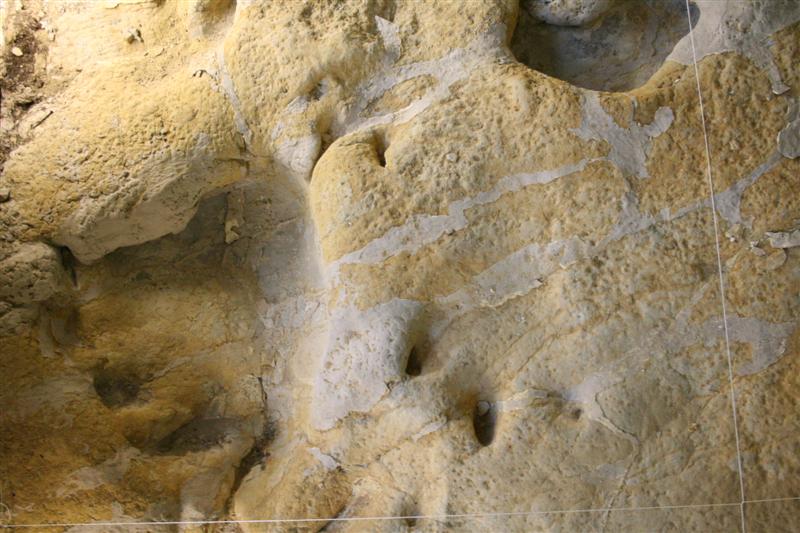
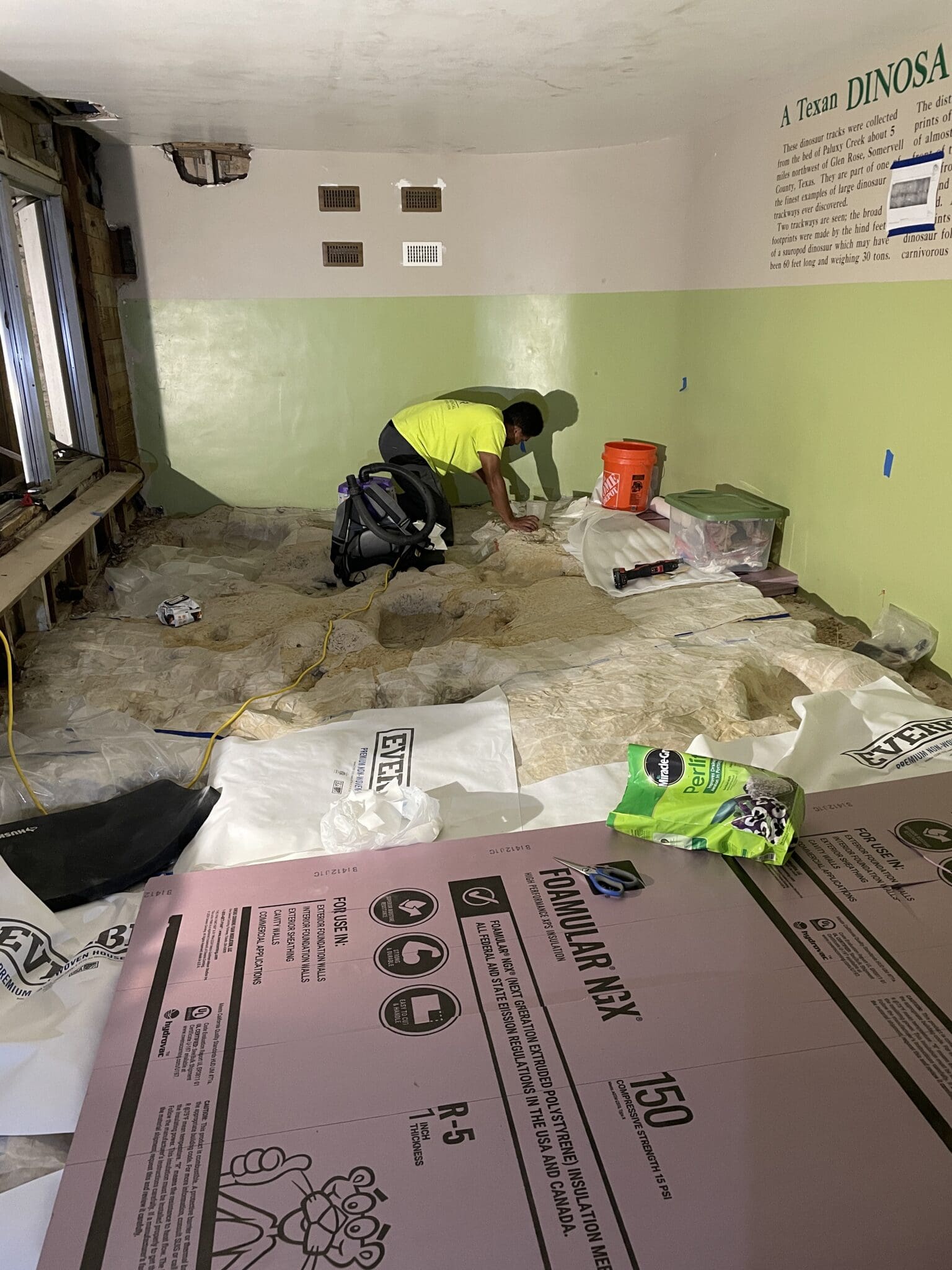
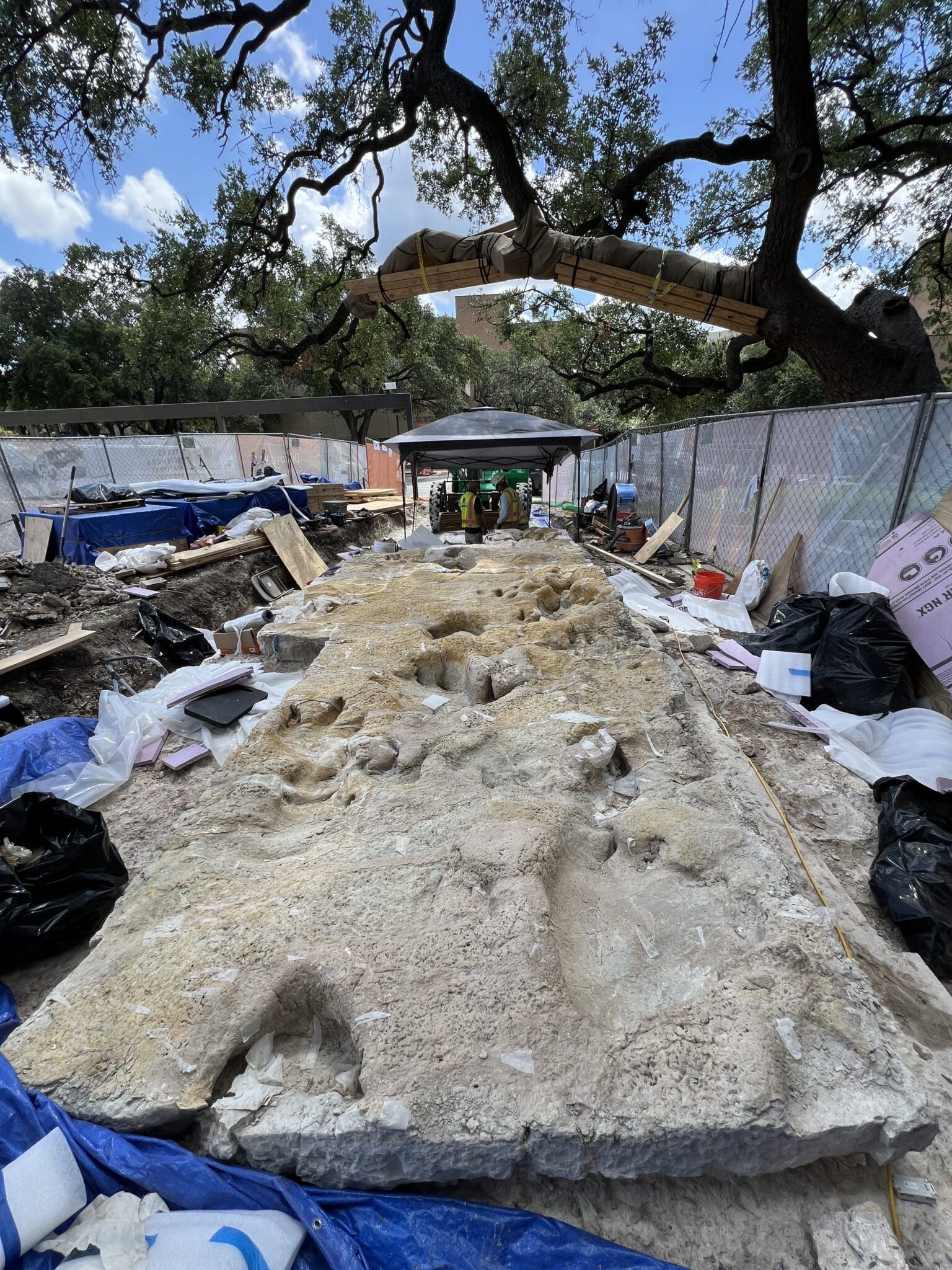
In 2024, EverGreene was asked to return to execute the proposed work. Another condition assessment was necessary to provide updates to the original plan. During the on-site investigations, it became clear that the safest and most effective means of preserving the trackways would be to remove them entirely from their existing location. This approach eliminated the risks posed by ongoing construction activities and addressed a primary cause of deterioration: the trackway’s direct contact with underlying soil.
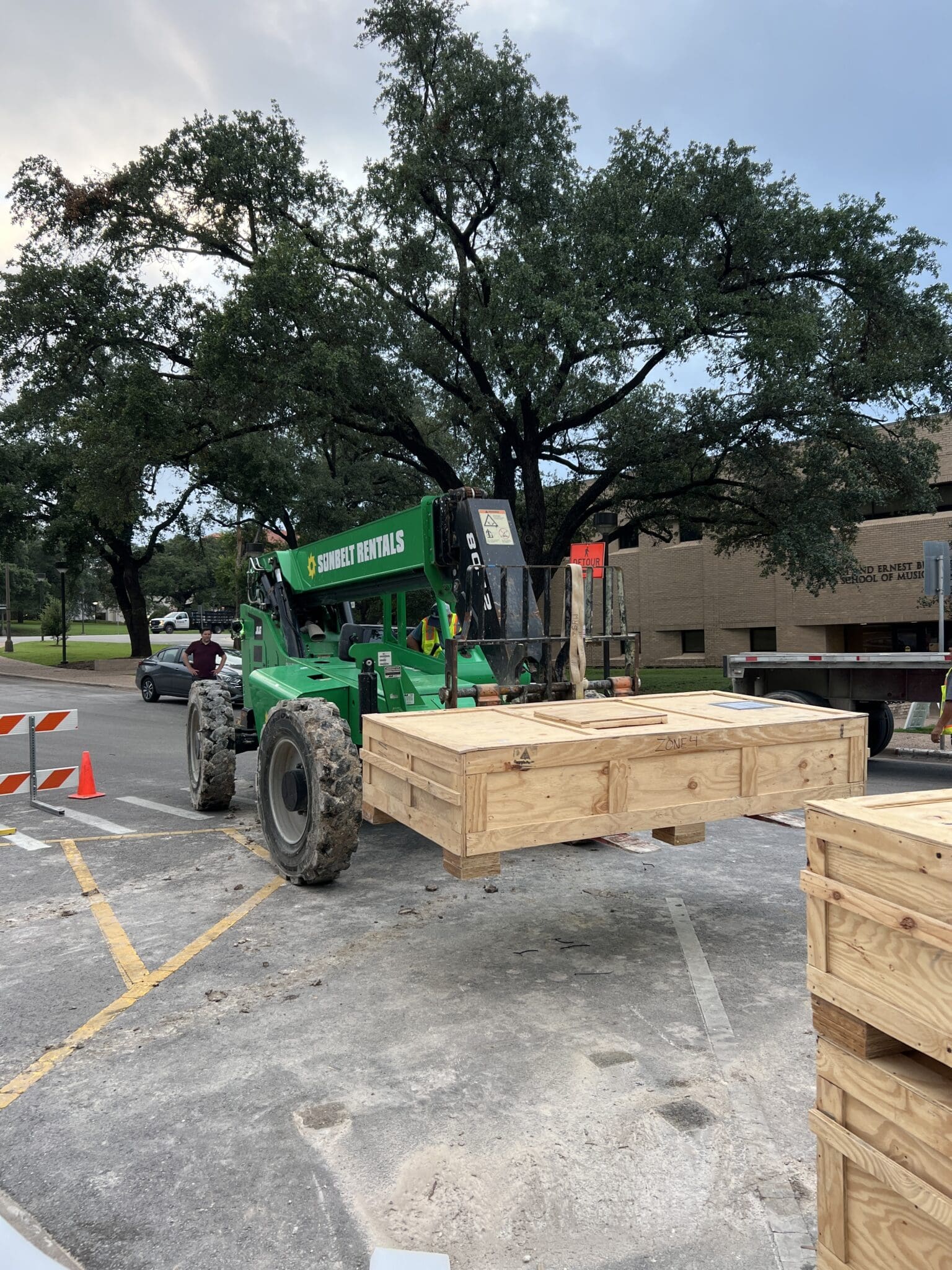
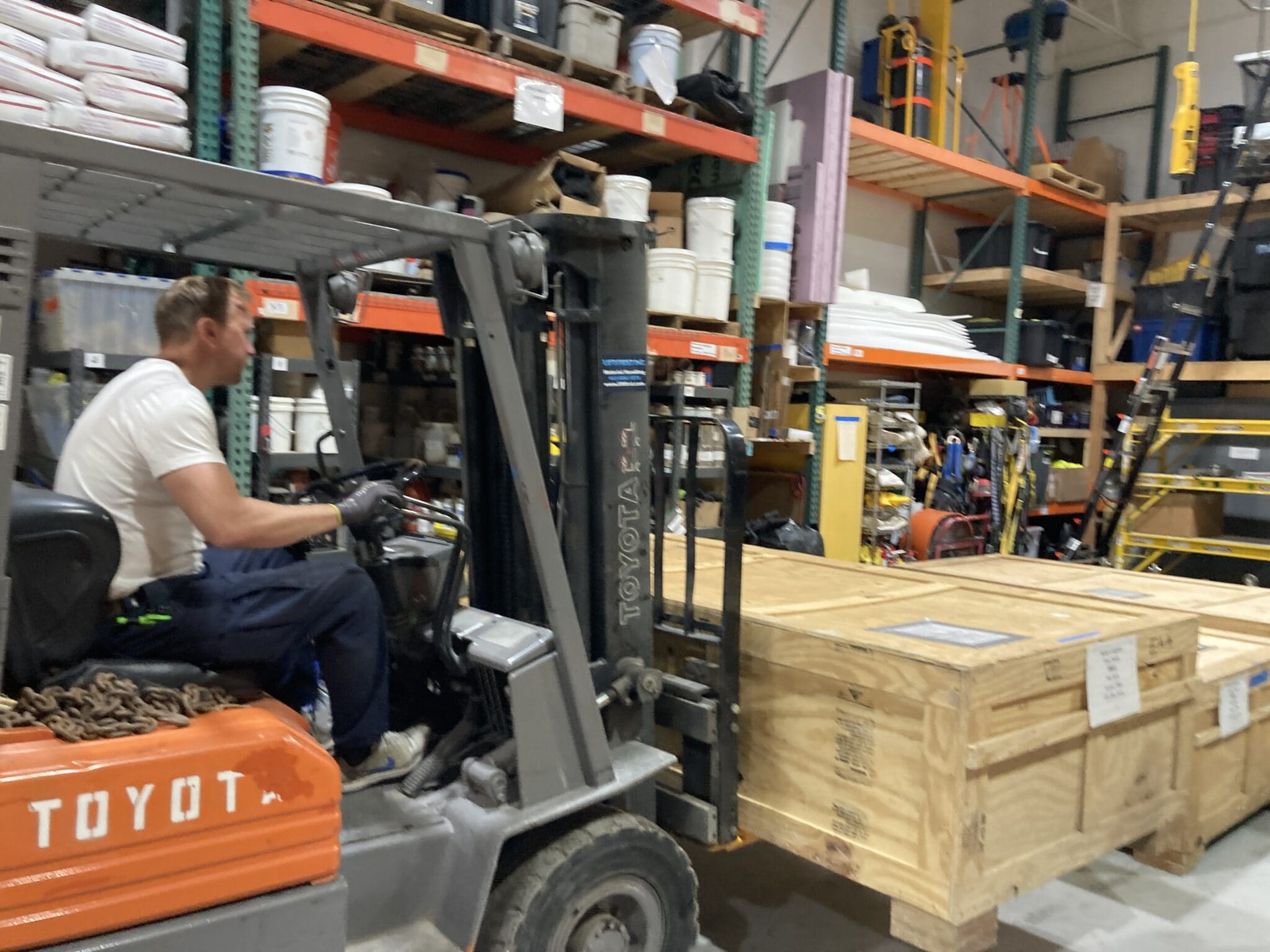
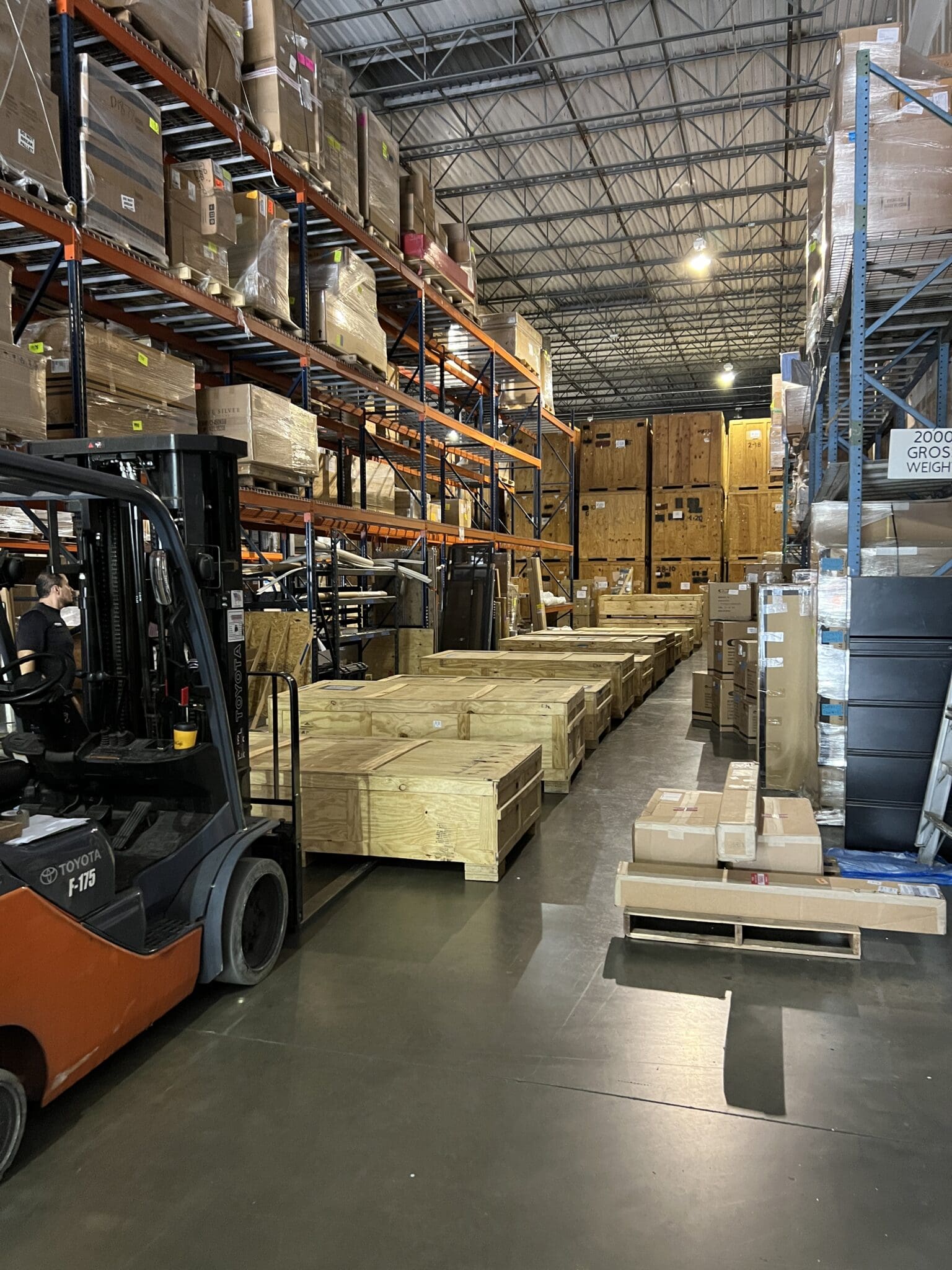
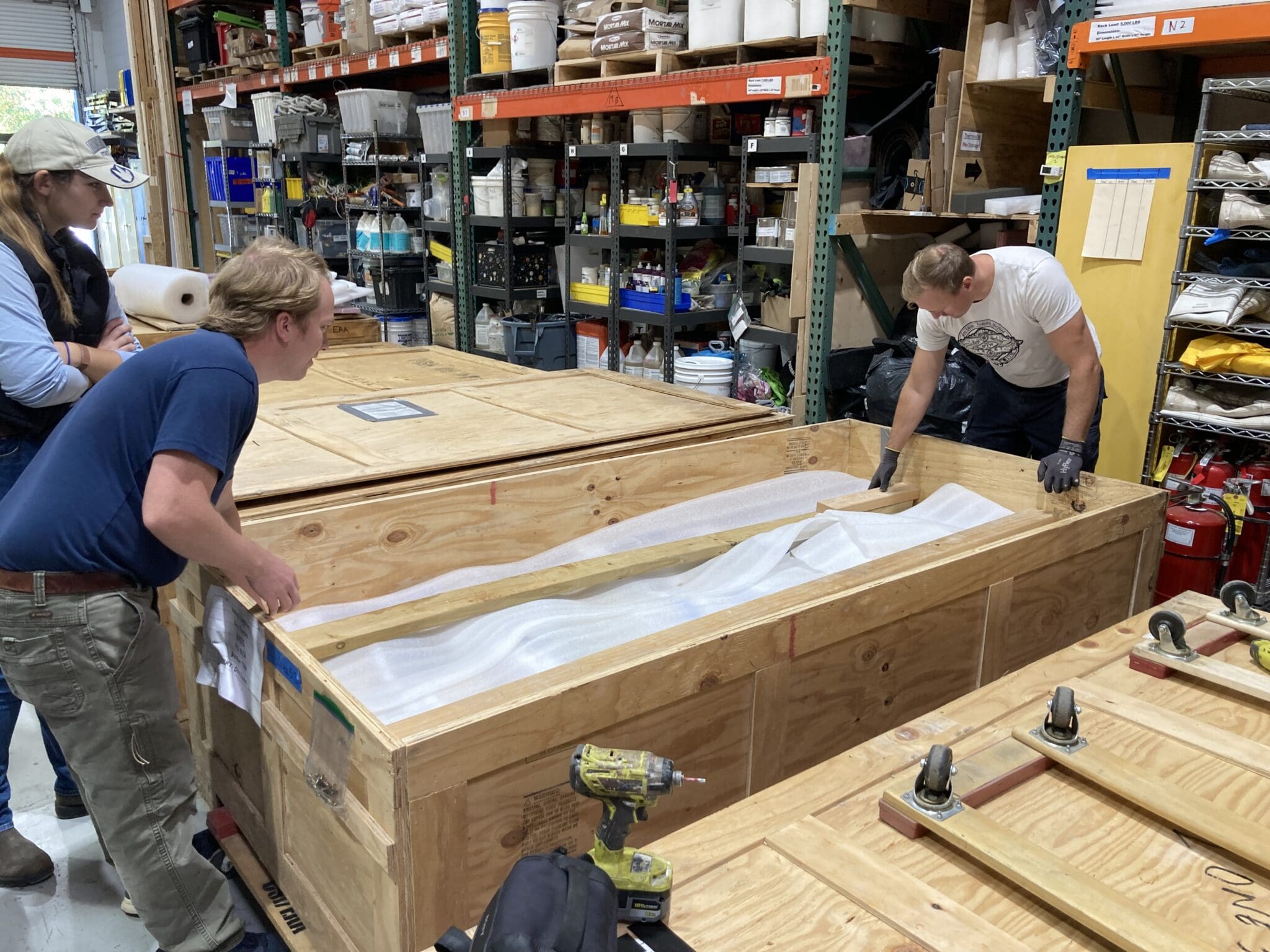
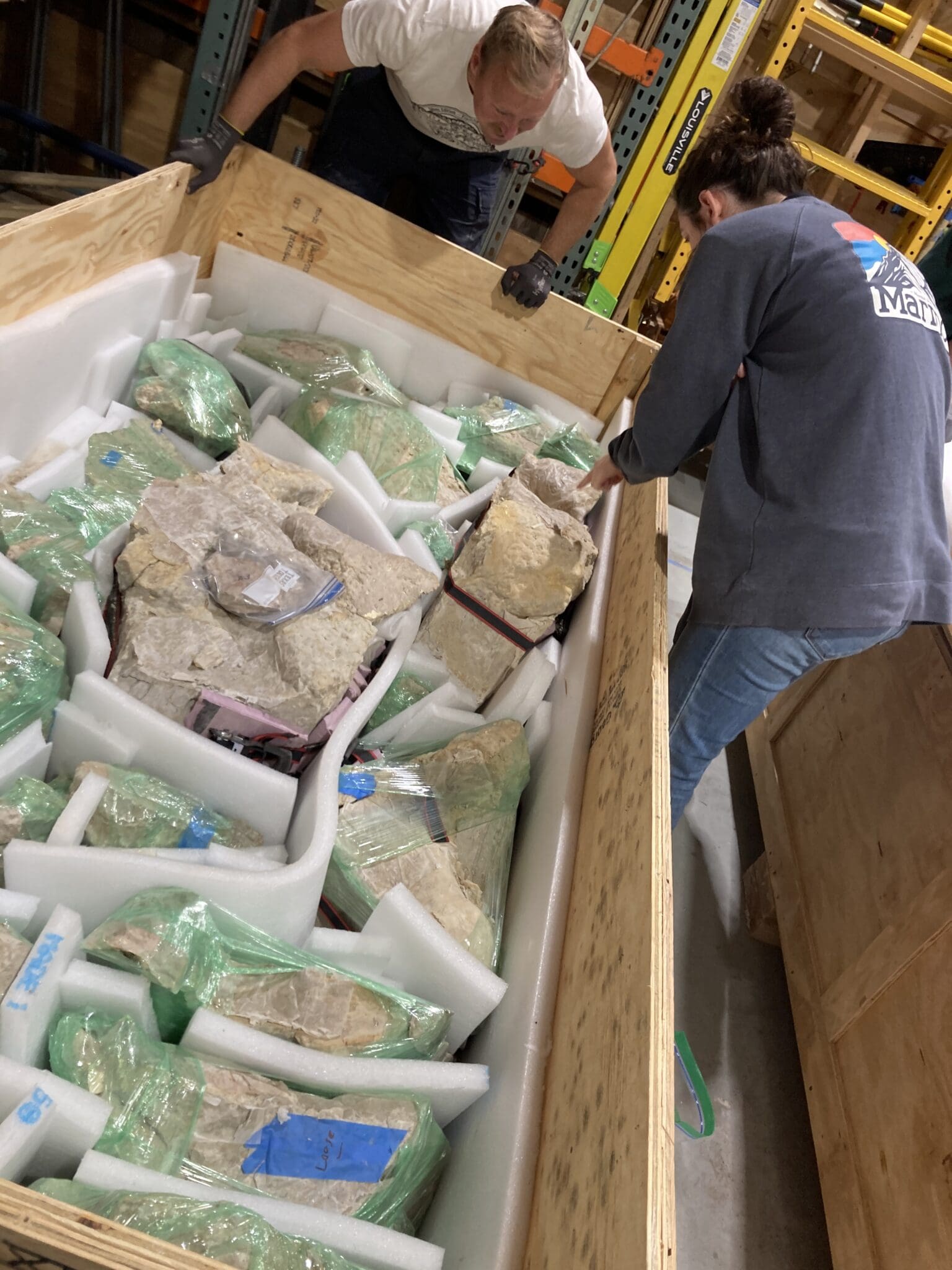
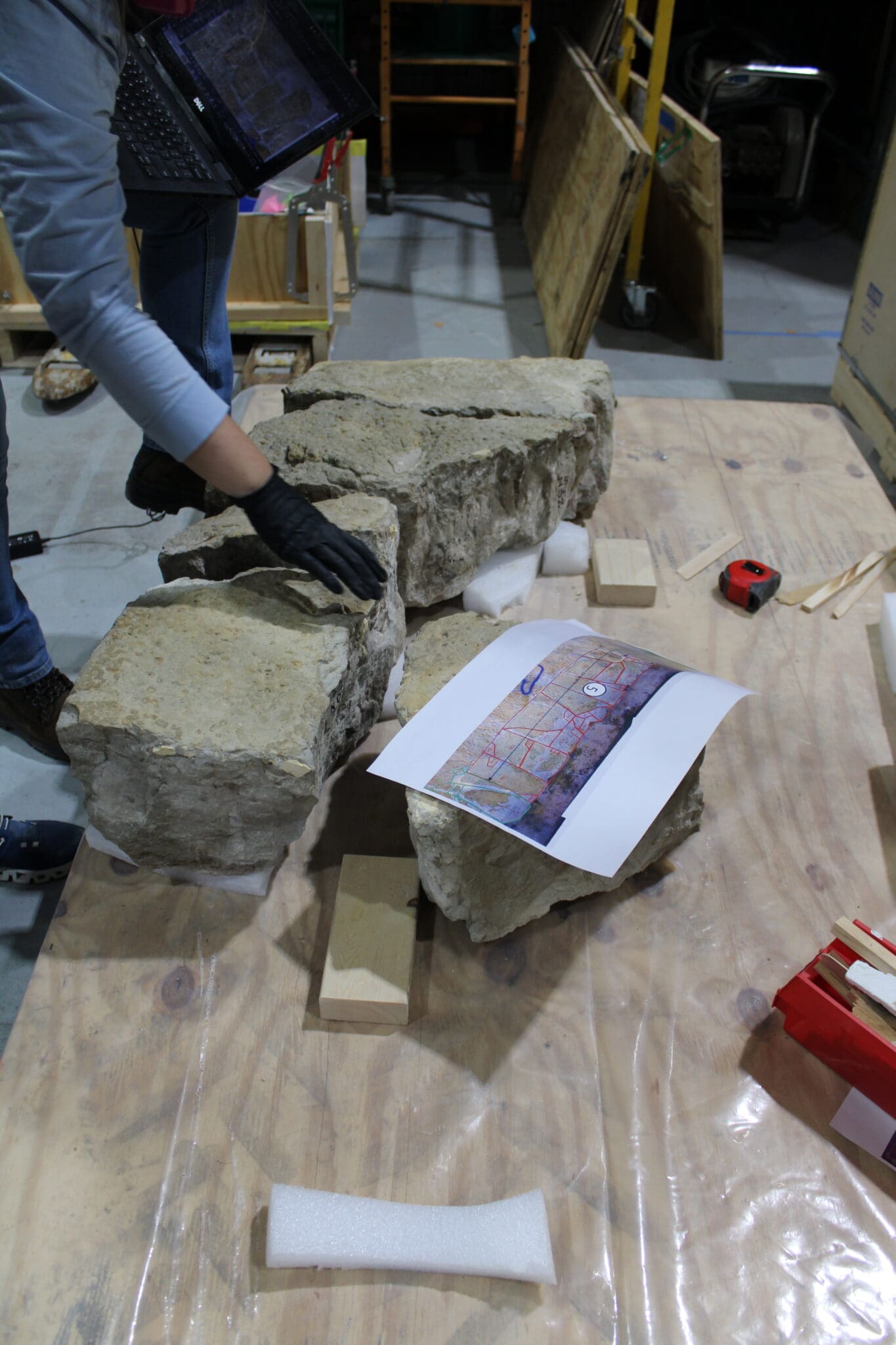
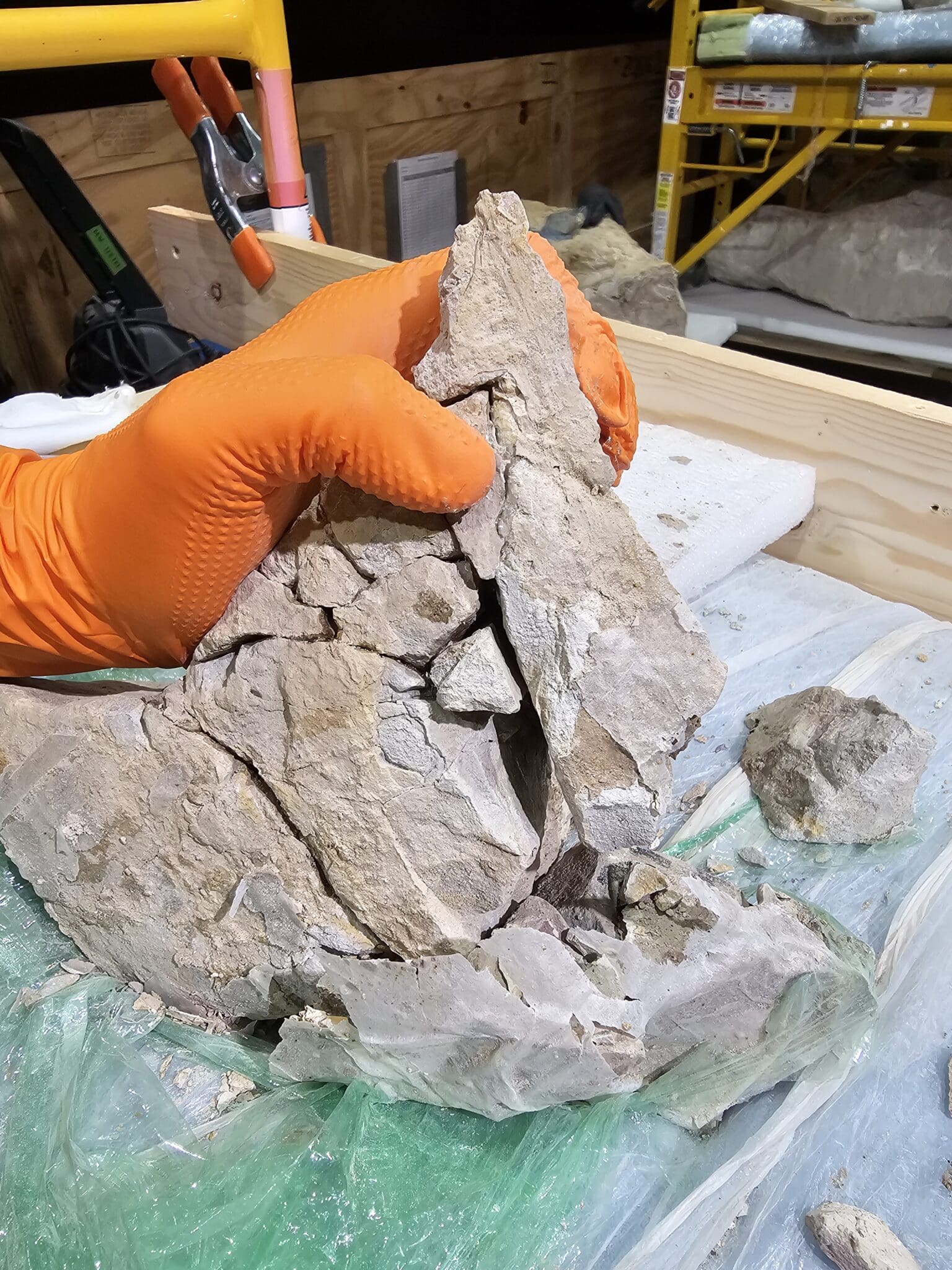
EverGreene therefore undertook the careful dismantling and removal of the entire trackway, including the removal of previous plaster fills and stabilization of vulnerable stone sections. Individual segments were custom crated and transported via air-ride truck to EverGreene’s conservation facilities in New York and Maryland for treatment and safekeeping.
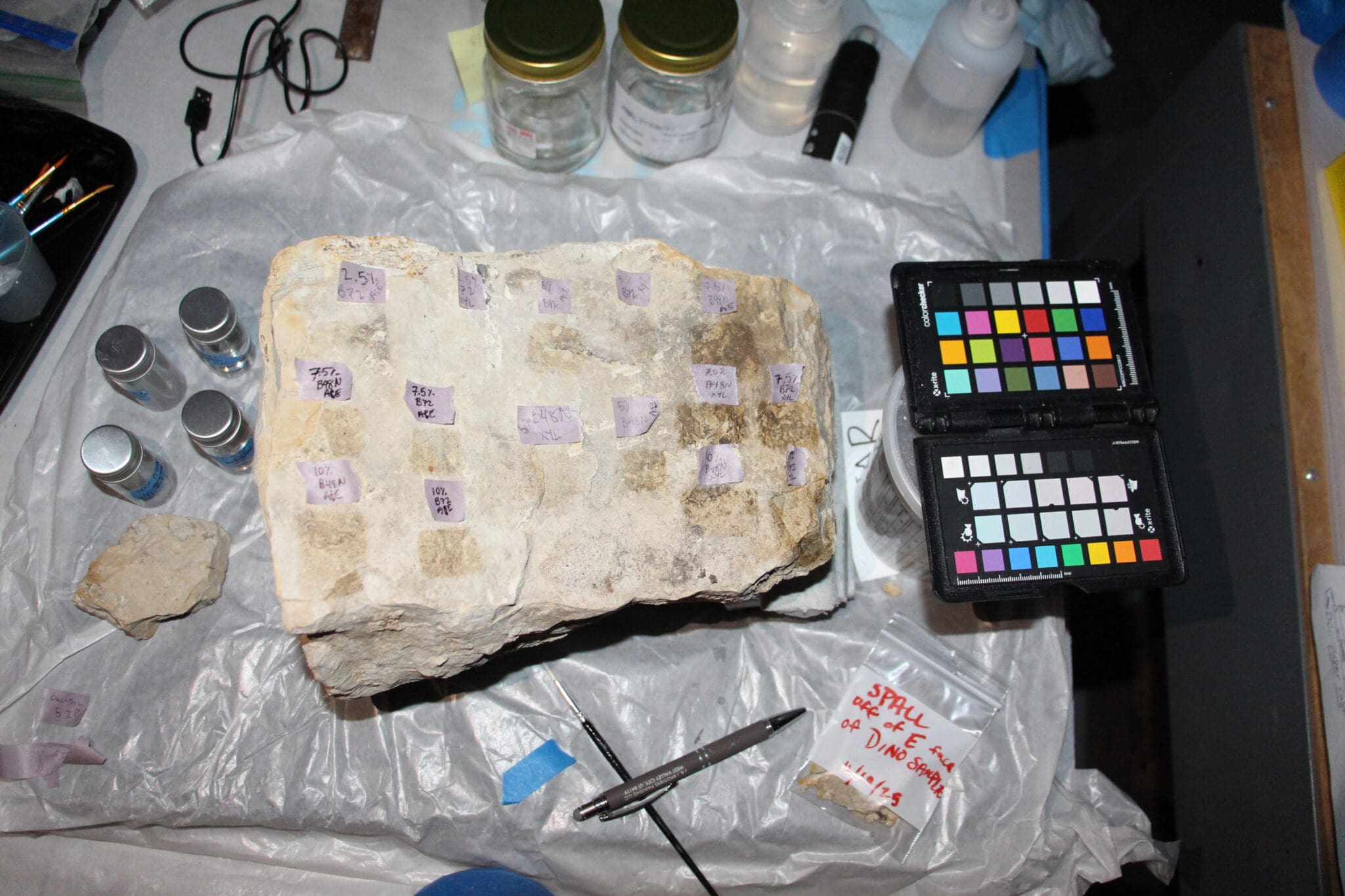
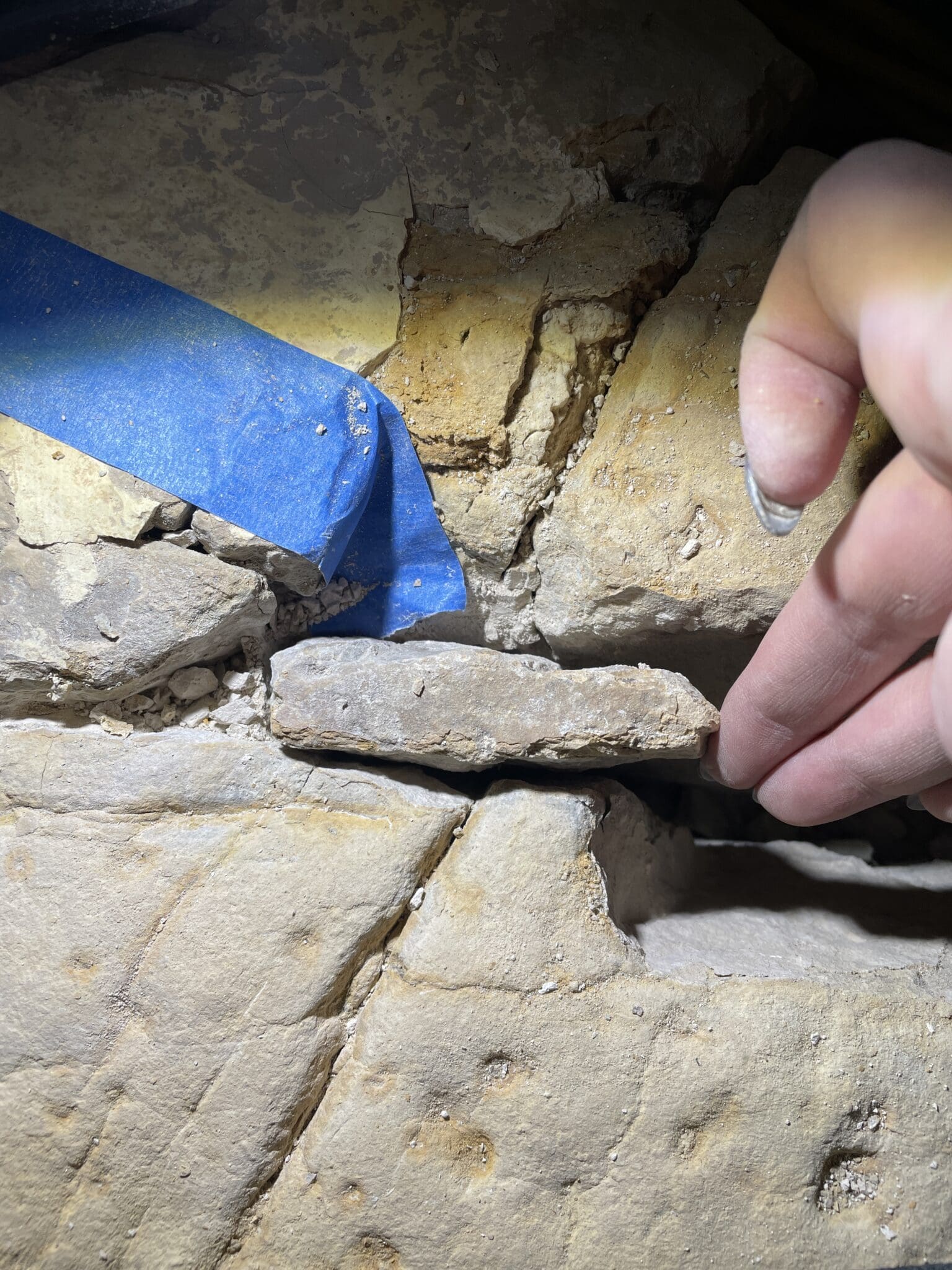
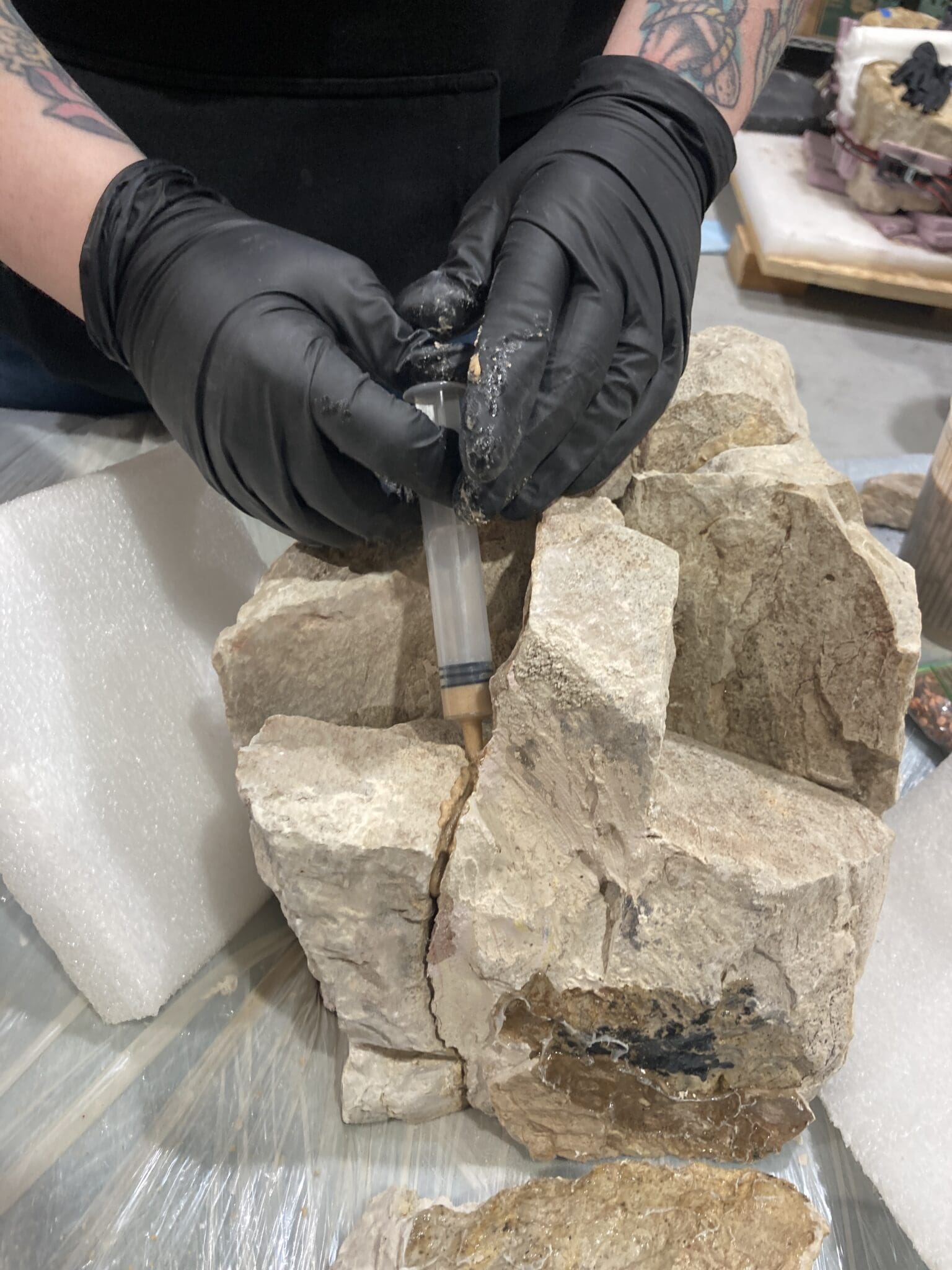
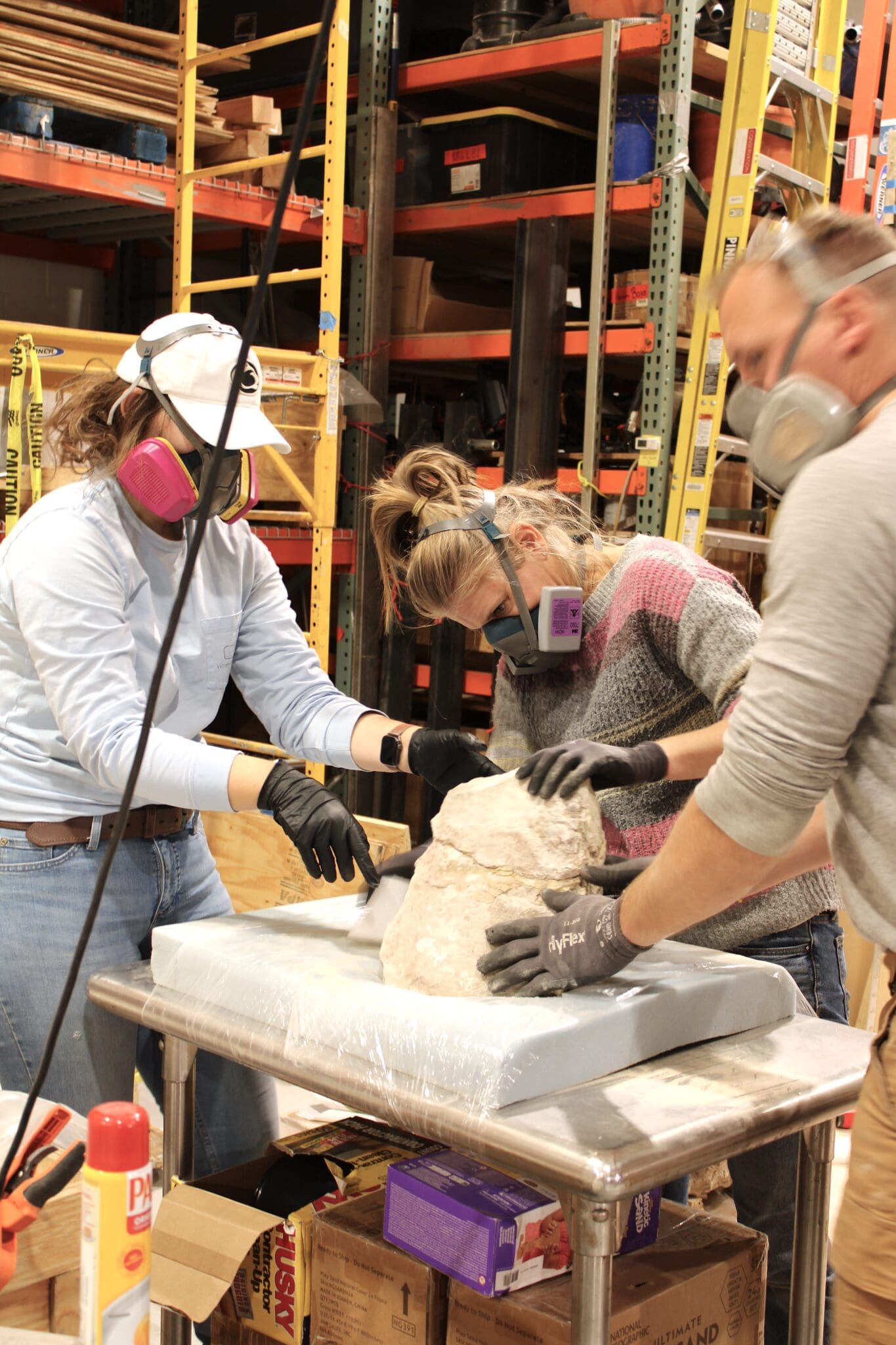
At the conservation studios, EverGreene implemented treatment recommendations developed during the original assessment in 2009 while also evaluating emerging advances in stone conservation technology to ensure the most appropriate preservation methods were employed. The treatment program emphasized minimal intervention and extensive testing to identify the least aggressive and most effective conservation solutions for the fossilized trackways. Treatments included paint removal, stone consolidation, crack fills, patching, and inpainting.
In parallel with the conservation effort, EverGreene collaborated with structural engineers, architects, and exhibit designers to develop a new integrated support and display system. Designed to serve throughout handling, transportation, installation, and exhibition, the system provides long-term structural stability while simplifying future maintenance and reinstallation.
Upon completion of the project, EverGreene will provide comprehensive documentation detailing the condition, treatment, handling, transportation, and installation of the artifact, ensuring a complete record for its future stewardship and preservation.
As construction of the new museum facility progresses, EverGreene continues to coordinate with the University and project team regarding the timing and logistics of the trackways’ return and installation. Work is currently ongoing.