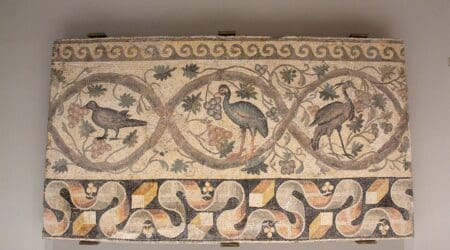


Our presentations highlight ideas and innovations that shape the field today—connecting conservators, scientists, and practitioners through shared expertise, emerging technologies, and evolving best practices in historic preservation.
OPENING GENERAL SESSION
Challenges in the Care and Preservation of Conservators
THURSDAY, APRIL 30
8:45–10:15am
ROOM 517AB
STRONG CHALLENGES, STRONGER WOMEN
The Truth of being a Pregnant Woman within the Realm of Architectural Conservation
Presented by Brooke Russell
Architectural conservation sits at the intersection of preservation practice and the construction industry where women make up a significant portion of the workforce. However, pregnancy remains inadequately addressed in policies and day-to-day practice, particularly on active job sites. This presentation examines challenges including construction-site safety protocols, physical labor expectations, environmental exposures, and scheduling constraints and discusses strategies to develop clearer policies and a more supportive professional culture. Link to abstract
MONUMENTAL MURAL, MONUMENTAL STRAIN
Conservator Health in the NASM Project
Presented by Katey Corda
Between 2019 and 2020, conservators removed five monumental murals from the National Air and Space Museum in preparation for asbestos abatement and building renovation, requiring the team worked inside negative-air containment wearing full protective equipment. This presentation uses the project as a case study to examine the demands placed on conservators during large-scale treatments. The talk will share practical strategies developed during the project to support safer and more sustainable conservation practice. Link to abstract
ARCHITECTURE SESSION
Specialty Breakout: Collaboration Among Professionals, Architectural/Cultural Preservation & Distemper Paints
SATURDAY, MAY 2
2–3:20pm
ROOM 520AD
DECISION MAKING FOR A WHOLE AND ITS PARTS
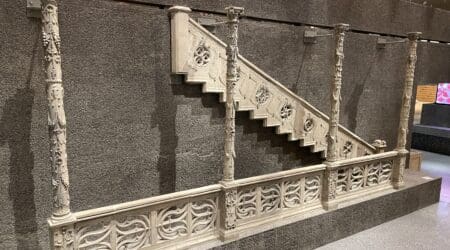
Conservation & Installation of the Mallorcan Stairway and Gallery at the Princeton University Art Museum
Presented by Kelly Caldwell, Elena Torok & Alexandria Letvin
What story should be told and how does it shape conservation decisions? This presentation examines these issues through the conservation of the 15th–16th century limestone Stairway and Gallery from Palma de Mallorca in the collection of the Princeton University Art Museum. The monumental ensemble was deinstalled, conserved, and reinterpreted. This case study highlights the collaborative work required among curators, conservators, engineers, and contractors to balance conservation practice, interpretation, and the realities of large-scale architectural installation. Link to abstract
CONSERVATION SCIENCE
Assessment Of A Novel Application Of Peptide Mass Fingerprinting (PMF) For The Identification of Distemper Paints in Architectural Finishes
Presented by Brooke Russell & Catherine Matsen
This study explores the use of peptide mass fingerprinting (PMF) with MALDI-TOF—a highly sensitive technique for identifying collagen-based materials—to analyze architectural distemper finishes. Brooke Russell collaborated with Catherine Matsen of Winterthur Museum, Garden and Library to test the method on mock-up distemper paint samples and historic architectural finishes. Results highlight both the promise and limitations of PMF for detecting collagen binders and emphasize the importance of continued collaboration between architectural conservators and conservation scientists. Link to abstract