National Air and Space Museum Collections Care
The National Air and Space Museum (NASM) in Washington, D.C. is a part of the Smithsonian Institution. Established in 1946 as the National Air Museum, the institution is dedicated to human flight and space exploration. Its current location on the National Mall near L’Enfant Plaza opened to the public in 1976 and displays only a small fraction of the institute’s collection of aircraft and large space objects. Several of the artifacts and objects are housed in a vast hanger known as the Steven F. Udvar-Hazy Center near Dulles International Airport in Chantilly, Virginia, which was specially constructed for the collection in 1993. The center also houses the museum’s conservation labs. Additional NASM artifacts from America’s military and space history are housed at the Garber Facility in Suitland, Maryland.
EverGreene has a longstanding relationship with NASM, performing conditions assessments and implementing comprehensive treatment plans for artifacts within their collection. Prior to beginning work, each piece is assessed and pre-treatment reports are created to document conditions and outline treatment programs.
Art Conservation
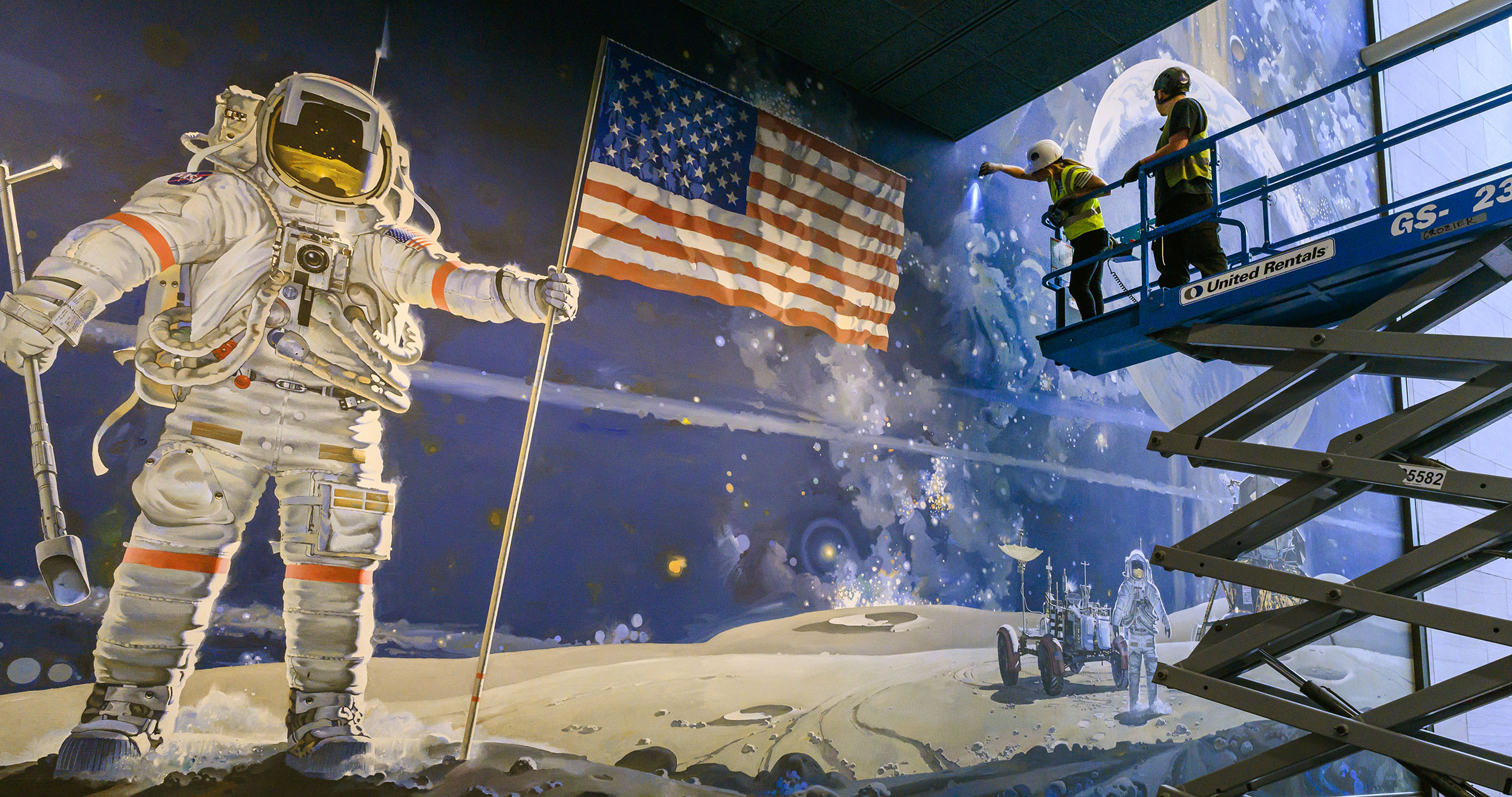
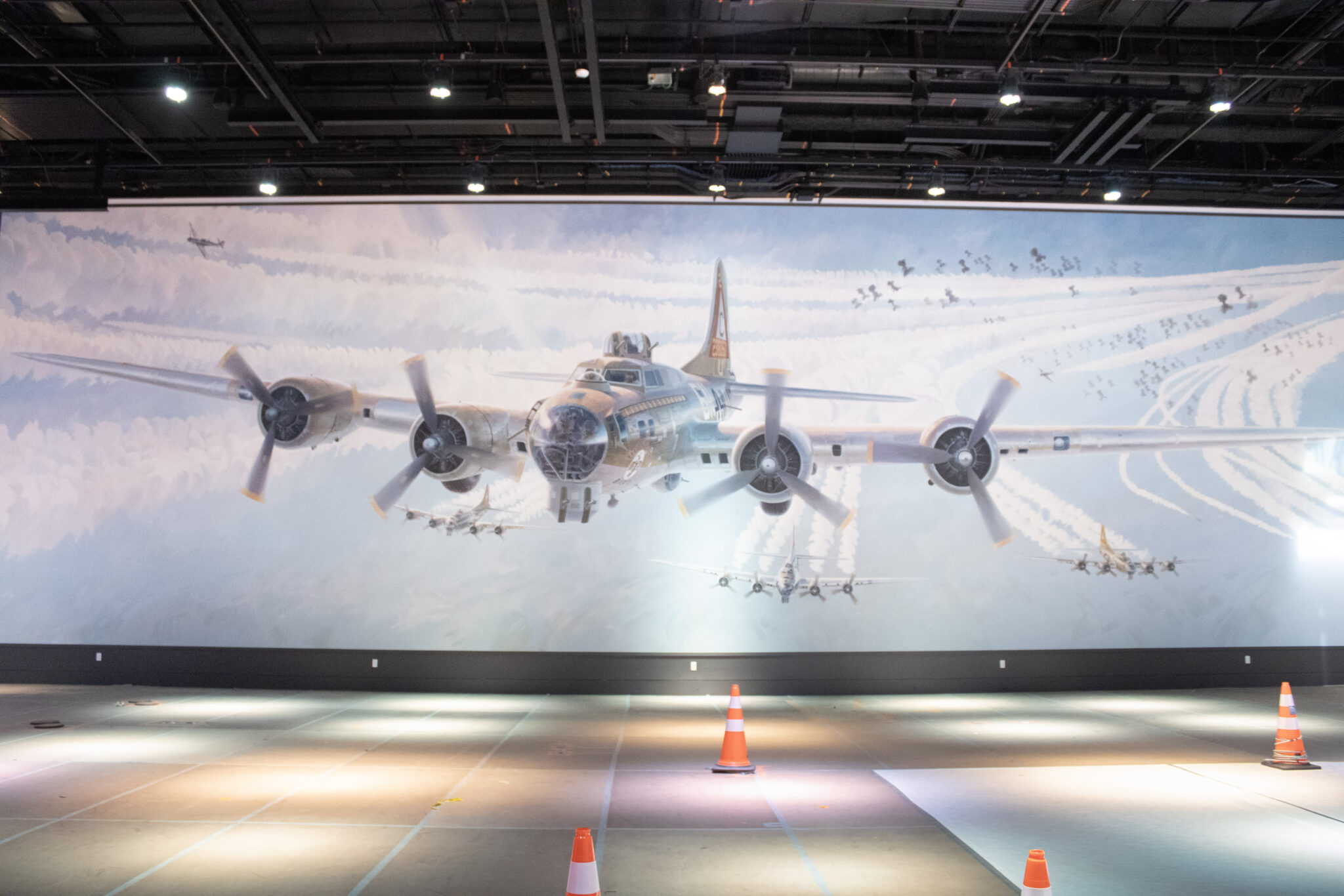
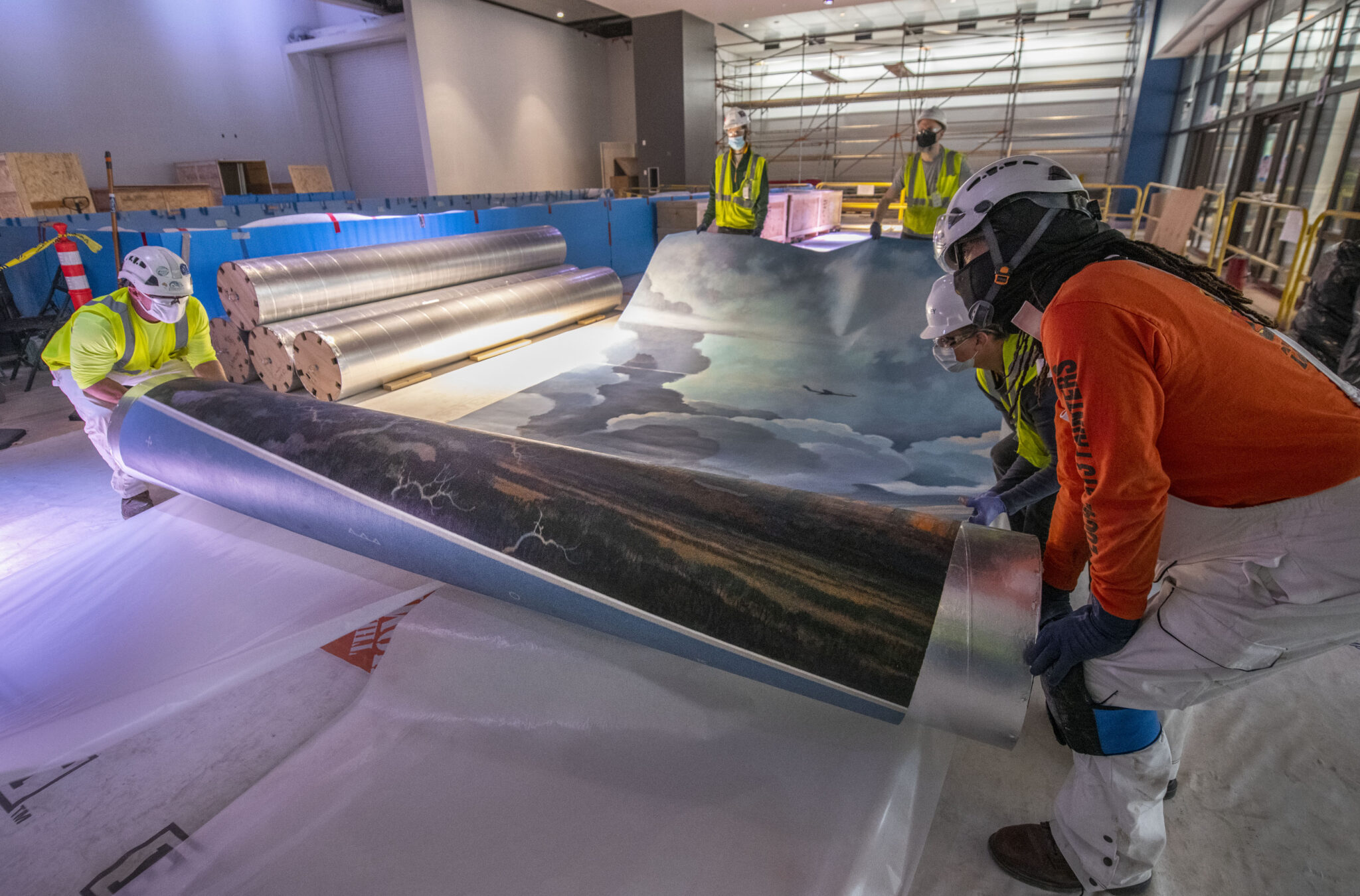
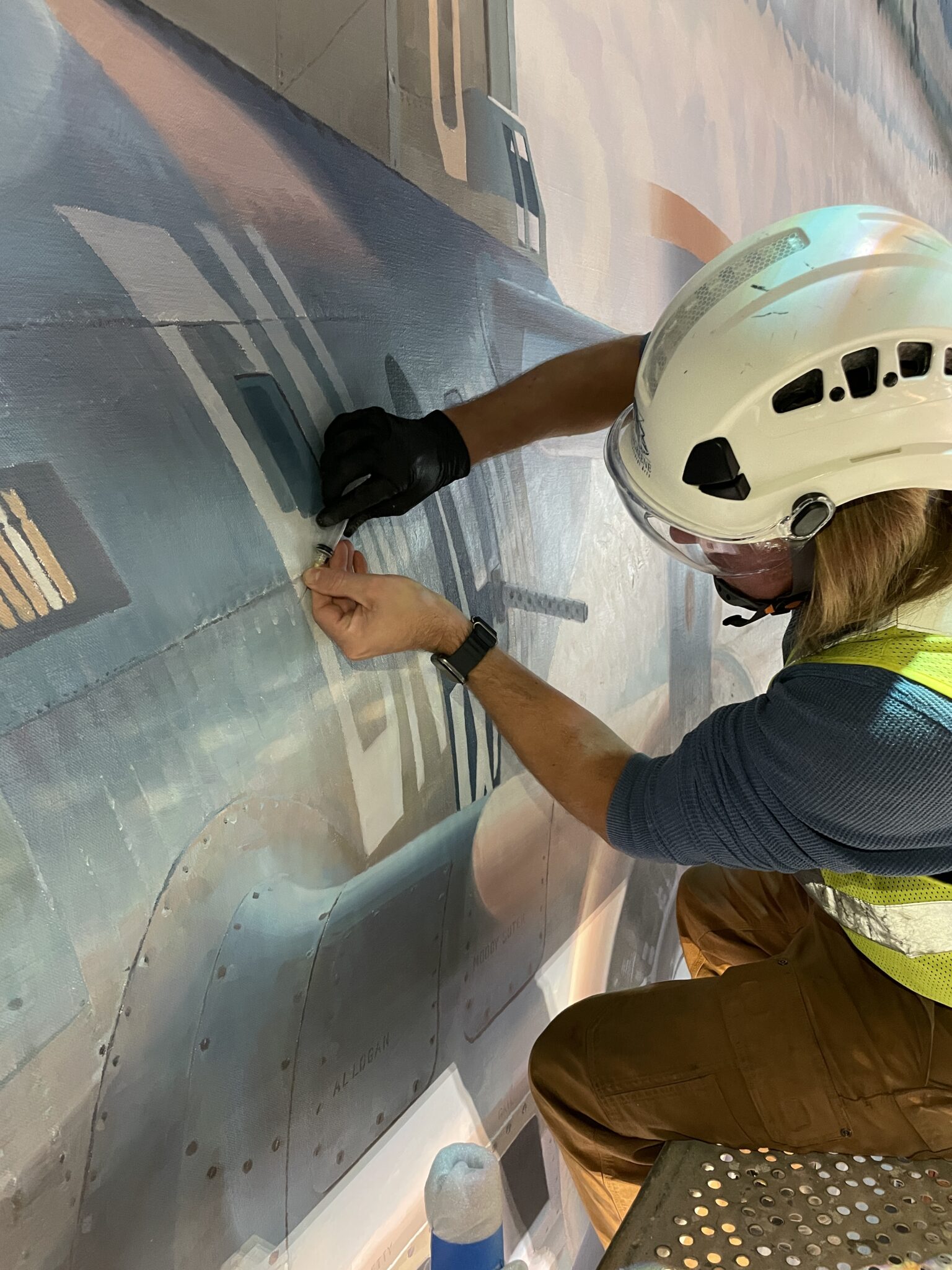
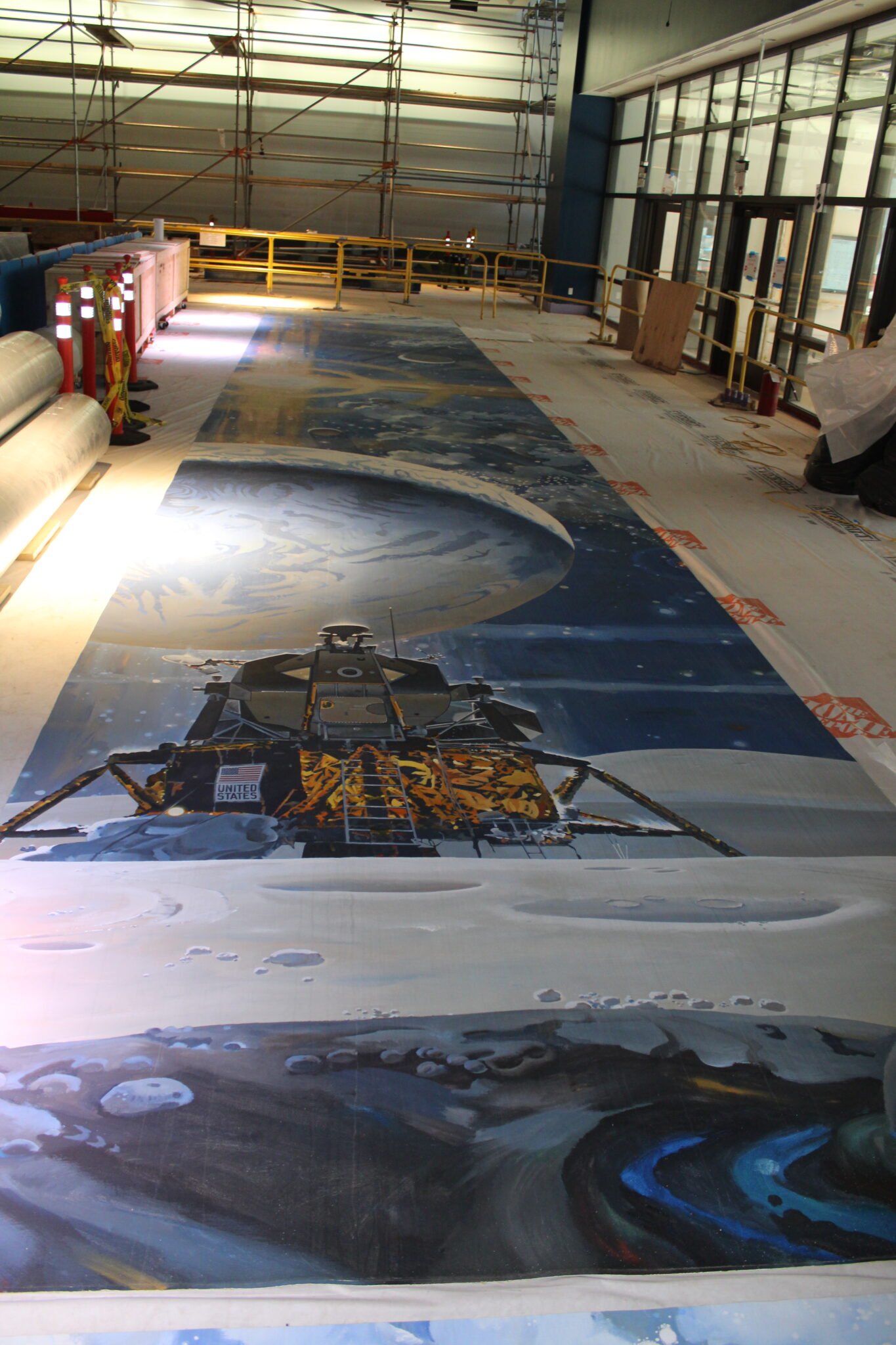
National Air & Space Museum Murals: EverGreene addressed five monumental murals at NASM as a part of a major renovation of its exhibition and presentation spaces. The murals had been created for the museum during its construction in the mid-1970s and included:
- Weather
- The Evolution of Jet Aviation
- Fortresses Under Fire
- Earth Flight Environment
- A Cosmic View
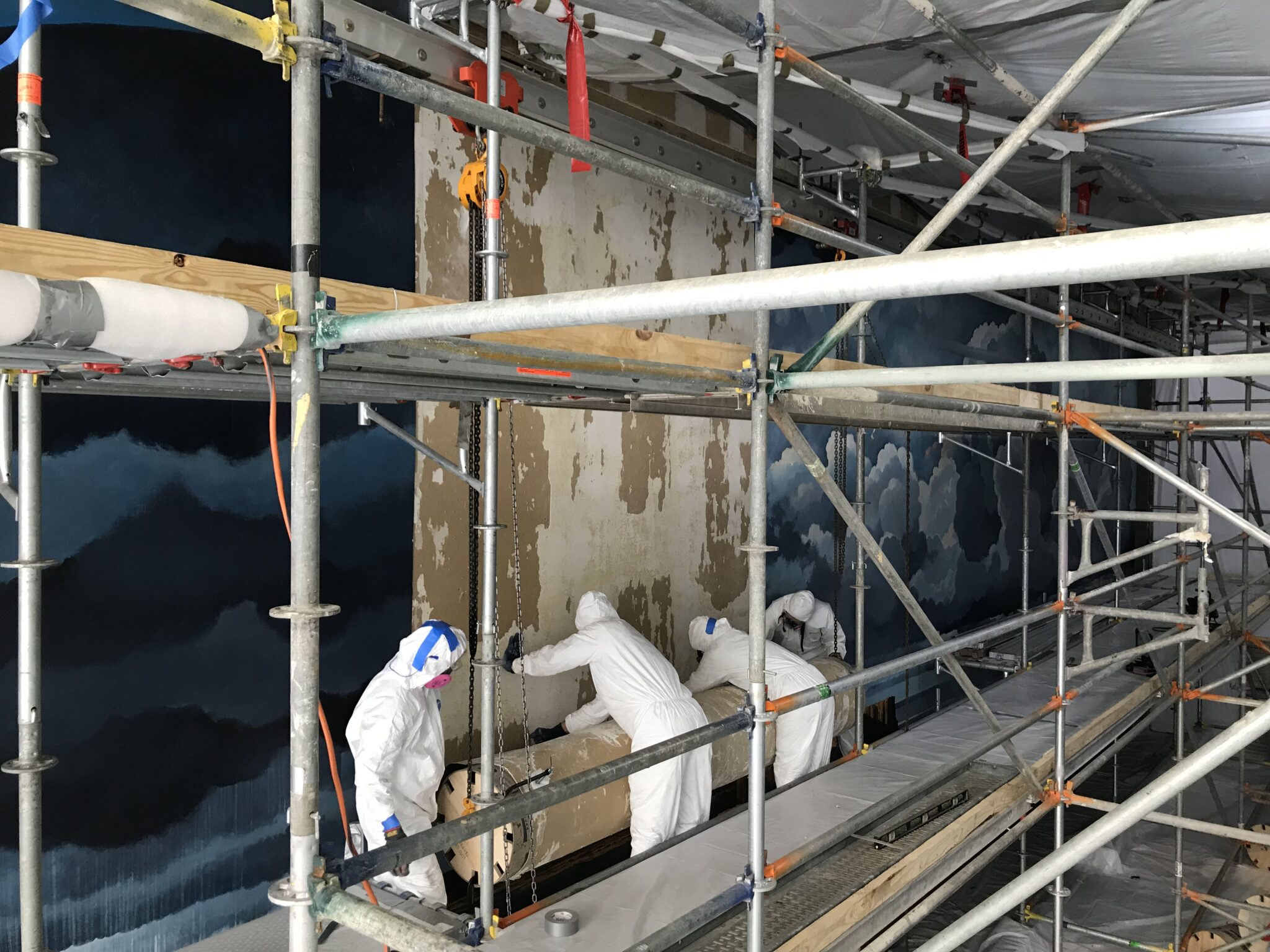
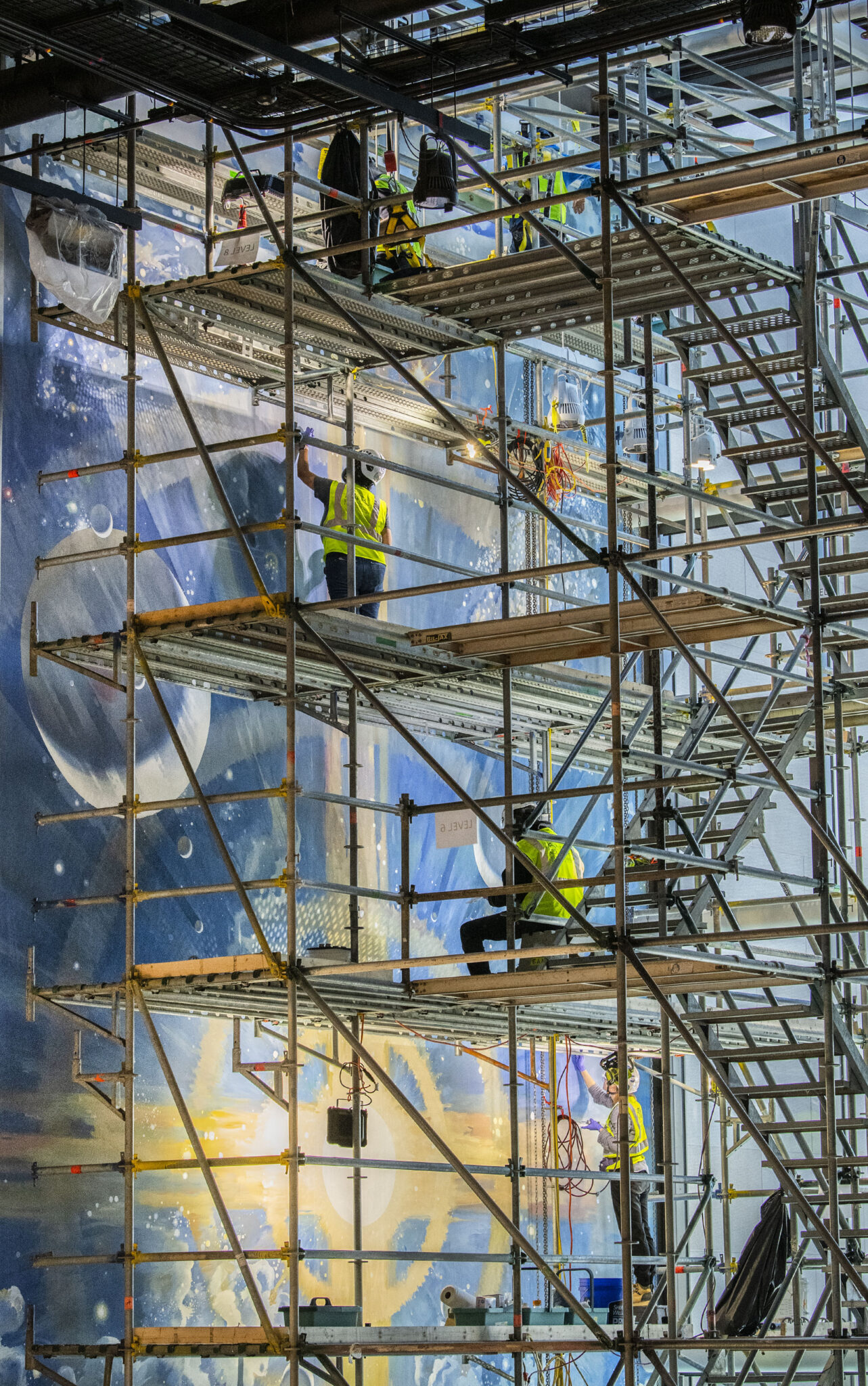
The murals were deinstalled and treated for asbestos containing materials (ACM). All but The Evolution of Jet Aviation were later reinstalled for display. EverGreene assessed, documented, and developed a plan to safely remove the large-scale murals from their walls. Custom-designed enclosed scaffolding with negative-air containment, along with appropriate PPE, were used to mitigate exposure to ACM in the wall substrate. The murals were removed in sections corresponding to their original canvas dimensions, rolled onto large sonotubes, and safely transported to EverGreene’s conservation studio.
For the purpose of this project, a clean containment room was constructed in our studio, so excess hazardous ACM wall materials could be safely removed from the back of each canvas. After careful cleaning and final testing to confirm the complete absence of any ACM, the murals were rerolled in archival materials, crated, and returned to the museum for storage.
Upon the completion of the renovation work, the mural section were carefully aligned and readhered to the newly refinished gallery walls. The seams in between canvas panels were restored, minor damage addressed, and a painted trim was added to frame each mural.
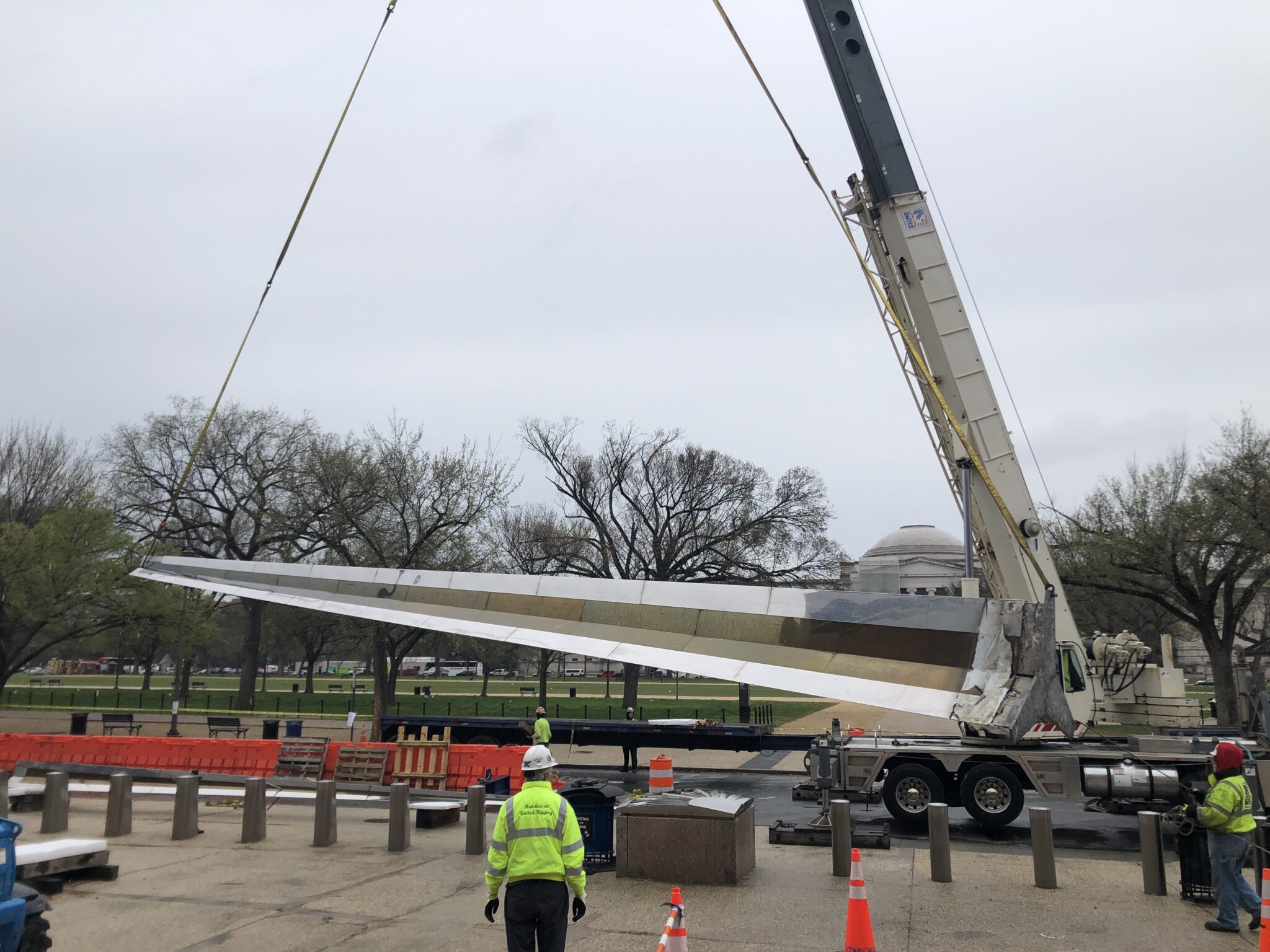
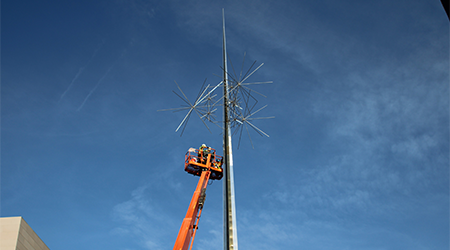
Ad Astra Sculpture: This 114-foot-tall stainless steel abstract work by Richard Lippold has been adorning the Jefferson Drive entrance to Smithsonian National Air and Space Museum since 1976.
EverGreene led the careful dismantling and temporary storage of the sculpture in preparation for the museum’s expansion and revitalization. Our team studied original materials, thoroughly documented its condition, and provided informed recommendations to guide the process. We then planned and executed the removal and, following completion of the site work and facilitated the sculpture’s precise reinstallation.
Artifact Conservation
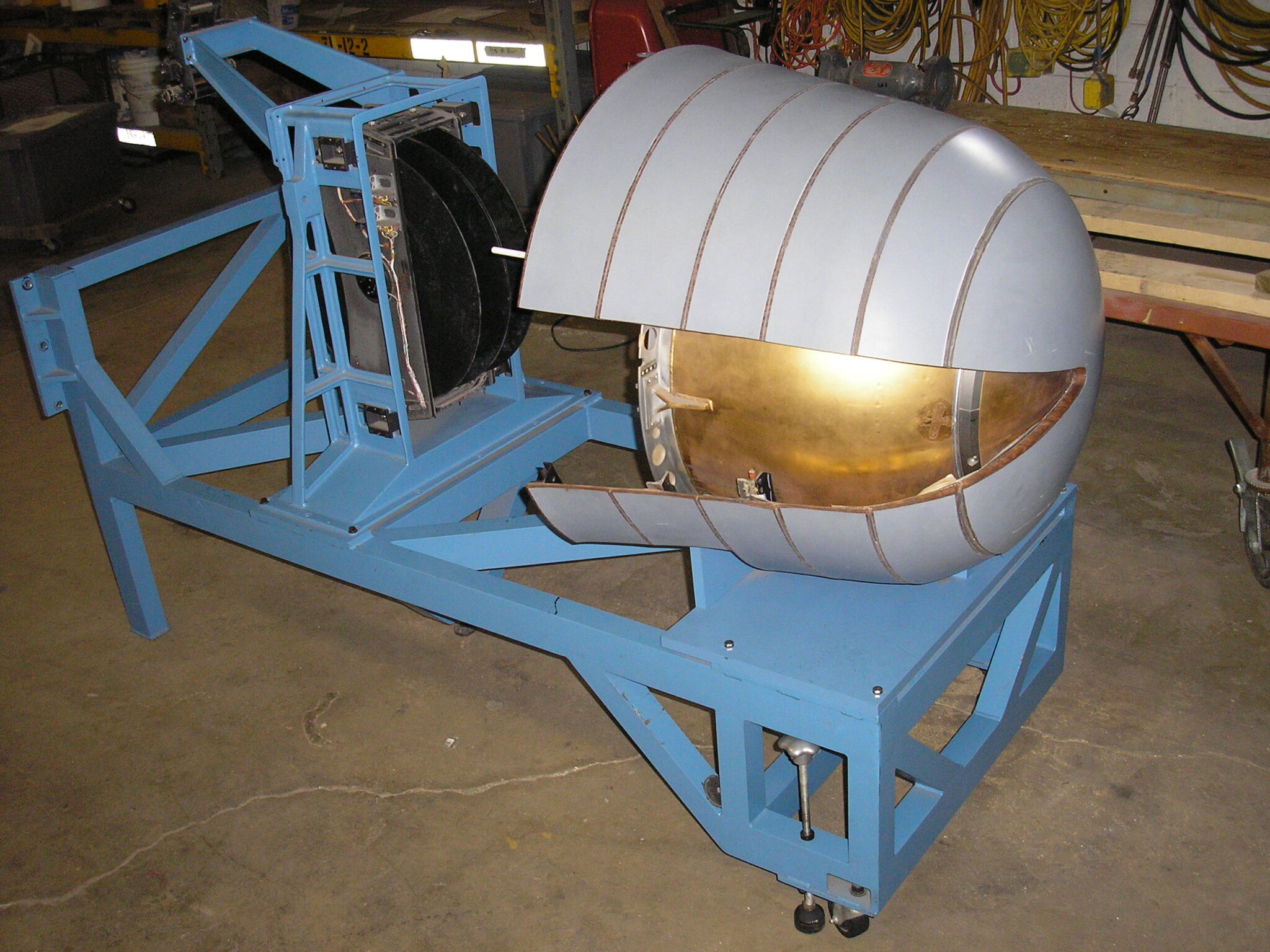
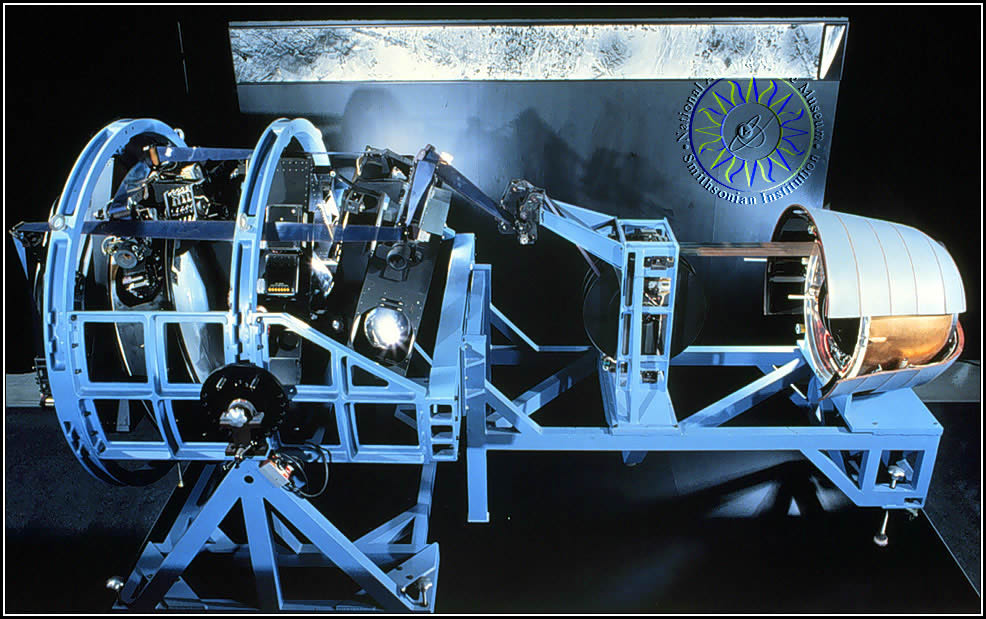
Corona KH-4B Satellite Spy Camera: This satellite camera was designed to monitor Soviet sites, using rotating cameras to produce high-resolution panoramic images on film. Smithsonian National Air and Space Museum houses the only known surviving Corona Camera on public display.
EverGreene was contracted to assess and conserve the object in our studio. The satellite was carefully disassembled, including the film canisters, nosecone, film transfer devices, and heat shield. Each component was meticulously cleaned using brushes, HEPA-filtered vacuums, and aqueous detergents. Battery terminals were cleaned and isolated to prevent ongoing deterioration. Corroding materials were stabilized or removed and treated with metal brighteners and corrosion inhibitors. The nosecone was polished, and the ablative heat shield was filled and in-painted to restore its integrity.
Rocket, Missile Stands & Launchers, Garber Facility: EverGreene has conserved several objects at the Smithsonian National Air and Space Museum Garber Facility, including the Little John Rocket Launcher, Corporal Rocket Launcher, Mobile Missile Launcher, and Rocket Engine Stand.
Conservation treatments included cleaning failed coatings and loose corrosion, removing rust, applying corrosion inhibitors, and powder coating with the original specified paint colors. NASM staff disassembled each artifact prior to treatment. EverGreene transported the stands and launchers from the facility, completed the specified treatments, and returned the fully restored artifacts to the museum.
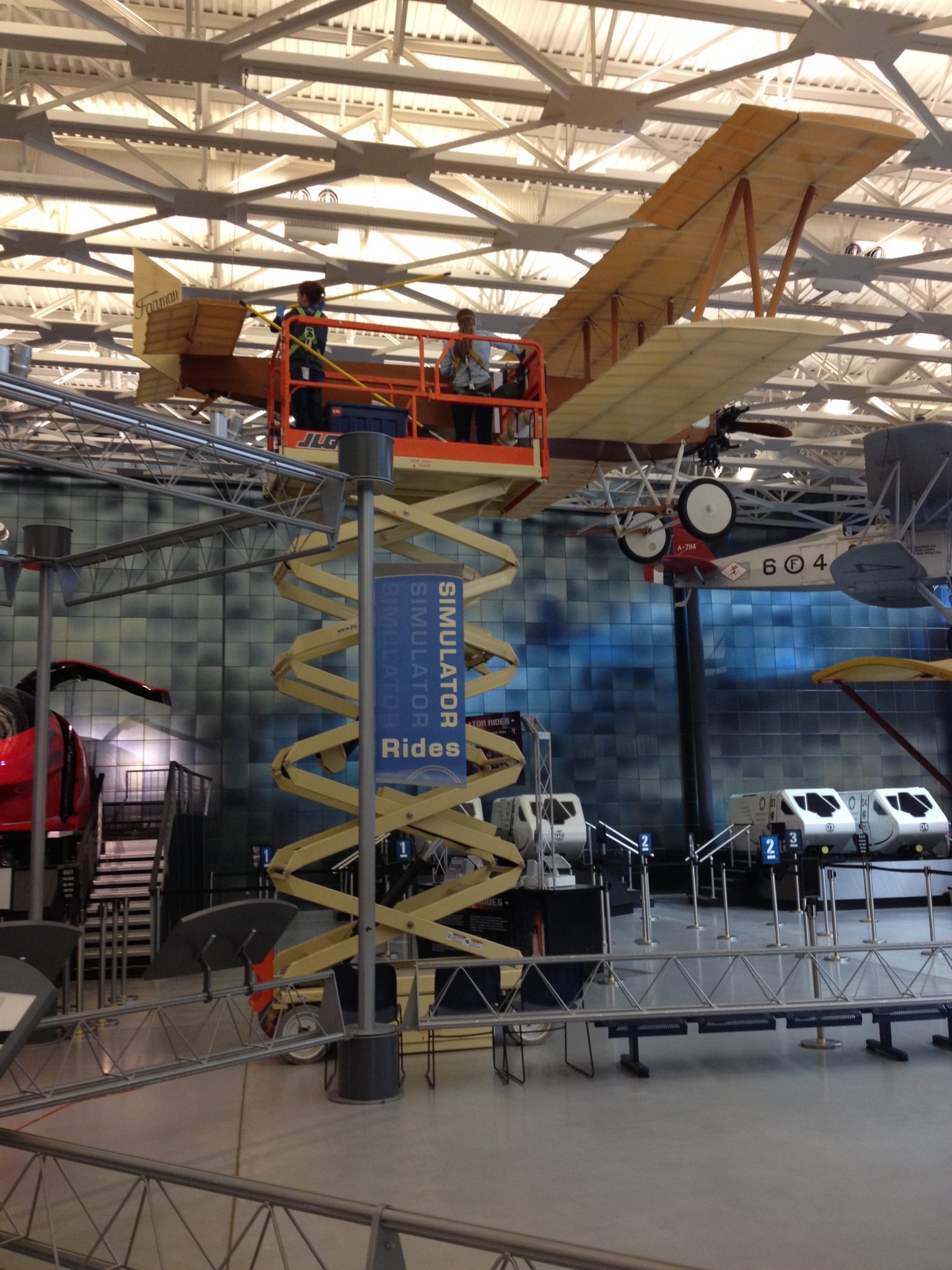
Steven F. Udvar-Hazy Center Aircraft: This expansive hangar houses large galleries displaying iconic aircraft, including the Enola Gay, a Concorde, an SR-71, a Space Shuttle Orbiter, and other historic planes. Many are suspended from the ceiling, creating a dramatic, cavernous display.
EverGreene was contracted by the Museum to perform regular, cyclical cleaning of all 144 historic aircraft and spacecraft. Each cleaning is carried out with meticulous care to preserve delicate paint and metal surfaces. The work involves safely navigating boom lifts through tightly packed aircraft to reach every surface, all while scheduling the tasks to be completed before the Museum opens each day. Each cycle takes approximately six weeks, after which the process begins anew.