


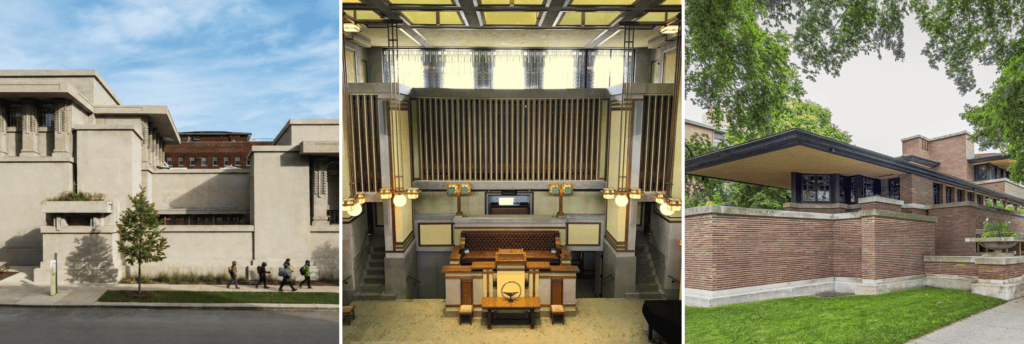
Frank Lloyd Wright transformed American architecture through a philosophy that united buildings with their surroundings and treated architecture, interiors, materials, and ornament as parts of a cohesive whole. Across a career spanning more than seven decades, his work challenged conventional ideas about how buildings should look, function, and be experienced.
That attention to the whole extended to the smallest material details. Plaster was not simply a substrate for color, nor was paint merely decorative. Texture, aggregate, translucency, and subtle variations in tone all contributed to Wright’s intended visual effect. Preserving these buildings therefore requires more than reproducing a color or repairing a surface—it requires understanding how the original materials worked together.
EverGreene has brought its expertise in architectural conservation, historic plaster, decorative finishes, and materials analysis to the restoration of two of Wright’s most celebrated works: Unity Temple in Oak Park and the Frederick C. Robie House in Chicago. At both landmarks, careful investigation and hands-on craftsmanship helped recapture the nuanced surfaces that are integral to Wright’s architecture.
Unity Temple
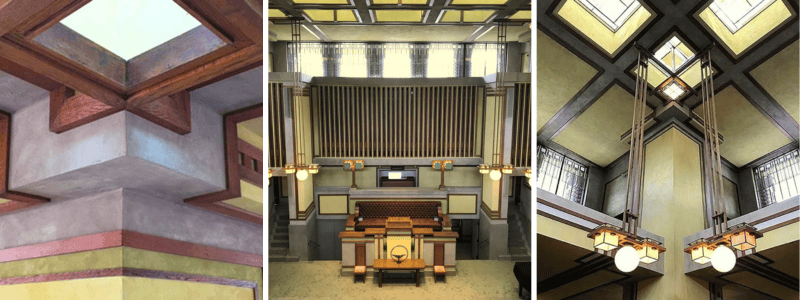
Designed by Wright and completed in 1908, Unity Temple represented a radical new approach to religious architecture. Its monumental concrete exterior gives way to a remarkably intimate interior, where geometry, light, color, and decorative finishes work together to shape the experience of the space.
As part of the building’s $25 million restoration, which began in 2015, EverGreene conservators and craftspeople restored the historic interior finishes. Analysis revealed that the original sand plaster played an essential role in their appearance: because the paint was translucent, the texture and character of the plaster remained visible through the finished surface.
EverGreene identified sand that closely matched the historic material and developed plaster mock-ups based on findings from the analysis. When paint-removal testing determined that the original surfaces could not be uncovered sufficiently to provide accurate finish samples, the team developed a treatment approach using skim coats and new plaster applications to recreate the historic appearance. The restored surfaces recaptured plaster, texture, color, and transparency that Wright envisioned for the space. More about this project.
Frederick C. Robie House
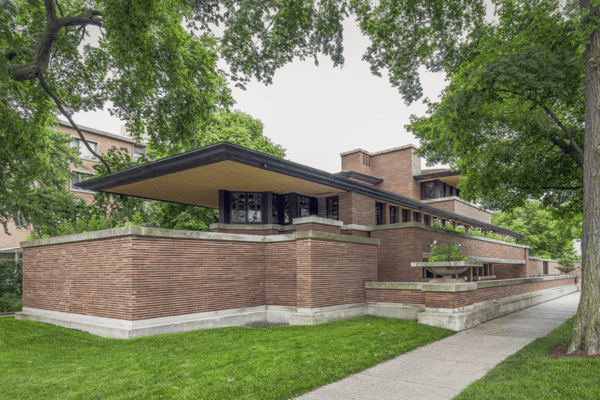
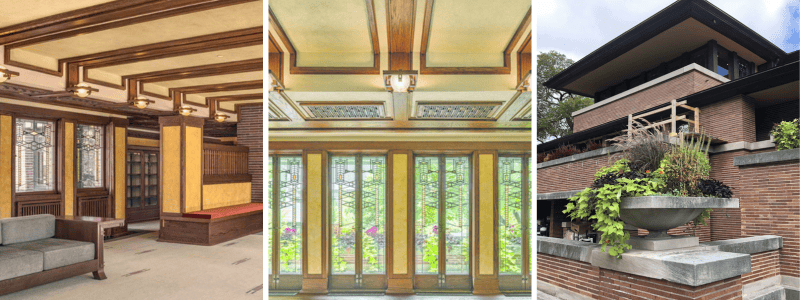
Completed in 1910, the Frederick C. Robie House is one of the defining examples of Wright’s Prairie style. Its strong horizontal lines, open plan, expansive overhangs, and carefully integrated interiors demonstrate Wright’s belief that architecture and decorative arts should function as a unified composition.
In 2018, EverGreene was contracted to conserve and restore the historic plaster and replicate the original paint scheme throughout the landmark. Working with Henry Frerk Sons, EverGreene sourced and evaluated dozens of aggregate samples to recreate the building’s three-coat lime plaster. Extensive testing established the appropriate mix ratios, and the newly applied plaster was carefully tooled to expose the aggregate and reproduce the distinctive texture of Wright’s original specifications.
EverGreene conservators and decorative artists then carefully removed modern paint from existing plaster finishes and recreated Wright’s translucent wash finish. The historic colors were delicately reintroduced while allowing the texture and aggregate beneath to remain visible—preserving the relationship between material and color that was fundamental to Wright’s design. More about this project.
Unity Temple and the Robie House illustrate the complexity of conserving Frank Lloyd Wright’s architecture. In both buildings, seemingly subtle details—the size and color of an aggregate, the texture of a plaster surface, or the transparency of a painted wash—have a profound effect on the character of the finished space.
EverGreene’s approach combined archival and materials research, scientific analysis, testing and mock-ups, conservation expertise, and traditional craftsmanship to understand those details before developing an appropriate treatment. The result is restoration that goes beyond repairing historic surfaces but preserves the relationship between material, texture, color, and craftsmanship that makes Wright’s interiors so distinctive.