Vizcaya Museum & Gardens
Vizcaya Museum and Gardens, located on the Biscayne Bay in Miami, Florida, was built between 1914 and 1916 as the winter residence of American agricultural industrialist James Deering, one of the founders of International Harvester. The property was built in the Mediterranean Renaissance style around the owner’s collection of antiquities and art objects. Each room was designed to provide a theatrical experience of the collection of European antiques while enforcing an imaginary tale of the age and significance of the site and its maker. Vizcaya also has expansive gardens, which combine elements ofItalian and French Renaissance designs. Located throughout the garden, decorative marble balustrades frame sculptures and pathways; it is the largest collection of Italian outdoor sculpture in the United States. Deering occupied the site between 1916 and his death in 1925.
After Miami-Dade County acquired the villa and gardens in 1952, Vizcaya began operation as the Dade County Art Museum. In 1994, the Vizcaya estate was designated a National Historic Landmark.
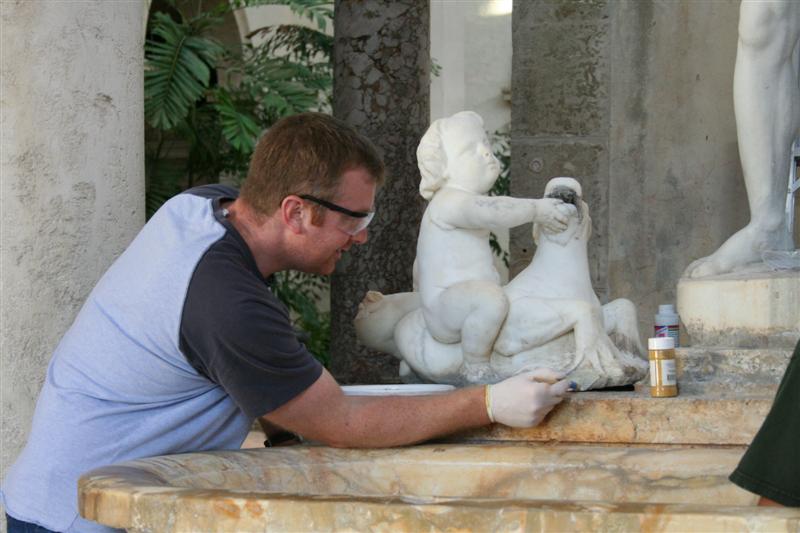
Over the past 100 years, the collection had suffered the ravages of tropical storms and hurricanes. Grants from the Tiffany & Company Foundation, the federal government’s Save America’s Treasures program, and funds from Miami-Dade County and FEMA supported a comprehensive outdoor sculpture conservation project. EverGreene entered into a multi-year contract to treat all of the outdoor sculpture, as well as select fountains and architectural elements throughout the garden, which were exceedingly vulnerable to the hurricane-prone and humid, sub-tropical climate of Miami. EverGreene worked closely with the museum curator and collections staff to realize their goals for the preservation effort. Prior to beginning work, each piece was assessed and conditions and treatment programs outlined in a detailed report.
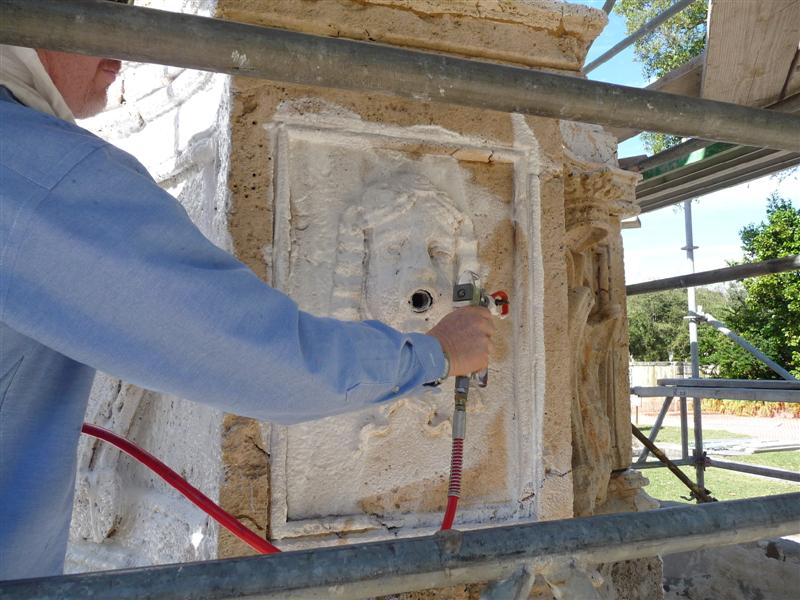
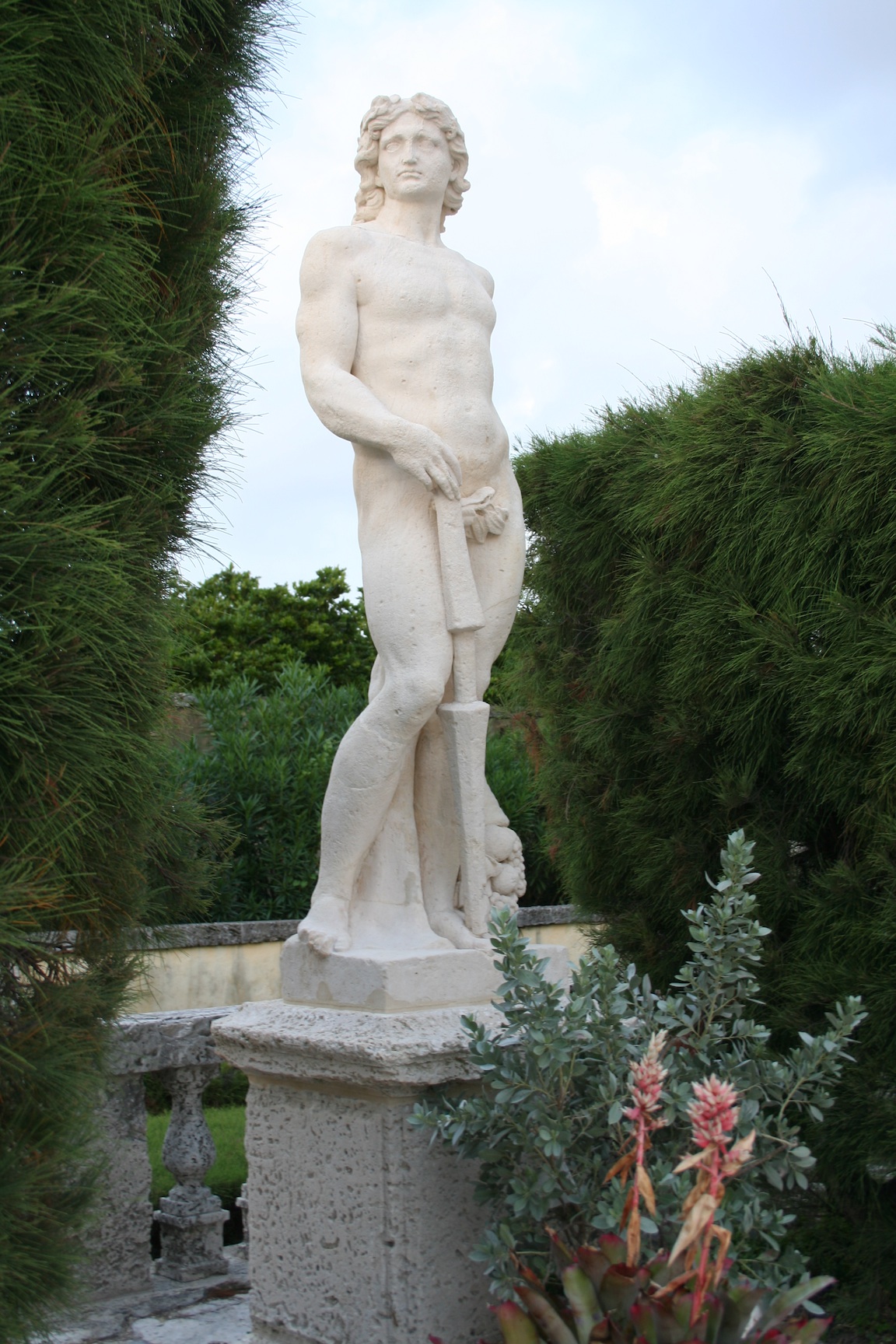
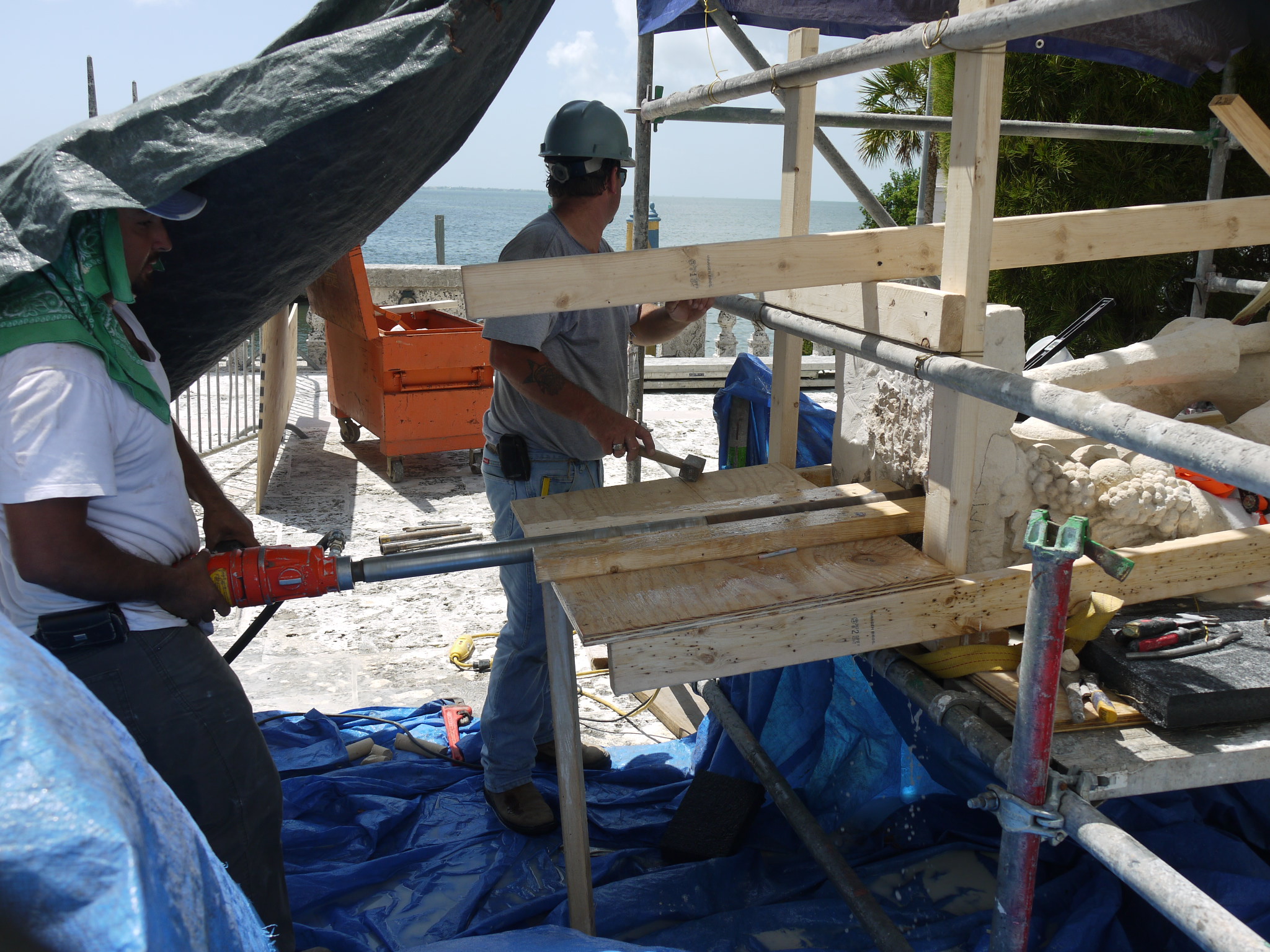
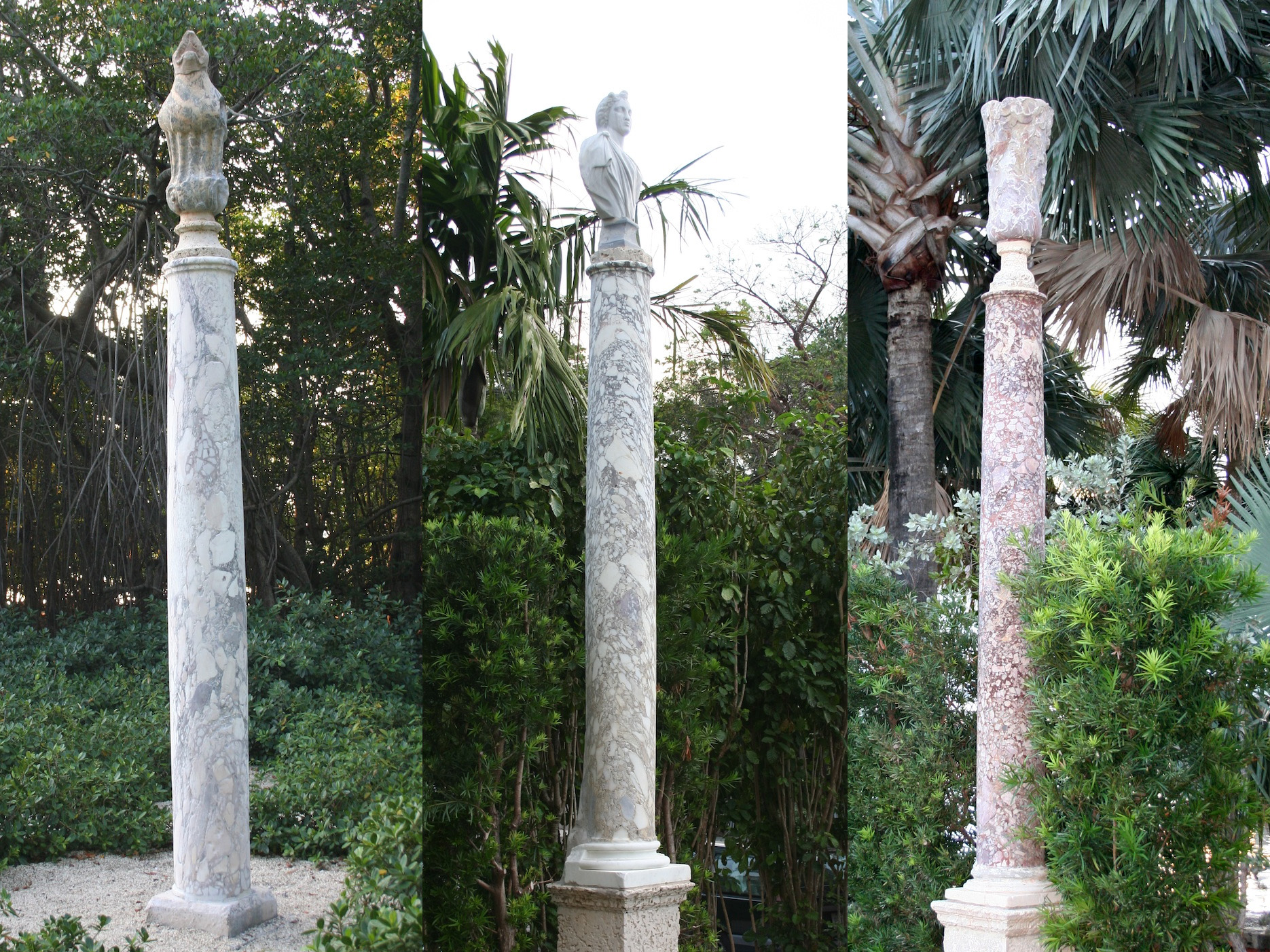
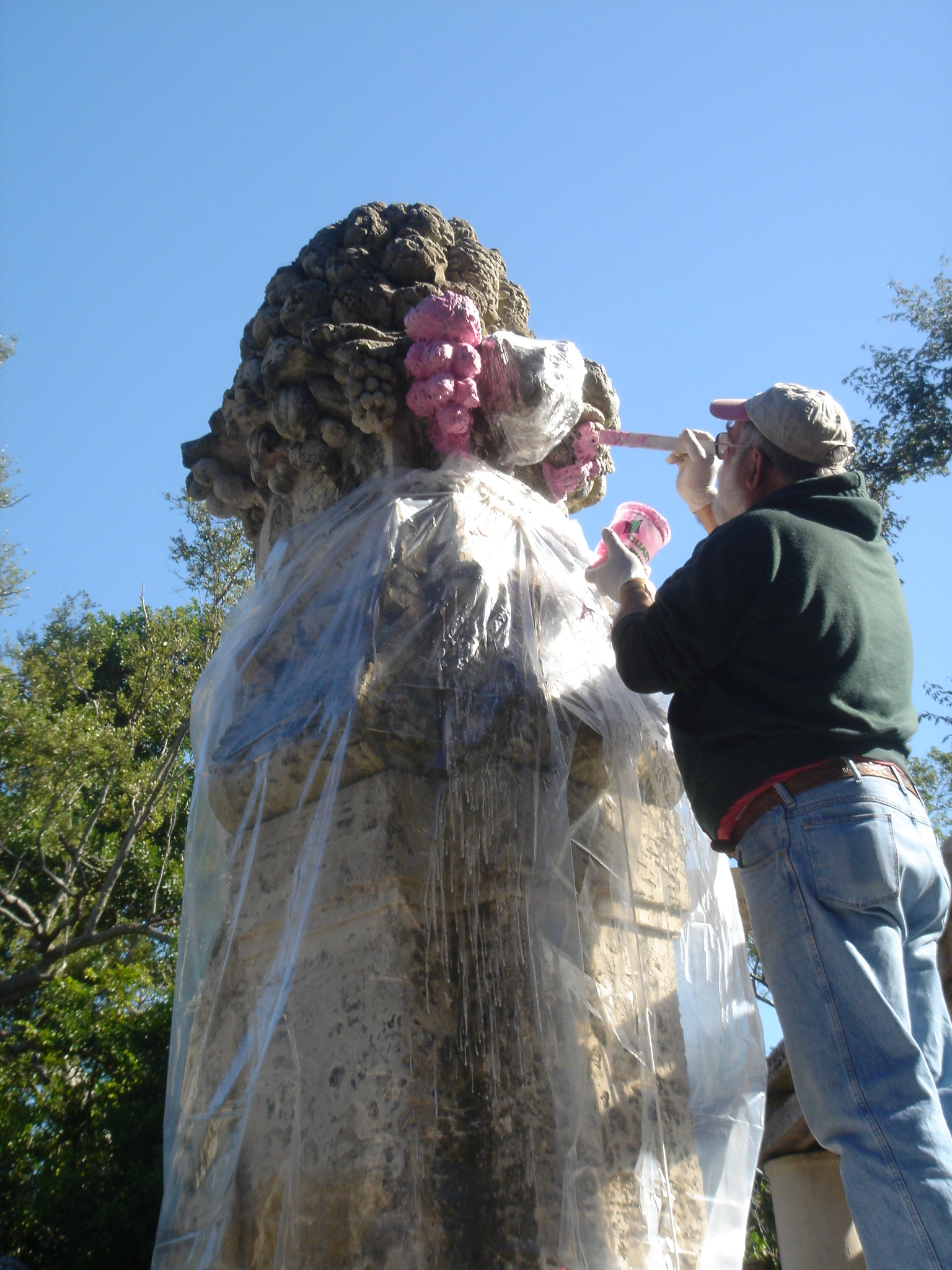
As a part of the consecutive work, EverGreene conserved the Italian sculptures and columns carved of Vicenza and Istrian stones, as well as the architectural elements, antique relics, and custom-made pieces crafted from native coral stone, a highly figured fossiliferous limestone. The Italian statues, originally from the Veneto region of Italy, typically represent figures from classical mythology such as Neptune, Venus, and Bacchus. While each work had its own individual treatment protocol, typical range of treatments included: reversing failing fills, removing failing iron pins and mounts, structural reinforcement and/or reassembly or re-creation of lost elements, patching using lime-based mortar or stone dutchman repairs, injection fills, and cleaning with detergents and poultices to remove atmospheric and biological soiling and staining. Several of the works required disassembly to structurally repair the works from the inside.
Outdoor Art Conservation
- Statuary Walk Columns & Sculptures
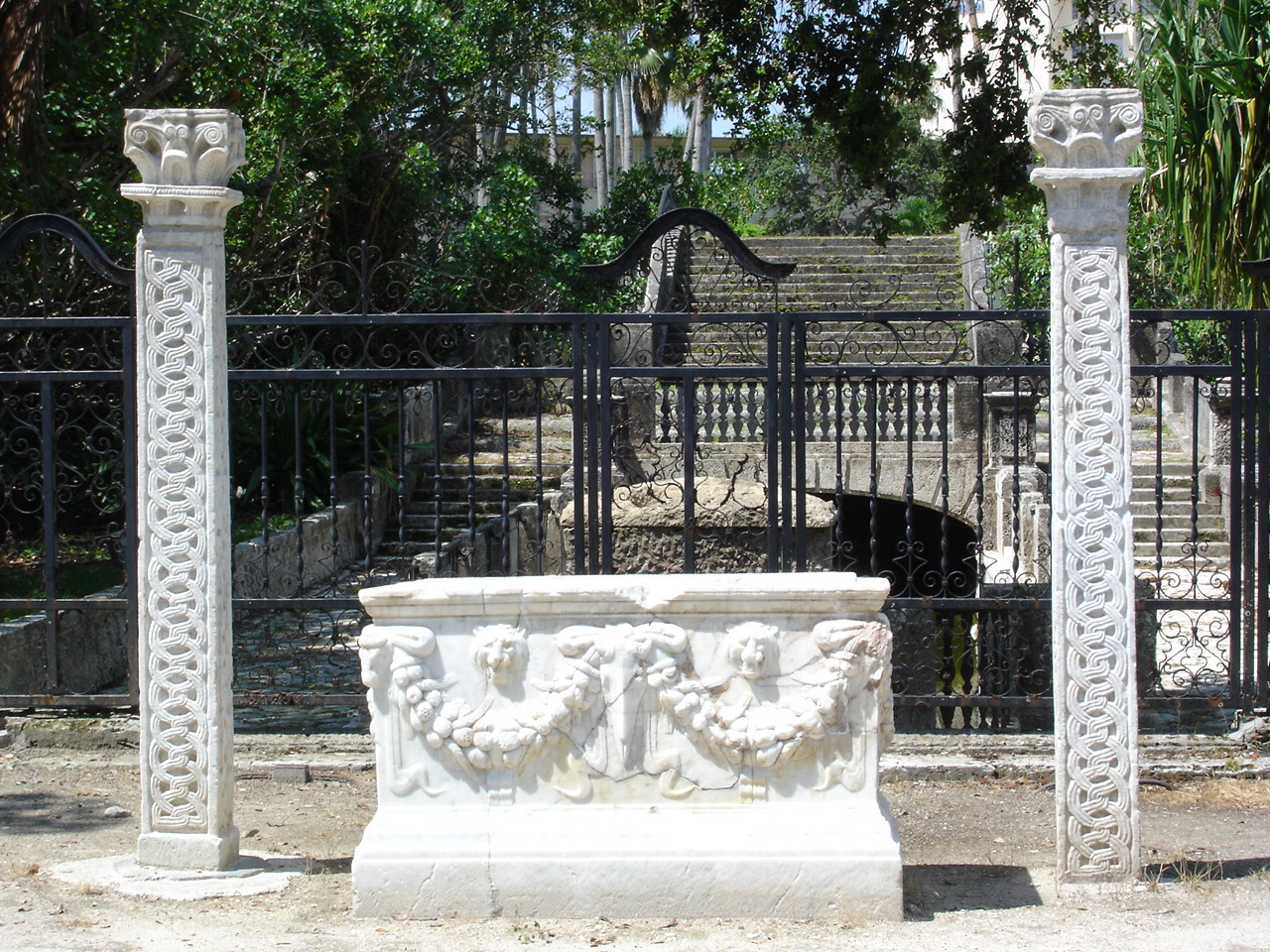
- Roman Altar (2nd Century) and Lombardic Columns (10th Century)
- Coral Limestone Herm
- Marine Garden Urns
- Marble Balustrade
- Architectural Elements (gutters, downspouts, columns, copings & railings)
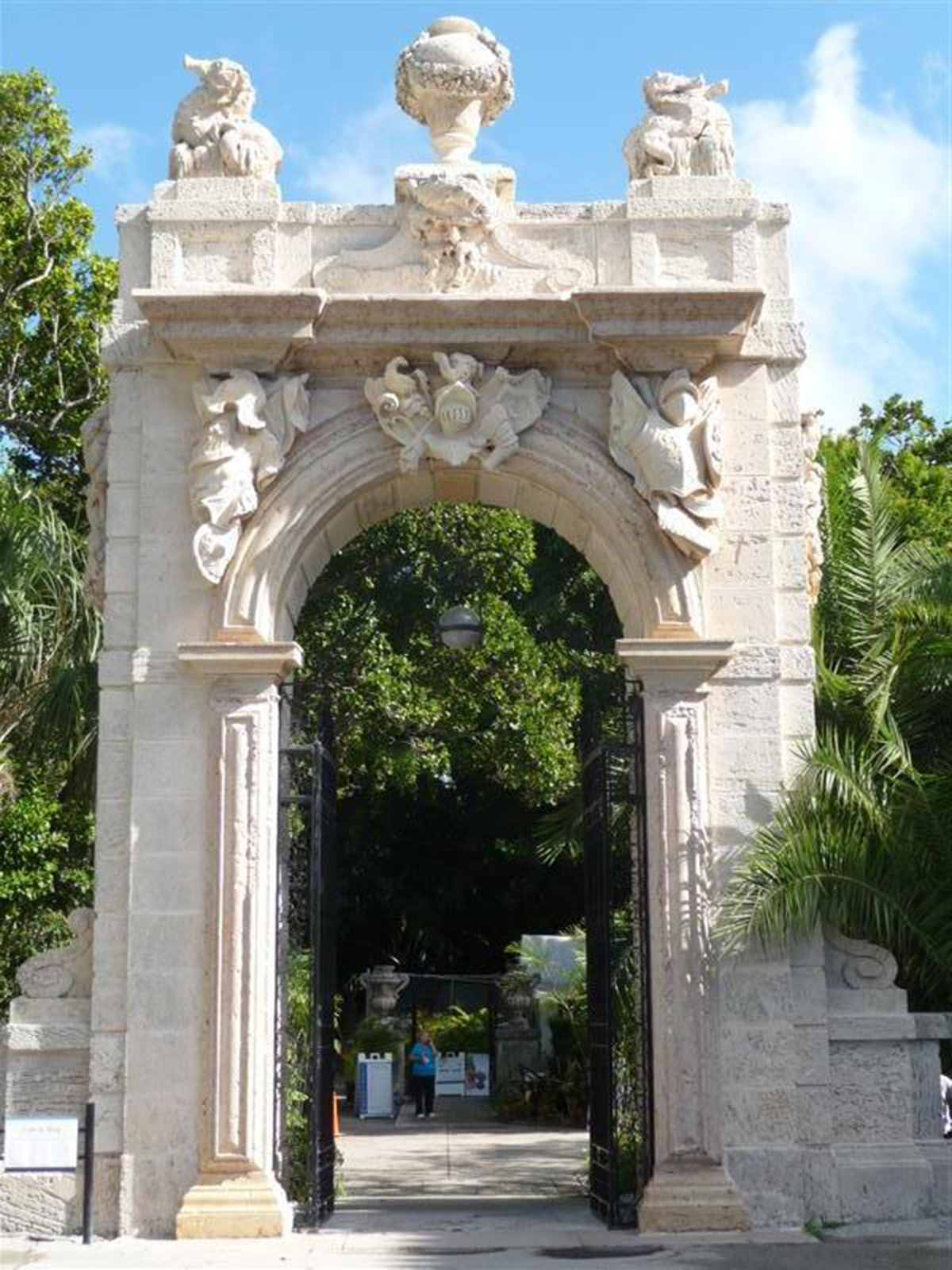
- Forecourt Gateways (16th Century)
- Stone Barge
Fountain Conservation
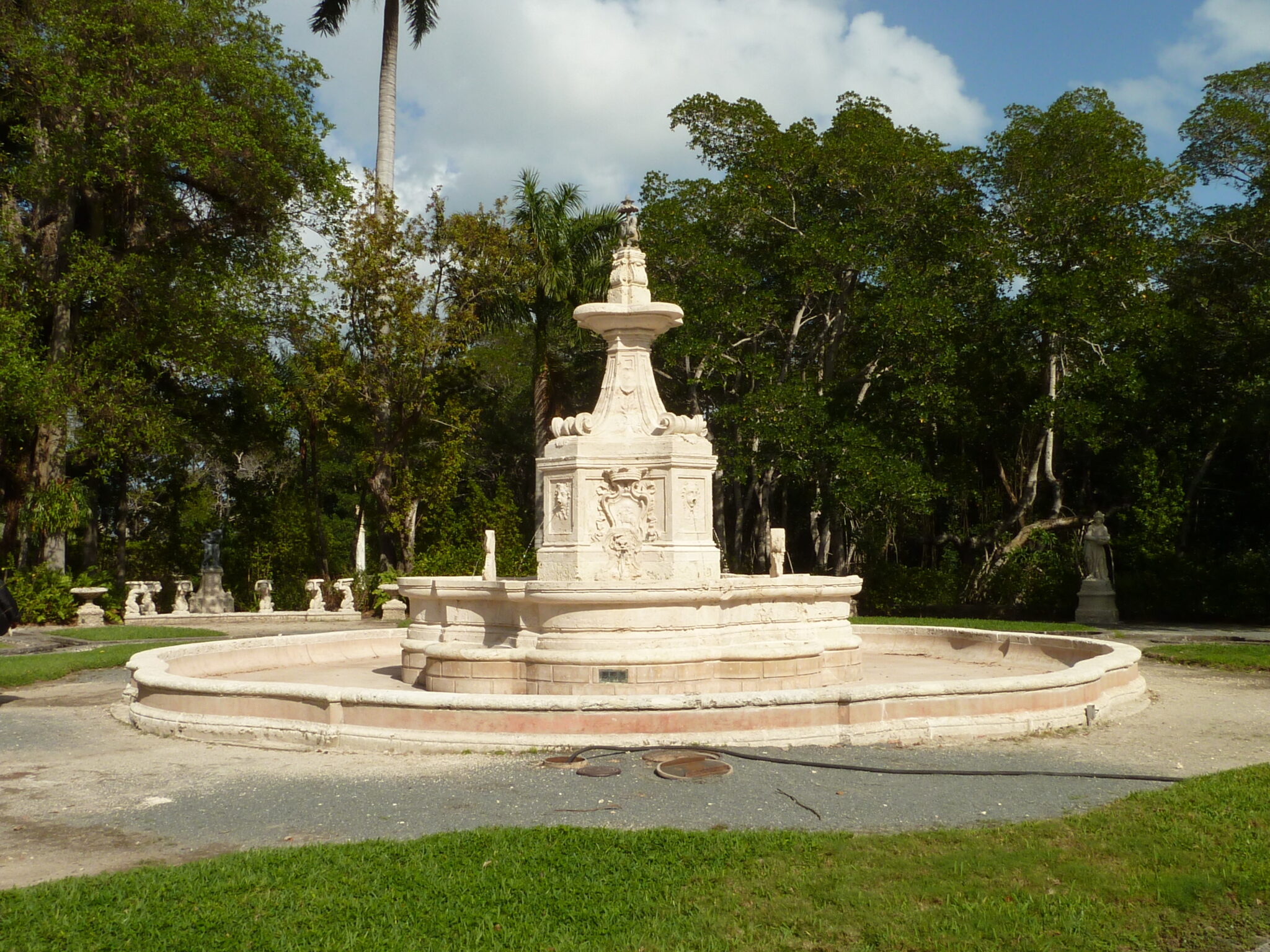
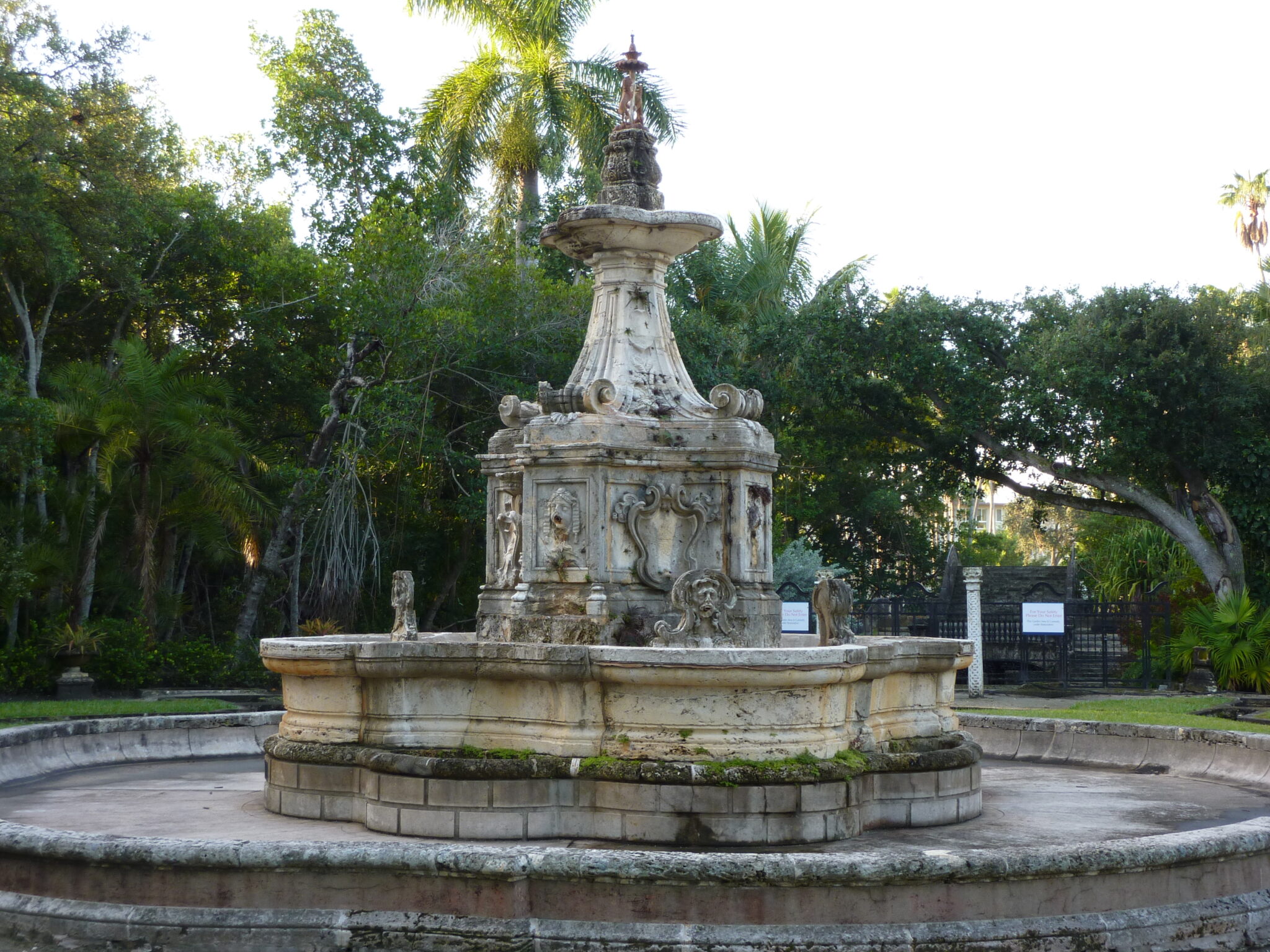
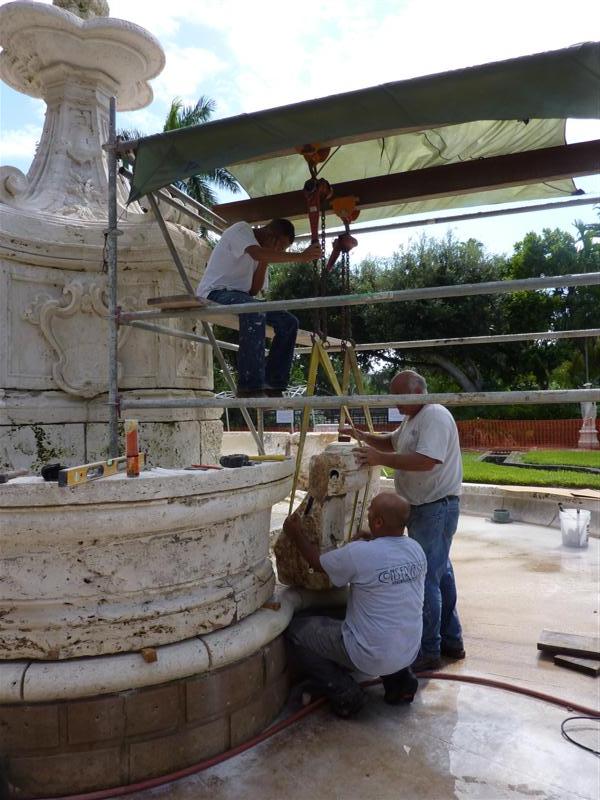
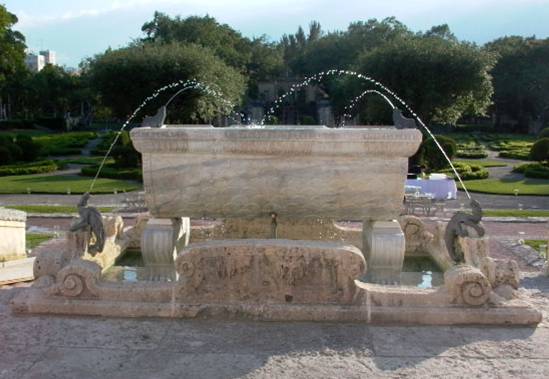
Sutri Fountain and Garden Sculptures (1722): Work included the complete disassembly of the primary basin walls, demolition of the existing concrete basin floor slab, integration of new piping chaseways, removal and replacement of coral stone molding stones, pinning and reinstallation of the basin walls, and pouring of a new concrete basin slab. Water spray jets were replaced with low-volume heads and a new plumbing manifold was installed.
Cascade Fountain: Work included the complete disassembly of the marble components of the font and removal for treatment. A new stainless steel structural pipe was milled to fit within the existing mountings and integrated into the water feed system. The font was then re-mounted on a restored coral stone base within the fountain.
Frog Fountain: Our conservators re-created the missing lizard by molding the original and casting a new element using a matching zinc alloy. The losses and reinforcement to the sarcophagus were filled with new stone dutchman repairs. An inconspicuous stainless steel brace was created to prevent continued cracking. The sarcophagus was then thoroughly cleaned. Additionally, the water quality was analyzed to determine the source of the mineral deposits and to prescribe appropriate remediation.
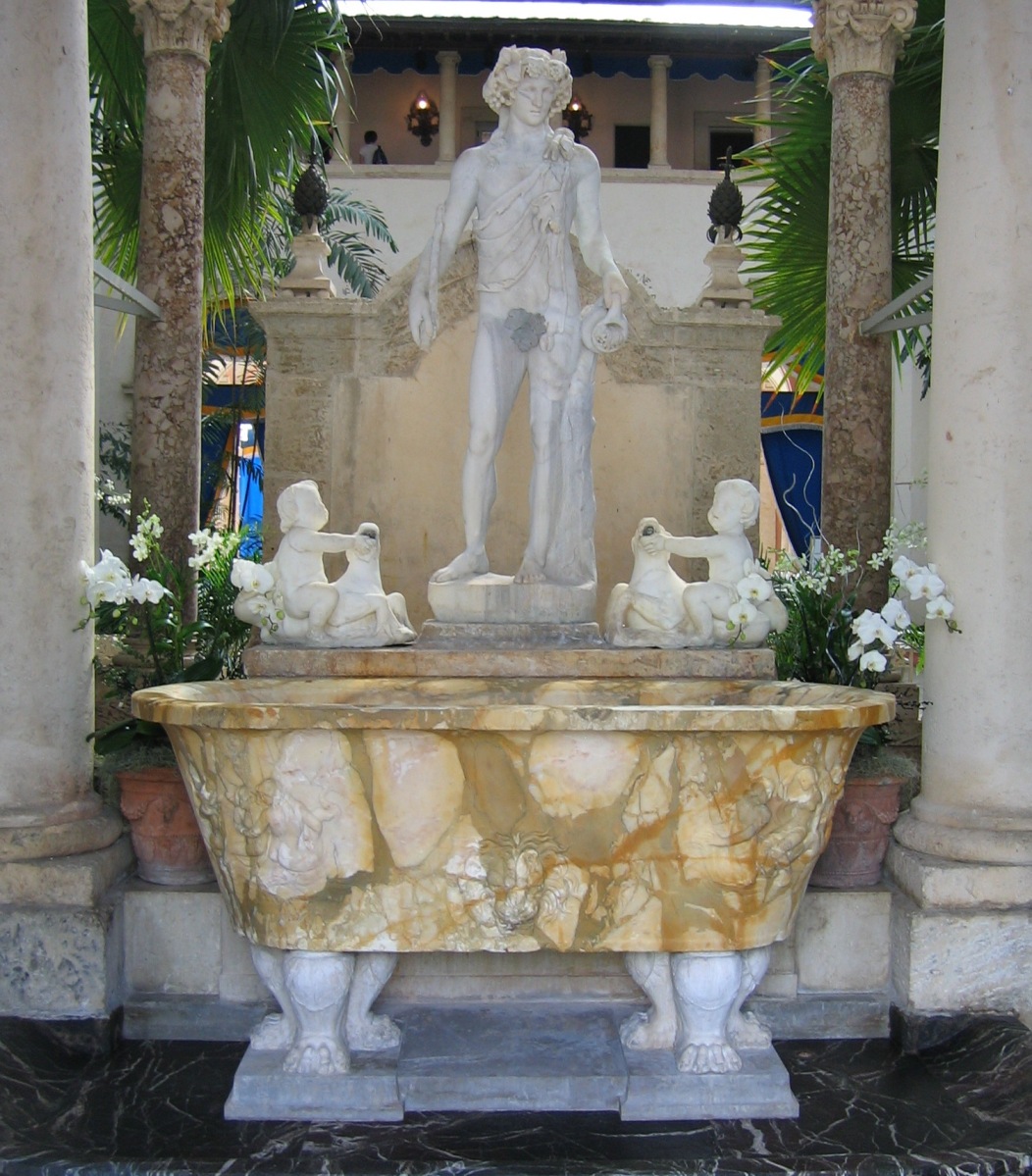
Bacchus Fountain: After careful detergent cleaning to remove soiling, the failing fills were replaced with appropriately formulated lime mortars. The losses in the verd antique pool were rebuilt with color-matched scagliola mortars and toned to match the figured stone. The lime deposits were carefully removed by multiple repeated applications of gelled solutions and hand scrubbing. Protective color-enhancing coatings were then applied to protect the stone and a comprehensive treatment report was submitted.
Structural Reinforcement
The three Commedia dell’arte figures of Pulchinello, Harlequin, and Narcissus: These hollow lead cast sculptures had become distorted as the lead sagged and deformed under their weight with no armature. The sculptures were conserved at EverGreene’s studio. Inappropriate post-historic repairs were removed using a combination of hand and power tools, micro-air abrasion, and acid baths. Internal armatures were designed and installed to support the weight of each statue using existing holes and access points. A new base and crook were created for Narcissus. Cracks and previous losses were filled with solder and lead sheets. Upon completion, the works were re-patinated and reinstalled.
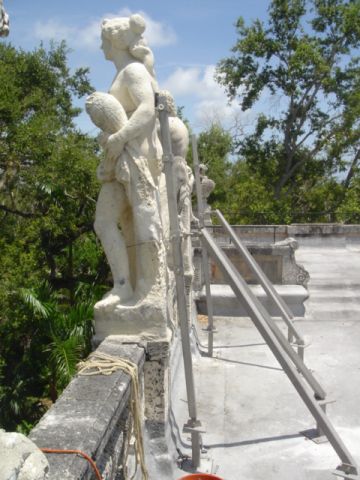
Four Casino Parapet Figures: The original structural supports were insufficient for resisting damage from a hurricane; the fragile stone figures broke free from the supports at the mounting points and rocked against the braces. A new free-standing stainless steel structure was engineered for each of the four figures, which is nearly invisible from the ground. A removable tripod was mounted to the roof and supported a tubular “strongback” that ran vertically along the rear of each figure; contact points between the support structure and the stone were padded with neoprene. Aircraft grade stainless steel cables, shielded in nylon sleeves, were wrapped around the figures at a minimum of three locations to provide support and allow minimal movement of the statues as needed, but resist tilting should movement occur
Interior Art Conservation
Deering’s Sitting Room: In 2005, Hurricane Wilma exposed metals in the sitting room to corrosive salt spray when the windows facing Biscayne Bay blew open. Fragile and vulnerable gilded ormolu fittings, silver, and other metal artifacts began to oxidize and corrode. EverGreene assessed the condition of the metals in the room and recommended treatments for each. A means of cleaning and restoring each artifact was recommended which the museum used as a guide for conservation.
Swimming Pool Grotto: The grotto was designed by American artist, Robert Winthrop Chanler. Half of it is tucked underneath the first floor of the main house, the other half is uncovered, opening into the garden. It is composed of painted plaster elements. EverGreene has worked on the pool several times, most recently in 2021 where our team stabilized the shell wall. A small section of the ceiling was previously stabilized after it fell into the pool due to damage from Hurricane Irma in 2017.